Overview
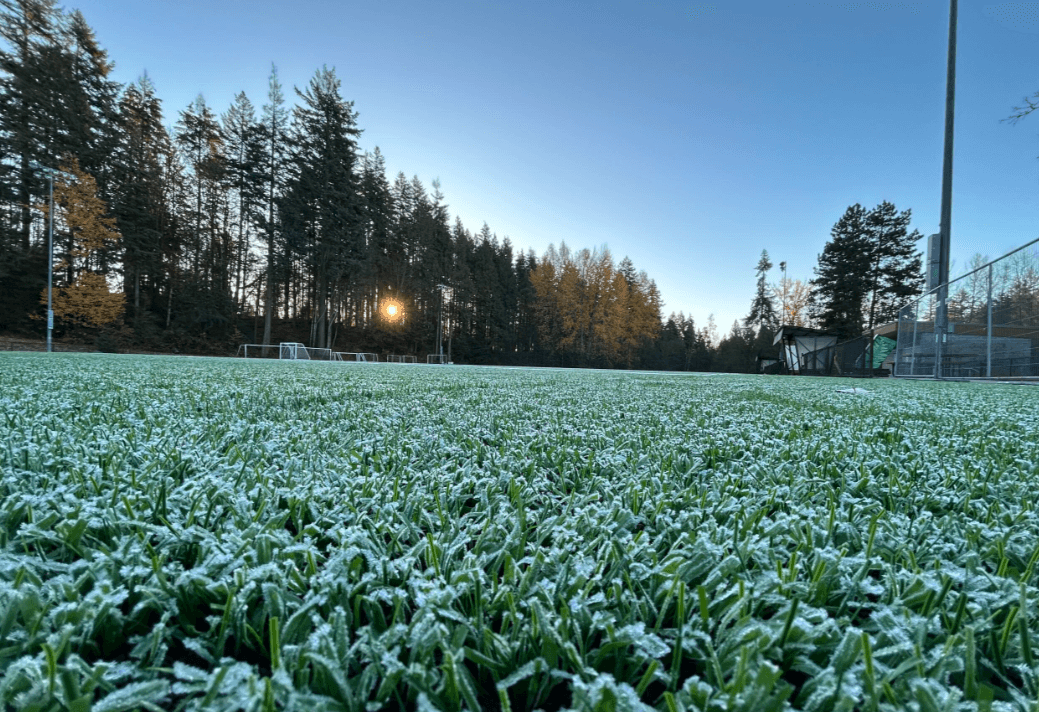
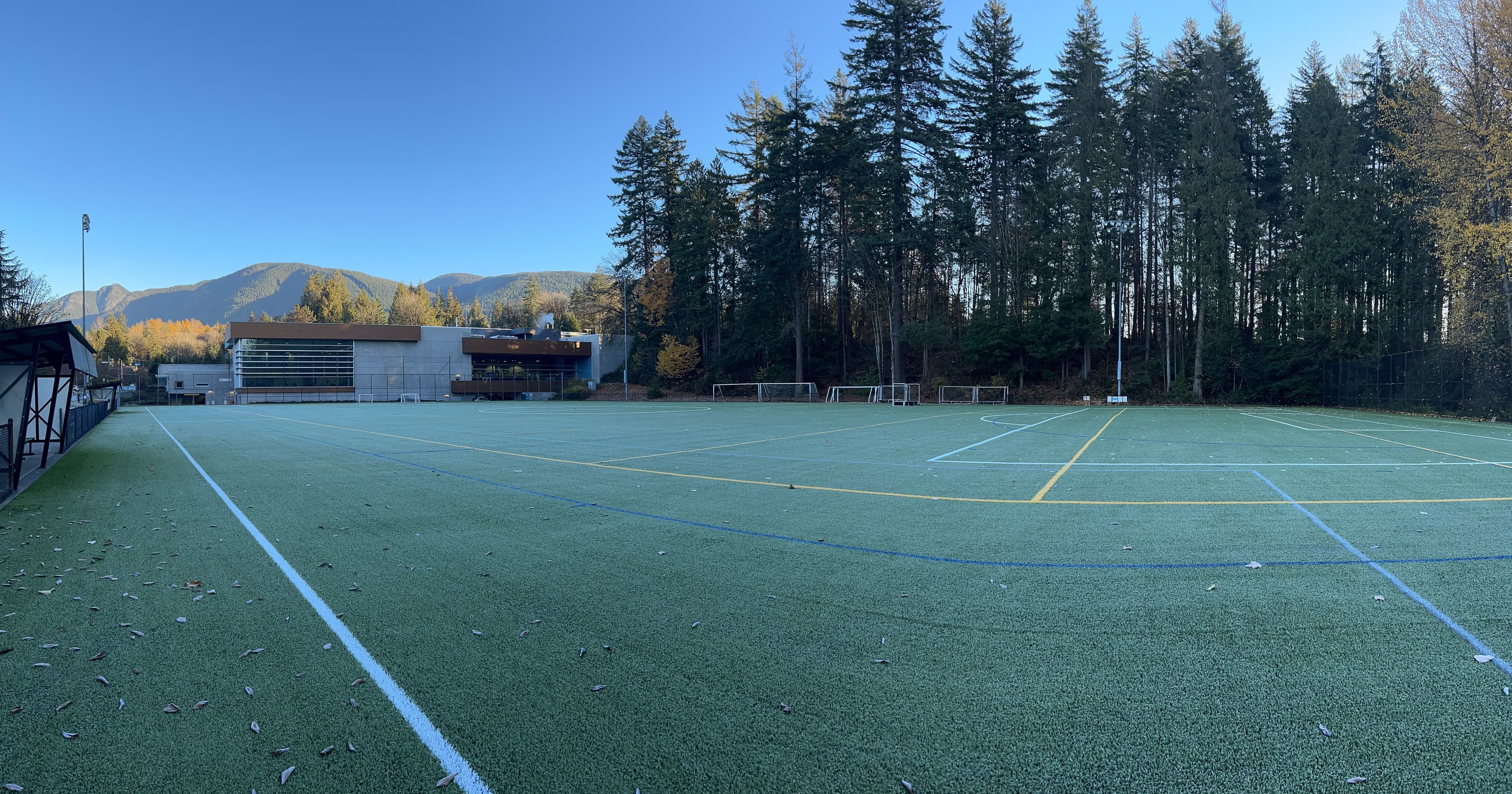
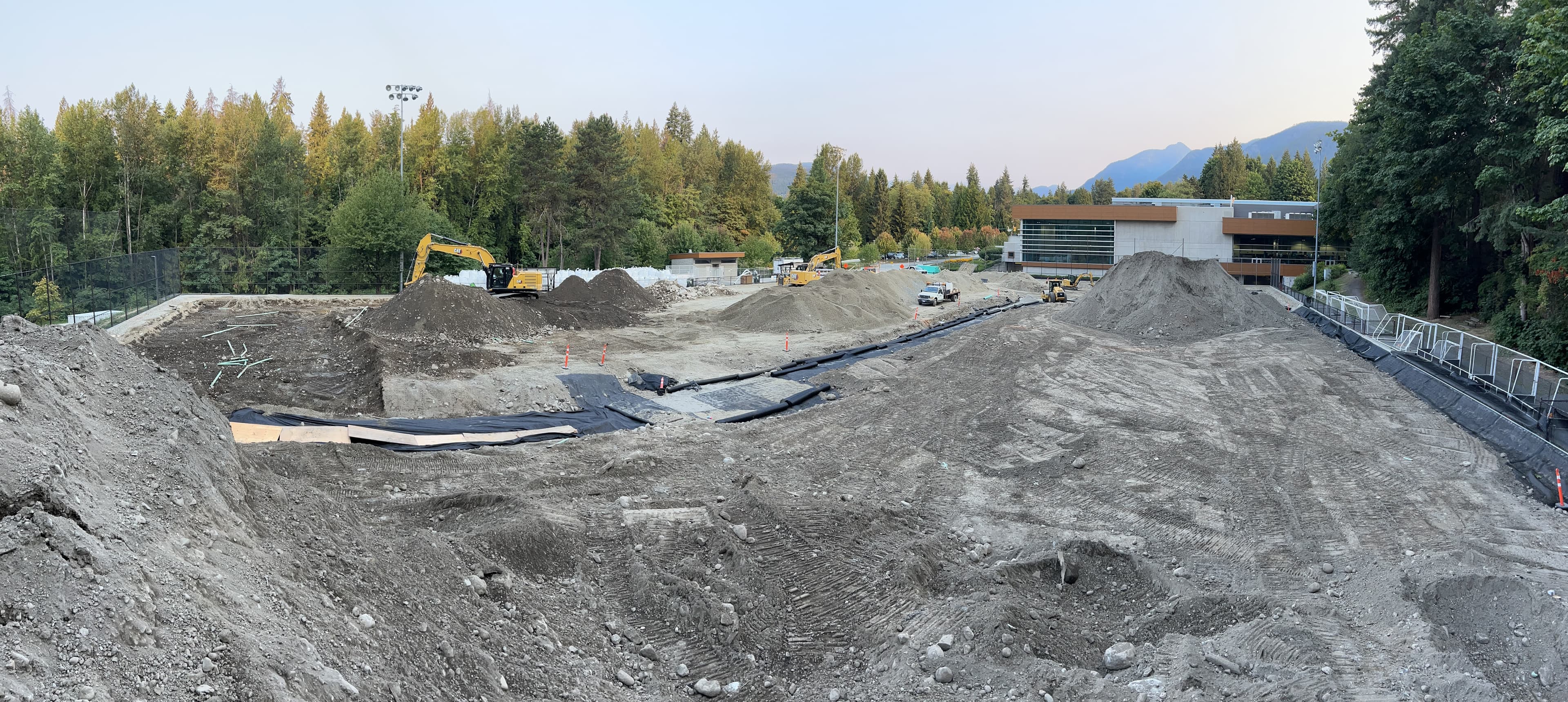
The William Griffin Recreation Centre in North Vancouver is home to one of the district’s highest-use fields for year-round sports including soccer, field hockey, and football. The existing turf frequently required repairs to address significant depressions in its surface and could no longer be maintained to offer optimal playing conditions. Due to the high costs associated with full excavation, Thurber Engineering was contracted to evaluate and recommend remediation strategies to improve surface drainage conditions, reduce potential ground settlement, and address sinkhole formation.
Thurber Engineering's assessment revealed that the field was built over more than 10 meters of undocumented fill. They advised remediation efforts to mitigate further sinkhole development, or to provide bridging the over existing sinkhole areas. To achieve this, they recommended the use of a geosynthetic solution and suggested consulting Solmax for specialized support.
Challenge
Solmax employed the methodology of Design of Soil Layer-Geosynthetic Systems Overlying Voids (Giroud, J. & Bonaparte, R. & Beech, J. & Gross, B., 1990), a standard practice in engineering for projects involving voids. This method integrates arching theory for soil with tension membrane theory for geosynthetics.
The project aimed to ensure stability and performance by addressing potential voids. Solmax incorporated various design parameters such as void shape, overburden thickness, peak friction angles, surcharge loads, allowable geosynthetic strain, and a design life expectancy of 75 years.
Key considerations included selecting a geosynthetic based on Long Term Design Strength, accounting for void diameter and deflection criteria. Calculations were made to ensure that the geosynthetic reinforcement provided sufficient pullout resistance with surrounding soils to support overburden and live loads. Long-term allowable tensile strength (Tal) calculations, factoring in strength reduction due to installation damage, durability, and strain-limited creep, were based on the isochronous curve for the MIRAGRID® XT product line, considering 2% and 5% strains over a 75-year period. MIRAGRID XT's testing provided predictions of remaining strength at the end of its design life.
Solution
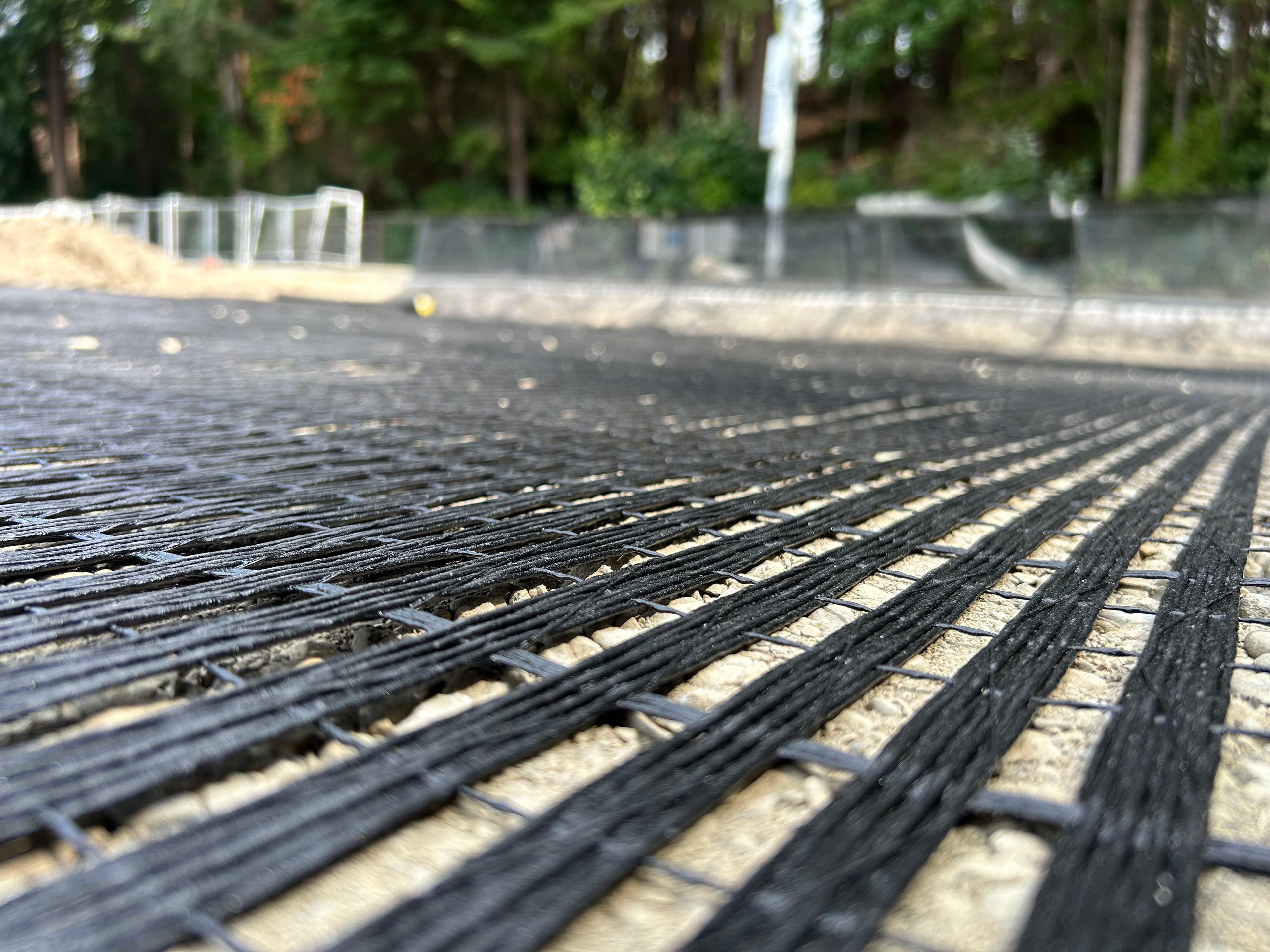
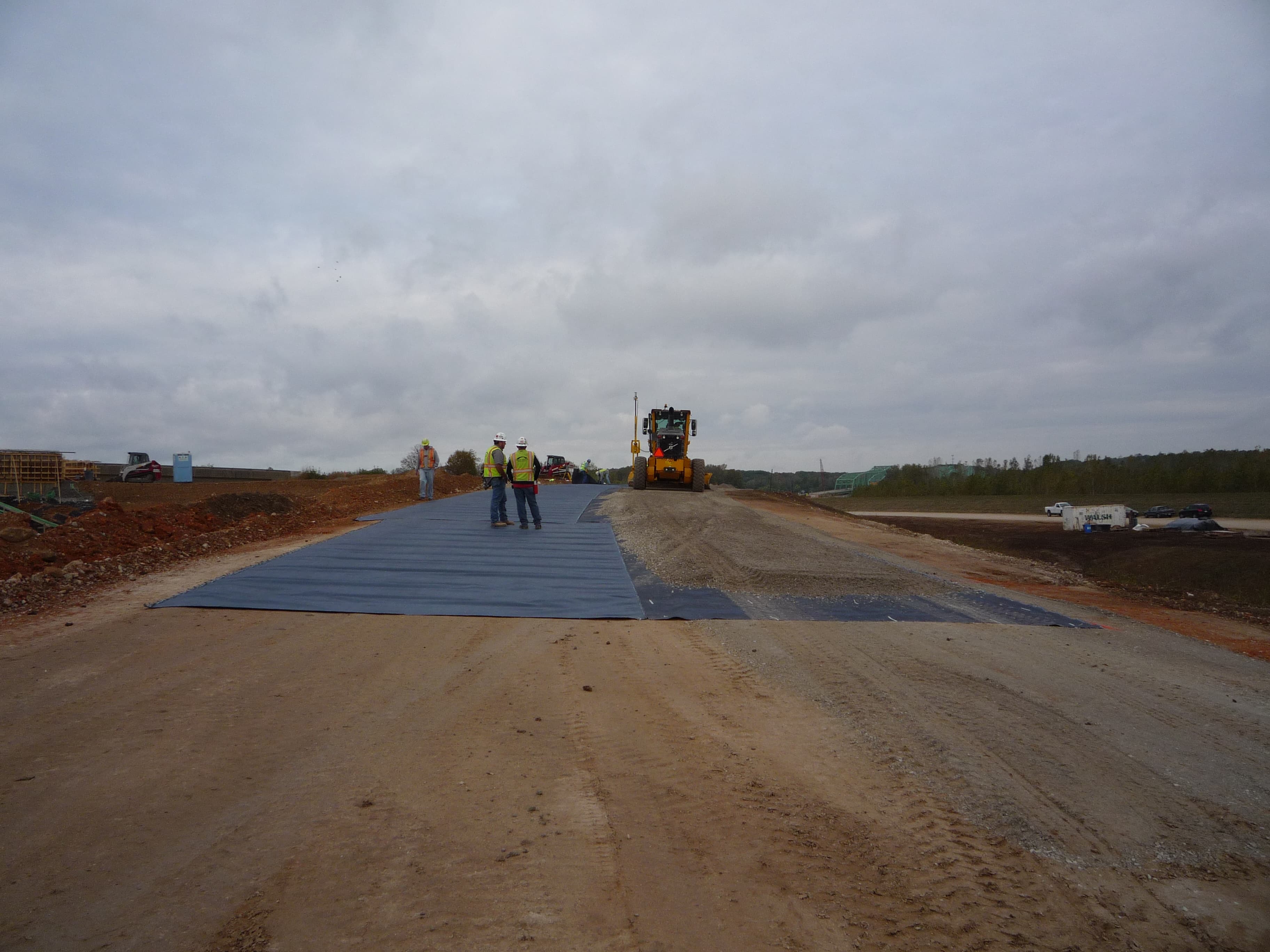
Analysis showed that MIRAGRID XT geogrids were a cost-effective solution for void bridging. The selection process was informed by allowable strains, void diameters, and vertical deformations for different MIRAGRID XT strengths. This highlighted the importance of geosynthetic strength in bridging larger voids with minimal deflection. Subsequently, 20,000 yd2 (16,722 m²) of MIRAGRID 24XT uniaxial geogrid was used for stabilization.
A notable design challenge involved securing sufficient anchorage if a void formed along the perimeter of the field. Typically, the geosynthetic would be extended past the edge of the hypothetical void; however, the construction limit was the edge of the field. Binnie & Associates, the design engineers, resolved this by anchoring the MIRAGRID 24XT to the existing concrete curb surrounding the field.
The William Griffin Park Artificial Turf Field project, featuring Solmax's MIRAGRID 24XT uniaxial geogrid, successfully overcame the challenges of void bridging in a high-traffic sports complex. The choice of MIRAGRID XT, coupled with Solmax's support, was pivotal in rejuvenating a field previously hindered by problematic subsurface conditions.