Overview
Embraport, a sprawling 850,000 m2 (square meters) container and bulk goods terminal under construction in the Port of Santos, Brazil, is poised to be the largest privately owned port facility in Brazil. With a staggering 600,000 m2 dedicated exclusively to container storage, it is set to become the largest in South America. Upon completion, the terminal will have the capacity to handle 2 million TEU (20 ft container equivalent units) and 2 billion liters of bulk liquids annually. The location, predominantly tidal flats, is situated on the North shore of the Estuario de Santos opposite the City of Santos in the State of São Paulo.
Challenge
The 2007 government approval for the Embraport project revealed that over half of the proposed terminal area rested on about 22 to 25 m of soft to medium sandy silt, with elevations between -1.0 m and +1.0 m. To reach the target elevation of +3.5 m and account for potential settlements, an import of 1.5 million m3 (53 million ft3) of select fill was deemed necessary. A major challenge was also the requirement to remove, dewater, and dispose of 600,000 m3 (21 million ft3) of contaminated sediments due to the heavy industrialization in the Santos region. These sediments contained a variety of contaminants ranging from heavy metals (like lead, copper, nickel, chromium, and mercury) to PAH’s and PCB’s. The combined tasks of importing fill and removing contaminated sediments raised significant cost implications, threatening the project’s financial viability.
Solution
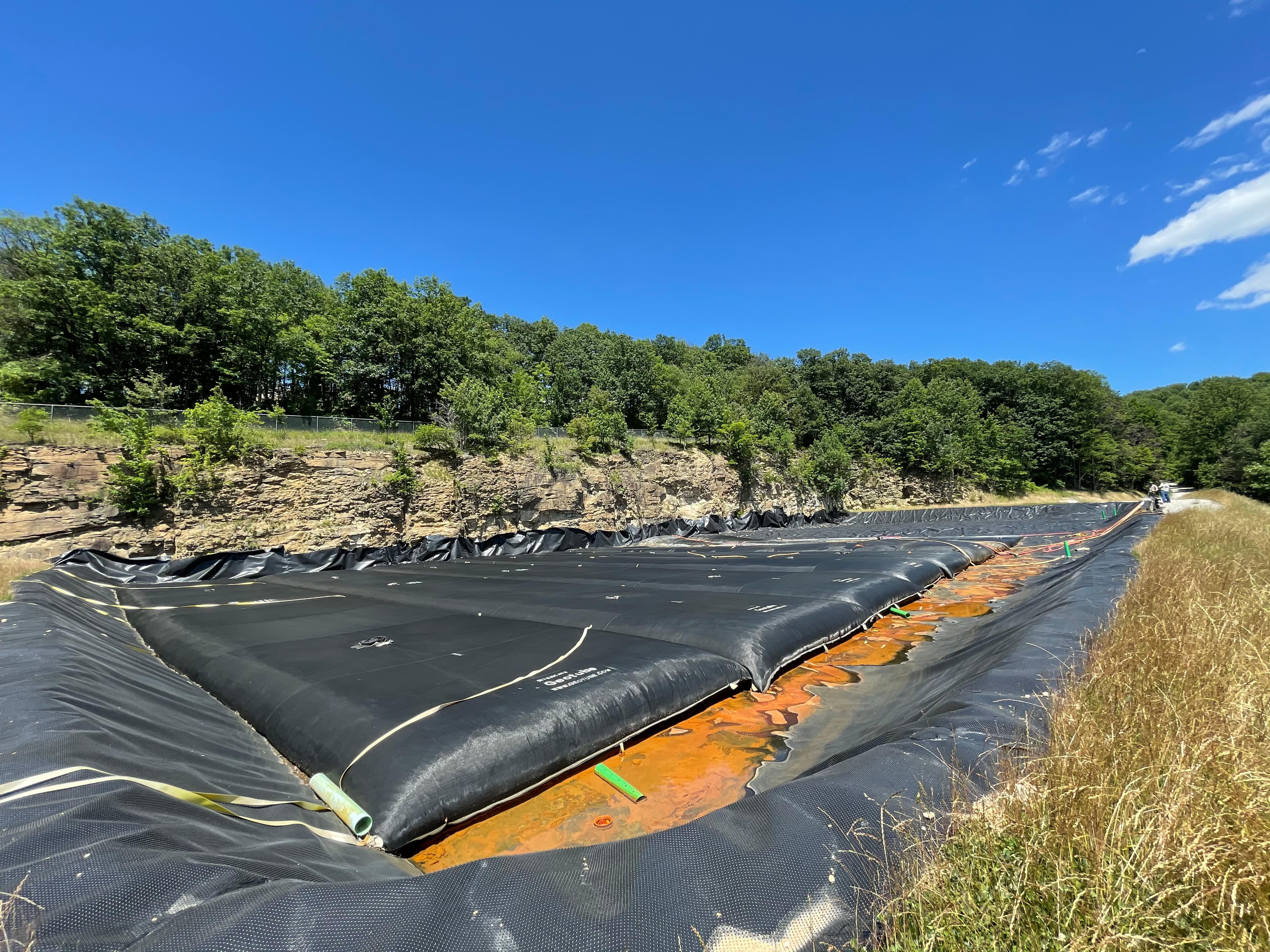
A groundbreaking solution was conceptualized, leveraging GEOTUBE® containers to dewater and encapsulate the dredged contaminated sediments within the port’s earthfill platform. After dewatering, these encapsulated sediments would form the base for the container storage area, resulting in substantial savings on imported fill and the cost of offsite disposal. A meticulous procedure was employed: 1. Dewatering tests: Preliminary dewatering tests on sediment samples confirmed that with the right chemical accelerant dosage, sediments could be effectively dewatered. This ensured stability under surcharge loads and the effluent’s environmental safety. 2. Platform construction: A primary containment dyke was built around the port earthfill platform area. Within this, a geotextile separator and a 0.5 m (1.64 ft) thick gravel drainage blanket were placed. This gravel layer served dual purposes: draining the effluent water from the dewatered sediments and draining the pore water during consolidation. 3. Dewatering process: The dewatering area was bifurcated into two cells using a secondary dyke. GEOTUBE dewatering containers were set up in the first cell and were filled with sediment slurry from the dredge at a rate of 1,400 m3/hr (49,440 ft3/hr). This process was then repeated for the second cell. After the dewatering operation, each cell was capped with a surcharge up to +7.0 m. 4. Water treatment: The effluent from the dewatering process underwent a pH adjustment for solid precipitation, neutralization, and filtration through activated carbon filters, and was then safely released back into the environment. 5. Final touches: Once the dewatering and consolidation processes were completed, the surcharge was removed down to a subgrade level, and the container terminal pavement was laid out. This innovative approach led to a substantial saving of approximately 400,000 m3 (14 million ft3) in imported fill costs, translating to a 20% to 30% reduction in the earthfill platform’s cost for the terminal.