Home
>
Container and Flatbed Unloading Process
>
Solmax’s safe work methods are based on a general risk assessment and are advisory in nature, provided for informational purposes only. They do not create legal obligations or guarantee safety. The client is solely responsible for assessing site-specific risks and implementing all necessary preventive, protective, and control measures in compliance with applicable laws. Solmax disclaims all liability for reliance on, alteration of, or failure to apply these methods and for any resulting measures.
Solmax geomembrane rolls are delivered via flatbed trucks, seaway, or intermodal containers and require controlled, well-planned unloading to protect both the crew and the product. Loads are securely fastened in accordance with Solmax's internal procedures and photographed before departure from our manufacturing sites.
These guidelines outline the minimum safety, equipment, and handling practices required to unload geomembrane rolls without damage and to prevent staff injuries.
The delivery address is managed by the client or contractor. Before any unloading activity begins, verify the following critical points:
The designated unloading area
The planned unloading method
The approved storage method for materials at the site
These points must be carefully assessed and planned to ensure a safe and efficient unloading process while preserving product quality.
A safe unloading operation begins with establishing control of the working zone. Unloading operations introduce movement hazards, suspended loads, and rolling risks; therefore, the perimeter must be stabilised before any equipment engages with the load.
Always report to the unloading zone identified by the site or project manager. Ensure the area is level, stable, and suitable for the required equipment. If it is not safe, stop work and escalate immediately.
A clearly marked safety perimeter must be created around the truck or container to prevent workers from entering the hazard zone while rolls are being handled.
All personnel involved must wear the safety equipment required on the site, or at minimum:
Safety helmet
Safety boots
Safety glasses
High-visibility clothing
Correct equipment selection is essential, as geomembrane rolls are heavy, cylindrical loads that behave unpredictably if unsupported. Each roll weighs approximately 2 tons, and the slings must be positioned correctly to maintain stability, ensure even load distribution, and prevent pendular oscillations during lifting.
Equipment selected must have a safe working load (SWL) in excess of the maximum roll weight and hold a valid lifting certificate.
This section outlines the minimum equipment expectations and procedural controls required to meet site risk-prevention requirements. Consult the Solmax Sling Procedures Manual if necessary.
Approved equipment includes:
Forklift
Front-end loader
Backhoe
Excavator
The construction or site manager determines the appropriate option based on availability and site conditions.
Use controlled procedures for lifting, sling removal, lowering, and placement
Prevent impact damage and maintain product quality throughout the unloading process
When the safety perimeter is installed and the equipment is positioned correctly, unloading may begin. The objective is to remove each roll in a stable, controlled manner, while maintaining full control over the suspended load.
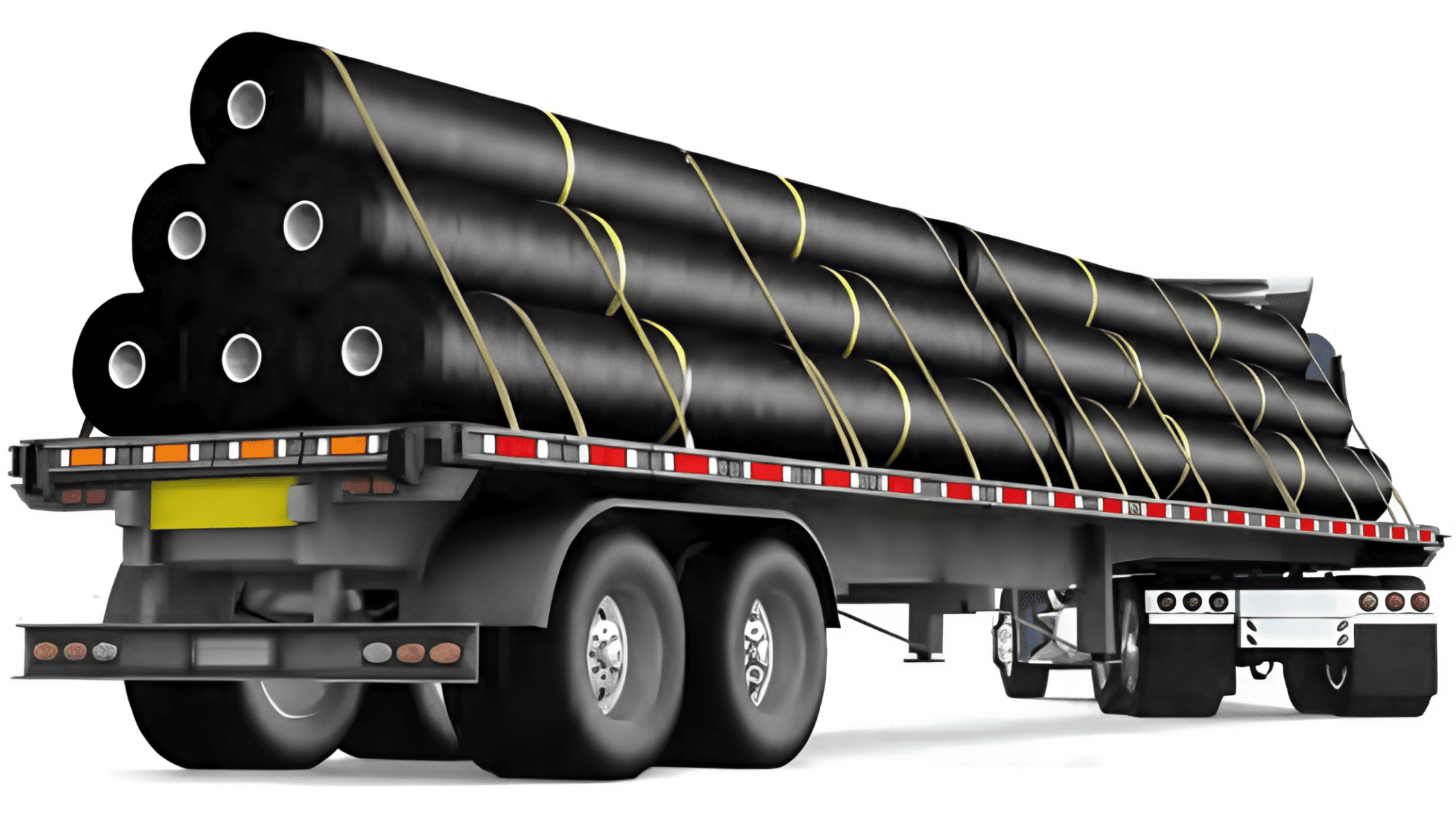
Verify all sling points are properly secured before applying tension
Clear the unloading area of personnel, tools, and obstacles
Maintain a designated safety zone visible to the equipment operator
Use a guide cable (tag line) if required to stabilize and orient the roll
Lift slowly and smoothly in a controlled, steady motion
Attach the two loose slings positioned on top of the roll and connect securely to the lifting equipment
Raise the roll until it clears the flatbed and can be moved safely to the designated placement area
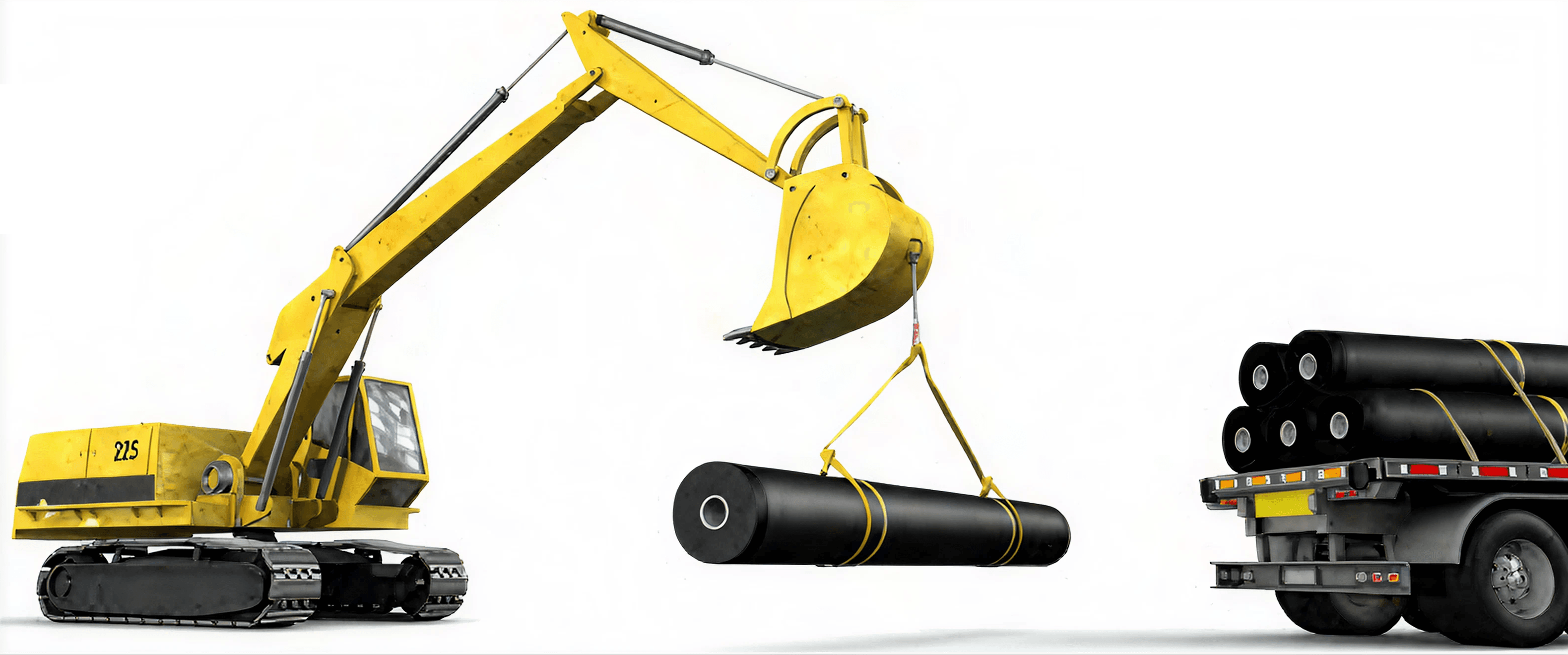
Before loosening straps, physically secure the rolls using the available lifting equipment to prevent them from falling.
Loosen only the straps on the specific tier being unloaded
Release straps roll by roll as each roll is lifted
Never loosen straps in advance
When the truck driver handles the straps, ensure the load is secured to prevent any possibility of rolls shifting or falling
Any climbing activity intended to access the lifting slings on the rolls must be performed safely, in accordance with the recommendations in effect at the job site and in full compliance with all applicable regulatory requirements. A preliminary assessment of the condition of the rolls (stability, surface condition, height) and environmental conditions (rain, snow, ice, wind, etc.) must be conducted to ensure that the chosen access method remains safe and appropriate given the circumstances.
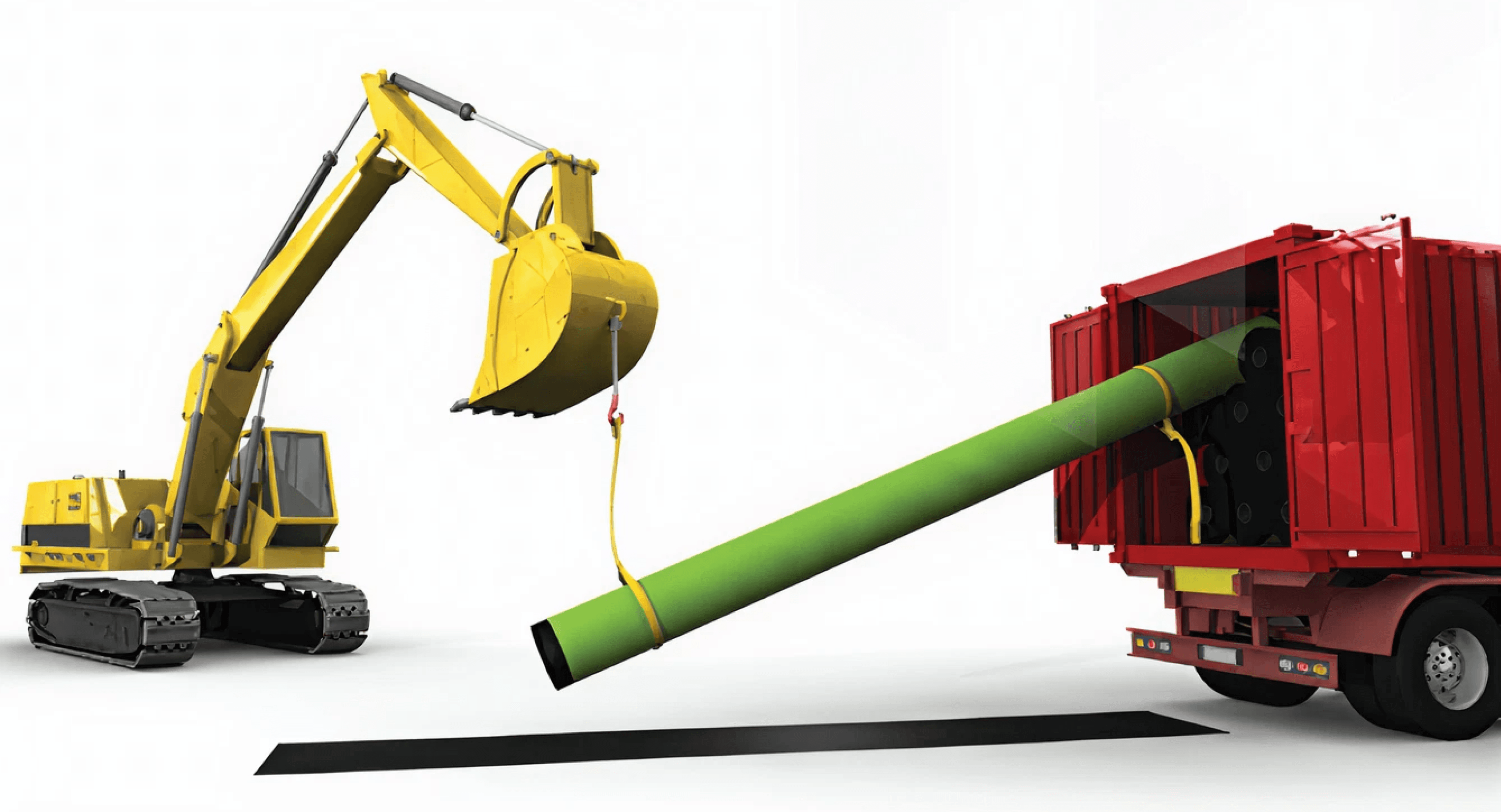
Attach the loose sling positioned on top of the roll and connect securely to the lifting equipment
Personnel shall not remain in the container when the rolls are being moved
Pull the roll slowly until it slides out of the container
Place the roll on the forks of a forklift with the required capacity
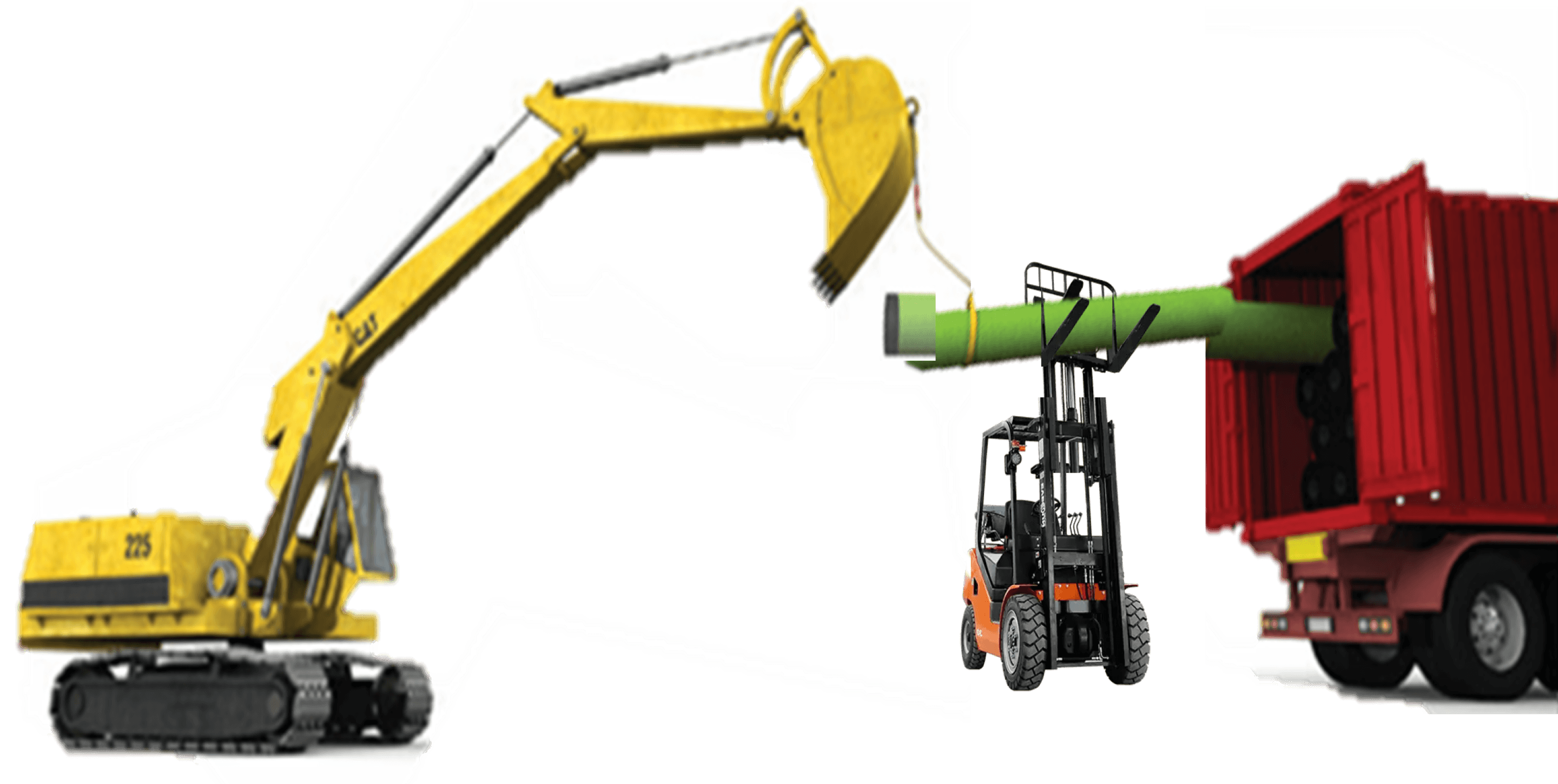
Stabilize the roll on the ground or on a protective base with one end still in the container
Remove pulling sling and adjust lifting sling to required position if necessary
Lift slowly and smoothly until the roll is completely out of the container
After the roll is safely removed, it must be transported in a controlled manner, avoiding collision, excessive vibration, or sudden or uncontrolled movement.
The slings are intended solely for unloading; they are neither designed nor approved for carrying rolls over long distances. Dynamic loads generated by ground irregularities during extended movement can exceed the sling’s maximum allowable strength and may result in failure.
Proper routing and adequate spacing during transport are essential to prevent damage prior to installation.
Verify route conditions: ensure the path to the storage area is stable, level, and free of obstacles or ground hazards
Maintain a pedestrian-free transport path
Use a flagman if needed; the flagman must maintain continuous visual contact with the operator while remaining outside the vehicle and load “line of fire”
Prohibit walking beside moving loads
Specific recommendation for storage based on product type:
Geosynthetic storage recommendations | Solmax
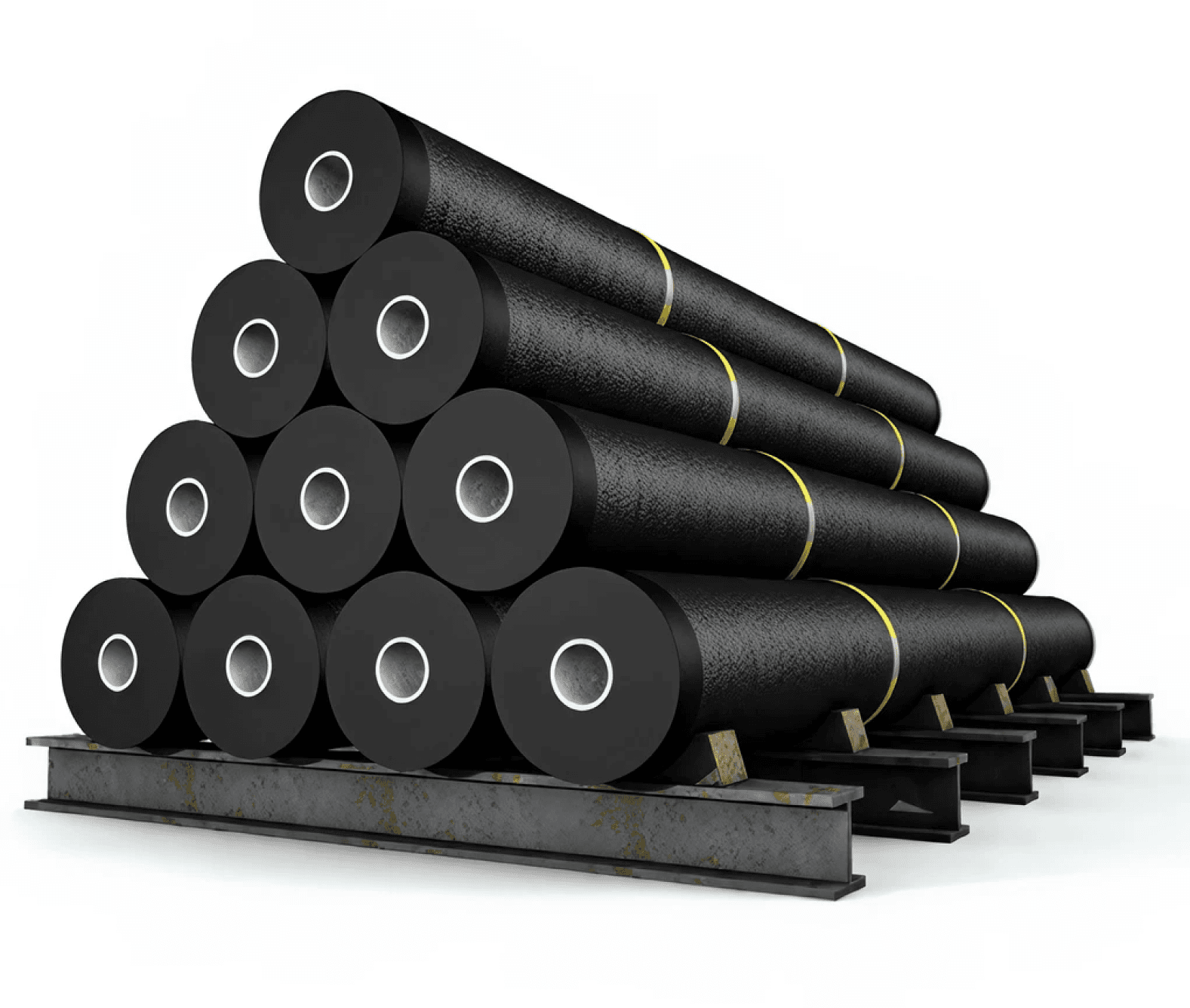
PE Smooth: up to 4 rolls high
PE Textured: up to 3 rolls high
These guidelines represent general recommendations; however, site-specific conditions may limit the safe number of tiers. The pile height must never exceed what is reasonable for local safety conditions, including ground stability, slope, equipment access, and weather exposure.
Place all rolls on a raised, stable, and suitable surface to prevent moisture, scratches, and ground contamination.
Apply chocks to the bottom tier rolls using high-visibility chocks (orange or yellow recommended)
Do not walk between unsecured rolls
Build subsequent tiers by nesting rolls between the two adjacent rolls of the tier below
Upper tiers do not require chocks; stability is achieved by the interlocked arrangement
Fully complete and secure the bottom tier before placing rolls on the next tier
Respect maximum stacking heights to maintain product integrity and ensure safe handling during future installation
Two‑level storage platforms allow slings to be removed directly from ground level. This method is recommended because it eliminates the need to climb onto the stored materials and reduces exposure to fall hazards.
However, several conditions can increase the risk level:
Rain, moisture, or debris carried on footwear can make rolls and walking surfaces slippery.
Repeated cycles of heat and cold can cause gaps to form between rolls, which may lead to unwanted movement or instability of stacked materials.
Because these factors can vary from one task to another, each work situation must be observed and evaluated by a competent person to ensure that conditions are safe and that appropriate controls are in place before beginning the activity.