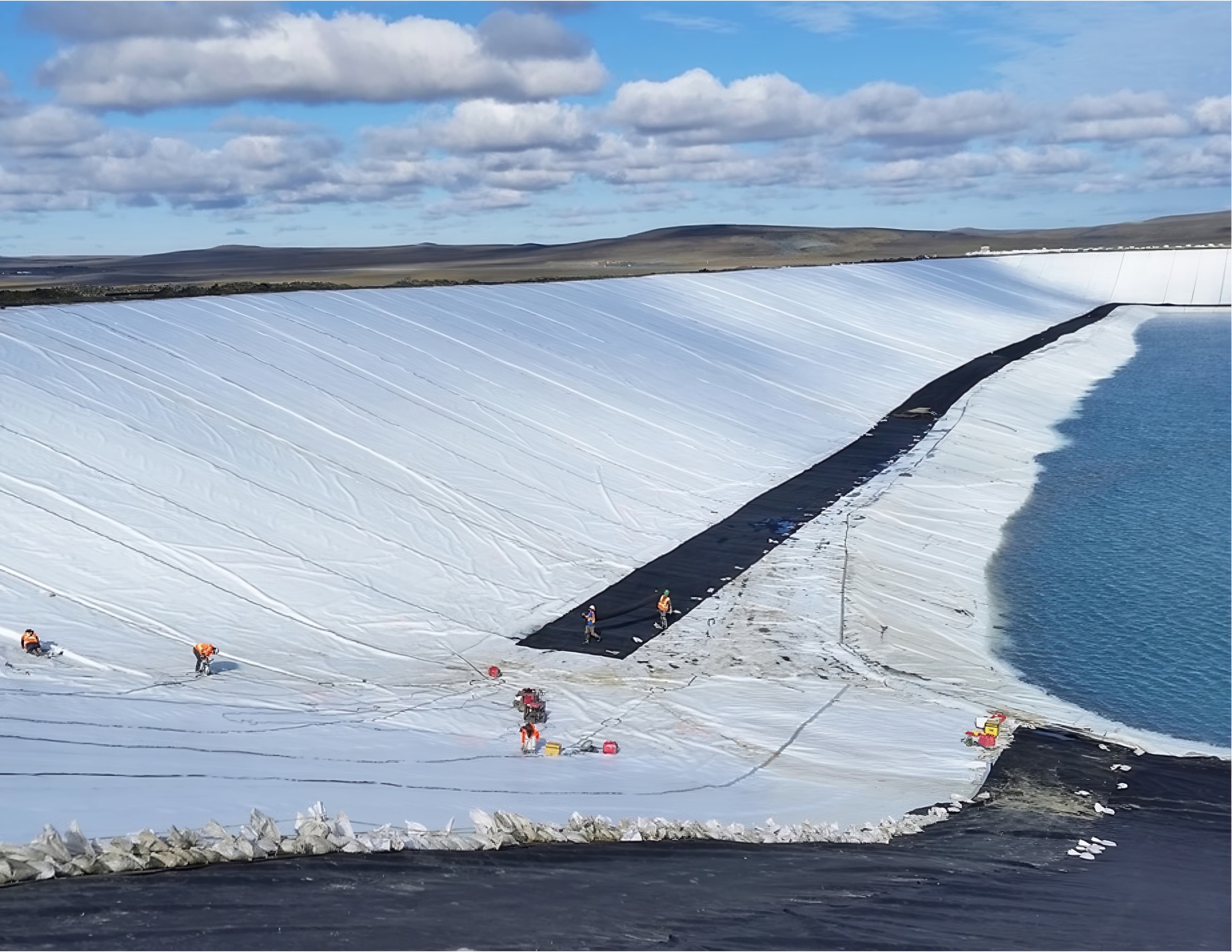
Do you care if it leaks?
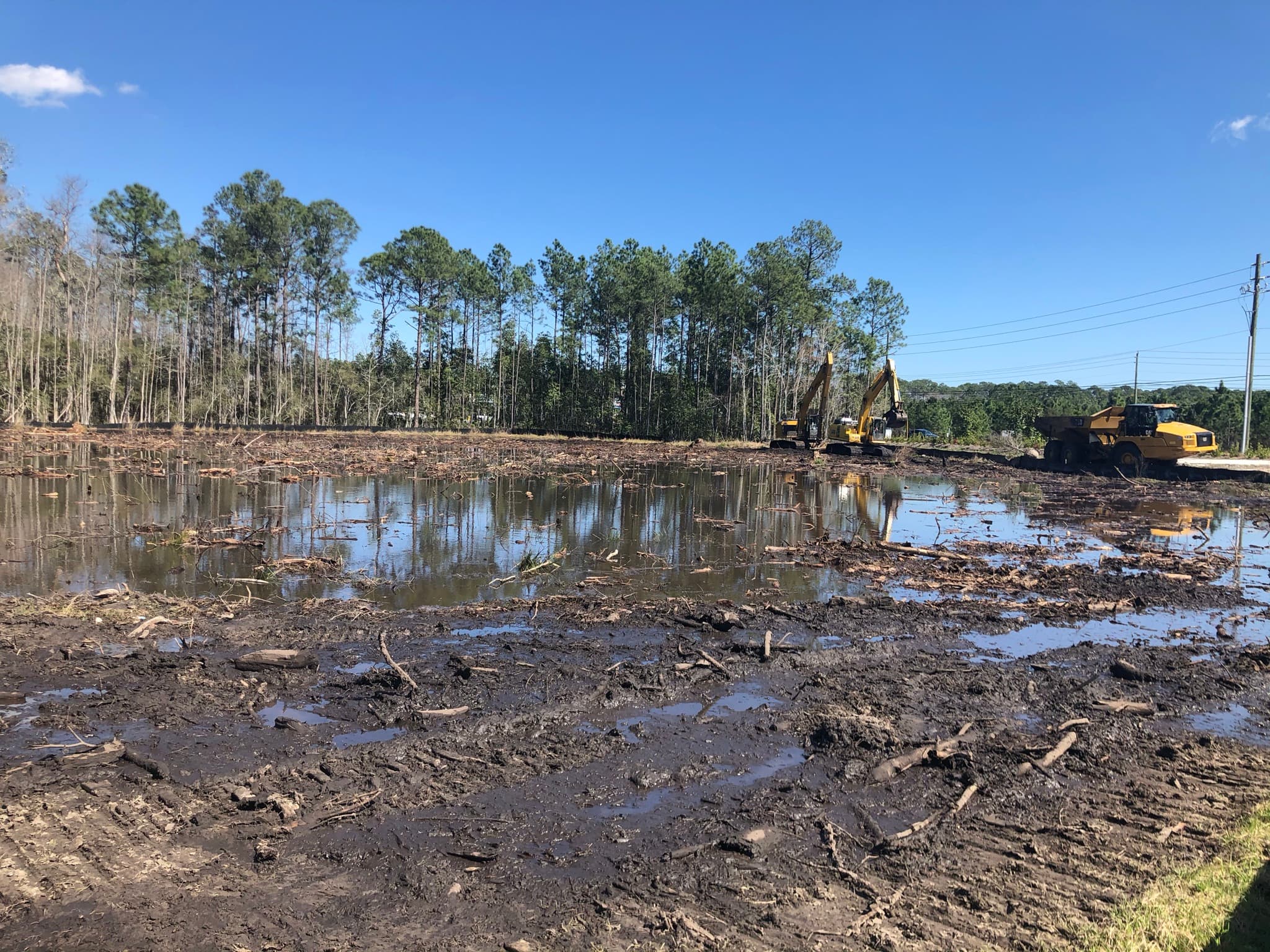
When an embankment settles unexpectedly, it can result in project instability, dangerous working conditions, and significant scheduling delays. Projects built on weak subgrades often experience settlement, instability and long-term performance issues if the soil is not properly stabilized. Whether constructing roadways, embankments, landfills or working platforms, understanding soft soil behavior is critical to designing reliable and durable infrastructure.
Soft soil stabilization focuses on improving load-bearing capacity, separation, controlling deformation and managing moisture. Modern geosynthetic solutions allow engineers to stabilize and reinforce existing on-site soils, reducing construction costs and time, while minimizing environmental disruption compared to traditional undercutting methods.
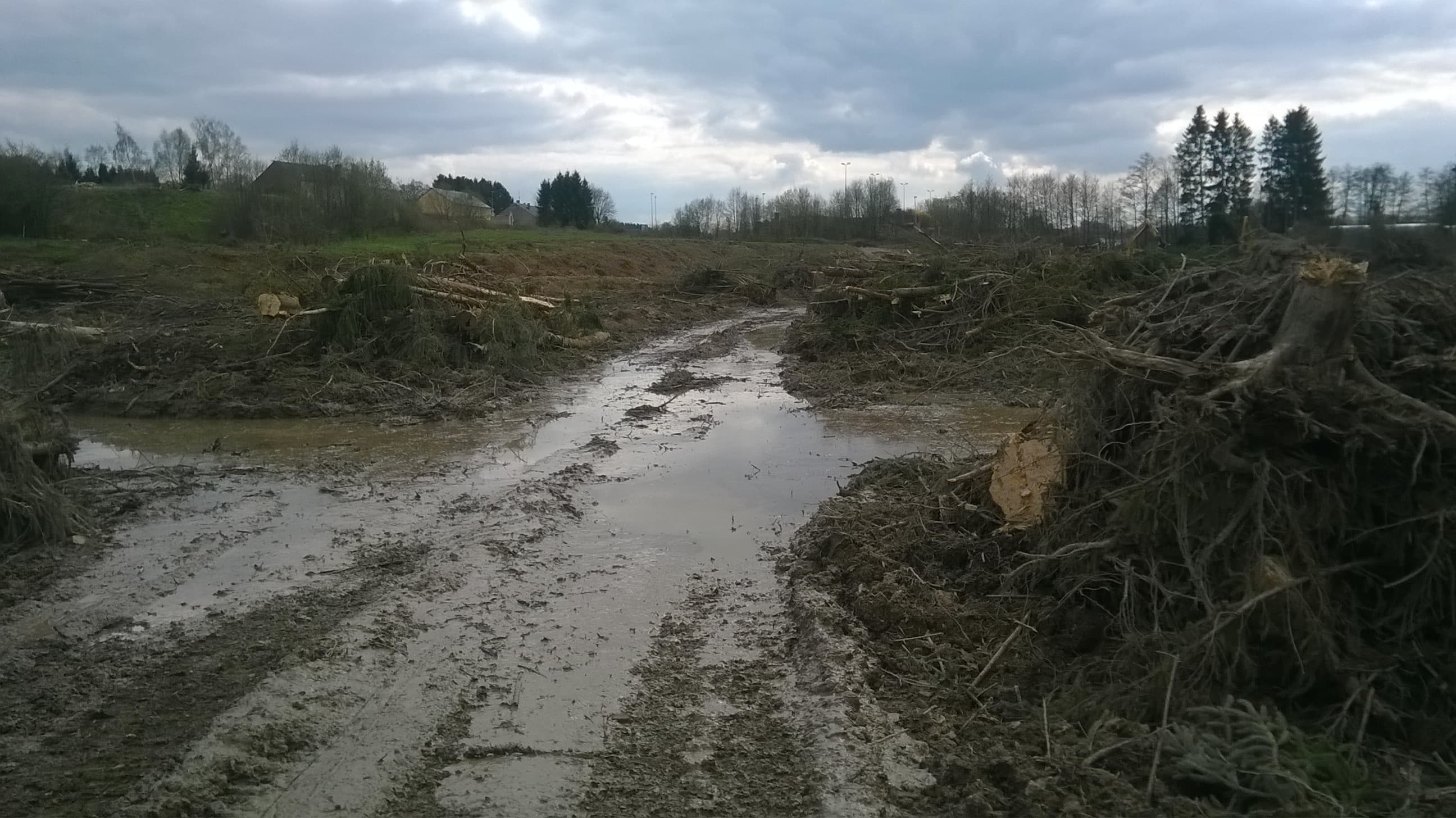
Soft soils are generally characterized by high water content, low shear strength, high compressibility and limited ability to support structural loads. The elevated moisture levels typically found in soft soil reduce internal friction, which cause soil to deform easily under pressure.
Soft soil is typically composed of high-plasticity clays that consolidate slowly, saturated silts that lose strength when exposed to water and organic soils such as peats that exhibit extremely low bearing capacity. Loose dredge deposits found in reclaimed or coastal areas also fall into this category. The defining characteristic of soft soil is its inability to maintain stability under load without excessive rutting, settlement or lateral displacement. When loads are applied, pore water pressure may increase, further reducing effective stress and apparent soil strength.
The primary risks associated with construction over soft soil include excessive total and differential settlement, lateral spreading of embankments, bearing capacity failure, and long-term creep deformation. These risks are directly related to the soil’s low strength and high compressibility.
For example, when constructing a roadway over soft clay, the weight of the fill compresses the underlying soil and triggers consolidation. If this settlement occurs unevenly, pavement cracking and structural distress can follow. In embankment construction, weak foundation soils may fail in shear, resulting in slope instability. Over time, ongoing deformation can compromise structural performance, resulting in increased maintenance requirements or failure.
Traditional solutions often involve removing and replacing weak soil or installing deep foundation systems. While effective, these methods can increase construction time, cost and environmental impact. In many cases, reinforcing the soil in place with a geosynthetic offers a more efficient alternative.
Rather than replacing weak soils entirely, engineers increasingly use geotextiles to improve the performance of the existing subgrade soils. Geotextiles can provide mechanical reinforcement, separation and hydraulic control. Instead of attempting to eliminate soft soil, they enhance its performance by improving load distribution, increasing soil interaction and reducing pore water pressure.
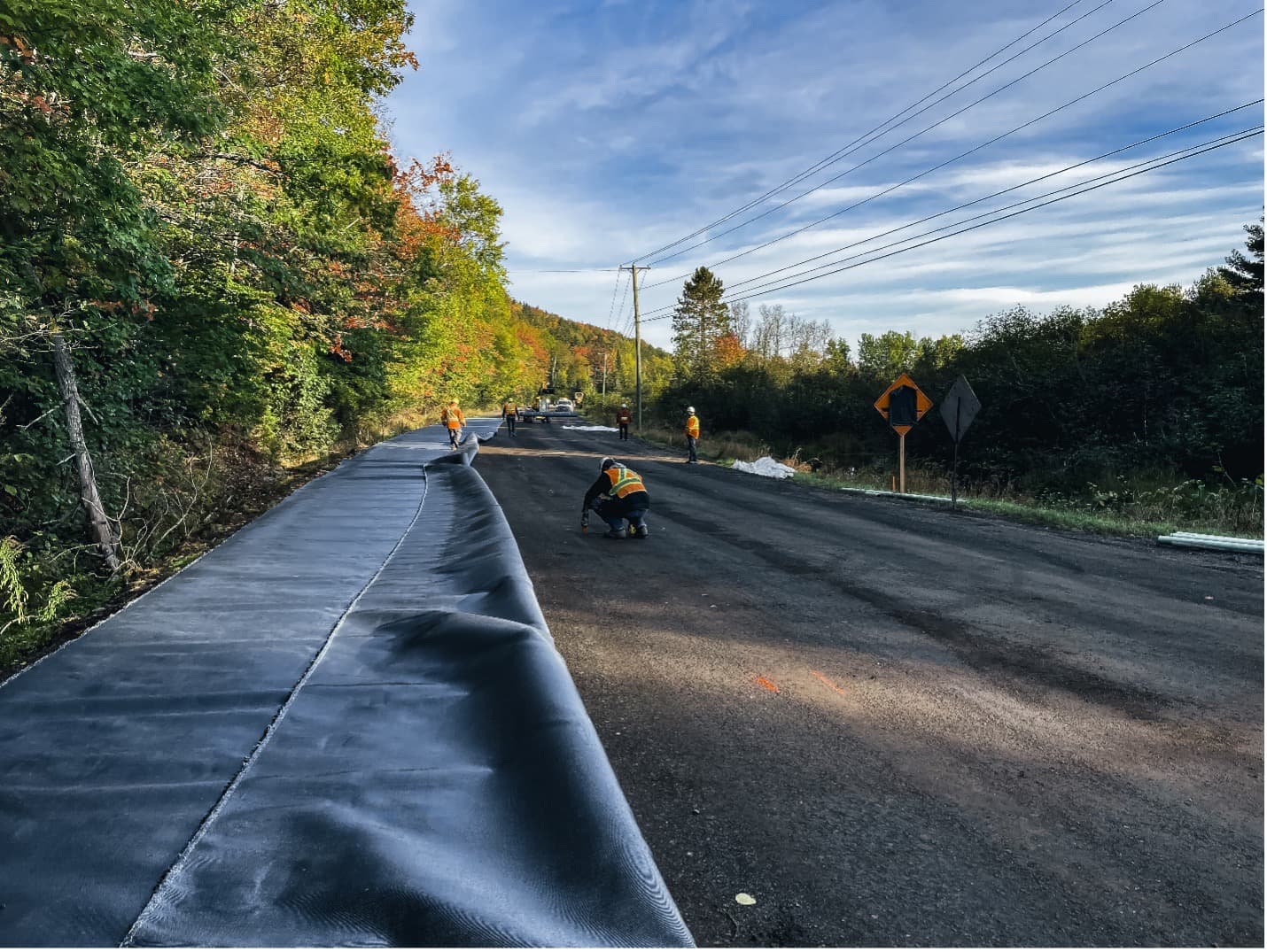
Woven and nonwoven geotextiles are widely used in soft soil stabilization applications. Installed between weak subgrade and structural fill, they perform two essential functions. First, they provide separation, preventing the intermixing of aggregate and soft soil. Second, they distribute loads across a broader area, reducing stress concentrations and limiting differential settlement.
Pore Size Distribution is a critical parameter/specification in geotextile performance because it governs the ability of the material to provide effective separation across a range of soil particle sizes between the subgrade and the aggregate base layer. Even a small amount of fines migration from the subgrade into the base course can significantly reduce the structural capacity of the roadway. Research by Jorenby and Hicks (1986) demonstrated that at a roadway base course section can experience up to a 50 percent decrease in resilient modulus with only 8 percent fines contamination. The double-layer construction of MIRAFI® RSi-Series geotextiles helps to address this challenge by providing a greater distribution of finer pore size openings to stop the migration of very fine soil particles compared to traditional single-layer geotextiles that have a more singular/narrow distribution of pore size openings that easily allows soil migration and base contamination. This unique double-layer construction improves the confinement of fine soil particles while maintaining filtration performance, helping prevent subgrade fines from migrating into the aggregate layer, reducing pore water pressure buildup and preserving the long-term strength of the structural section.
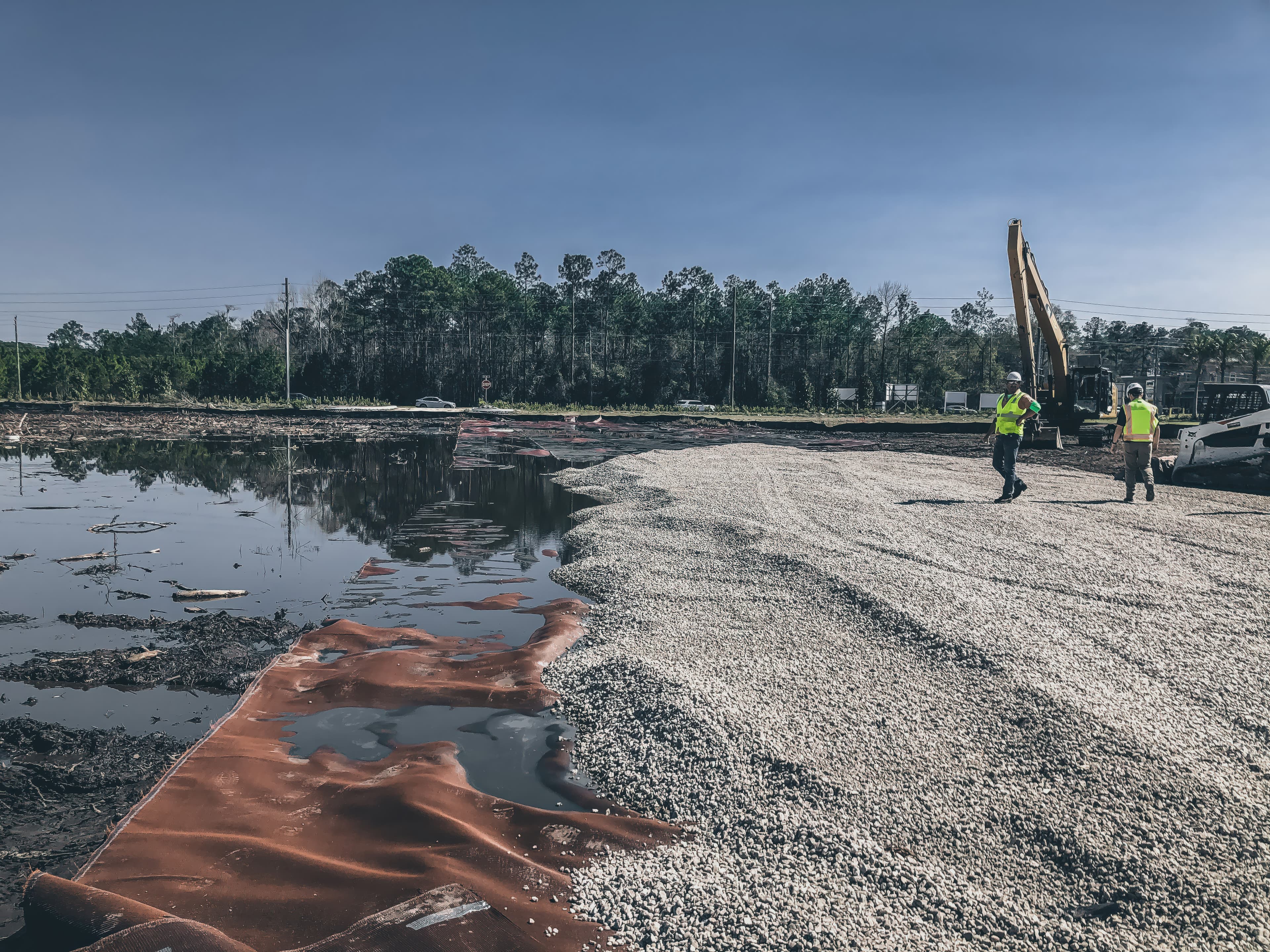
Active moisture management is another critical factor in maintaining the long-term performance of roadway structural sections built on weak subgrades. Excess moisture within the soil can reduce effective stress, increase pore water pressure, reduce soil shear strength, and accelerate deformation under repeated traffic loading. In many roadway and embankment applications, pore water moving through the soil to the aggregate base course can also mobilize fine particles, increasing the potential for pumping and contamination of the aggregate base layer. Geotextiles designed with both reinforcement and hydraulic functionality can help address these challenges by allowing water to move through the system while maintaining soil stability. MIRAFI H₂Ri high-performance woven geotextiles are engineered to provide reinforcement and active moisture management, helping manage water movement within the soil profile while maintaining separation and filtration between the subgrade and aggregate layers. By facilitating controlled water flow and reducing the buildup of excess pore pressures, these materials help preserve the strength of the structural section and improve the long-term performance of roads and embankments constructed on moisture-sensitive soils.
For additional information on this topic, please see our brochure on the MIRAFI RSi-Series.
Geogrids are commonly used in roadway and embankment construction to improve soil confinement and increase bearing capacity. When aggregate is placed over a geogrid, the interaction between the aggregate particles and the grid apertures creates a mechanically stabilized layer. This confinement effect helps distribute loads more efficiently and reduces rutting in the structural section. MIRAFI geogrids, for example, provide tensile reinforcement that enhances the performance of aggregate layers constructed over weak or compressible soils.
However, geogrid systems typically require an additional nonwoven geotextile separator to prevent subgrade fines from migrating into the aggregate base layer. Without this separation layer, contamination of the base course can occur, reducing the structural capacity of the roadway over time. This means that geogrid installations generally involve placing two geosynthetic layers, one for reinforcement and another for separation and filtration. Unfortunately, when geogrid is placed over a low modulus/high elongation nonwoven geotextile, its interlock and stiffness mobilization are significantly reduced and a slide plane between the geogrid/geotextile interface is introduced – reducing performance.
Geotextiles such as MIRAFI RSi-Series and MIRAFI H₂Ri provide an alternative approach by integrating several stabilization functions into a single material. These products combine soil reinforcement, separation, filtration and confinement within one geosynthetic layer while also helping manage moisture movement within the soil profile. By providing these multiple functions simultaneously, they can improve the performance of roads and working platforms constructed over soft or moisture-sensitive subgrades. The use of a single product can also simplify installation by reducing material handling, laydown area and construction time compared with systems that require both a geogrid and a separate geotextile.
Among these solutions, MIRAFI H₂Ri geotextiles are specifically engineered to address projects where moisture conditions play a major role in soil stability. In environments with expansive clays, high groundwater levels or freeze–thaw cycles, the ability to manage water movement within the soil structure becomes critical for maintaining long-term roadway performance. By combining reinforcement with enhanced hydraulic functionality, these materials help maintain structural stability while supporting the durability of transportation infrastructure built over challenging soils.
Soft soil poses significant engineering challenges, yet successful construction is still achievable. By comprehending soil behavior and implementing suitable geosynthetic reinforcement techniques, soft soils can effectively support long-term infrastructure. Geosynthetic reinforcement enhances load distribution, boosts soil confinement, and regulates hydraulic conditions without the need for major soil excavation. Through careful design and assessment, soft soil stabilization transforms unstable ground into a dependable foundation that can support long-term infrastructure performance.
Jorenby, B. N., & Hicks, R. G. (1988). Base Course Contamination Limits. International Journal of Rock Mechanics and Mining Sciences & Geomechanics Abstracts, 25(2), 86–101.