Managing differential settlement on soft landfill soils with MIRAFI
MIRAFI® RS380i stabilized pavements at FLETC Charleston over soft marine clays and landfill soils, reducing settlement risk while improving constructability and lowering costs.

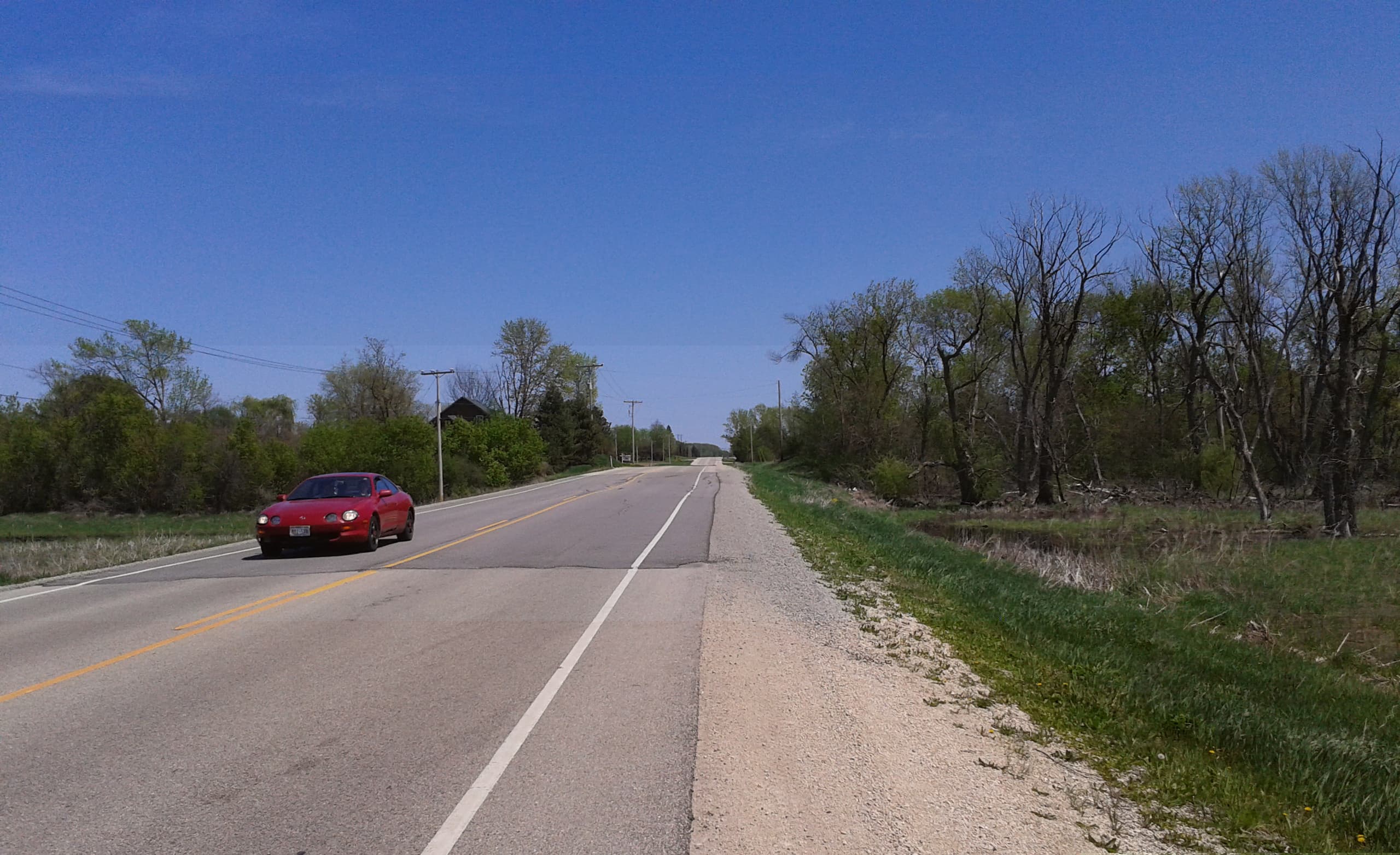
Wisconsin Highway 106 (STH-106) underwent reconstruction over a marsh area but soon faced problems with uneven settling. The Jefferson County Highway Department sought a quick reconstruction method that would limit the need to remove large volumes of wet, organic soil while ensuring a stable base for the flexible pavement road. The solution needed to be sturdy enough to prevent uneven settling along the road, maintaining a smooth and ridable surface.
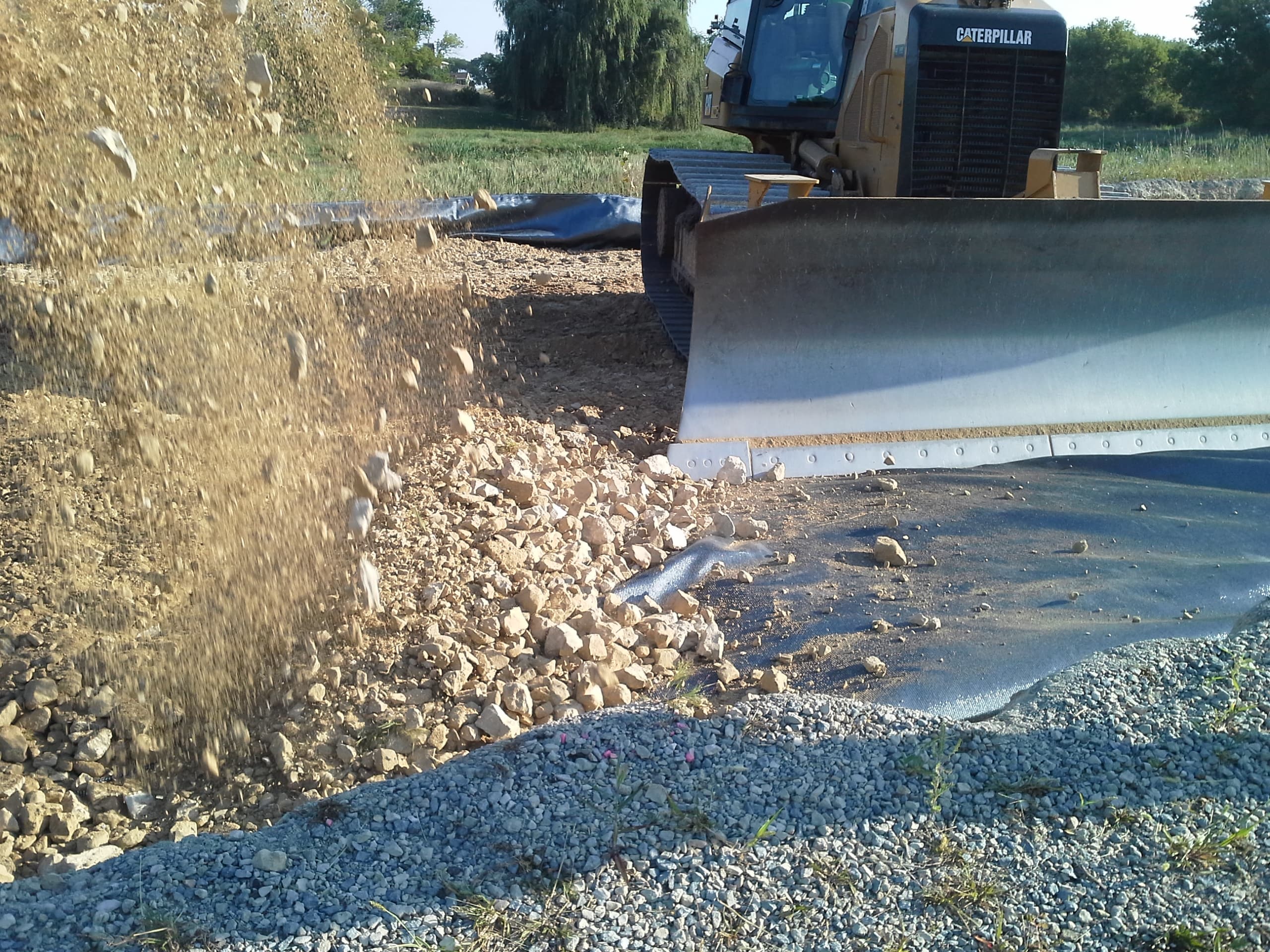
The main challenge was dealing with wet, saturated silt and peat deposits, extending over 30 feet (9.14 m) beneath the existing pavement. The solution involved a robust construction approach using a single layer of MIRAFI® H₂Ri geosynthetic material placed directly on the subgrade. This was followed by a 15-in (38 cm) layer of crushed stone, a layer of MIRAFI BXG110 biaxial geogrid, and another 15-in (38 cm) layer of crushed stone. The MIRAFI H₂Ri reinforcement and moisture management created a "raft"-like platform for the road, improving drainage, particularly during spring thaws and heavy rains.
The Jefferson County Highway Department was satisfied with the installation process. The multi-layer geosynthetic reinforcement provided a strong, stable base, allowing for smooth paving operations. This robust system reduced the need for subgrade removal to just 30 in (76 cm), significantly less than the 5-8 ft (1.52-2.44 m or more) that might have been necessary given the soil conditions. The MIRAFI H₂Ri not only saved costs but also allowed for quicker installation.

The multi-layer geosynthetic reinforcement provided a strong, stable base, allowing for smooth paving operations
Managing differential settlement on soft landfill soils with MIRAFI
MIRAFI® RS380i stabilized pavements at FLETC Charleston over soft marine clays and landfill soils, reducing settlement risk while improving constructability and lowering costs.
Geosynthetic reinforcement enables vertical landfill expansion on soft soils
Cherry Island Landfill needed more disposal capacity on a constrained site underlain by weak, compressible soils. Solmax geosynthetic reinforcement helped make vertical expansion possible and delivered more than 20 years of additional disposal life.
Texas retailer chooses modern engineering solutions
A Texas fast-food build used FABRINET® TP instead of aggregate for subsurface drainage. The solution reduced excavation, cut costs by 54 percent, sped up installation, and minimized environmental disruption.