Overview
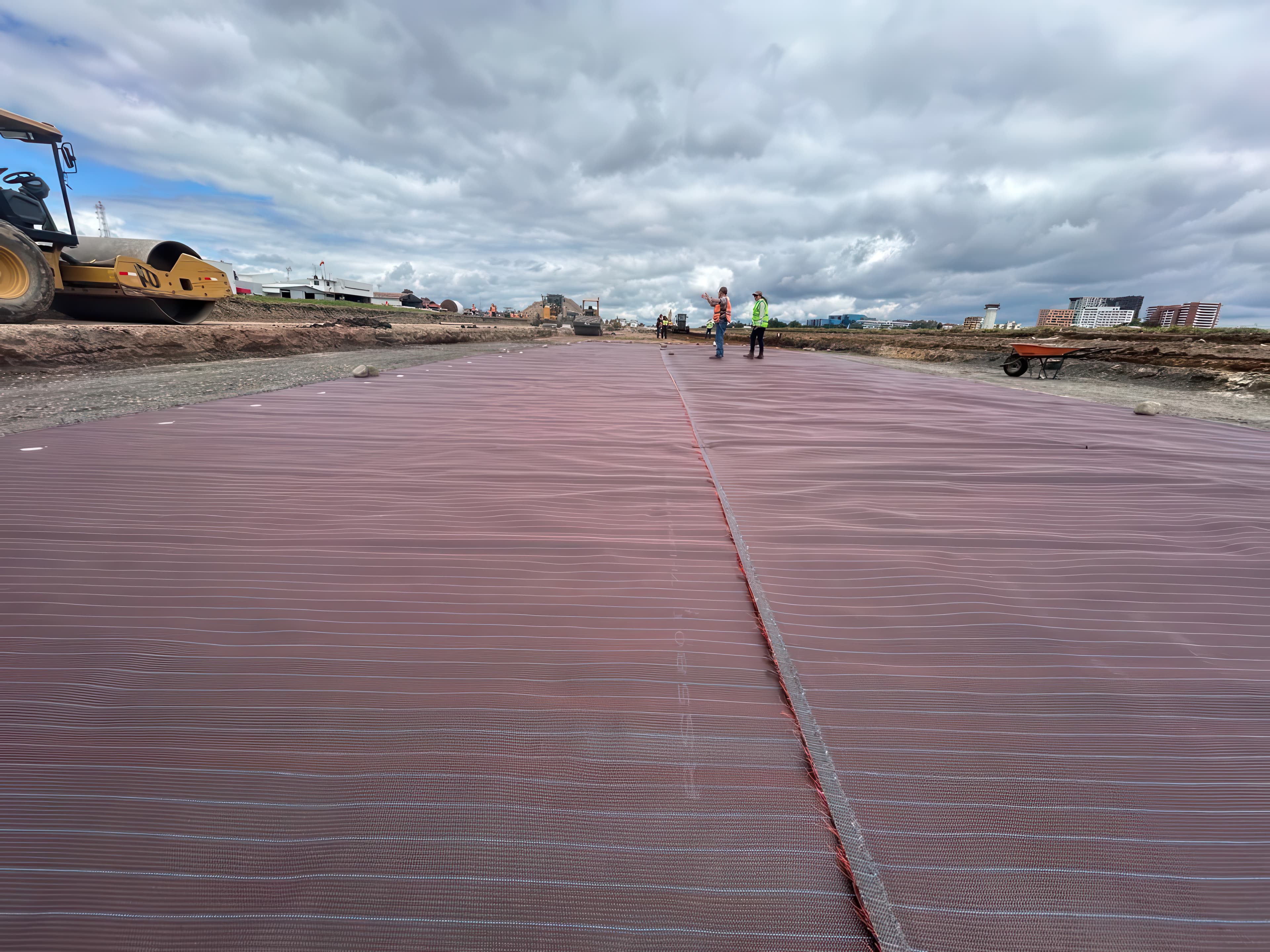
A taxiway at La Aurora International Airport in Guatemala City required stabilization due to challenging subgrade conditions. The section of pavement was 492 ft (150 m) in length and 72 ft (22 m) in width. Challenging soil conditions posed a risk to the long-term performance and safety of the pavement structure. To address these concerns, the project team implemented a geotechnical solution using MIRAFI® RS580i, a high-modulus woven geotextile engineered to provide superior reinforcement. By integrating this material into the subgrade, the team aimed to establish a stable and uniform working platform that could effectively distribute loads, minimize deformation, and enhance the durability of the pavement under continuous aircraft traffic.
Challenge
The project faced several significant challenges, beginning with the subgrade’s composition. The existing soil was classified as A-7-6 high-plasticity clay, which is known to experience significant volumetric changes and instability under dynamic loading conditions. This made the subgrade highly susceptible to differential settlement and deformation, which could compromise the structural integrity of the pavement over time.
In addition to the geotechnical difficulties, the construction had to be carried out on an active airport taxiway. This operational constraint required the team to implement solutions that minimized disruption to airport activities while maintaining safety and efficiency. The need for rapid execution and reliable performance added pressure to select materials and methods that could deliver consistent results under tight timelines.
Without proper reinforcement, the unstable areas of the subgrade would likely require frequent excavation and replacement. This would not only increase material and labor costs but also lead to delays and potential safety risks. Therefore, a robust and sustainable solution was essential to ensure long-term performance and cost-effectiveness.
Solution
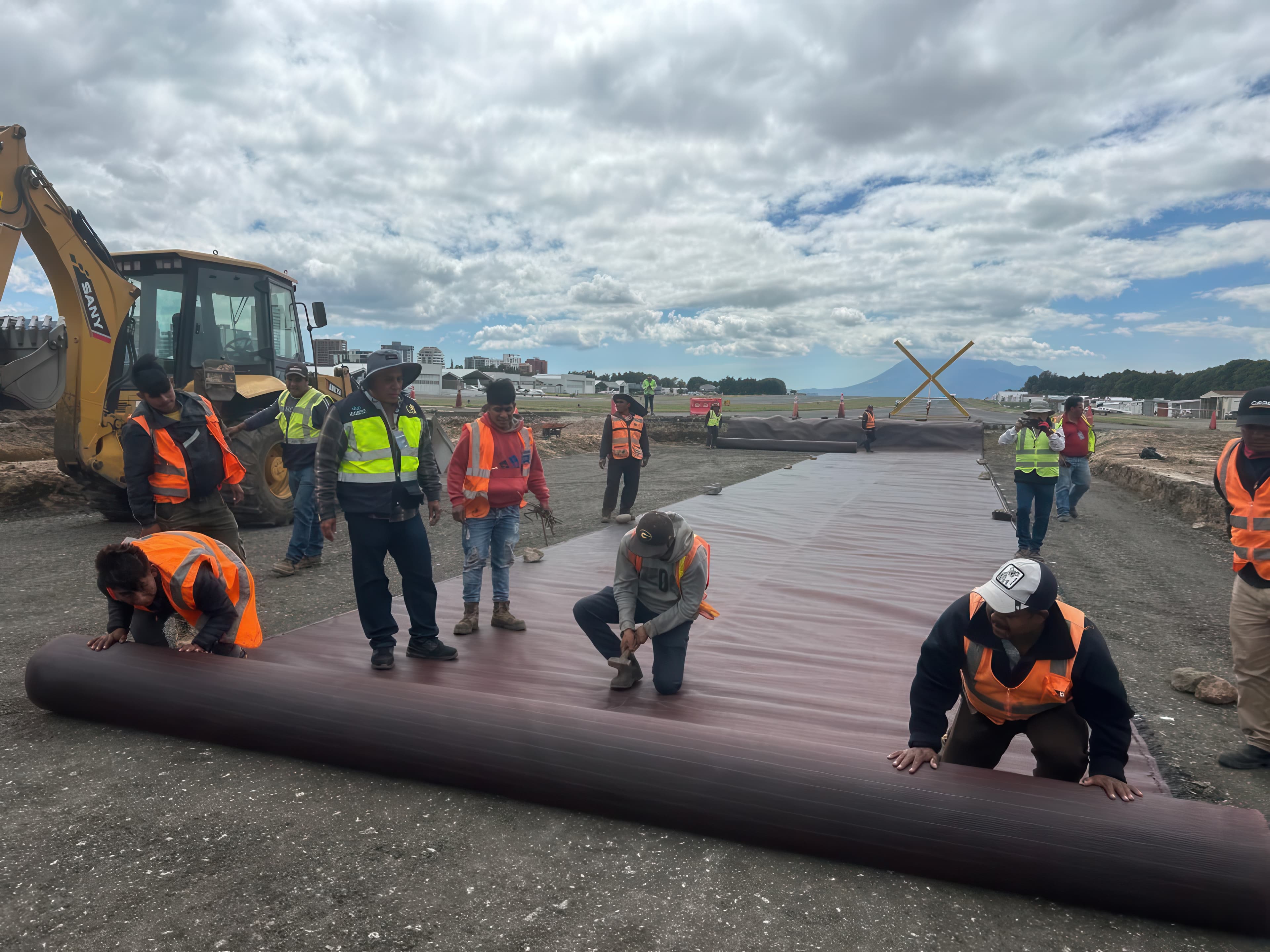
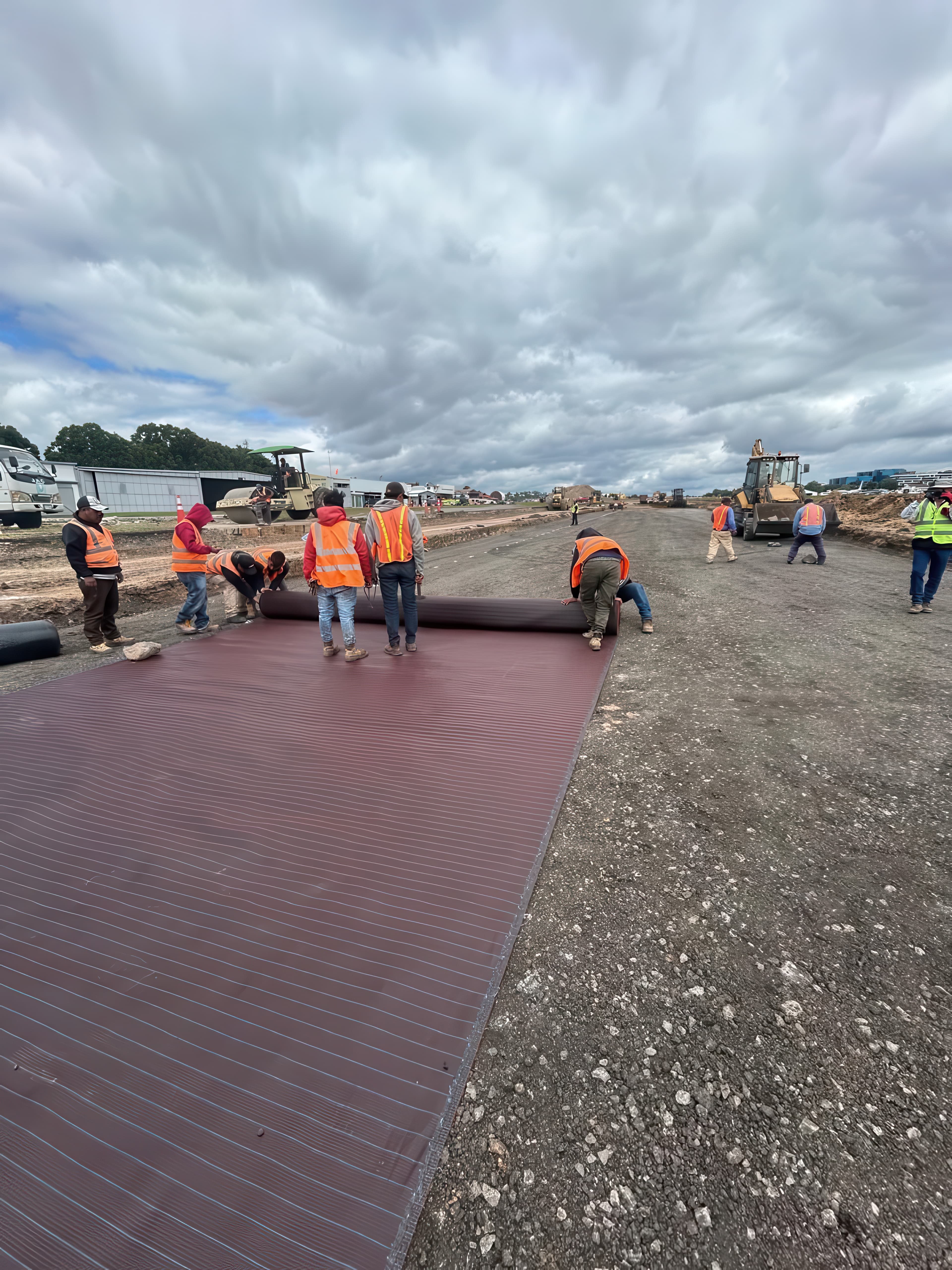
To address the subgrade instability, the construction team began by placing and compacting a 2 in. (5 cm) layer of Reclaimed Asphalt Pavement (RAP). This initial layer helped eliminate localized instabilities and provided a smoother surface for subsequent reinforcement. The high-modulus woven geotextile MIRAFI RS580i was tensioned and installed directly over the prepared subgrade. This geosynthetic was selected for its ability to distribute loads evenly and resist deformation, making it ideal for high-traffic areas like airport taxiways.
Fill layers were then placed in stages to activate the geotextile’s stabilizing properties. The first lift, measuring 10 in. (25 cm), allowed the geotextile to begin to tension and reinforce the structure. A second 10 in. (25 cm) lift followed, which further improved uniformity and reduced deformation across the surface. In areas identified as particularly vulnerable, MIRAFI BXG120 geogrid was added to provide additional rigidity and support.