Overview
Bad Wünnenberg is a town in North Rhine-Westphalia, Germany, located on the river Aabach, approximately 20 km (12.4 mi) south of Paderborn. The new section of road, B480n, connects to the Aftetal bridge. This bridge is an 800 m (2,625 ft) long steel composite structure that spans the Afte Valley at a height of almost 70 m (230 ft). It serves as the central feature of the Bad Wünnenberg bypass.
To withstand high traffic loads, Federal German roads require good quality foundations. However, a section of the B480n Bad Wünnenberg Bypass between the Rhenish Slate Mountains and the Münsterländer Chalk Basin, where the B480n passes over a wide chalk karst area, did not meet this requirement. Underground cavities can rise to the ground surface, especially in cuttings, resulting in local deformations and subsidence.
Challenge
To account for the possibility of ground subsidence along the planned route, basal geotextile reinforcement was applied as a form of insurance against potential future subsidence. If foundation voids were to arise beneath the road structure in the future, the geotextile reinforcement would span across any formed depressions, thus maintaining the road in a serviceable condition.
Along the planned route of the road bypass, its alignment changes from cuttings to embankment fills up to 7 m (23 ft) in height. In the cuttings, where most subsidence problems are expected to occur, fill heights of 1.1 m (3.6 ft) were used. Based on the results of the ground survey and geotechnical analysis, it was found that initial void diameters of 1.5 m (4.9 ft) could be expected in the fissured foundation stratum beneath the roadway alignment. These voids would result in potential vertical subsidence beneath the earth fills.
Solution
In the cutting sections where 1.1 m (3.6 ft) of earth fill was used, an analysis using the RAFAEL subsidence method showed that the expected subsidence diameter at pavement surface would be 1.7 m (5.6 ft). In the embankment sections, the same analysis showed the expected subsidence diameter at pavement surface to range up to 3 m (9.8 ft), depending on embankment height. The resulting maximum allowable geotextile reinforcement strains ranged from 2% to 6% depending on the height of earth fill on the basal geotextile reinforcement.
The required basal reinforcement properties were determined in accordance with EBGEO (2011). This resulted in a design tensile strength of at least 300 kN/m (171 lb/ft) over a 100-year design life at the required strain levels. MIRAFI® Geolon PET 800 geotextile reinforcement, with an initial tensile strength of 800 kN/m (456 lb/ft), fulfilled the long-term design requirements and was subsequently used for the basal reinforcement.
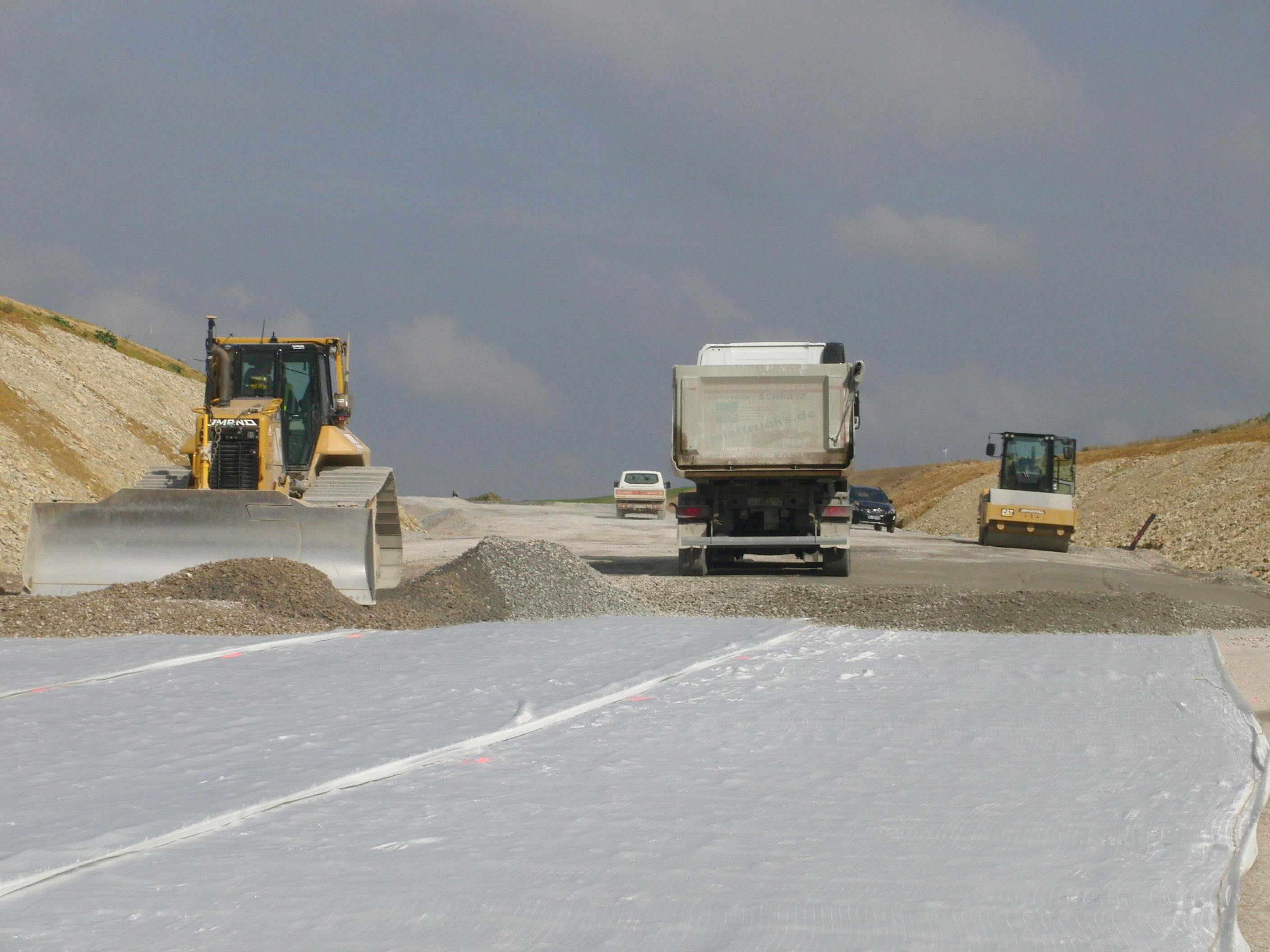
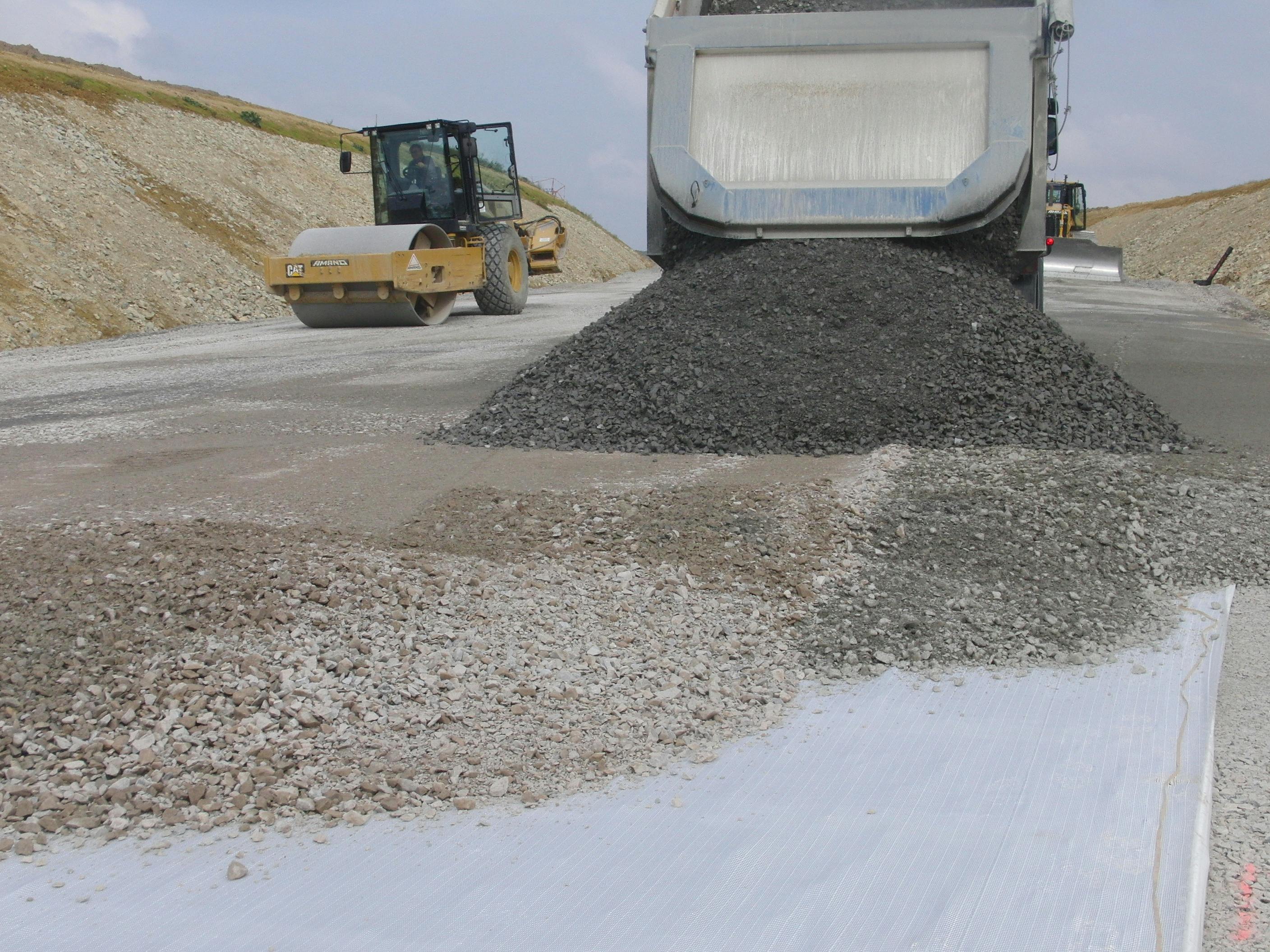
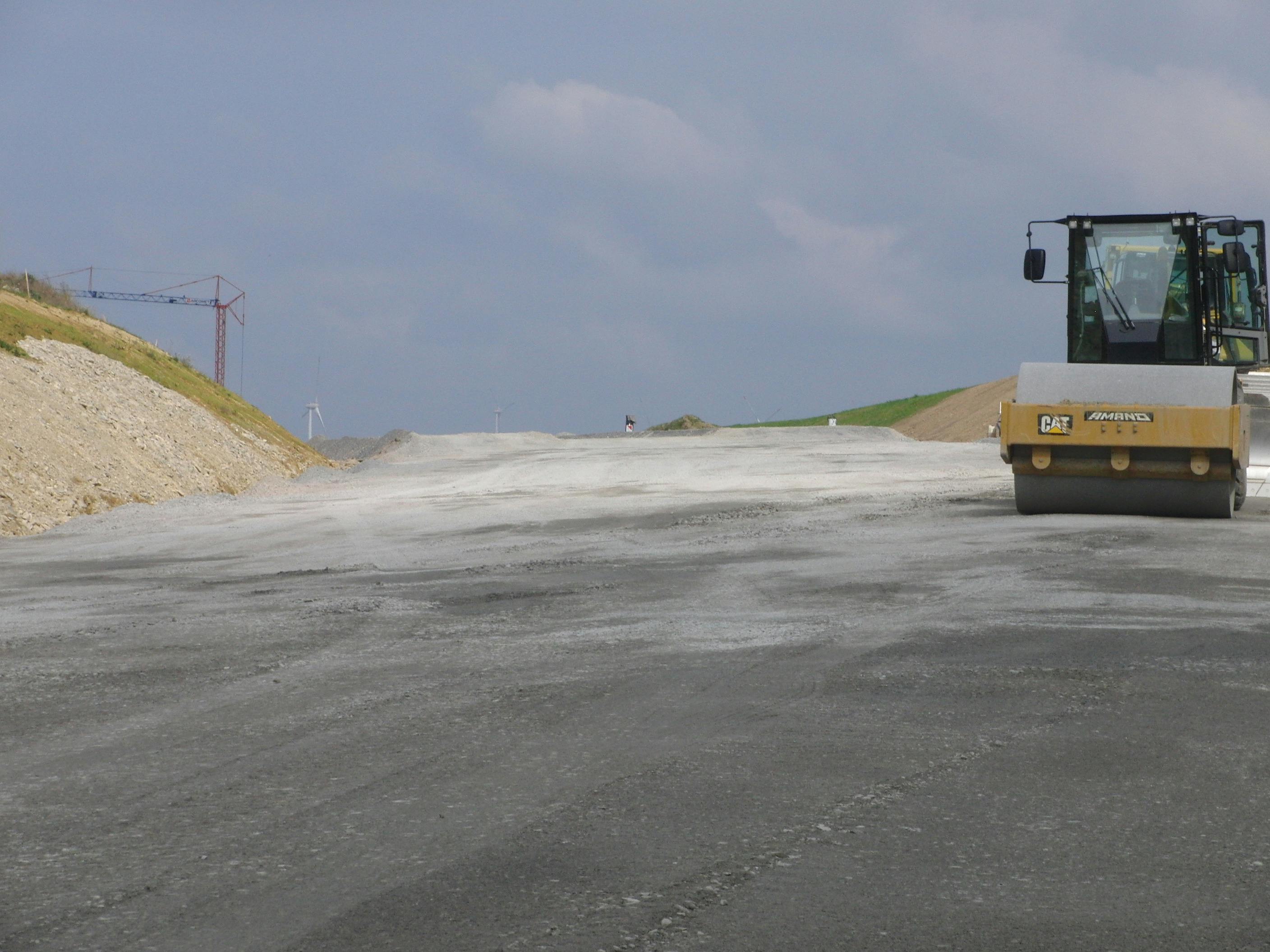
The subgrade surface was first prepared by smoothing and compacting the ground surface. Next, the layer of MIRAFI Geolon PET800 geotextile reinforcement was installed in the direction along the length of the roadway. On top of the geotextile reinforcement, granular fill material, having good dilatancy properties, was placed and compacted. Further lifts of granular fill were placed and compacted as needed.