Overview
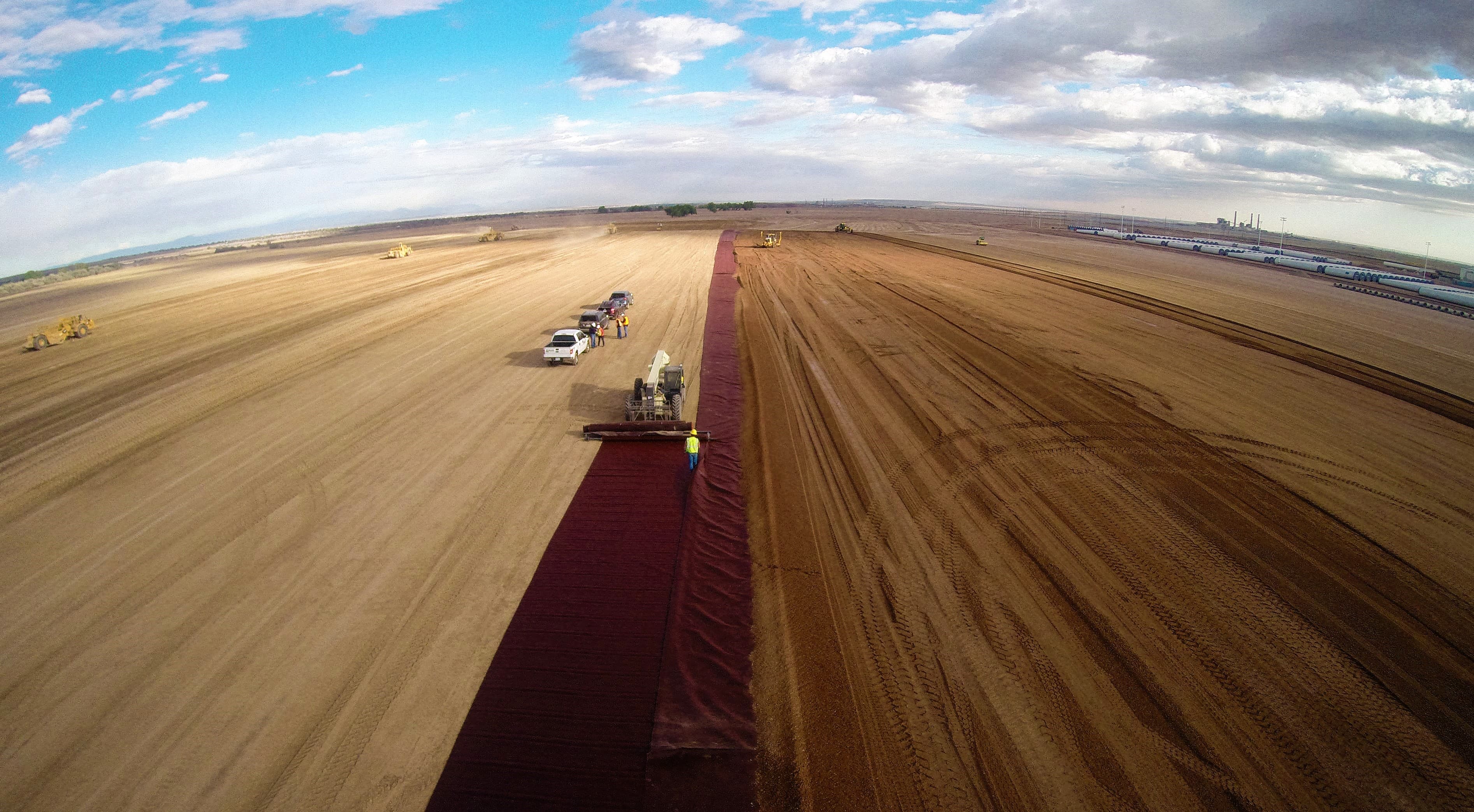
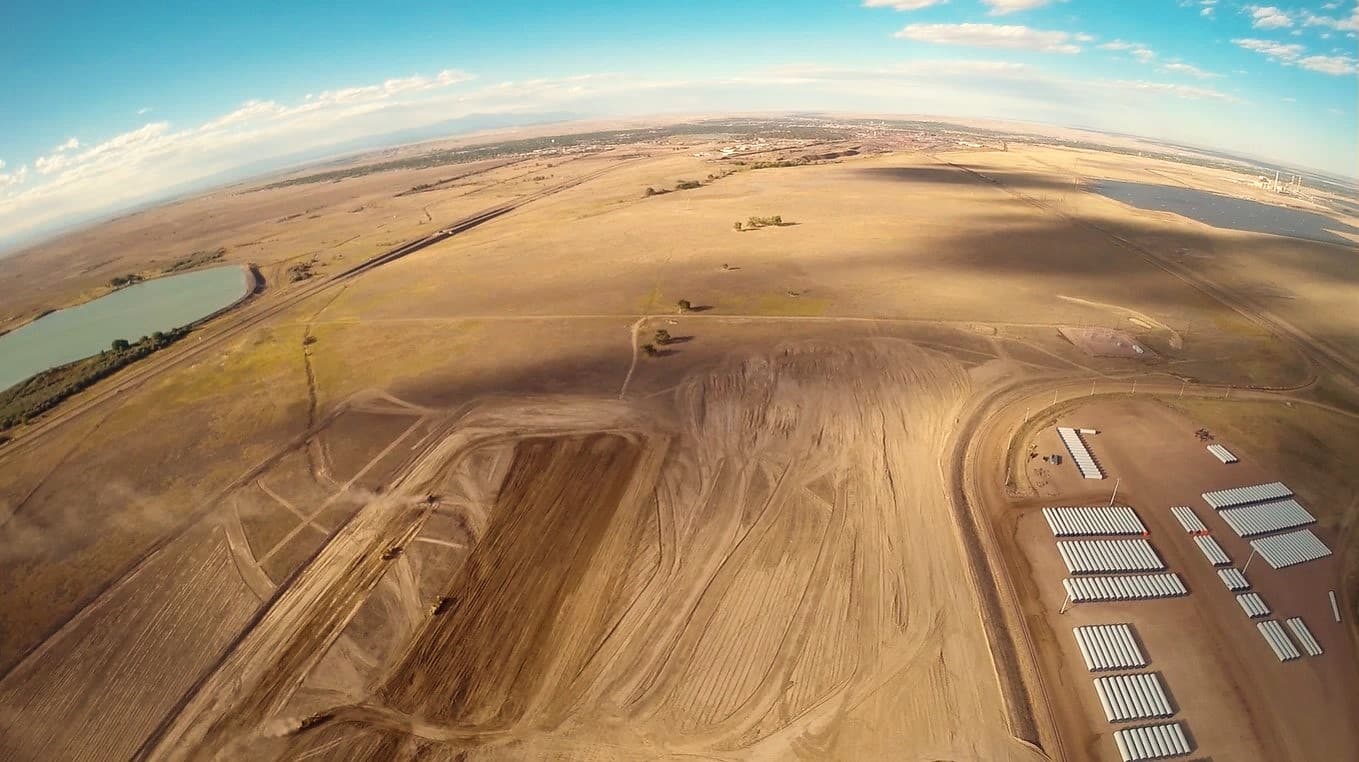
In August 2016, a wind component manufacturer in Pueblo, CO bid on a project to expand their existing laydown yard by approximately 140 acres (57 ha). Due to the availability of wind development tax credits through the end of 2016, the project operated under an accelerated construction schedule aimed at achieving substantial completion before year-end. The overall project was divided into seven phases, with final completion scheduled for early 2017.
In addition to a demanding timeline, the closest aggregate source was located 50 miles (80 km) away, making the import of material both expensive and time-consuming. Project engineers had to develop alternative solutions that addressed the tight schedule, high aggregate costs, and the site’s poor soil conditions.
Challenge
According to the geotechnical report, the subsoil consisted of sandy clay over claystone bedrock, with shallow groundwater present in several areas. High sulfate concentrations were also recorded across the site. Installation of the MIRAFI® RSi geotextile began in late September 2016.
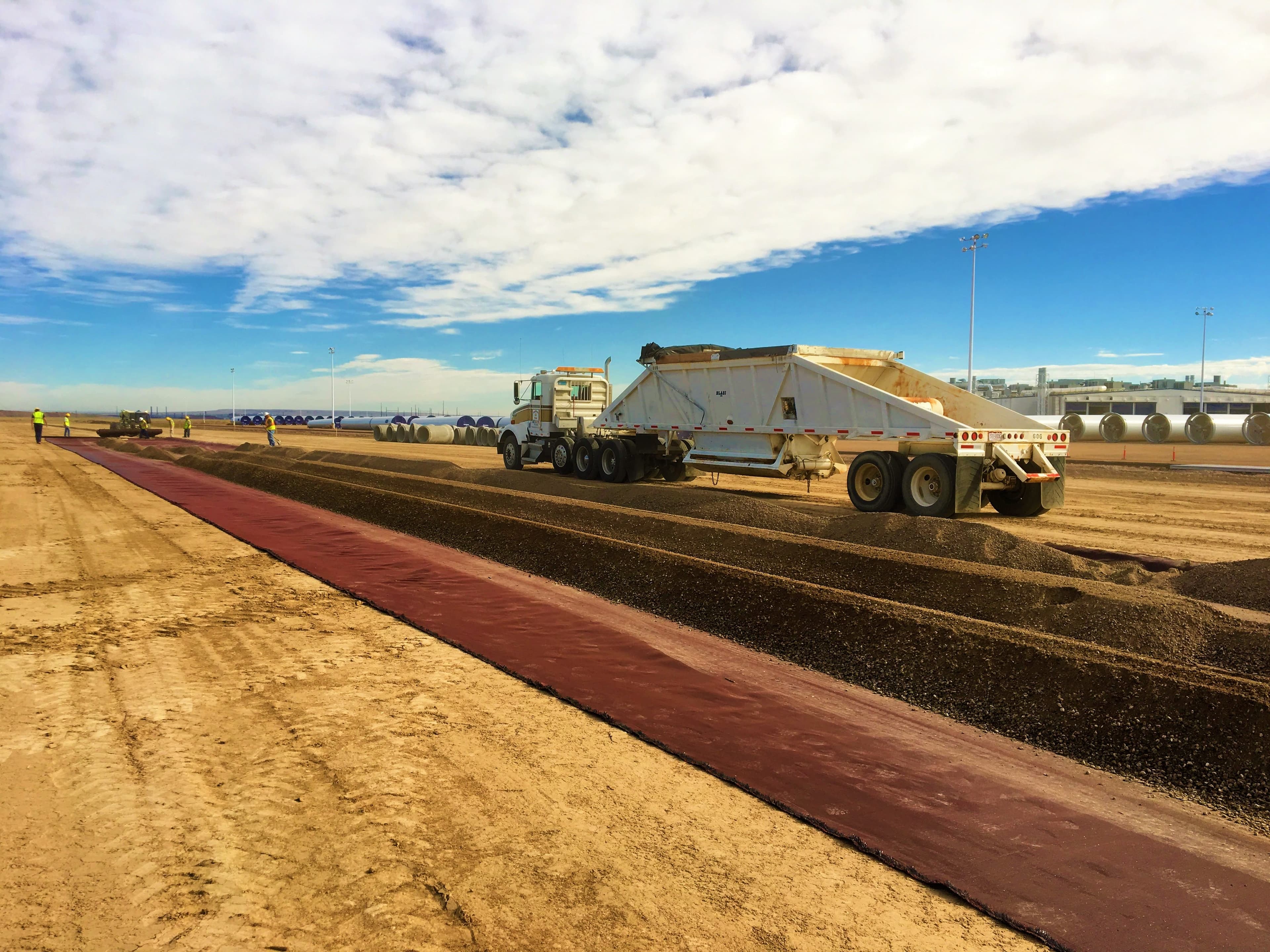
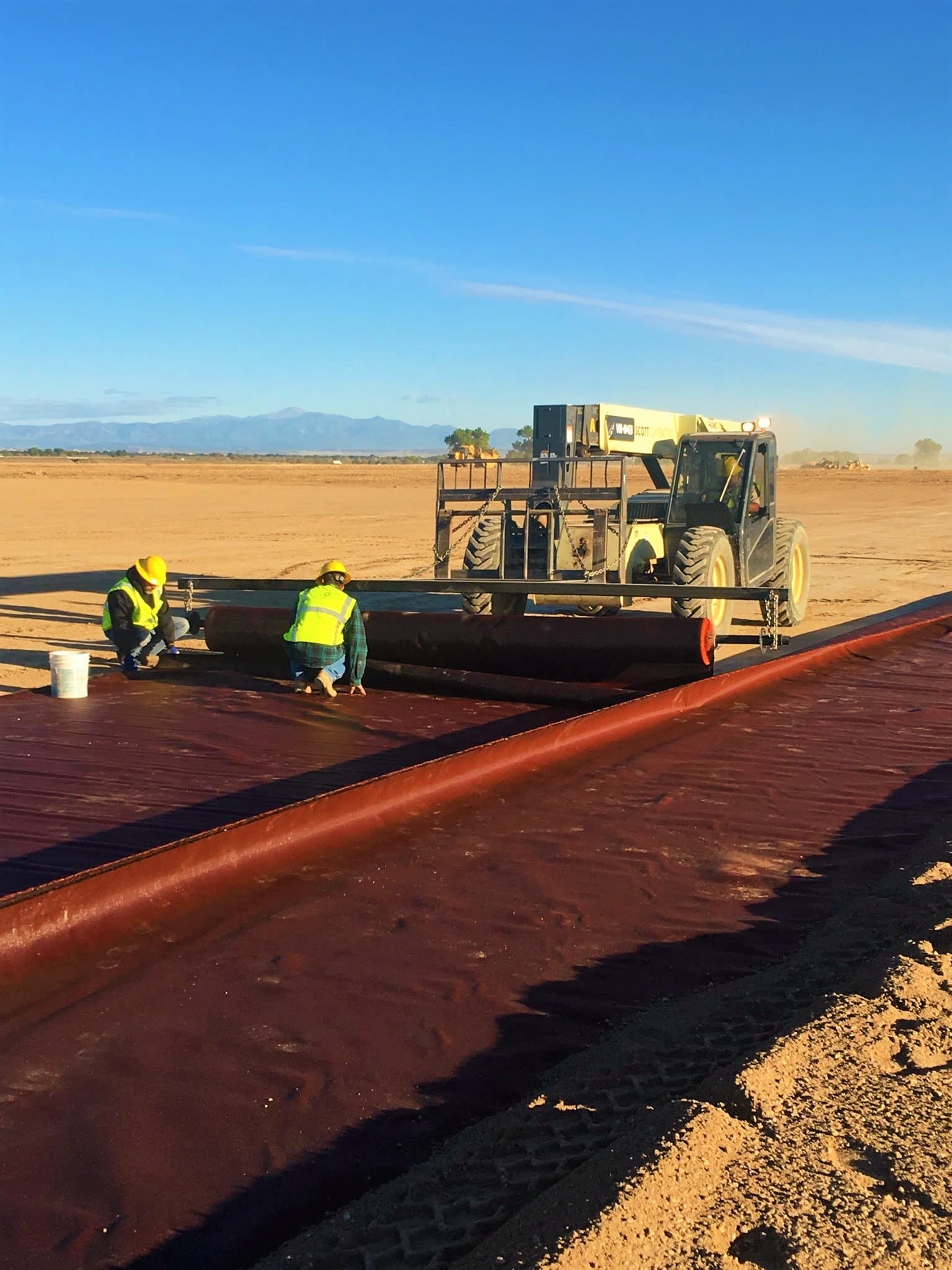
To accelerate the process, the contractor began by installing the first several rolls manually, then transitioned to using a spreader bar for more efficient deployment. A 12-inch (30c m) overlap was maintained throughout installation. While pins are typically unnecessary to hold the geotextile in place, the high winds common in this region of Colorado led the contractor to install pins sporadically along the overlaps. The aggregate base course—hauled in from 50 miles (80 km) away—was either belly or side dumped onto the geotextile, then bladed and compacted in place.
Solution
Vestas successfully transported their components onto the completed section of the laydown yard, which is performing extremely well, with only a few isolated soft spots. Even when subjected to haul equipment with axle loads exceeding the original design parameters, the section has exhibited minimal to no deflection.
The use of MIRAFI RSi provided critical tensile reinforcement and frictional confinement, which allowed for a significant reduction in aggregate thickness. In addition, the geotextile will provide long-term separation by preventing fines from migrating upward from the subgrade into the aggregate base course.