Overview
When Hillsborough College – Brandon Campus in Florida rehabilitated the distressed and well utilized student, visitor and staff parking lots and Nancy Watkins Drive that feeds all the parking lots and serves as the primary bus route for the campus the project team needed more than a standard mill-and-overlay design approach to achieve a useful asphalt overlay life.
A preliminary pavement surface distress survey identified both environmental and structural distresses. The site also has underlying water sensitive subgrades. These conditions increase the risk of pavement distresses returning prematurely and put long-term overlay performance at risk in an environment where the pavement condition and aesthetics can influence the Brandon campus image and future maintenance costs.
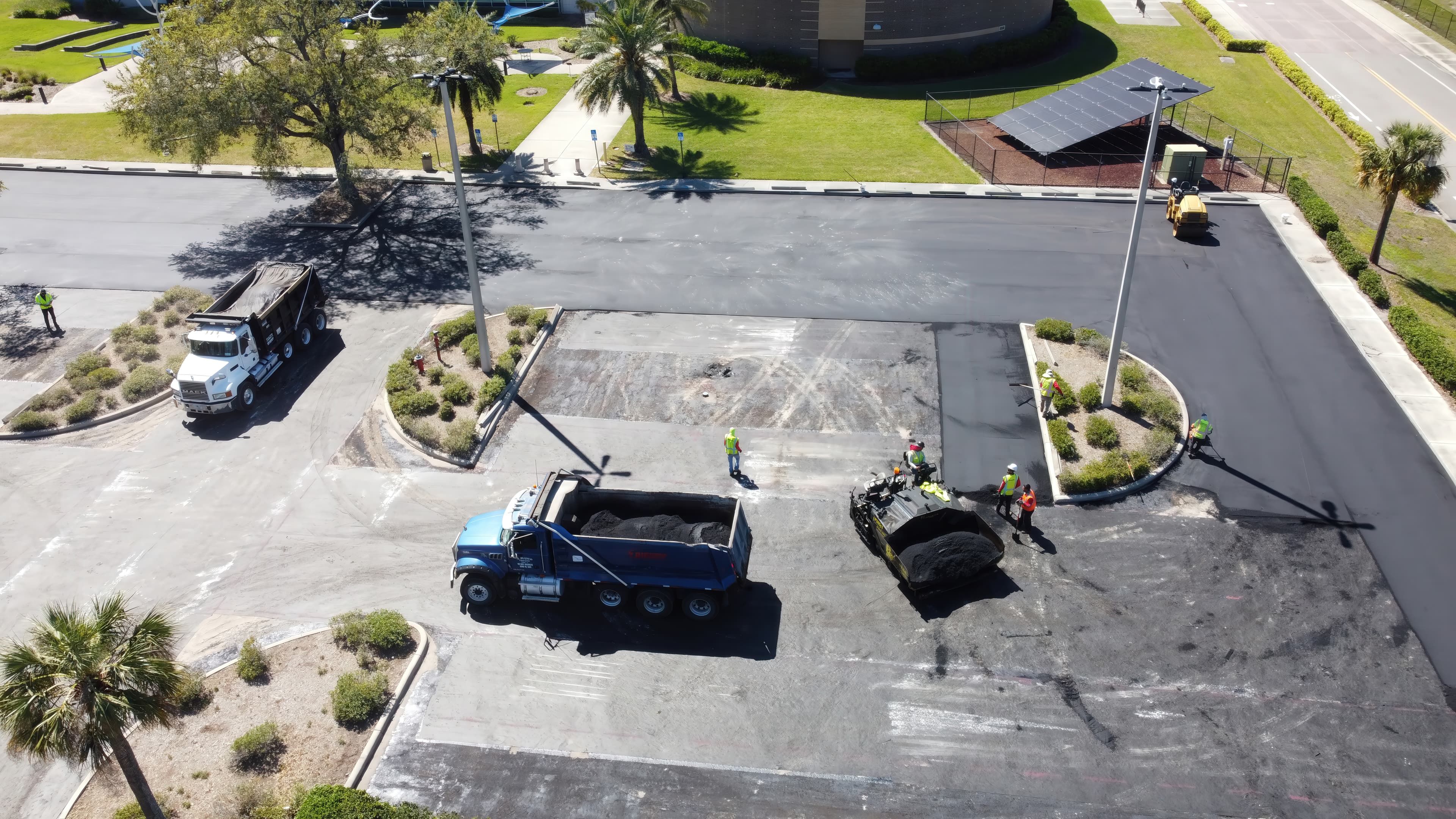
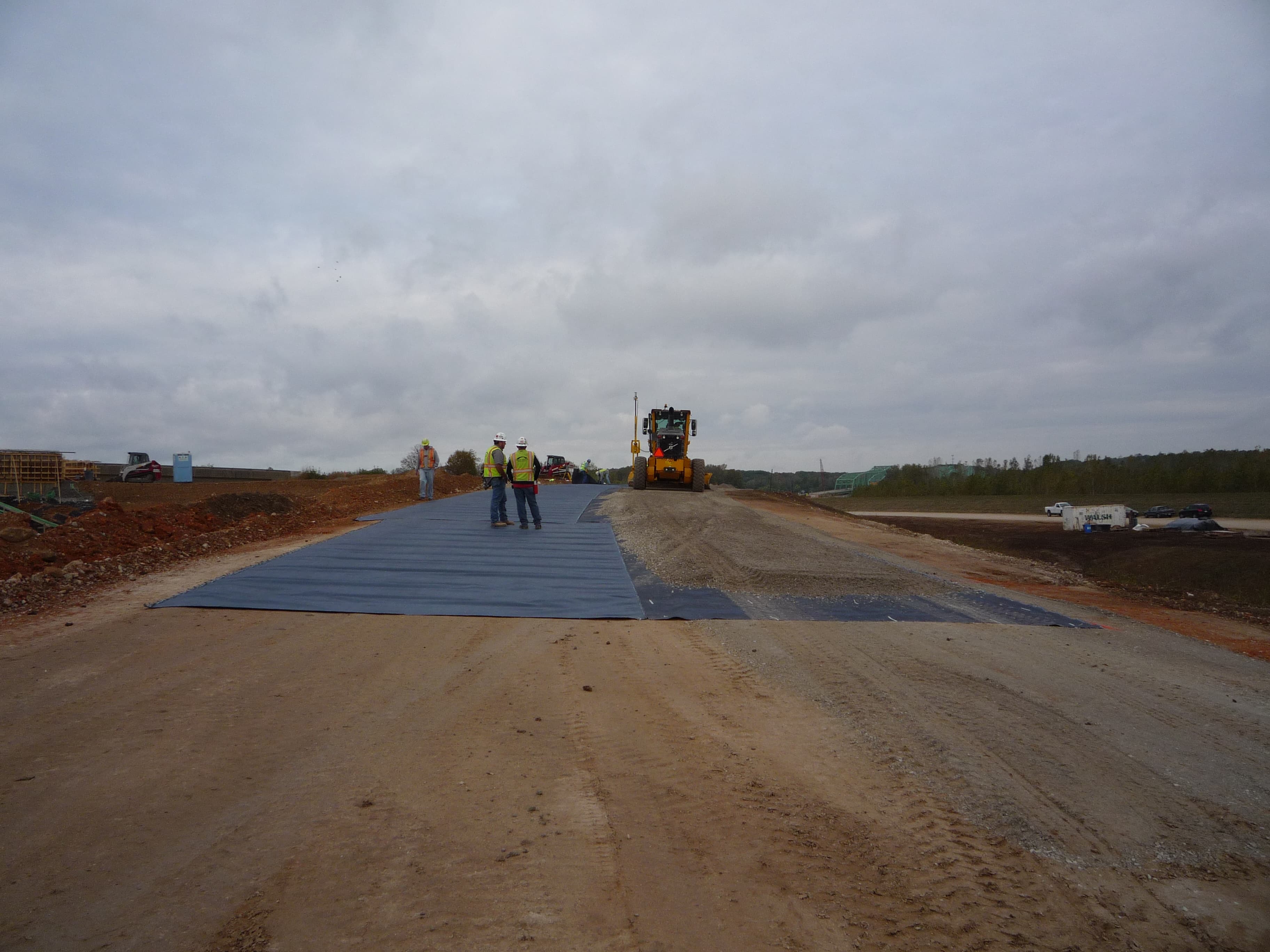
To help address those challenges, Solmax recommended the rehabilitation be performed with Petromat® MPV500 paving fabric installed across approximately 34,281 m2 (41,000 y) as part of a 2 in (50 mm) mill-and-overlay for the parking lots and 4 in (100 mm) mill-and-overlay for the Nancy Watkins Drive. Petromat MPV is engineered and installed to form a crack relief membrane that helps minimize surface water penetration into the pavement structure before and after cracking, provides a stress-relief interlayer that helps inhibit reflective cracking, and promotes better and uniform bonding which extends the asphalt overlay and pavement life.
Challenge
The main design challenge was the pavement distress condition together with the presence of a water sensitive subgrade.
Based on the project site conditions, the expected useful service life without the interlayer solution was less than 10 years, while the target service life with the Petromat paving fabric solution was 15+ years.
The project was driven by a familiar but critical pavement rehabilitation objective: renew the asphalt surface but also achieve the maximum overlay life, thereby maximizing the interval between future rehabilitation projects.
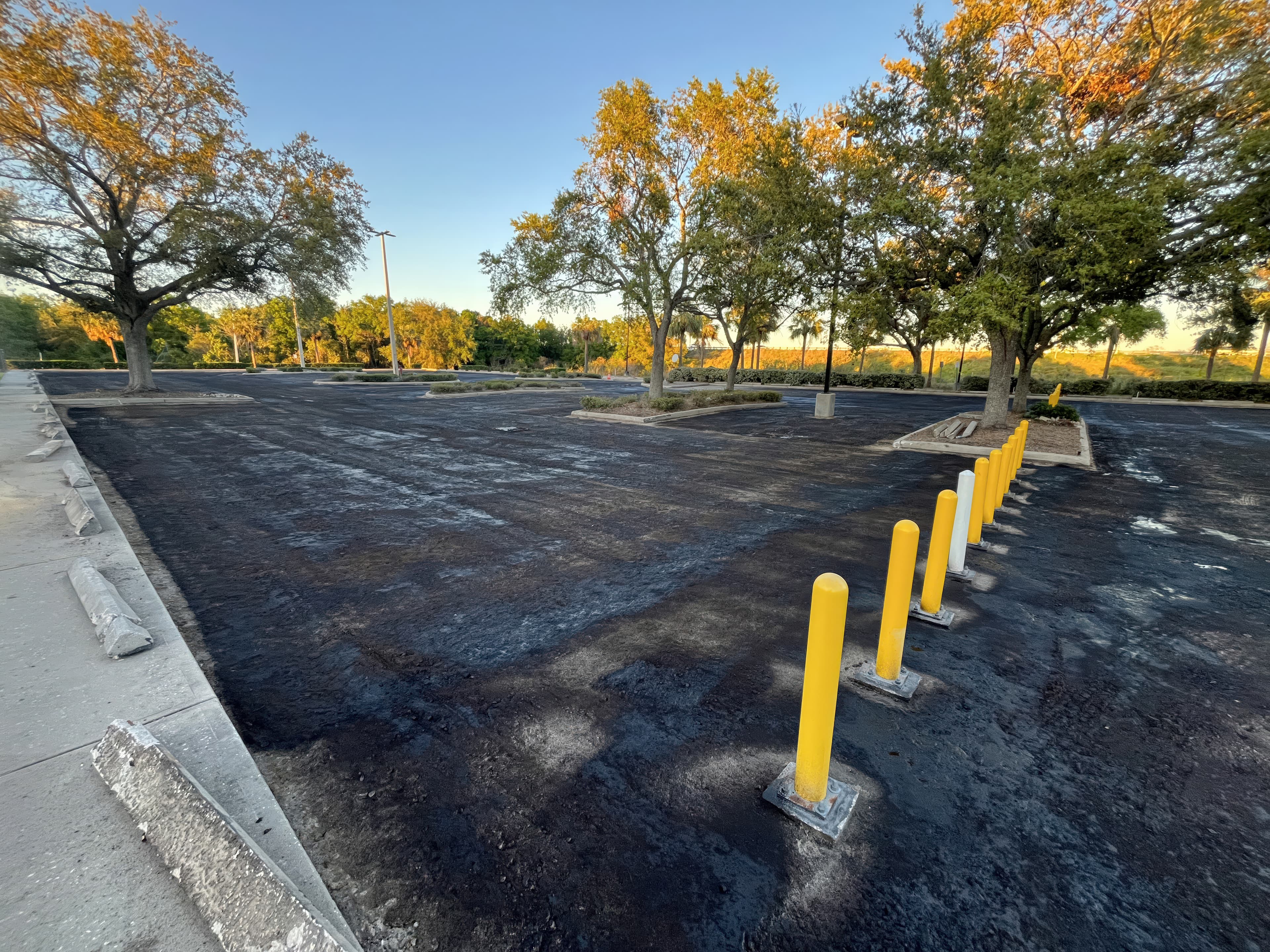
The main installation challenge is that the asphalt thickness varied enough that milling exposed the aggregate base and subgrade in some, but not all the parking lots. Although, localized total removal of the asphalt was anticipated, total removal of the asphalt had not been anticipated.
Solution
Solmax helped the project move forward by adding Petromat MPV500 paving fabric to the milled surface using a PG76-22 asphalt binder prior to placement of the new 2 in (50 mm) asphalt overlay. The equivalent improved performance of the MPV500 and 2 in (50 mm) overlay is equivalent to 3.2 in (81 mm) of asphalt.
The installation of 41,000 y2 (34,281 m2) MPV500 was performed by one of Solmax’s specialist installers – American Paving Fabrics, one of our largest installers in the United States.
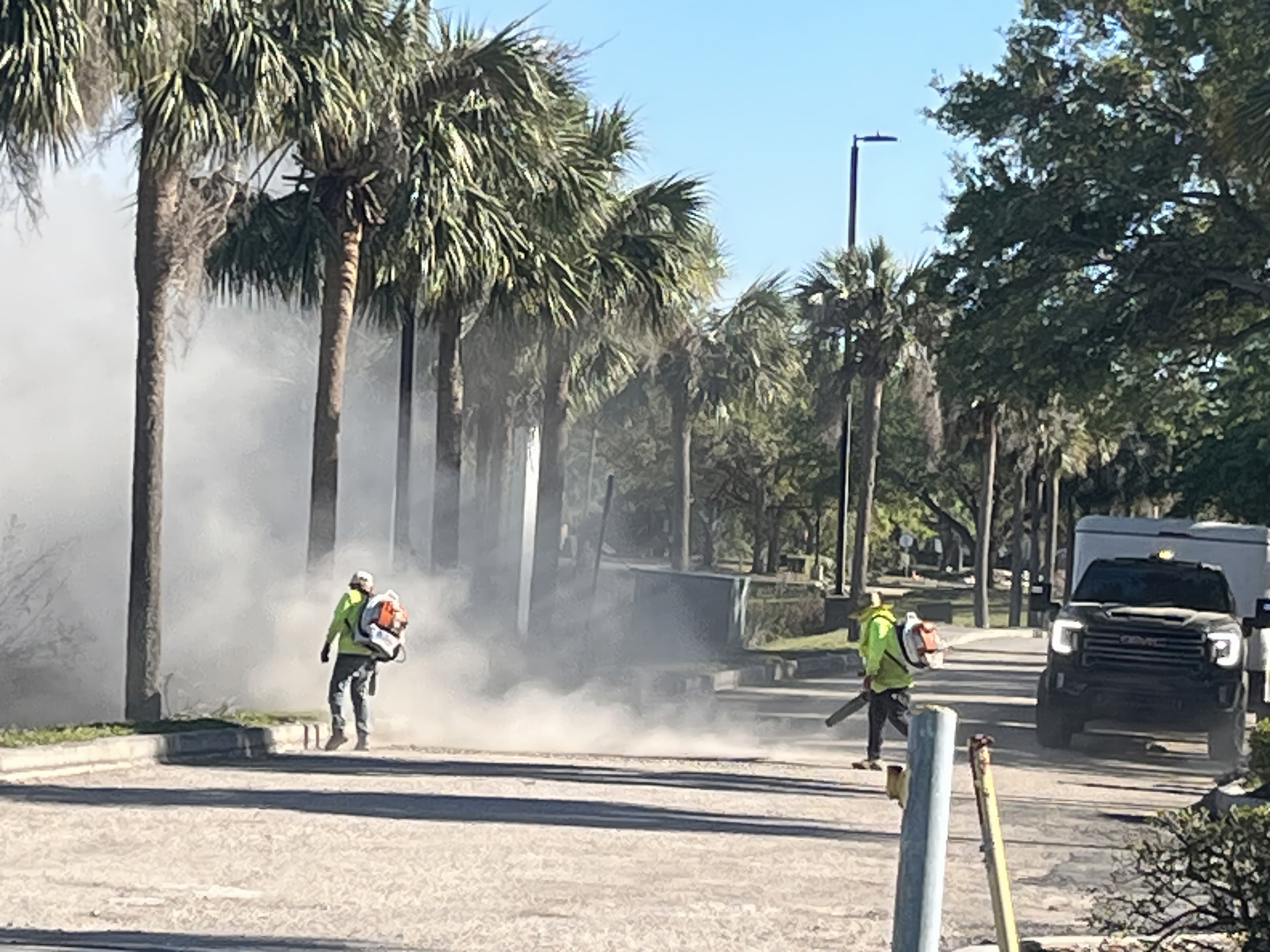
For parking lots, where the milling operation had totally exposed the aggregate base and in some cases the subgrade, a heavy asphalt emulsion (0.2 gal/y2 of residual asphalt binder) was used to prime the aggregate base and left overnight. The MPV500 and asphalt overlay were then installed the next morning.
In this application, Petromat MPV500 facilitated excellent bond development between the thin remaining asphalt layer and exposed unbound aggregate base and/or subgrade. The bond function aligned well with the project’s needs, because Petromat MPV is designed to provide moisture protection after future cracks develop, and stress absorption to delay cracks from the remaining cracked asphalt. Together, those characteristics supported the rehabilitation strategy even under unexpected field conditions.
Solmax supported a team that also included Stantec as consultant and American Paving Fabrics as installer. Field support from Solmax helped guide the installation of the Petromat MPV500 paving fabric, despite the unexpected large area exposure of the unbound layer. Solmax efforts included introducing the emulsion treatment which allowed the project to maintain its intended rehabilitation approach with minimal delay rather than shifting to a more costly alternative, such as introducing a levelling course.
Results
This project demonstrated an important advancement in asphalt interlayer installation. Even after milling exposed the unbound subgrade, Solmax site support helped the team continue with installation of the paving fabric interlayer. This outcome is a notable breakthrough because this type of installation historically would have forced teams either to remove the product from the scope, which would have compromised the performance, or to add a leveling course at significant additional cost and delay. By helping the team proceed without those costly measures, Solmax’s quick response supported a rehabilitation strategy aimed at longer pavement life and stronger overall performance.
As a result, Hillsborough College – Brandon campus moved forward with parking lot rehabilitation designed to better support long-term overlay performance and extended pavement service life. The project demonstrated the value of combining the right interlayer technology with responsive field support, and it provided a strong example of how Solmax helps design teams manage variable pavement conditions while keeping performance goals in focus. For Hillsborough College - Brandon campus, the project also reflects a practical investment in innovative rehabilitation methods that can improve durability and help infrastructure owners get more from their pavement assets.