
Lake bank stabilization at Vivid Shores
At Vivid Shores in Bonita Springs, Florida, PROPEX® Armormax®, MIRAFI® FW403 and MIRAFI 140N stabilize lake banks exposed to wind-driven wave erosion. Completed sections are performing as designed.
>
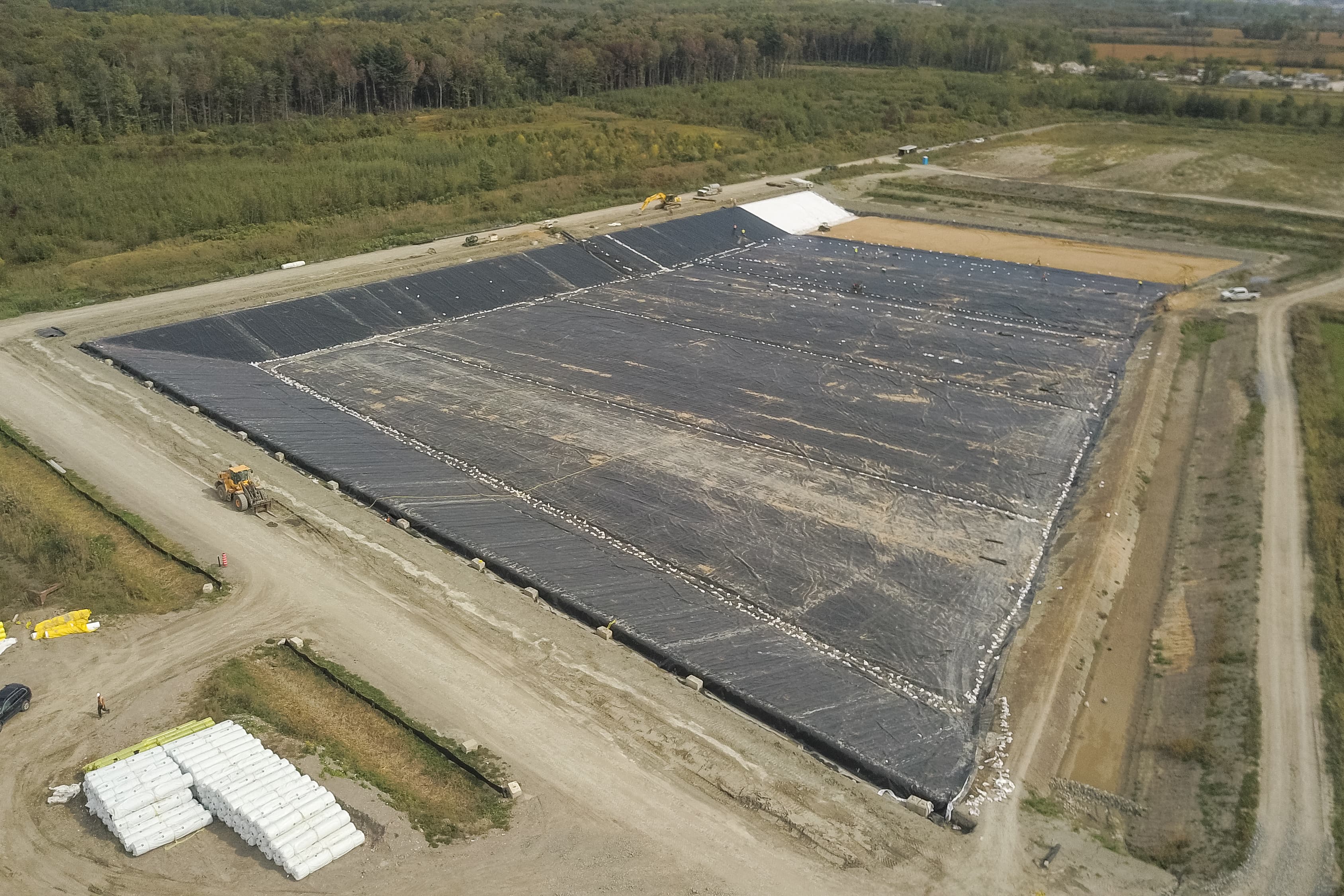
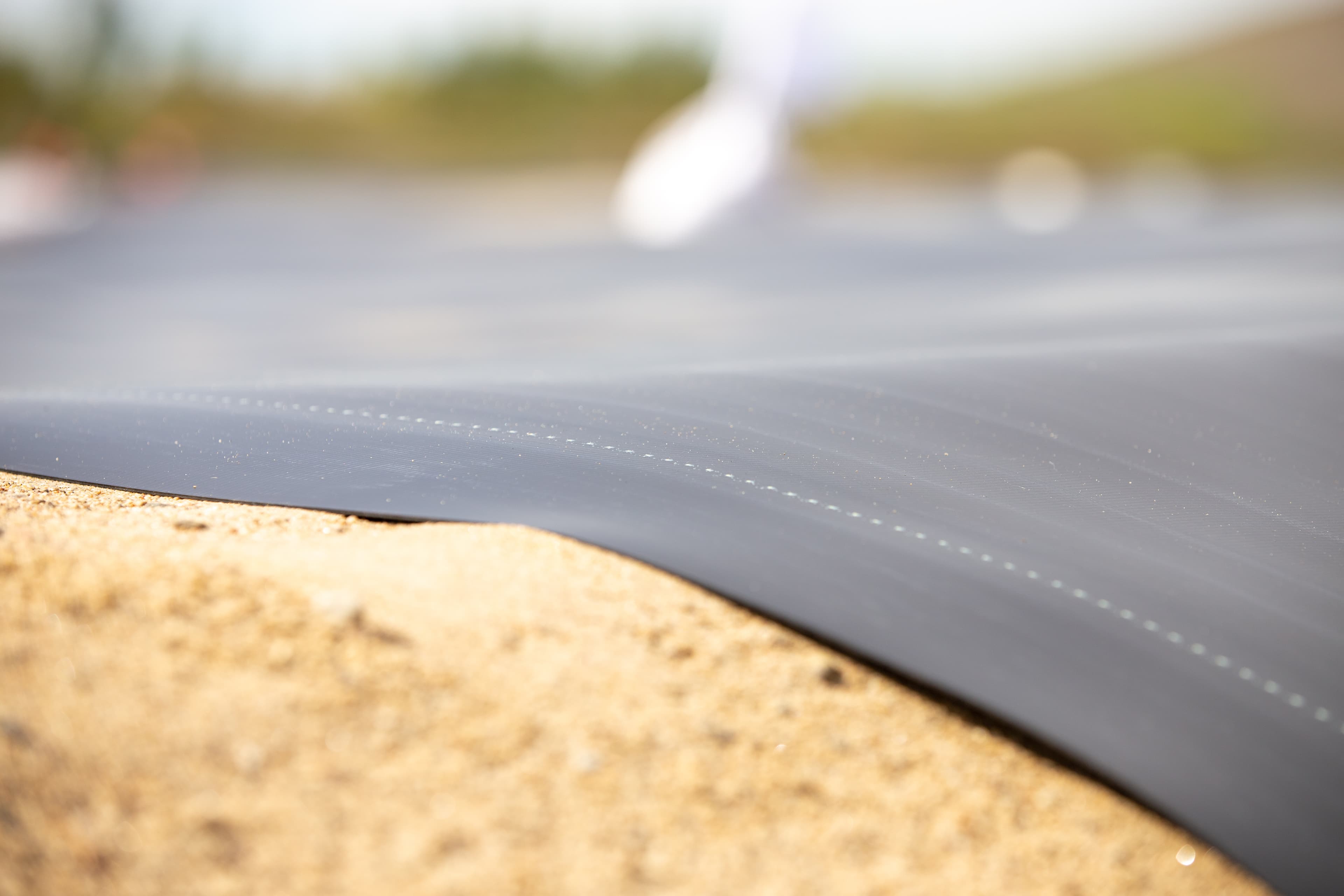
Layered geosynthetic system in progress, integrating FABRINET drainage and BENTOLINER GCL to meet long-term environmental and regulatory performance requirements.
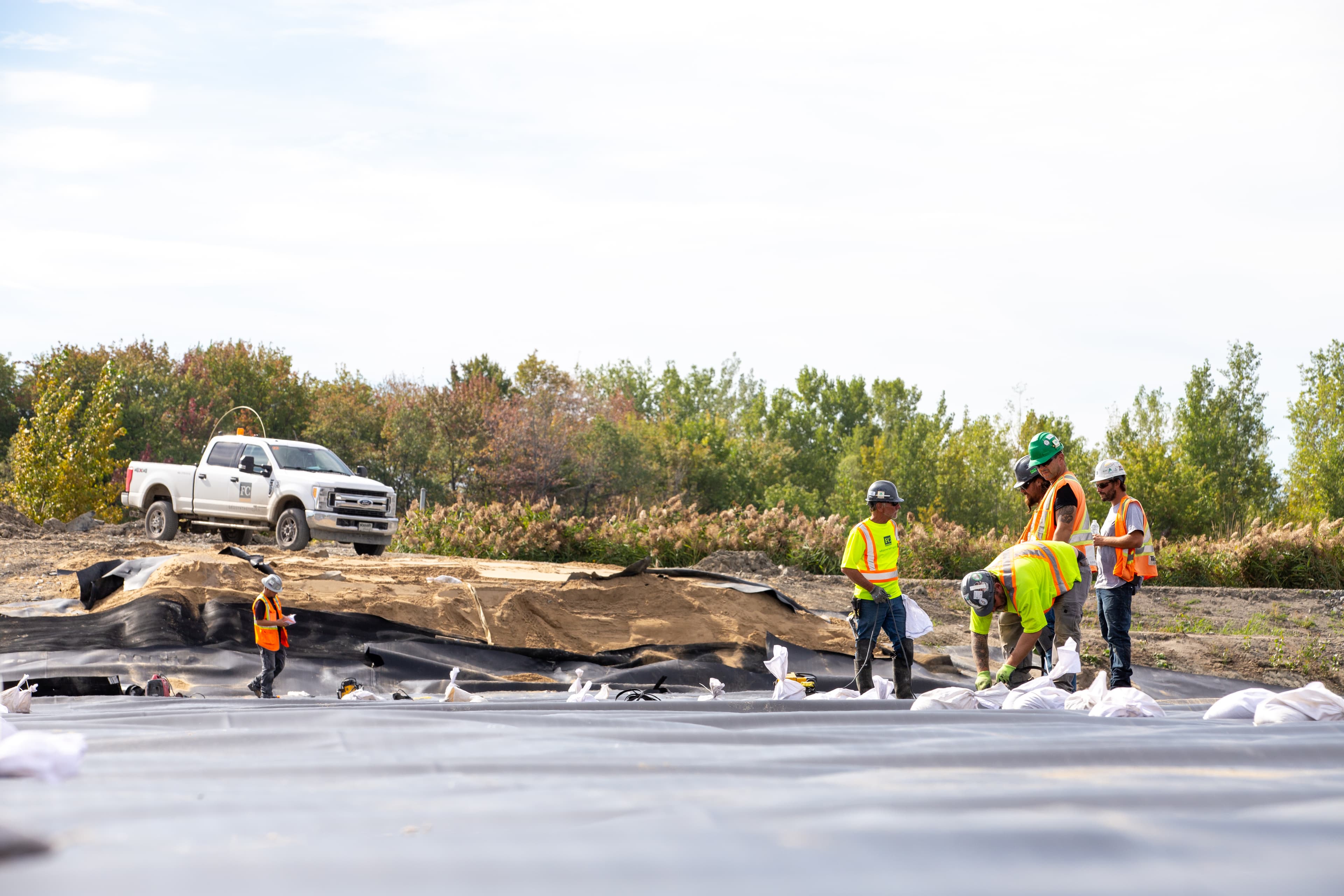
Field crew deploying 60-mil textured GSE HD liner manufactured in Varennes, ensuring high chemical resistance and low permeability for controlled contaminant migration.
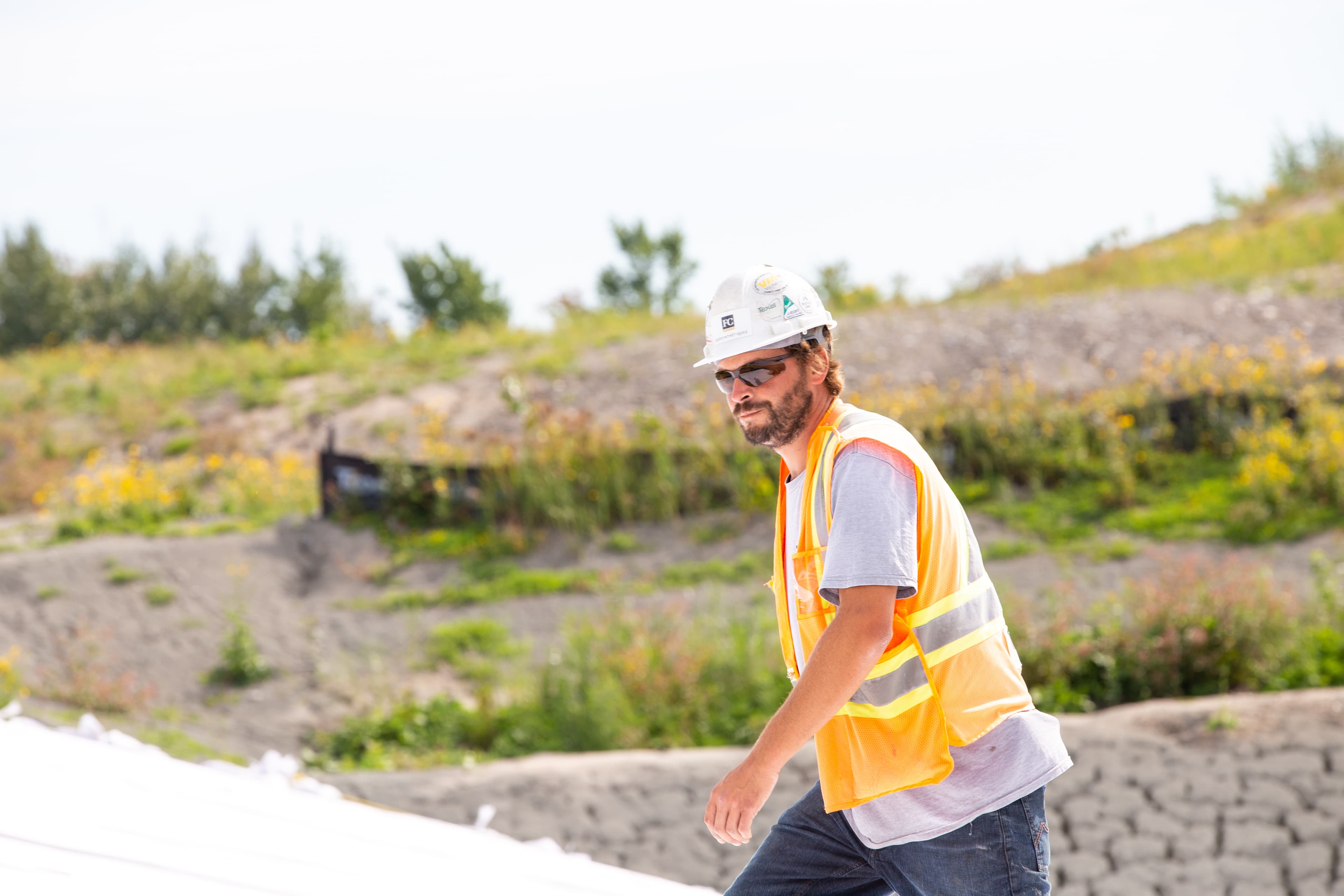
Staging of geosynthetics for the 23,300 m² cell footprint, coordinated to support the accelerated 10-day construction window achieved by FC Geosynthétiques.
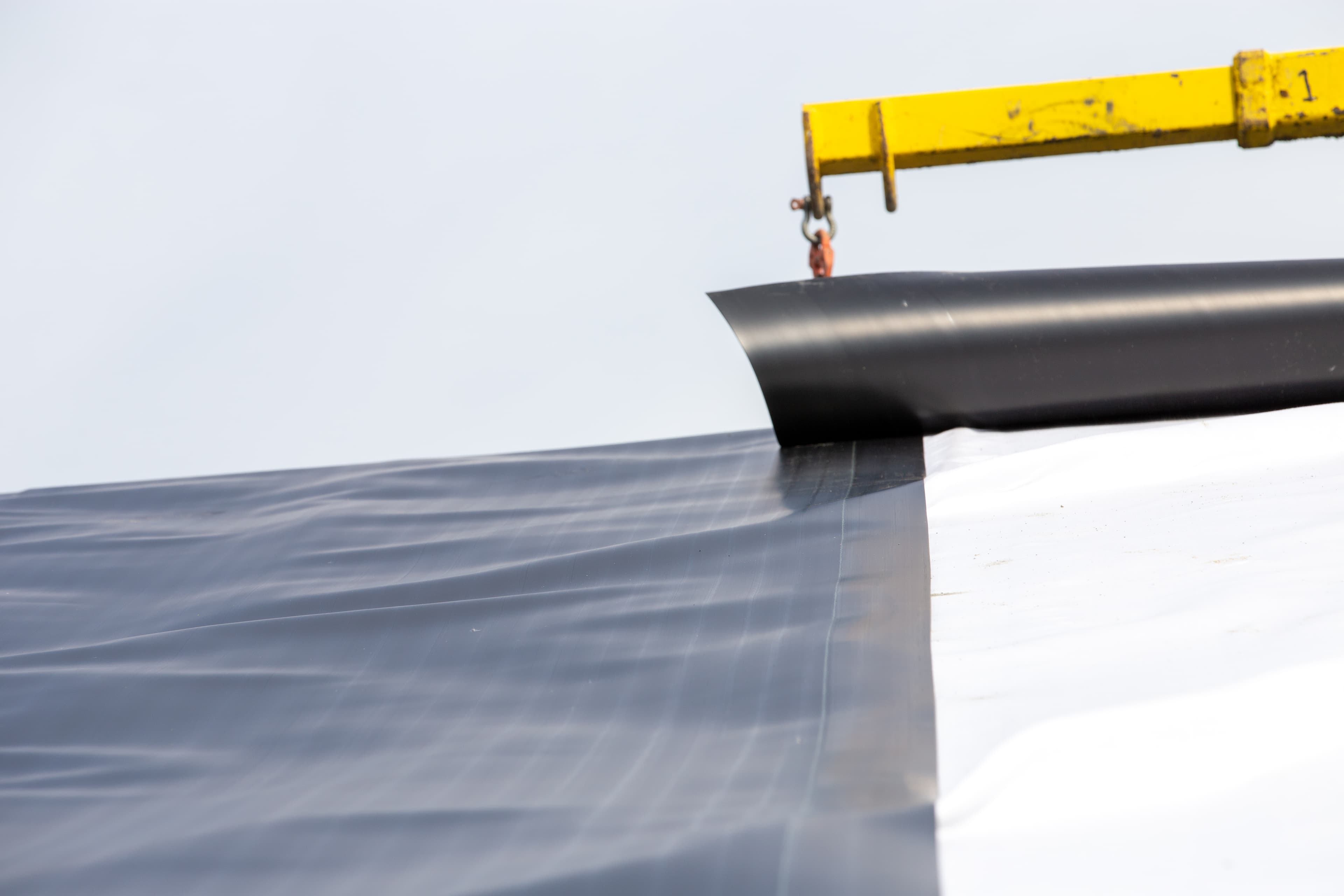
Completed Cell A1 expansion ready for service, increasing permitted capacity while supporting Signaterre’s long-term shift toward sustainable soil treatment and recovery.
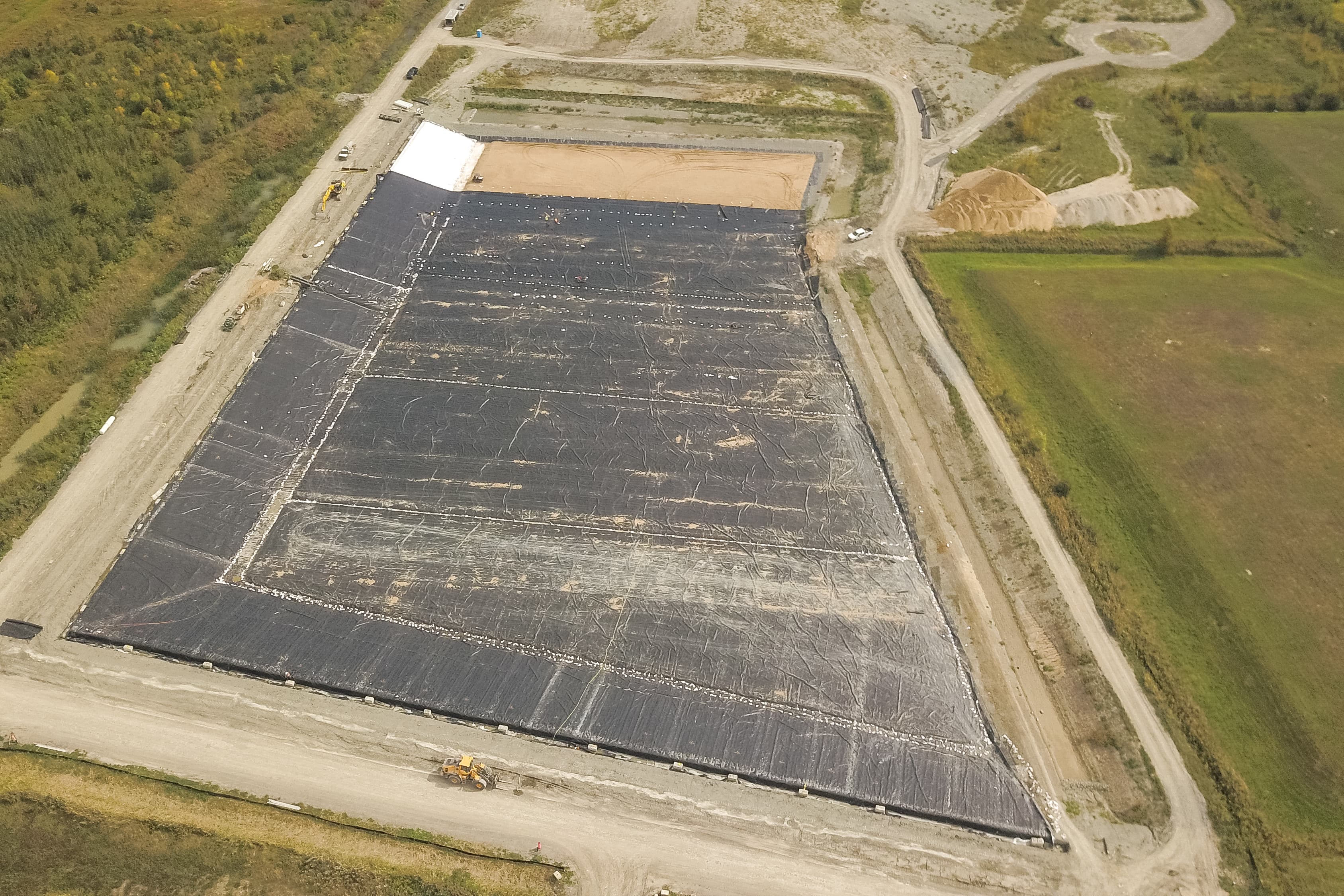
Installation of the GSE HD geomembrane and MIRAFI nonwoven geotextile forming the primary barrier system for Cell A1’s contaminated-soil containment upgrade.
Lake bank stabilization at Vivid Shores
At Vivid Shores in Bonita Springs, Florida, PROPEX® Armormax®, MIRAFI® FW403 and MIRAFI 140N stabilize lake banks exposed to wind-driven wave erosion. Completed sections are performing as designed.
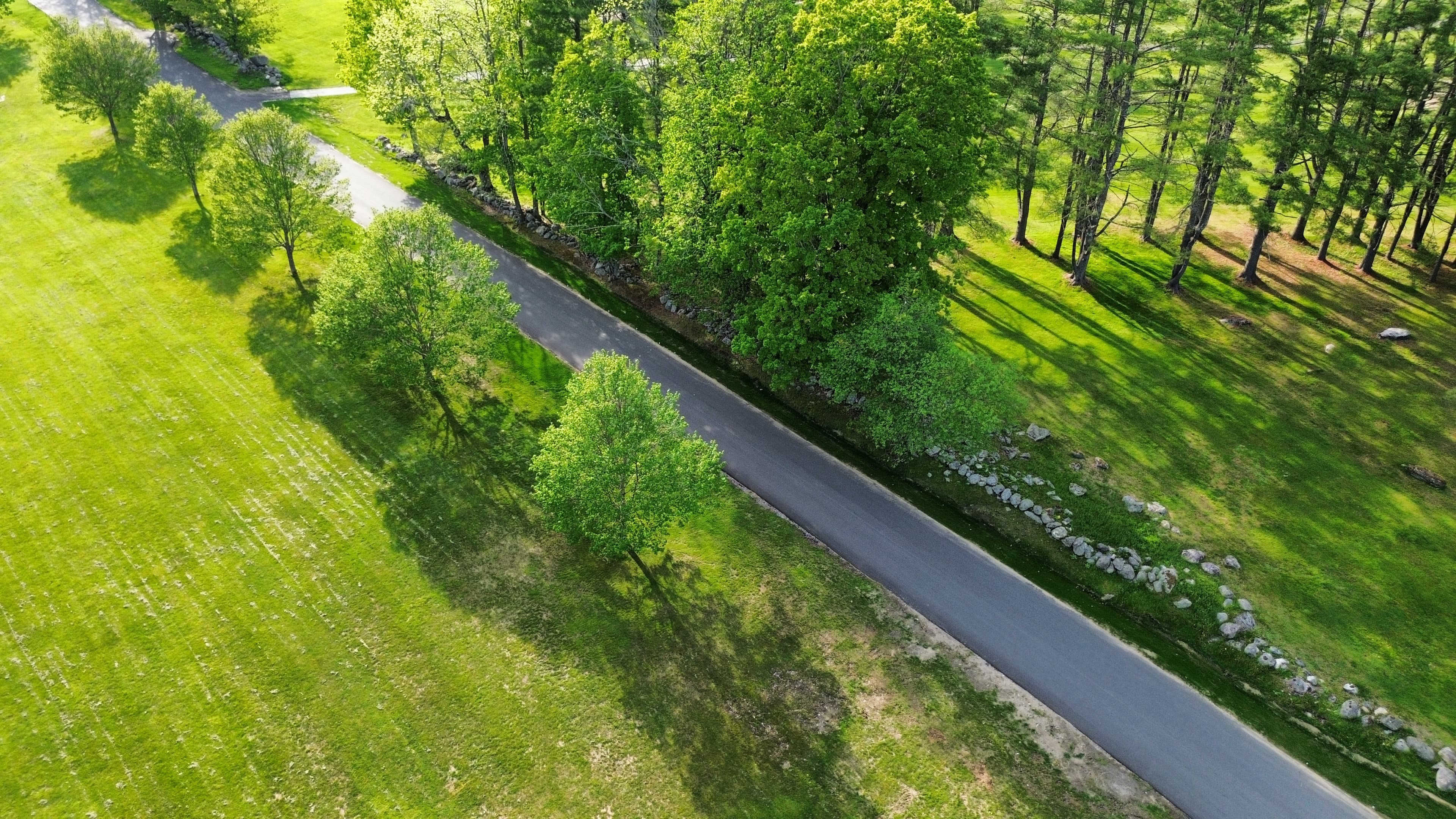
Crowne Point Country Club Case Study
Crowne Point Country Club rehabilitated a deteriorated Vermont access road with MIRAFI H2Ri, using active moisture management to address saturated soils, frost-related distress and subgrade instability.

GSE HD geomembrane lined salt ponds ensure long-term brine containment
GSE® HD geomembrane lined over 3.4 million m² of evaporation ponds to prevent brine seepage under extreme heat and UV exposure. This continuous barrier eliminated salt discharge and protected the surrounding environment.
The Cell A1 Expansion Project, part of a long-running contaminated soils management initiative in Mascouche, Quebec, represents the fourth phase of a broader effort by Signaterre Environnement to increase the site’s storage capacity and enhance environmental sustainability. Solmax became involved in this phase in September 2021, delivering geomembrane and geotextile components necessary to meet strict regulatory and operational requirements.
Originally launched in the 1990s, this multi-phase project has steadily evolved to support Quebec’s regulatory shift towards more environmentally conscious waste management. Following the issuance of a certificate of authorization under Section 22 of the Quebec Environmental Quality Act (EQA) on June 19, 2015, the project's permitted landfill capacity was increased to 929,500 m³. With a remaining usable capacity of approximately 327,595 m³, Cell A1 represents a significant step in achieving full site utilization while upholding environmental protection objectives.
Solmax’s role in this project centered around the supply of high-performance geomembrane and geotextile systems designed to control contaminant migration and extend cell integrity. Solmax supplied GSE® HD geomembranes and FABRINET® drainage. Installation was completed in 10 days., carried out by FC Geosynthétiques with engineering oversight from AECOM and materials testing provided by Alphard.
The long-term environmental value of this project is twofold. First, it ensures post-closure security through enhanced containment solutions and encourages the adoption of financial guarantees for ongoing site management, as recommended by the Ministry of Sustainable Development, Environment and the Fight against Climate Change. Second, it aligns with broader objectives to reduce reliance on landfilling by supporting the development of soil treatment technologies and promoting the recovery of treated soils.
While the Cell A1 expansion did not present technical complications beyond standard landfill cell design and construction, it was nonetheless part of a highly sensitive and regulated project. One unique challenge stemmed from the evolving expectations around long-term environmental risk mitigation. Specifically, stakeholders, including the provincial government and public audiences during consultation processes, emphasized the need for financial guarantees to fund post-closure management. Though not yet mandatory under the Regulation on the Burial of Contaminated Soil (RESC), these guarantees were treated as a non-negotiable element of public acceptance.
In addition, the project had to navigate policy tensions around the treatment of moderately contaminated soils. Although the RESC requires pre-treatment for certain contaminants before burial, it does not mandate optimal treatment where further reduction is technically feasible. The project's stakeholders, particularly Signaterre, expressed a desire to go beyond compliance and invest in diversified soil remediation technologies. This proactive stance required infrastructure and operational planning that integrated treatment and landfilling systems in a contiguous, efficient manner.
Another dimension was the project's scale. With approximately 23,300 m2 of each material layer required – GSE HD 60 mils textured geomembrane, MIRAFI® nonwoven geotextile, FABRINET drainage geocomposite, BENTOLINER® GCL – the logistics and coordination required to stage materials and personnel on-site for timely deployment had to be finely managed. This was especially critical given the commitment to complete construction in advance of schedule.
Solmax's contribution involved providing reliable, fit-for-purpose geosynthetic materials tailored to the complex environmental and regulatory context. The GSE HD geomembrane used was a 60 mil (1.5 mm) thick black textured liner, selected for its low permeability, high chemical resistance, and superior mechanical performance, attributes essential for the long-term containment of contaminated soils. Manufactured in Varennes, Quebec, this liner ensured quality control aligned with North American standards and minimized environmental impact by reducing transportation distances.
In parallel, MIRAFI nonwoven geotextile served as a critical component in the geocomposite layer, providing cushioning and separation while also enhancing drainage compatibility.
The integration of multiple geosynthetic layers provided a robust containment system capable of long-term performance, addressing both current site requirements and future liability considerations. More significantly, the deployment efficiency enabled the contractor to complete the installation ahead of schedule, minimizing disruption and reinforcing the client’s trust in both product and process.
The project’s completion advanced the site's goal of maximizing permitted landfill capacity while actively encouraging a transition toward more sustainable soil treatment practices. The development of adjacent soil remediation infrastructure allows Signaterre to refine its operational model, reducing reliance on burial and exploring new avenues for soil recovery and reuse.
The successful early delivery, high-quality workmanship, and regulatory compliance were met with strong client satisfaction. For the local community and broader regulatory ecosystem, the project reinforced the viability of managed, well-regulated contaminated soil burial as part of an integrated waste management strategy. It also set a precedent for considering financial guarantees and incentives for advanced soil treatment as part of future project evaluations.