Overview
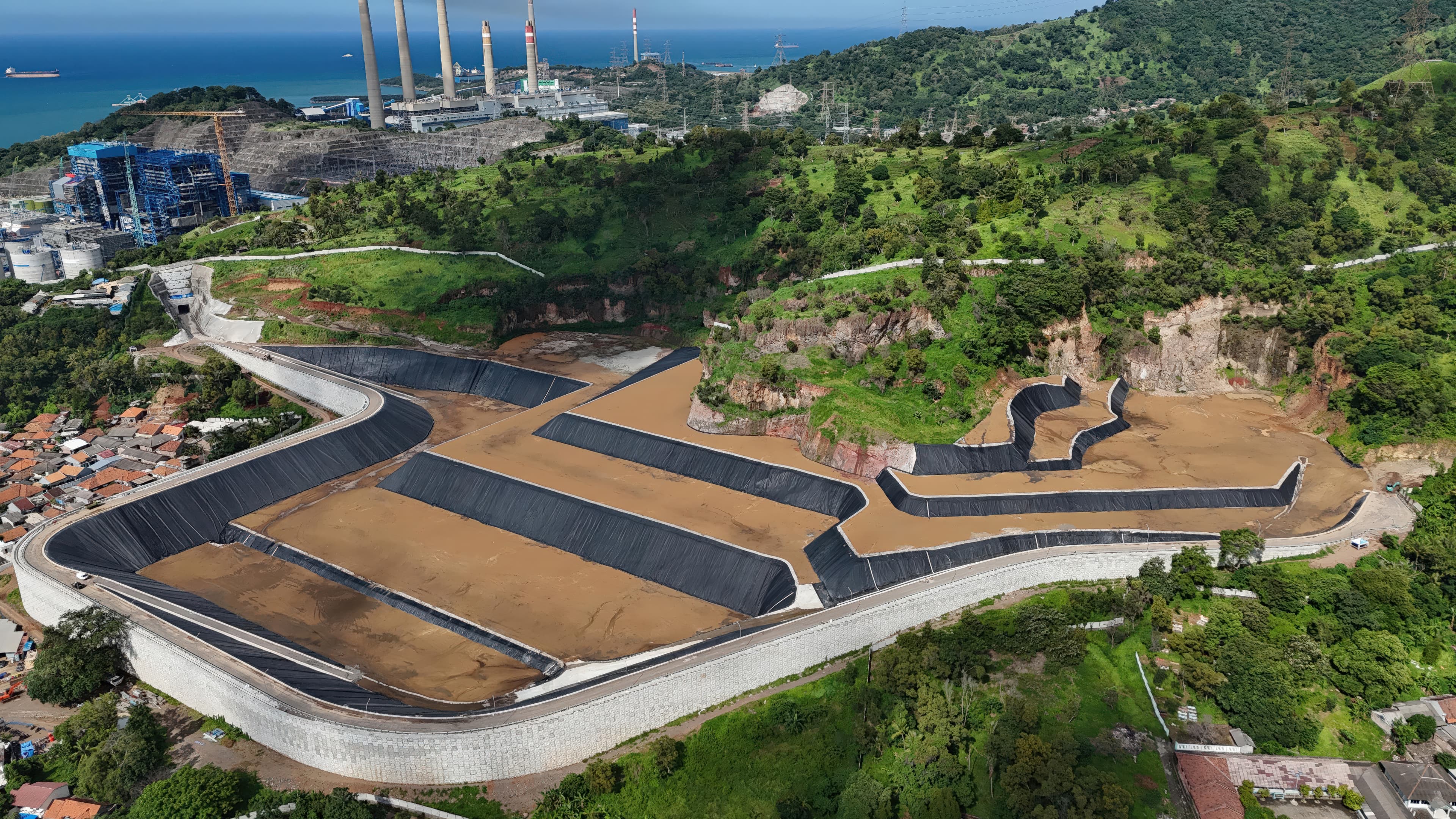
Coal ash and process wastewater pose a persistent containment challenge in power generation, particularly within tightly regulated facilities where any loss of control carries environmental and operational risk. At the Jawa Suralaya Power Plant ash handling facility in Indonesia, the project focused on creating a reliable liner system capable of isolating ash and wastewater while meeting national environmental regulations.
During the planning stage, the need for a high-performance containment solution became clear. A durable geomembrane system was required to manage long-term exposure to ash residue, maintain integrity under site constraints, and support a nationally significant Steam Power Plant (PLTU) facility operating under strict safety standards. The installation was scheduled to be completed within one year, with environmental protection and regulatory compliance as the primary drivers.
Challenge
The core challenge was not the scale alone, but the setting. Installation took place inside a nationally regulated power plant, where controlled access, detailed permitting, and rigorous safety procedures governed every activity. These constraints directly influenced productivity and sequencing.
Site conditions added further complexity. Weather variability, residual ash on prepared surfaces, and safety-related access limitations affected daily progress and required careful coordination between teams. Any delay or liner defect risked disrupting operations and compromising environmental safeguards. Maintaining quality and schedule discipline under these conditions was essential to success.
Solution
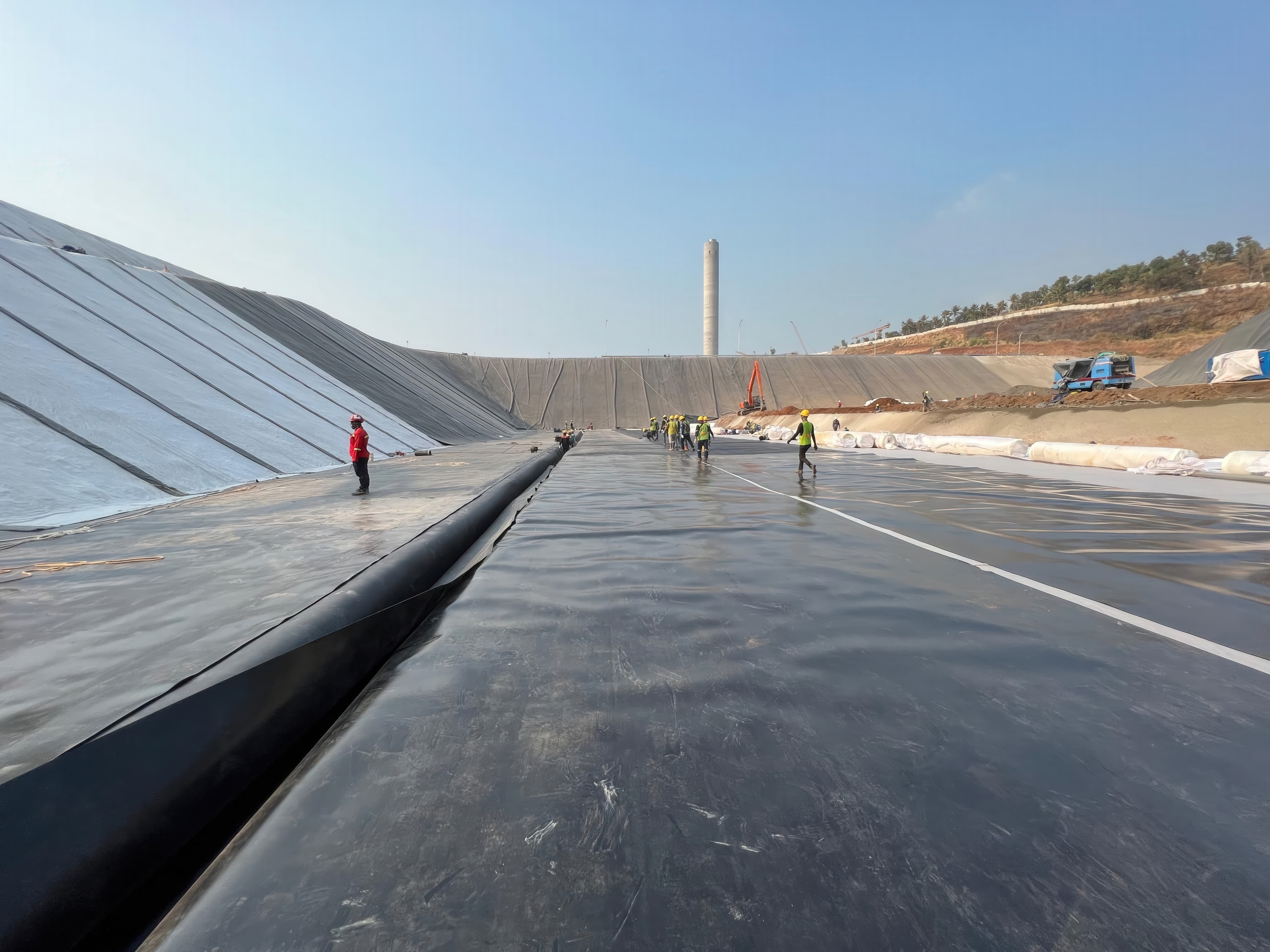
The containment system was built using GSE® HD geomembrane. In total, 113,000 m² of GSE HD geomembrane was installed across multiple containment zones within the ash handling facility.
Consistent material performance played a critical role in maintaining momentum despite access and safety constraints. Ongoing technical support and QA/QC guidance supported installation quality and helped manage variable site conditions. The system was completed within the planned 12-month schedule, with zero leakage incidents reported.
The finished liner system strengthened environmental protection, enhanced operational safety, and reinforced regulatory compliance for the facility. As noted by the project team, the geomembrane “performed reliably across all areas” and “delivered consistent results” under demanding conditions, demonstrating the value of coordinated execution, rigorous QA/QC, and appropriate material selection in high-risk ash containment environments.