Overview
The Remediation of the Technical Marine Zone at Port Ouest in La Grande-Motte, Hérault, France, forms part of a major infrastructure modernization programme designed to improve the long-term functionality, compliance, and operational performance of the port. The project has an anticipated service life of 50 years and supports the broader Ville-Port II development, which is managed by the municipality with the support of SPL L'Or Aménagement.
A fundamental component of the port infrastructure modernization programme involved the remediation of contaminated marine sediments. Before construction activities could proceed, approximately 2,000 m³ of contaminated sediments required dredging and treatment in accordance with environmental requirements. At the same time, the wider redevelopment required approximately 40,000 m³ of fill material, primarily for operations on the Baumel Esplanade, while a minimum dredging volume of 2,200 m³ was planned to facilitate the construction of new pontoons. These interconnected activities required careful planning to ensure that dredging, sediment treatment, and infrastructure construction could proceed within the constraints of the project programme.
The project was undertaken by BK ECO SERVICES and BTMF and required an effective approach to contaminated sediment management that would satisfy both environmental compliance and construction objectives. The remediation process needed to support ongoing redevelopment while preventing additional environmental impacts within the active harbour.
Challenge
The principal engineering challenge was the management of contaminated dredged sediments within a restricted working area while ensuring that water discharged back into the harbour remained free from turbidity and pollution. The combination of limited space, ongoing port operations, environmental regulations, and a demanding construction schedule created a complex set of project requirements that required an integrated dewatering solution.
The removal of contaminated harbour sludge represented a critical prerequisite for the wider modernization programme. Without successful dredging and treatment of these sediments, subsequent construction activities associated with the redevelopment of the port infrastructure could not proceed.
Water management represented another significant technical consideration. The dredging operation required seawater to be discharged back into the port while preventing the release of suspended solids and contaminants. This requirement imposed strict performance expectations on the sediment treatment process, particularly because the work was undertaken within an active harbour environment where water quality needed to be maintained throughout construction.
Site constraints further increased the complexity of the project. The available working area was limited, requiring an efficient sediment treatment process capable of operating within a relatively small footprint. At the same time, the site accommodated multiple concurrent activities, including port operations, construction works, nearby beaches, and shipbuilding activities. The location within a busy tourist area meant that construction activities also had to minimize disruption.
Programme constraints added another layer of complexity. The remediation works needed to be completed within a short timeframe before the start of the summer tourist season. Any delay in the dredging or dewatering process would have increased the risk of extending construction activities into July and August, potentially affecting both the redevelopment programme and surrounding public activities. Consequently, the selected solution needed to combine reliable environmental performance with rapid implementation and efficient treatment capacity.
Solution
The project adopted the GEOTUBE® dewatering solution as it provided the treatment capacity and dewatering efficiency required to manage contaminated sediments within the limited working area while supporting compliance with environmental discharge requirements. The solution was specifically selected for its ability to efficiently separate solids from water, allowing treated seawater to be returned to the harbour while retaining contaminated sediments for subsequent removal and treatment.
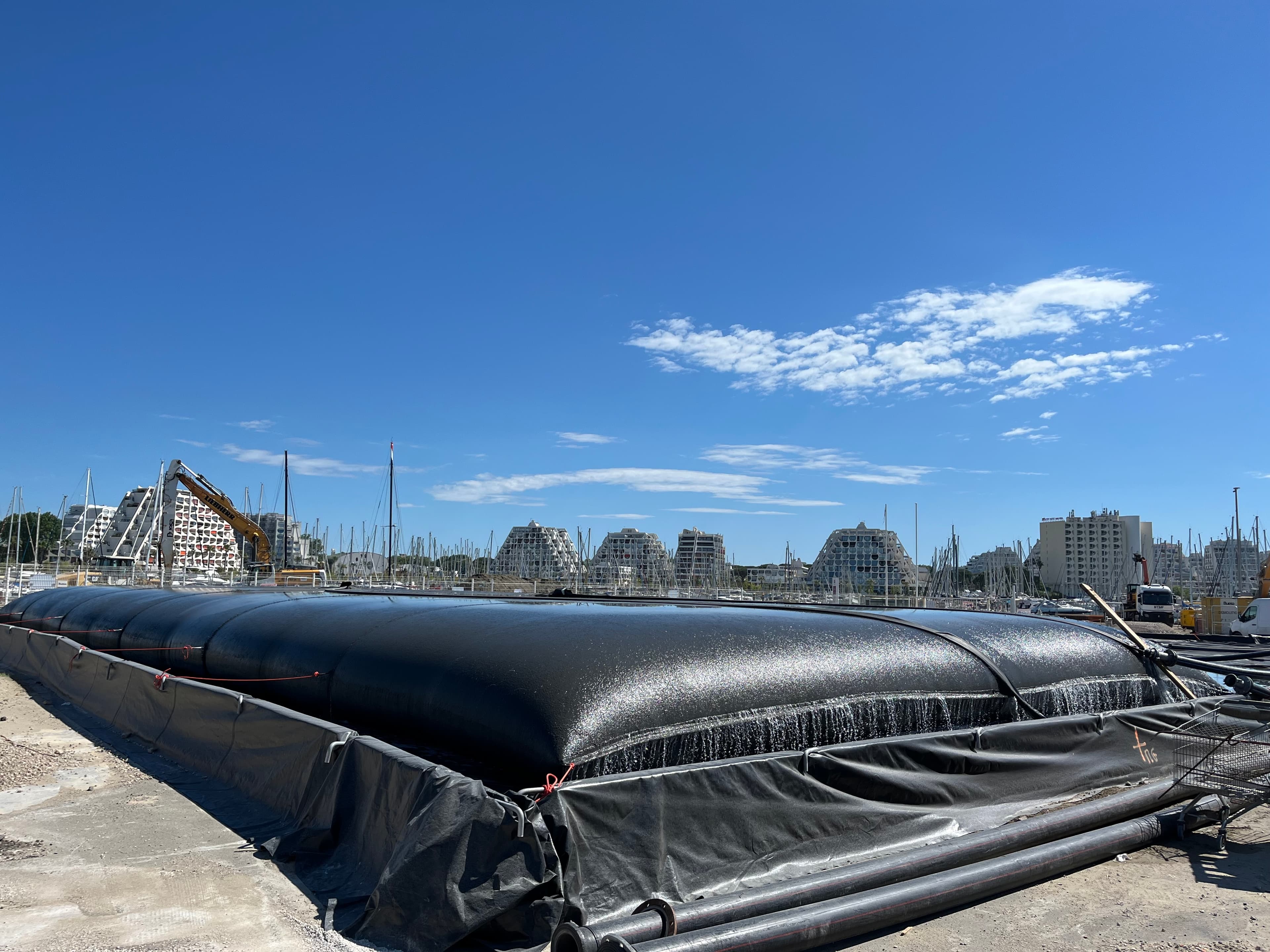
A secure dewatering platform was first established using a 45 m × 35 m NICOLON® C 881 liner installed on a prepared platform located between the beach and the port. This impermeable lining system created a controlled treatment area that prevented contamination of the surrounding ground during dewatering operations.
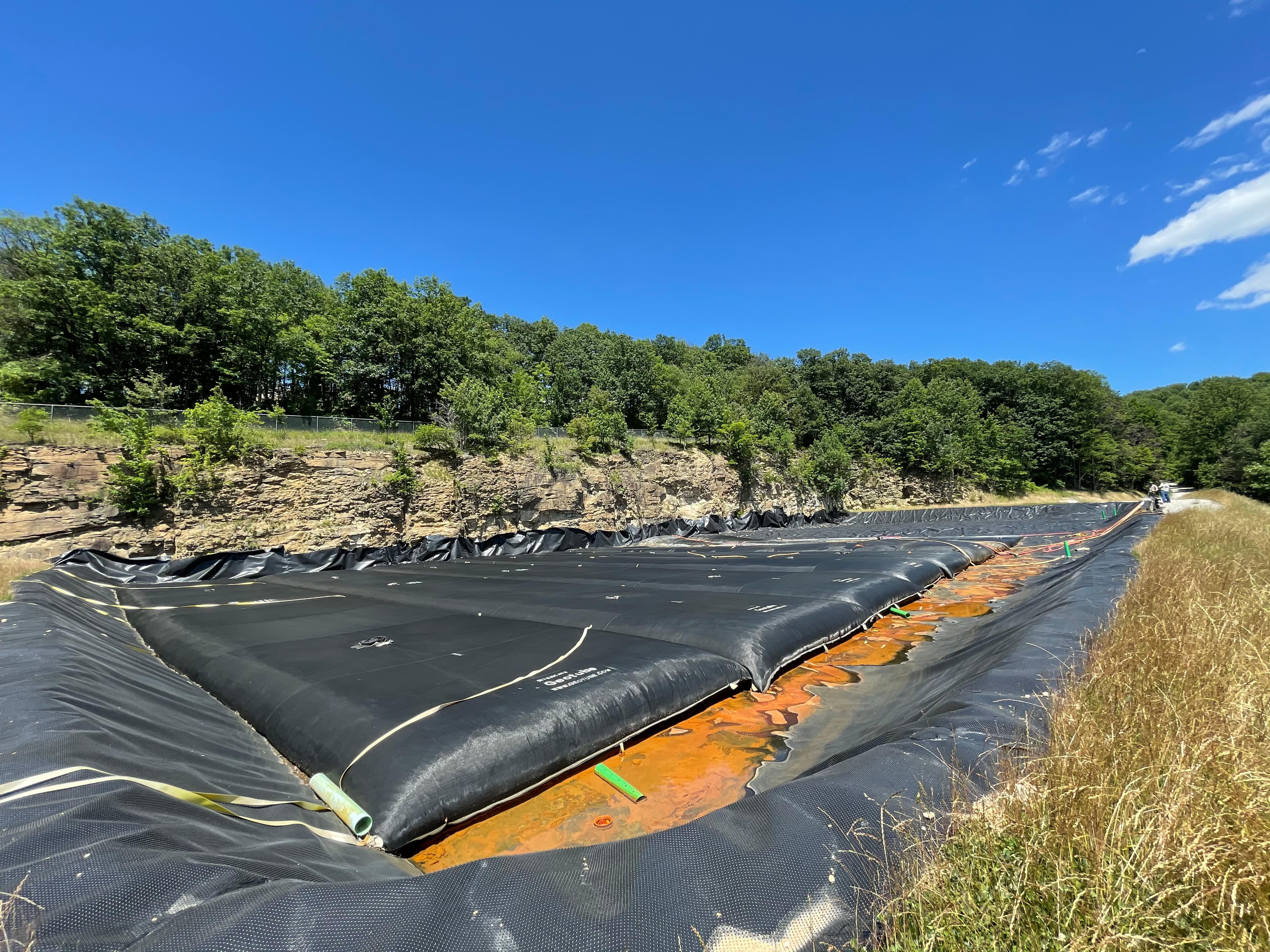
Three GEOTUBE GT500D containers, each with an approximate capacity of 850 m³, were then installed. During operation, dredged material was pumped into the GEOTUBE units while effluent (seawater) was discharged back into the port. Alternating filling cycles were carried out using an appropriate flocculant to maximize dewatering efficiency. This process promoted effective separation of solids from water while optimizing the retention of suspended solids and the targeted contaminants within the containment system.
As water drained from the GEOTUBE units, the retained solids progressively dried, significantly reducing the volume of contaminated sludge requiring final transport and treatment. This reduction in material volume improved the efficiency of subsequent handling while ensuring that the contaminated sediments remained safely contained until removal.
Project results demonstrated the effectiveness of the selected approach. Within only a few weeks before the summer of 2026, all contaminated sediments had been treated, dewatered, and transported to appropriate treatment facilities.
By supporting efficient dewatering, effective contaminant retention, and compliance with environmental requirements, the solution facilitated the successful completion of a critical phase of the wider port infrastructure modernization programme while meeting the project's demanding schedule and operational objectives.