Overview
A potash mining and processing facility in Germany operates a tailings heap for depositing the residue produced during crude salt processing. The site produces about 19 million tons of crude salt annually, which is used in the production of mineral fertilizers, pharmaceutical salts, and industrial products.
After the raw materials are processed, the remaining rock salt, not suitable for economic use – must be safely stockpiled and not be allowed to contaminate surrounding soils and water supplies.
Challenge
As the existing tailings pile was reaching maximum capacity, it needed to be expanded to ensure continuous, safe production of potash at the mine.
To expand the existing pile, a hydraulic separation system needed to be installed to avoid seepage of water in the fill area between the extension area and the existing heap.
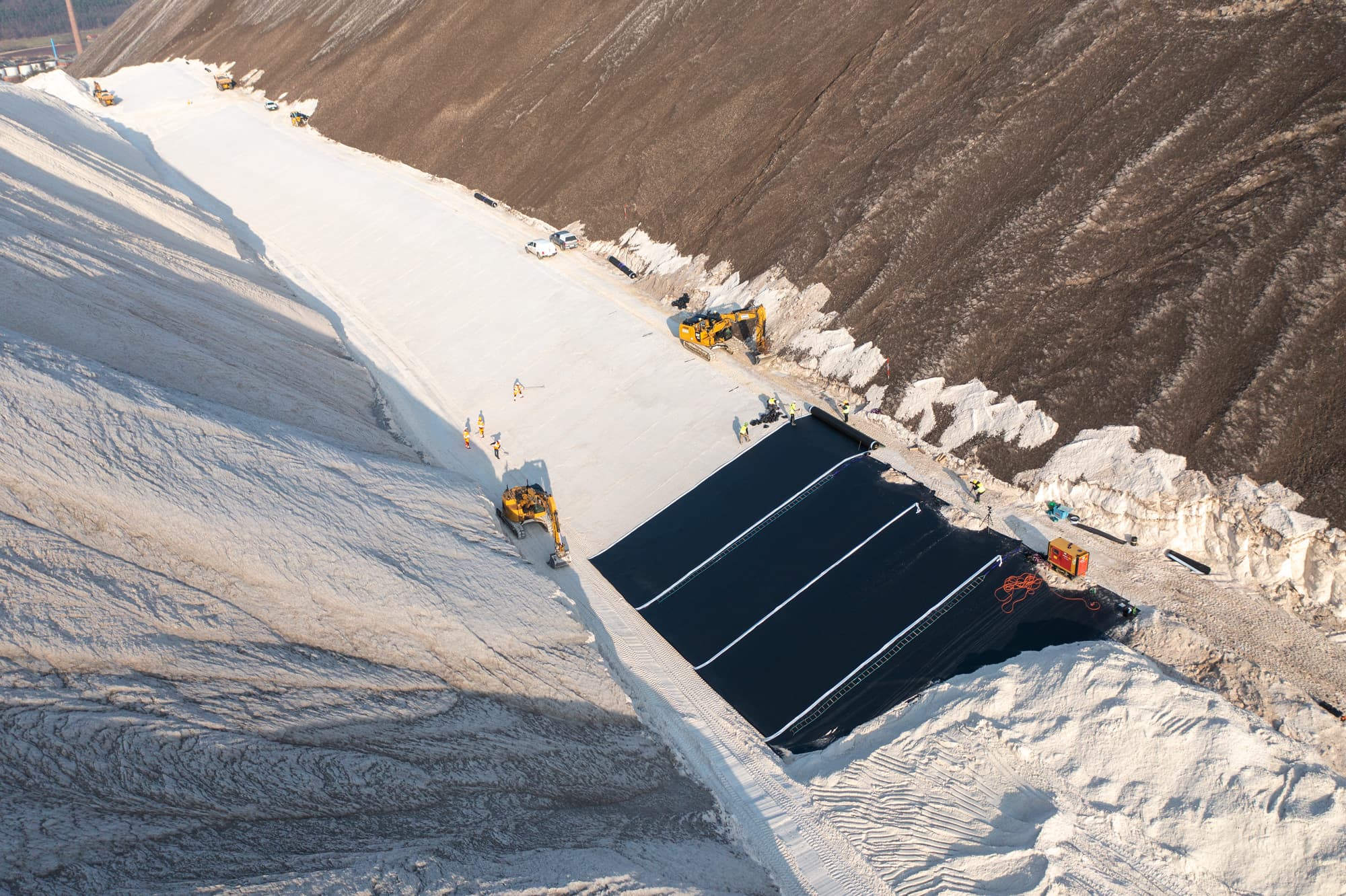
Because the terrain is steep, it needed to be reinforced before the hydraulic separation system could be installed. To secure the area and safeguard against seepage, pre-fill of approximately 5 m (16.4 f) in height was constructed. This height made the layered construction of the sealing system possible without the need for significant additional security measures. The hydraulic separation system could then be installed and laid using conventional technology.
There is a lack of standardization to govern quality standards in the construction of tailings facilities. As such the construction of the hydraulic separation system was designed to meet quality standards and regulations for landfills, in accordance with the German Landfill Ordinance (DepV). For this reason, Solmax Geomembranes with BAM certification were used in this application, which are usually used for landfills in Germany.
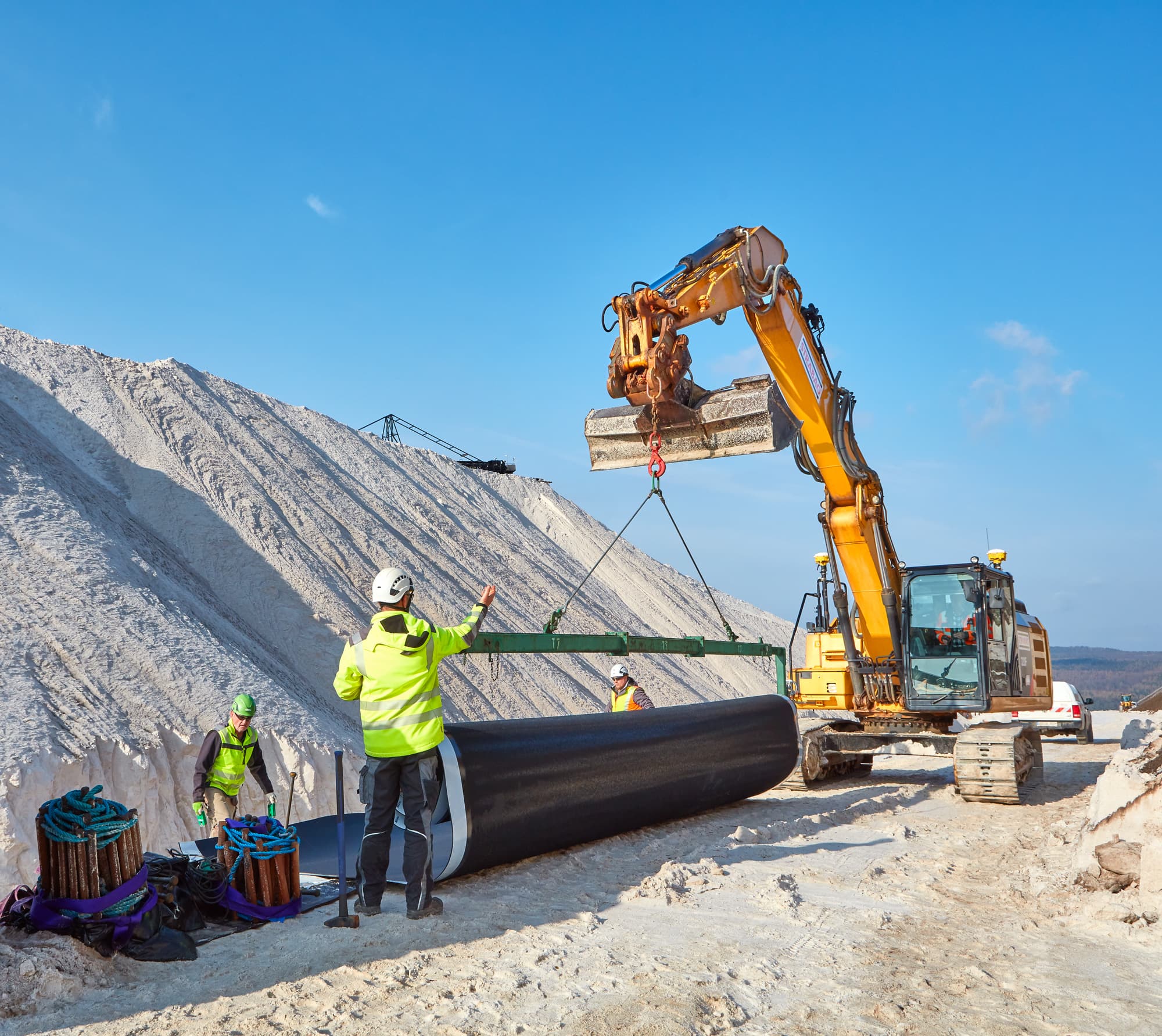
The biggest challenge in this project was the gradually increasing height of the paving site. Per berm also increases the height where the installation team had to work. The existing old pile has a total height of 510 m (1673.23 f), this height on berm 20 this year. Due to the increasing height, the logistics of transporting the material and the team to the installation site also become more difficult for our team. Solmax solved this problem by providing off-road vehicles for the team to drive up the steep slope. The material was transported up the slope in rolls with the help of an excavator.
Due to the height, there is also a high wind force, as a result it was very important to always secure the geomembranes in the same way to prevent accidents at work.
Solution
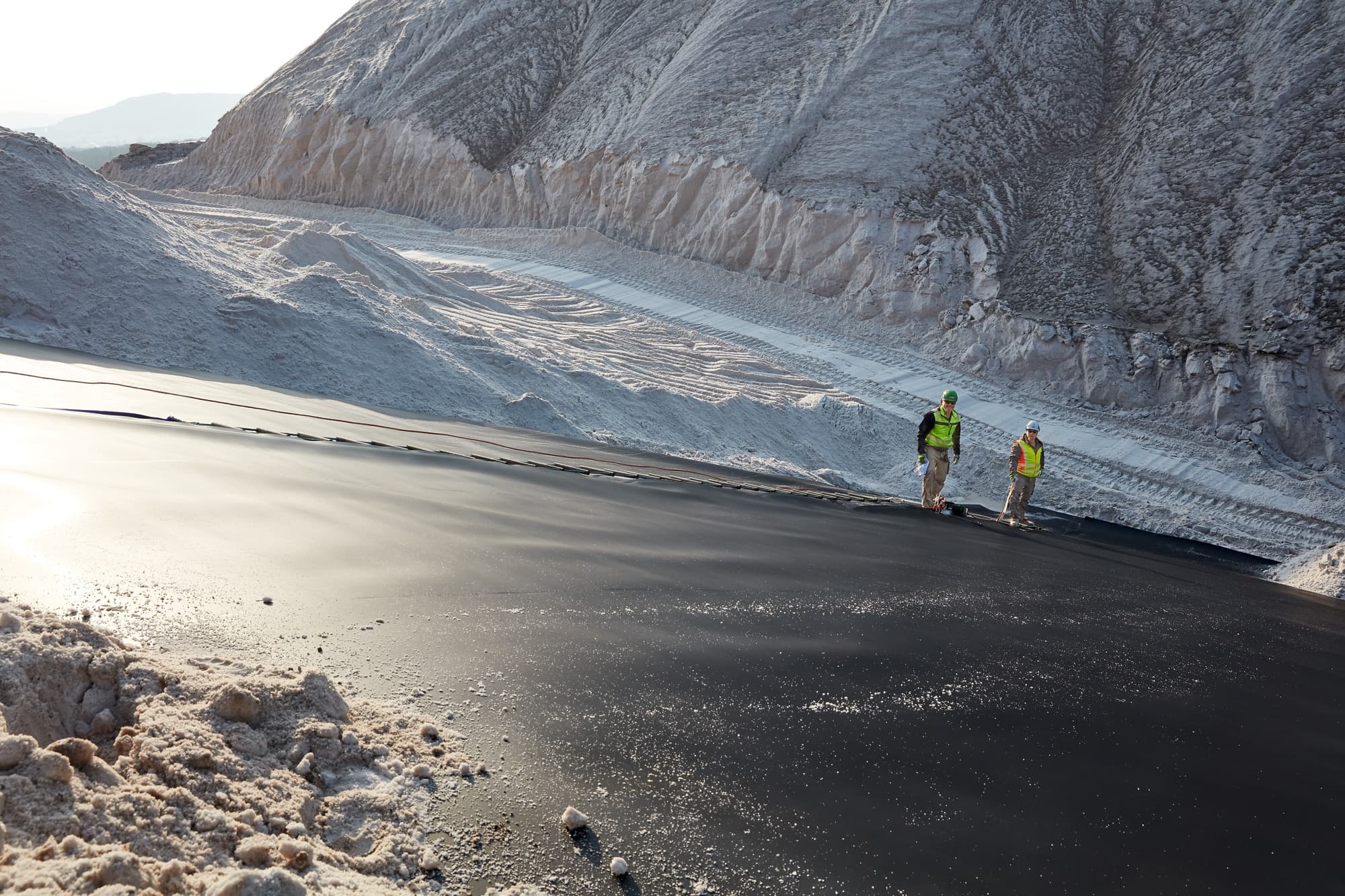
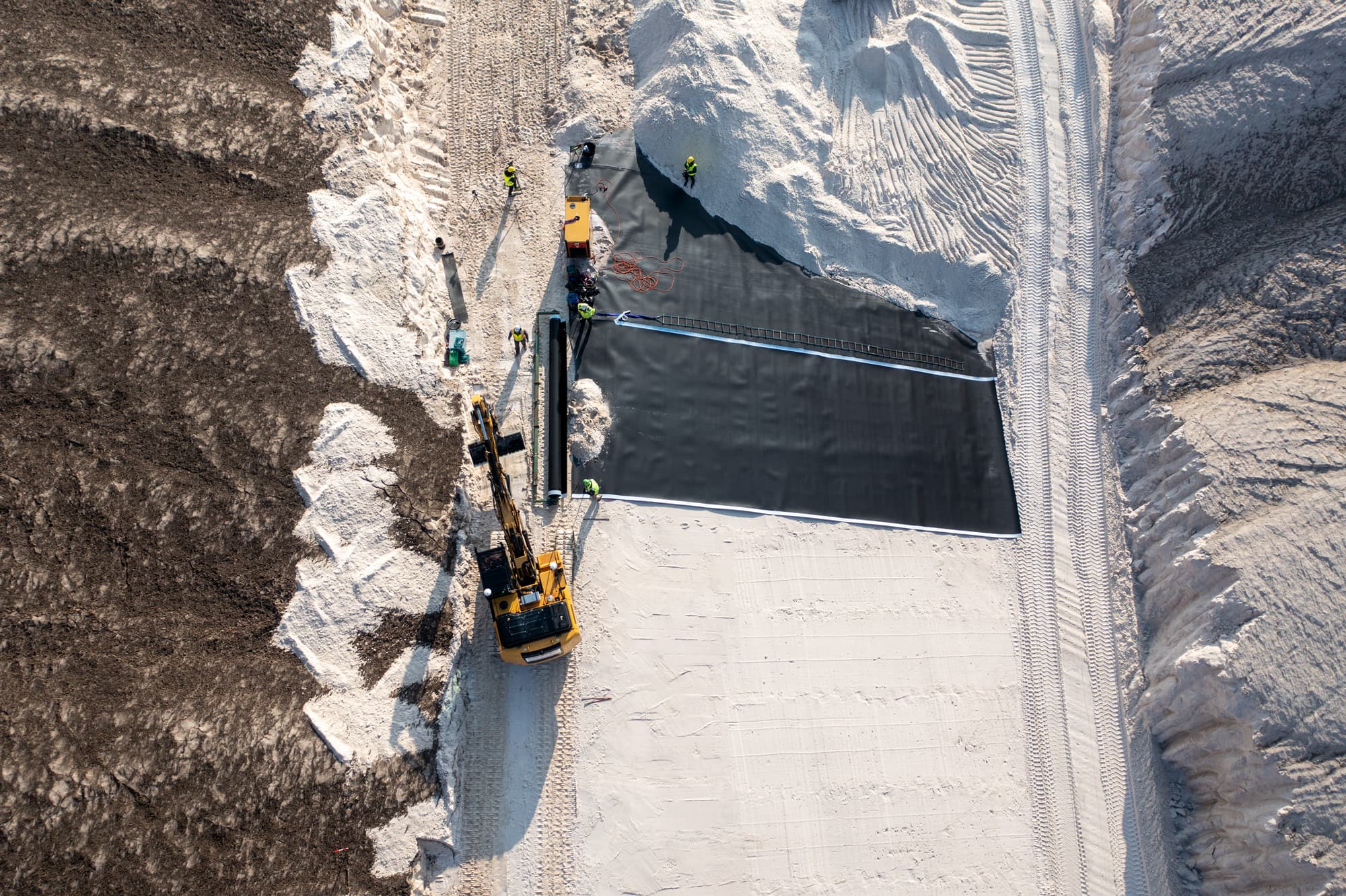
The planned hydraulic separation was achieved by building approximately 5 m (16.4 feet) high heap-based pre-fills along the old heap, which were then sealed with GSE® HD liner towards the new heap. GSE HD 2.50 mm FrictionFlex single-sided MRS, covering 140,000 m² (2 million f²), was installed by a team of only three people.