
Dredging the Schwarze Elster River with GEOTUBE
Discover how GEOTUBE® dewatering systems helped manage 10,000 m³ of sediment from the Schwarze Elster River, delivering an effective dewatering, containment and cost-effective solution.
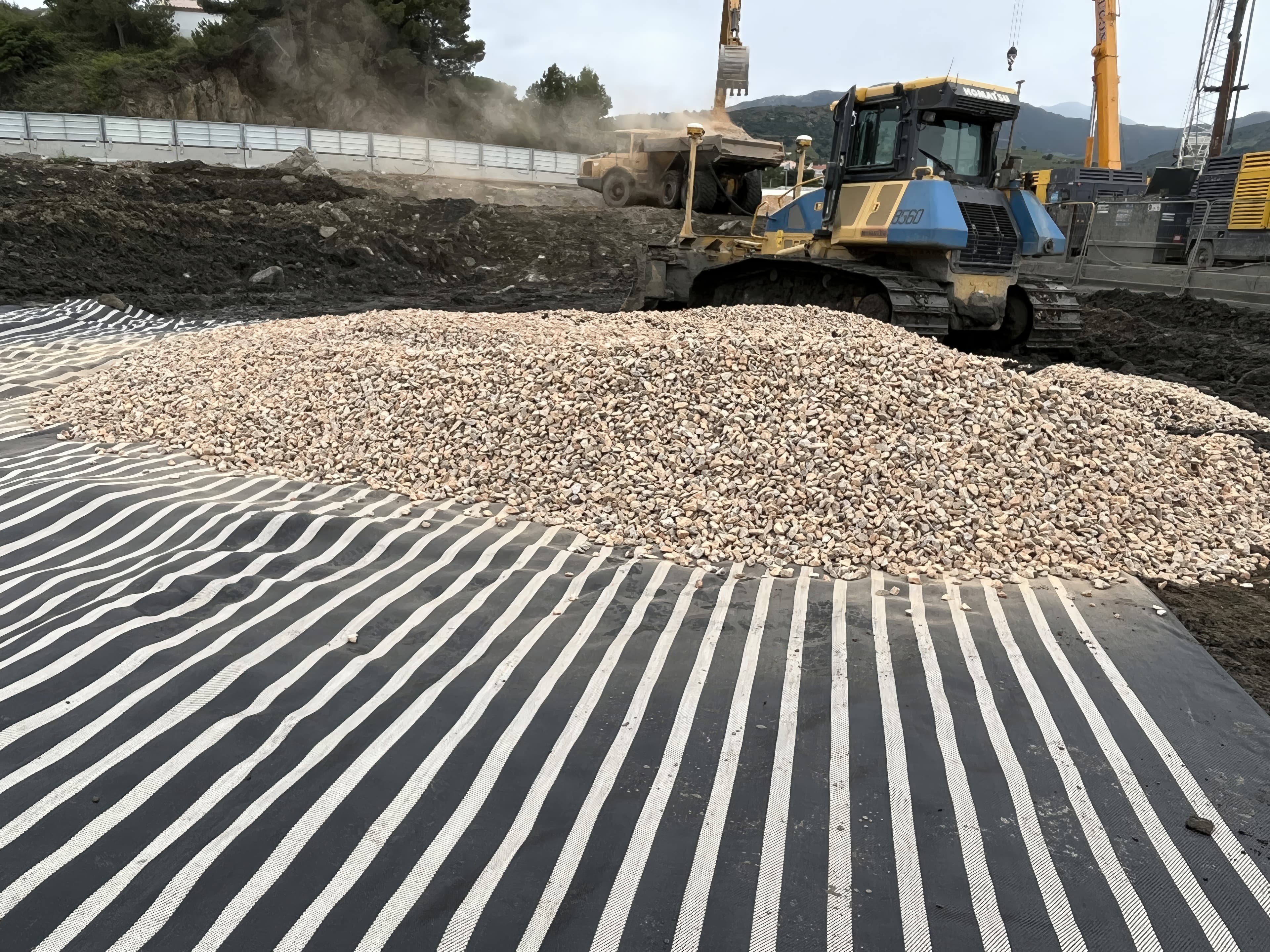
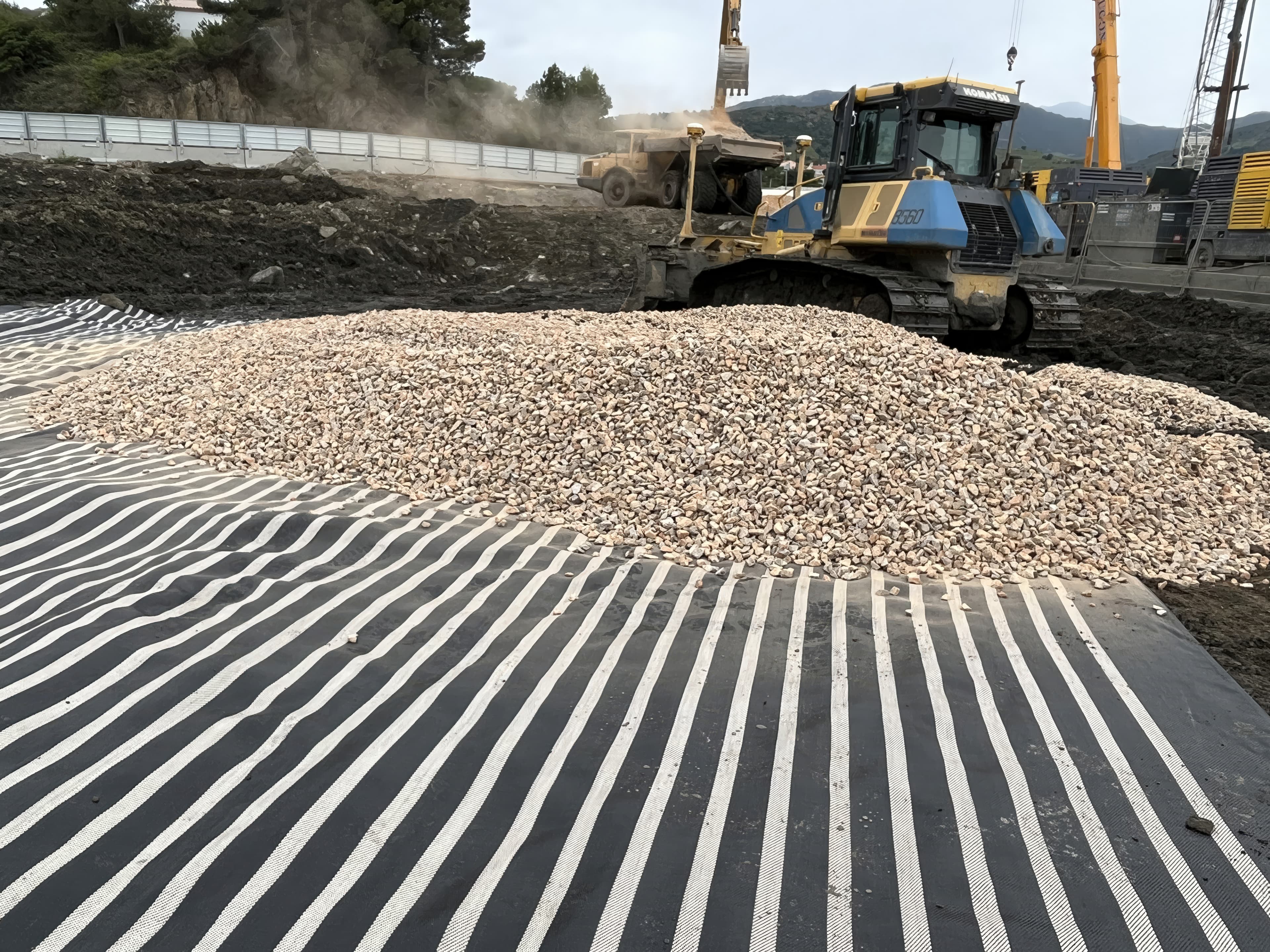
A 50 to 60 cm layer of 80/200 granular material was placed above the MIRAFI HMi 5 layer.
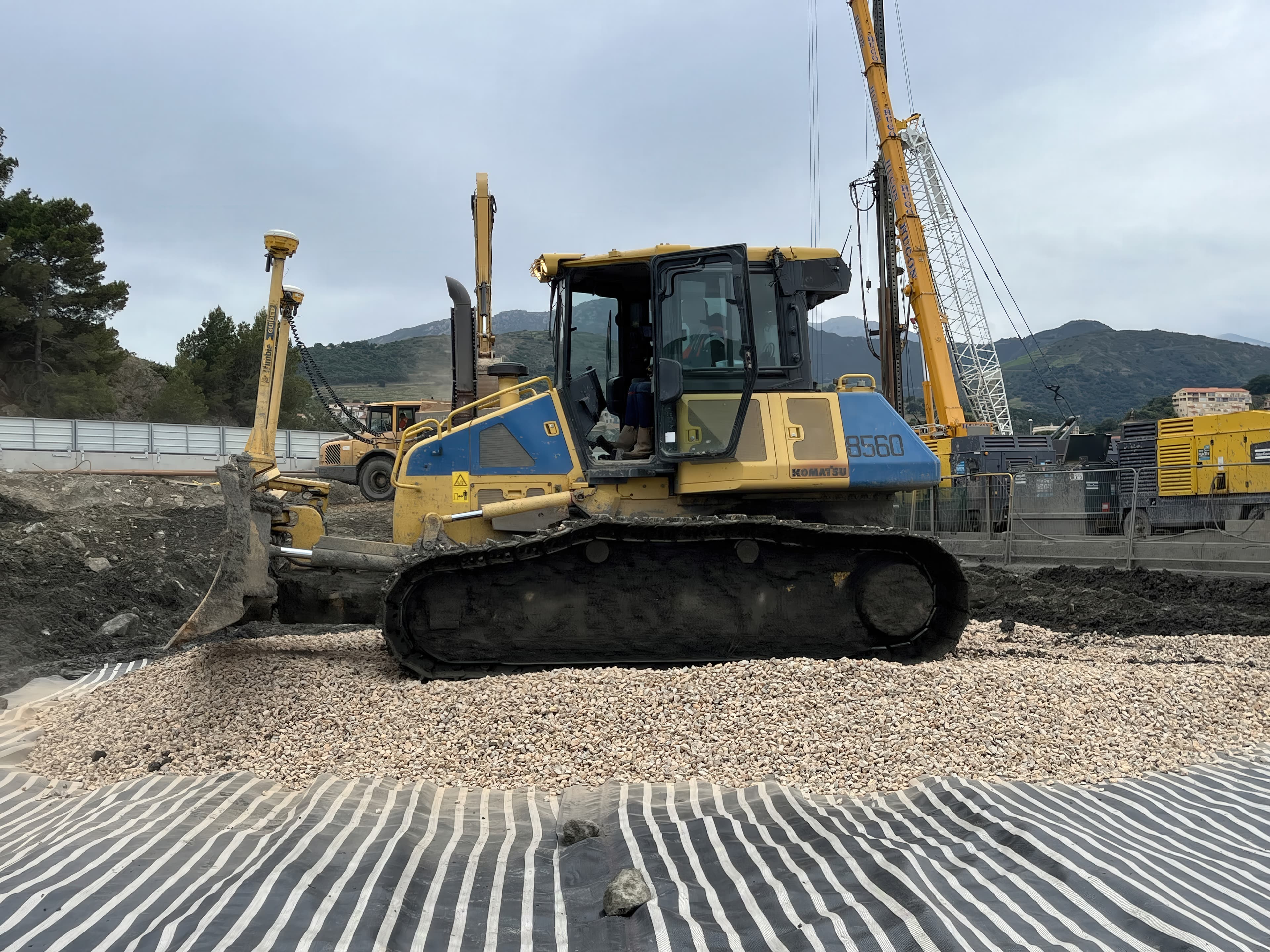
The layered system created a trafficable platform capable of supporting construction vehicles during preloading.
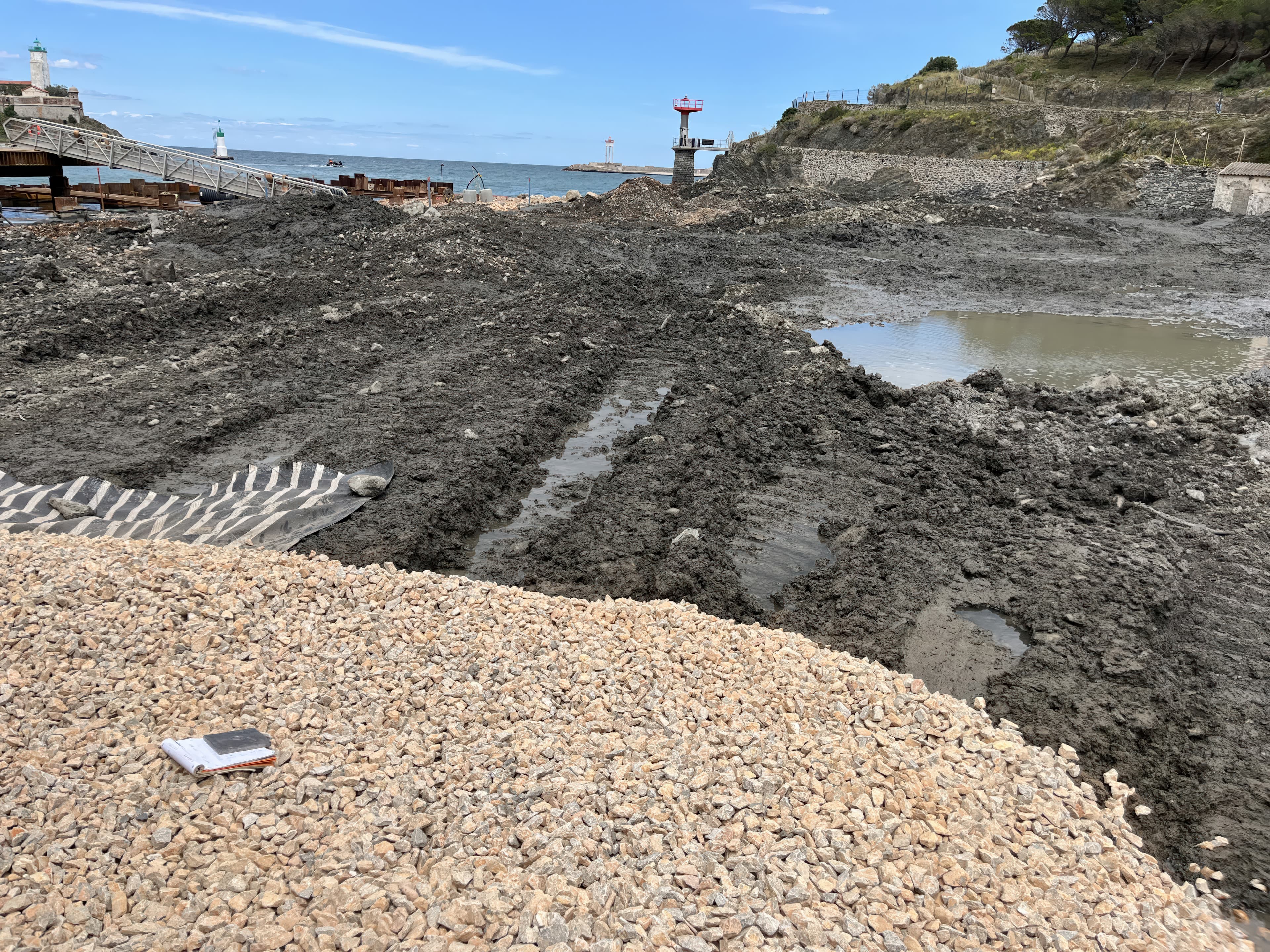
The installation sequence limited deformation while settlement occurred in the underlying compressible soils.
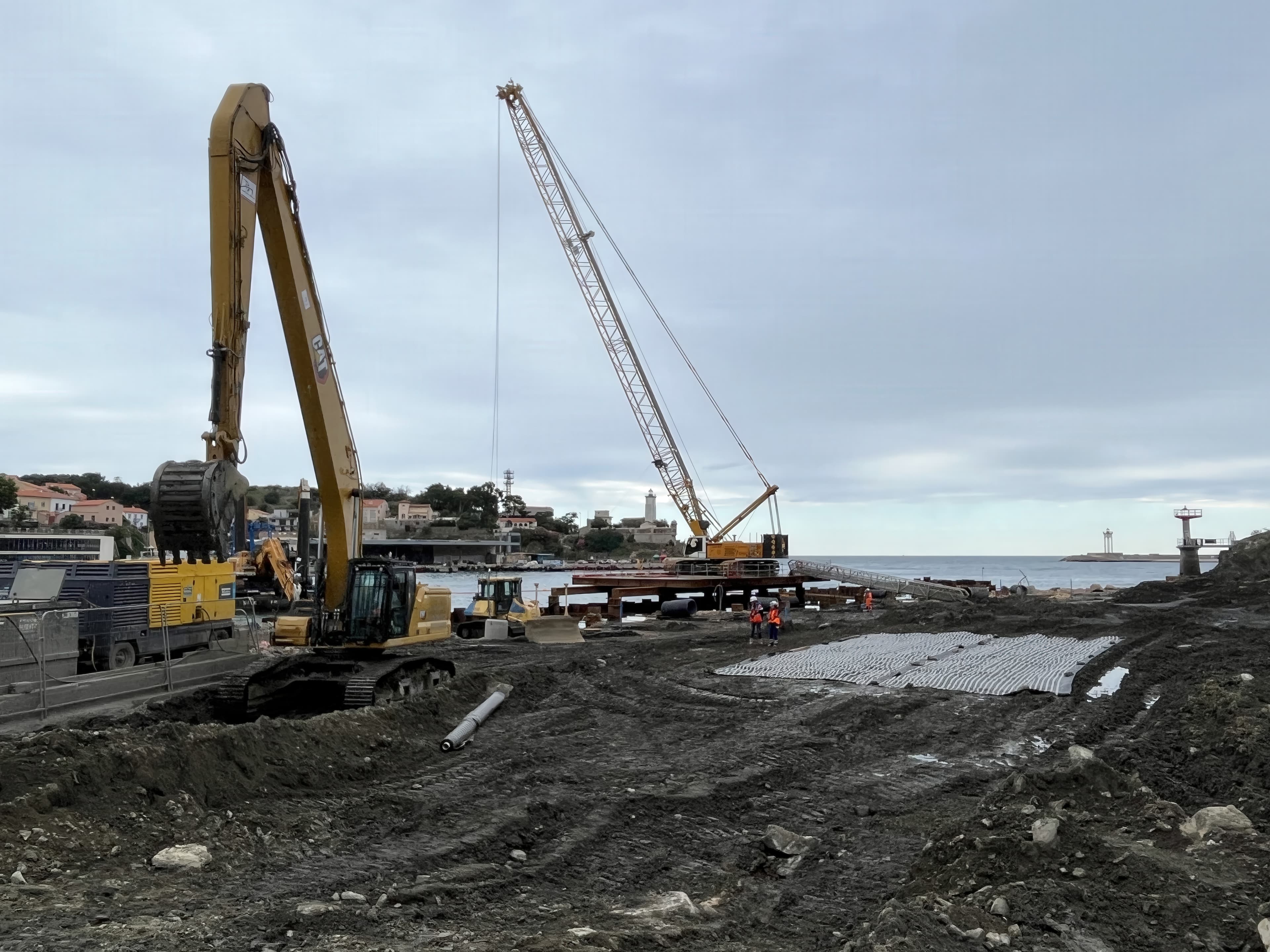
A test board was assembled on site to verify installation quality and system behavior.
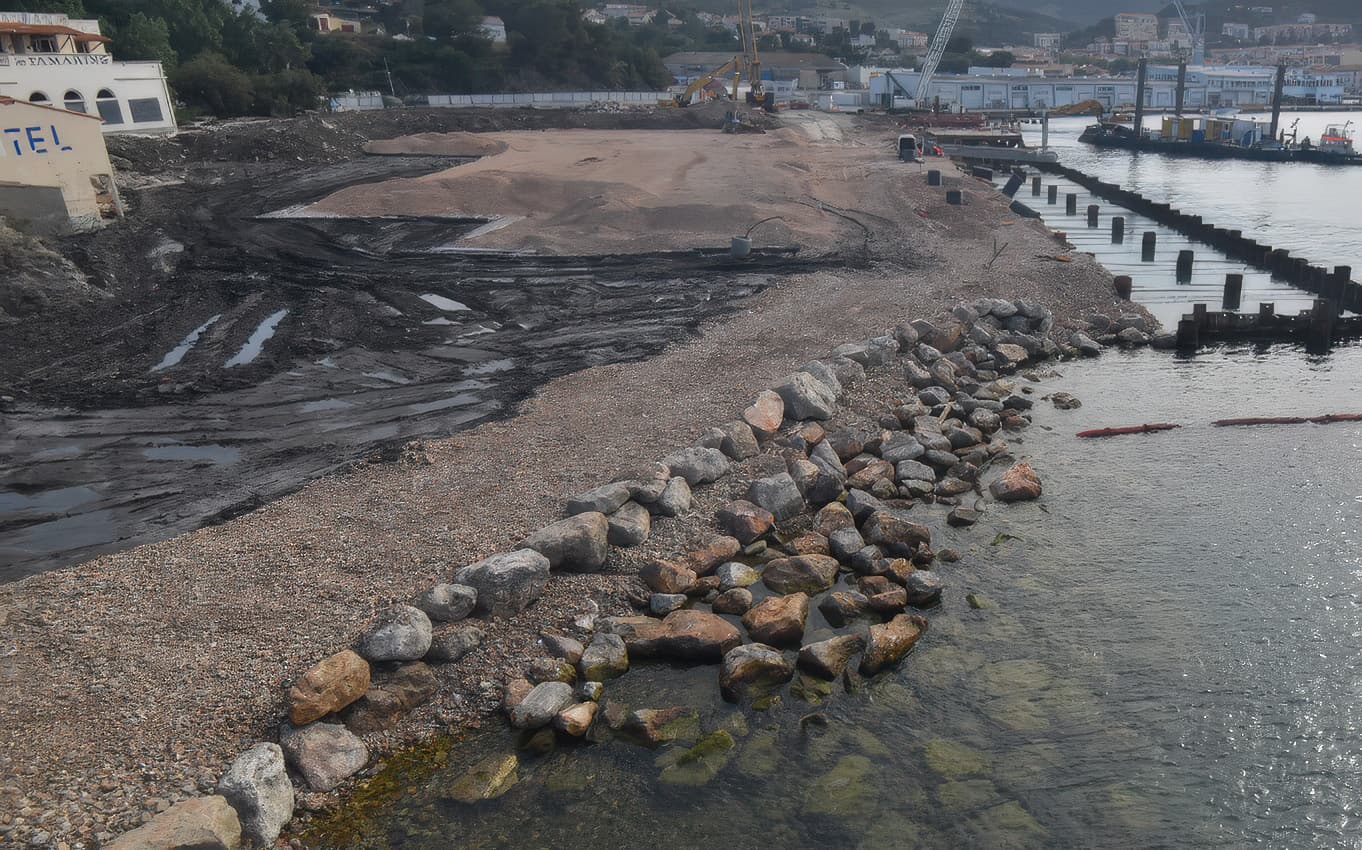
The platform remained stable and trafficable throughout dredging and material placement operations.
Dredging the Schwarze Elster River with GEOTUBE
Discover how GEOTUBE® dewatering systems helped manage 10,000 m³ of sediment from the Schwarze Elster River, delivering an effective dewatering, containment and cost-effective solution.
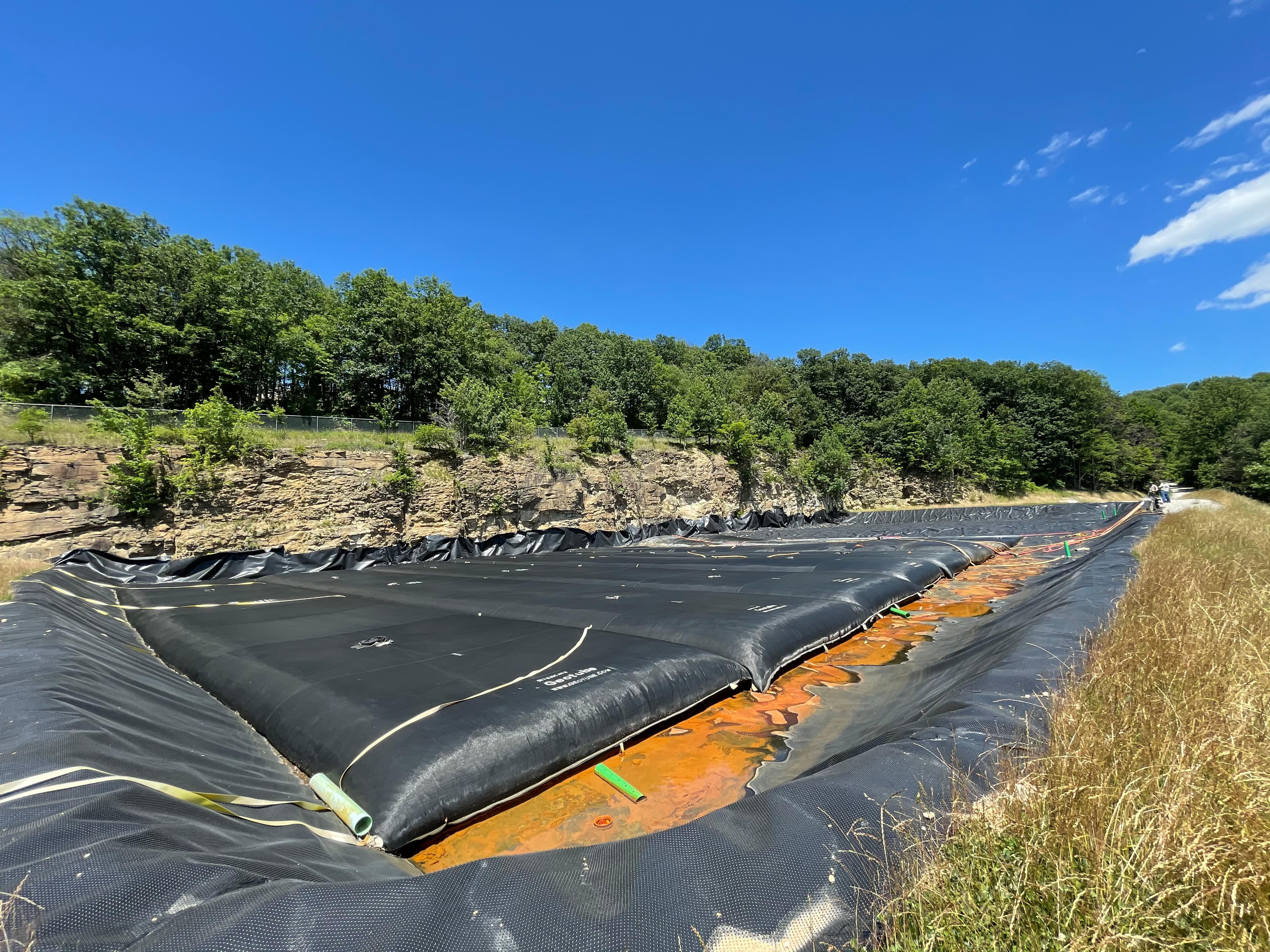
Omega Mine extends AMD treatment capacity with dewatering
At Omega Mine in West Virginia, GEOTUBE® GT500 units help the West Virginia Department of Environmental Protection treat and dewater acid mine drainage from abandoned mines while supporting long-term capacity and compliance.

Dredging and reuse of contaminated sediments
Embraport used dewatered contaminated sediments as structural fill within its terminal platform, saving 400,000 m3 of imported material and reducing earthfill platform costs by 20% to 30%.
Renovation works at the Port-Vendres seaport in southern France included the modernization and extension of Dezoum’s quay to increase operational capacity and improve functionality. The project comprised marine and landside works, including dredging, rock removal, quay extension, and the construction of a rear embankment to support expanded port operations. The new quay extension measures approximately 170 m in length, with a design water depth of 9 m at the quay face and incorporates a roll-on/roll-off ramp at its end to facilitate loading and unloading activities. A 10,700 m² embankment constructed from consolidated dredged and excavated materials extends the quay at the rear, enabling reuse of on-site materials within the overall design.
As part of the marine works, a temporary submersible breakwater was required to support dredging and rock removal operations at sea. The breakwater served a dual function: providing protection for ongoing works while allowing excavated materials to be deposited in a nearby cove. During the execution phase, the structure also needed to remain trafficable to accommodate construction vehicles moving across the site. The temporary breakwater was supported by a Combiwall sheet pile wall system, allowing controlled access and load transfer during the works.
The geotechnical conditions at the site were characterized by compressible soils, requiring careful management of bearing capacity and deformation. Preloading of the embankment was planned to control settlement and improve ground performance prior to later construction stages. Although the crest of the temporary breakwater was not intended to be permanently trafficable, it was required to maintain sufficient bearing capacity and stability to safely support construction traffic throughout the execution phase.
Within this context, the project required a ground improvement solution that would enhance trafficability over compressible soils while limiting the thickness of granular materials at ground level. Reducing granular thickness was a key design objective due to its direct influence on material volumes, construction logistics, execution time, and environmental footprint. These constraints are particularly significant in port environments, where working space is limited and construction sequences must be tightly controlled to avoid disruption to marine operations.
The primary technical challenge was to achieve a stable and trafficable working platform over compressible soils during preloading, while minimizing the thickness of imported granular materials. Compressible soils typically exhibit low bearing capacity and significant deformation under load, which can compromise temporary platforms and lead to excessive rutting or settlement during construction. In this project, these risks were amplified by the need to accommodate repeated vehicle loading during dredging and material placement operations.
The initial installation sequence involved preparation of a base course using materials generated from the rock removal process. This layer was lightly compacted to form a preliminary working platform. However, the mechanical properties of the underlying soils limited the effectiveness of a conventional granular build-up alone. Achieving adequate bearing capacity through granular layers only would have required substantially increased thicknesses, resulting in higher material demand, longer construction times, and more complex logistics within the constrained port site.
The design therefore needed to balance structural performance with material efficiency. The platform had to remain trafficable during the installation of the preload fill and throughout the preloading period, despite ongoing settlement of the underlying soils. At the same time, the system had to prevent intermixing between fine-grained subsoils and overlying aggregates, which could otherwise lead to loss of bearing capacity and long-term performance issues even during temporary use.
Environmental and logistical conditions typical of a coastal construction site were present, but these were not the dominant constraints. Instead, the critical challenge was technical: improving load distribution and limiting deformation in a compressible soil context while deliberately reducing the thickness of granular materials at ground level. This required a solution capable of mobilizing reinforcement effects efficiently, providing separation, and maintaining stiffness under temporary loading conditions.
The installation process addressed these challenges through a layered system. Following base preparation, a layer of MIRAFI® HMi 5 was installed directly over the lightly compacted materials. This was followed by the placement of 50 to 60 cm of 80/200 granular material. The combined system was designed to improve load transfer, reduce stress on the subgrade, and maintain platform integrity during traffic and preloading operations.
A test board was assembled on site in the presence of both the supplier and the project team, allowing direct observation of installation quality and in-situ behavior. This step provided additional confidence that the system would perform as intended under site-specific conditions.
The adopted solution was based on the use of MIRAFI HMi 5, installed over an area of approximately 9,000 m². The product was selected for its high rigidity and low deformation characteristics, which are particularly advantageous when working over weak or compressible soils. These properties enable more effective load distribution across the platform, reducing stress concentrations and limiting vertical deformation under construction traffic.
A defining characteristic of MIRAFI HMi 5 is its ability to combine separation and reinforcement functions within a single product. In conventional ground improvement designs, these functions are often addressed using separate components, such as a geogrid for reinforcement and a geotextile for separation. Integrating both functions into a single layer simplified the construction sequence, reduced the number of interfaces within the system, and minimized the risk of installation-related issues. This simplification was particularly beneficial in a temporary works application, where construction speed and reliability were critical.