Overview
TenneT initiated a project to connect wind farm electricity to the mainland grid, addressing the significant challenge of constructing a platform for drilling pipes under the dunes to house the wind farm's electricity cables. The project site at the beach, will be connected to the national grid which was below sea level behind the dunes, presenting a unique risk of flooding if not properly managed.
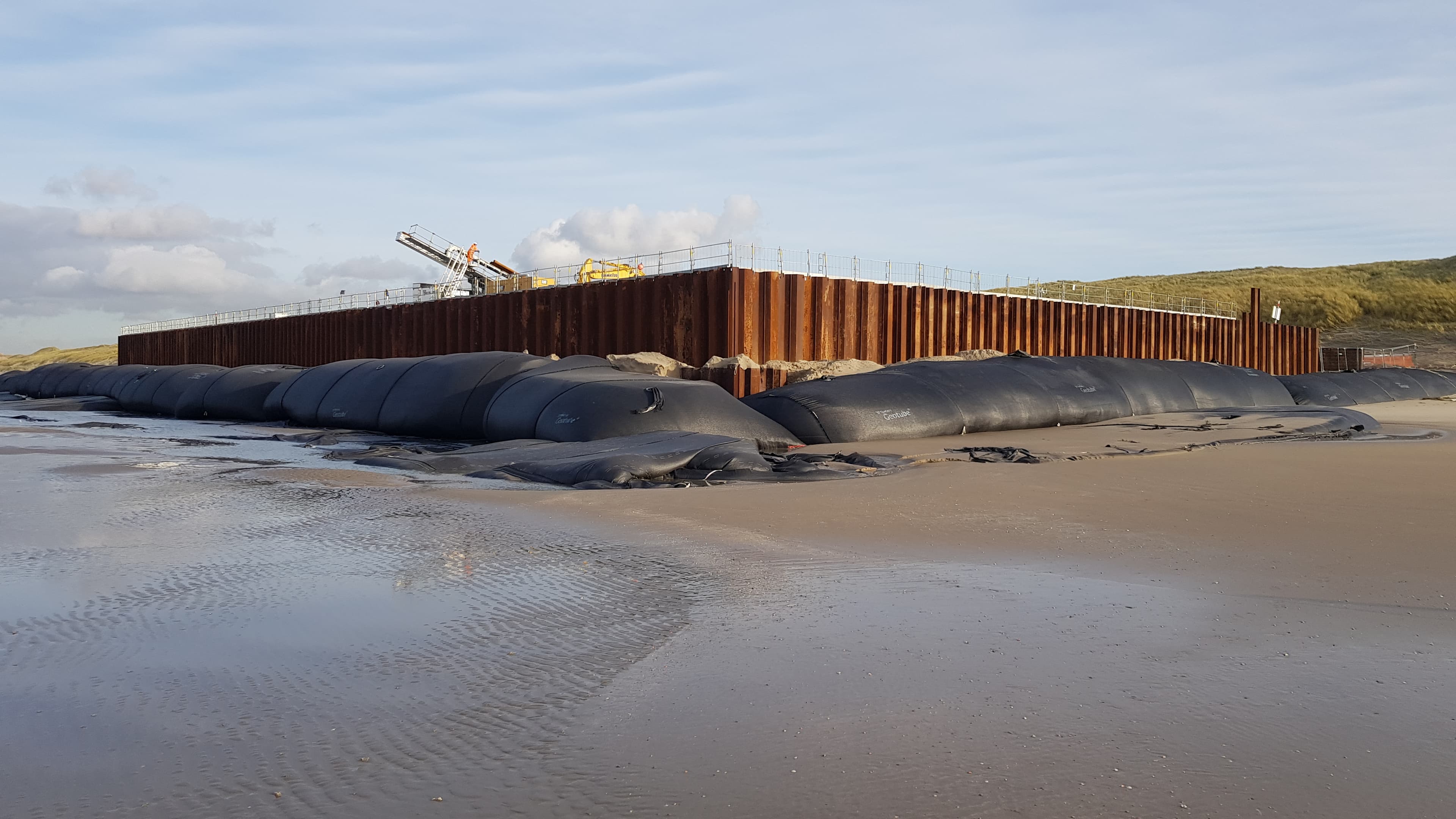
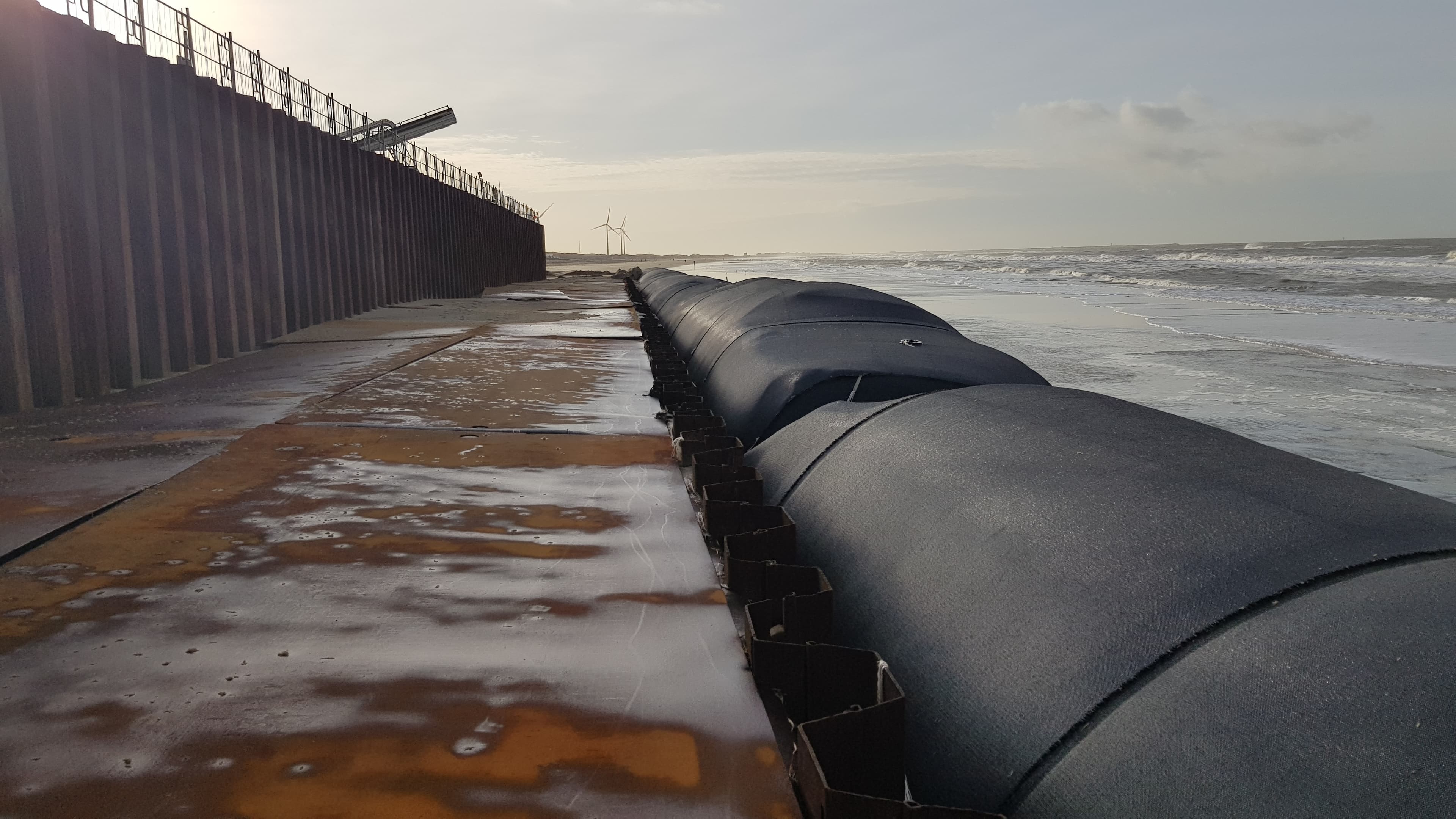
To counteract this risk, TenneT constructed a substantial platform on the beach. Standing 6-7 m (19.7-23 ft) tall and built with steel sheet piles, this platform was engineered to prevent flooding and withstand harsh weather conditions, particularly during the storm season from November to March, when construction was allowed. The GEOTUBE®system, serving as the first line of defense against north-west storms, was critical in absorbing wave energy. This phase necessitated collaboration with NRG, a consortium of van Vulpen, Alsema, and Denys, leading to a design approved by Deltares. The project was executed from October 2021 to March 2022, with the installed systems proving essential in protecting the structure from potential damage and flooding.
This initiative demonstrates the collaborative effort required to protect the local community living behind the dunes. The efficient, effective, and removable protective measures ensured the safety and well-being of the population with minimal environmental impact.
Challenge
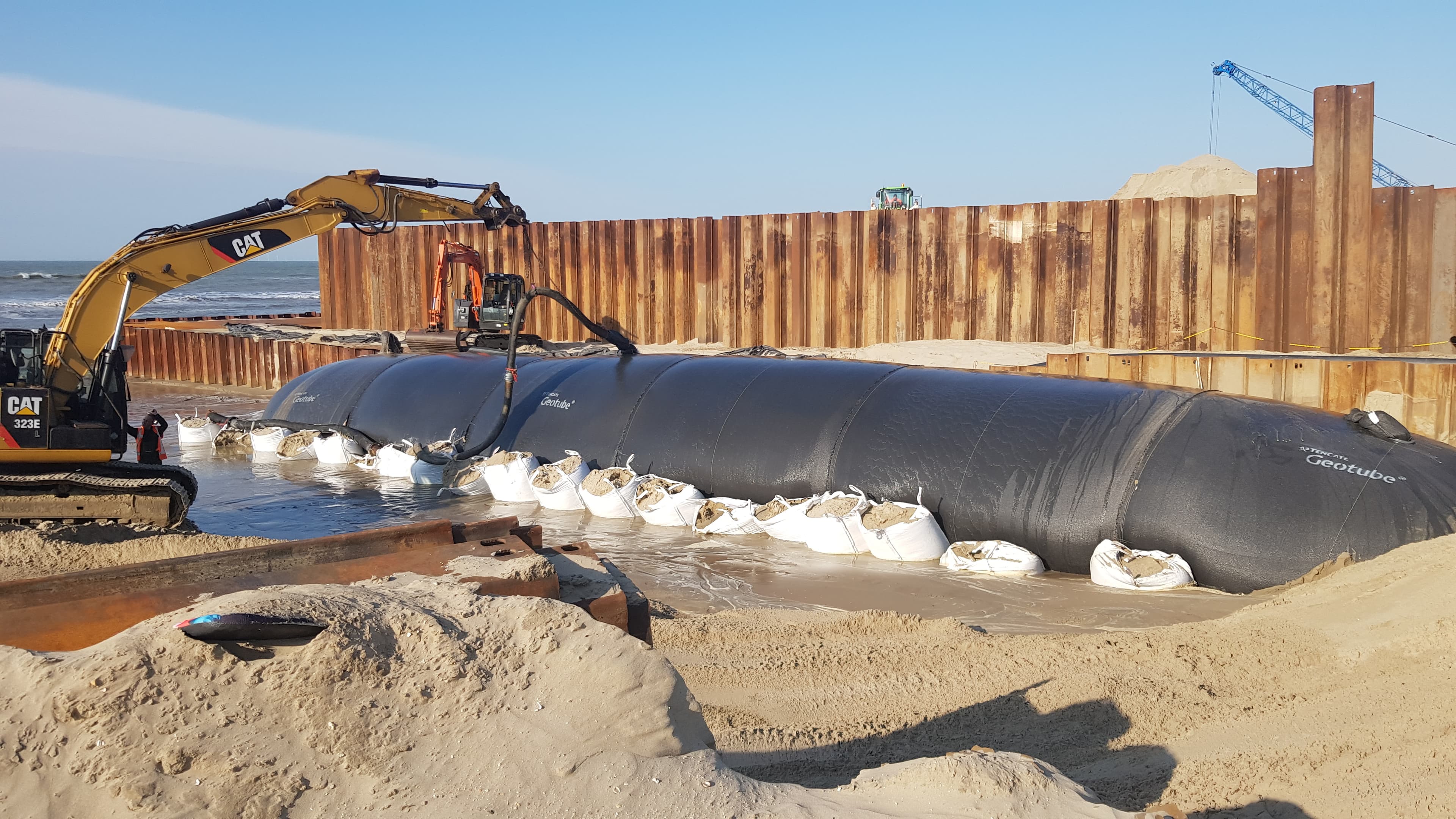
Installing steel sheet piles and filling the platform with sand demanded precision and planning to ensure stability and effectiveness. This complex task was managed by trucking in sand and simultaneously installing a scour apron with each GEOTUBE system section, fostering an organized construction process. The project, marking the first construction of such a large 'sandcastle' in the Netherlands, faced additional challenges from high tides, adverse weather, and potential storm damage, requiring meticulous planning for the installing contractor to swiftly implement all systems within a short timeframe.
Solution
The project's success hinged on deploying eight GEOTUBE systems (GT1000M) and ten GEOTUBE scour aprons (GT600M) of various dimensions, prefabricated for quick onsite deployment. These solutions were chosen based on a detailed design and risk assessment to provide a secure, temporary fix to the coastal challenges. Their flexibility and the CE-certified woven material used ensured durability and adaptability to the project's structural requirements. Despite the severe coastal conditions and the unpredictability of sand movement and erosion, the collaboration between NRG and TenneT resulted in a functional structure that performed effectively throughout its intended lifespan without any complex failures. Solmax's role was pivotal, offering reliability and support throughout all project stages, thus setting a benchmark for future coastal engineering projects.
Result
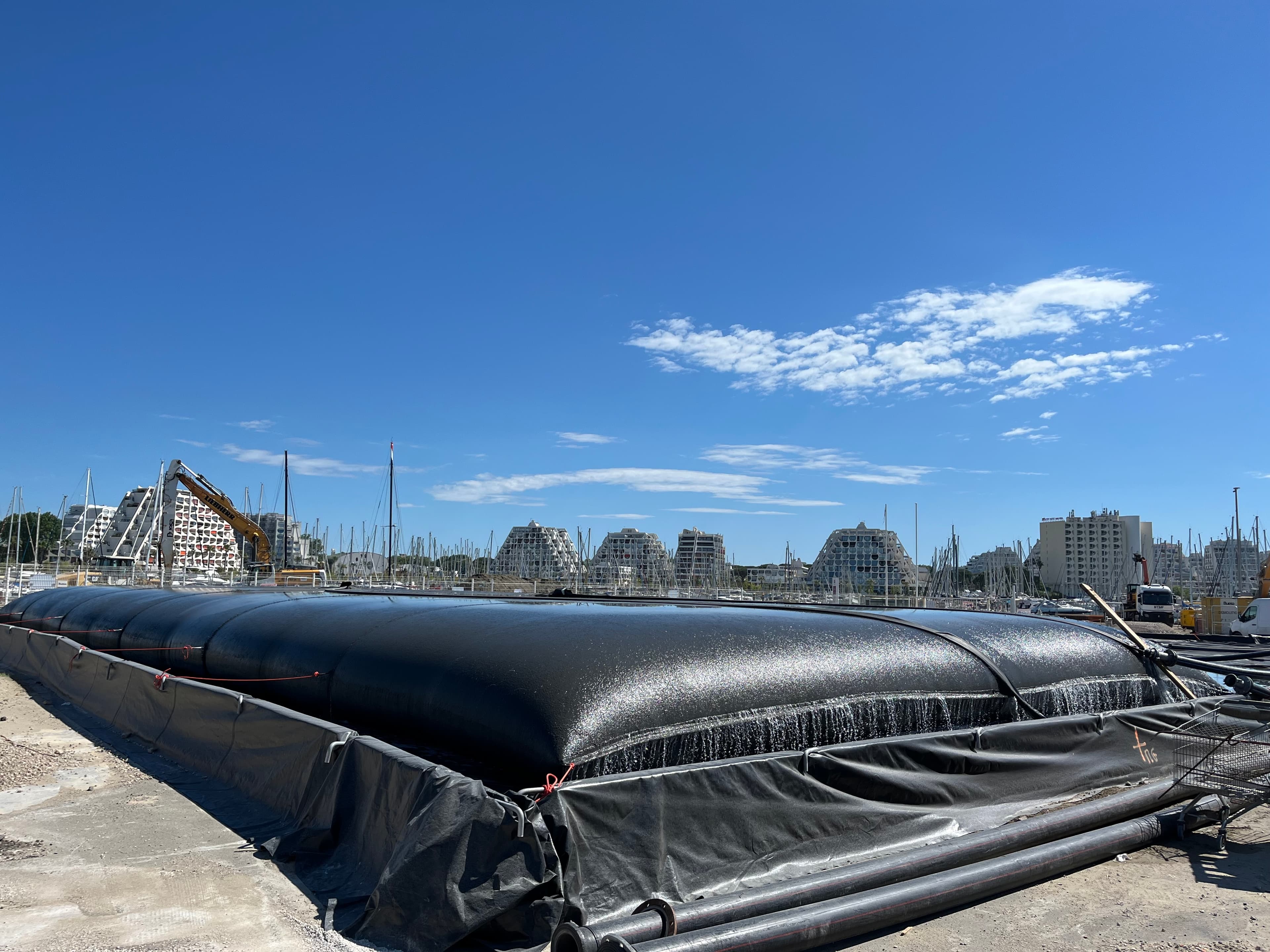
The project utilized high-strength woven GEOTUBE systems, tailored to meet specific demands. These systems, shaped like sausages and becoming oval upon filling, rely on sand's stability. Installation involved filling with a sand and water mixture, where water is expelled through the textile pores, retaining the sand. Prior to sand filling, filter stability calculations were recommended to ensure the structure's integrity. The strength of the seams and GEOTUBE woven material was crucial in absorbing installation stresses, demonstrating its effectiveness in protecting the steel vertical structure against wave forces.
This demonstrated remarkable performance in this temporary project, enabling pipeline installation during the storm season without delays. After six months, the entire structure was successfully dismantled, underscoring the project's temporary yet impactful contribution to the Netherlands' energy infrastructure.