Challenge
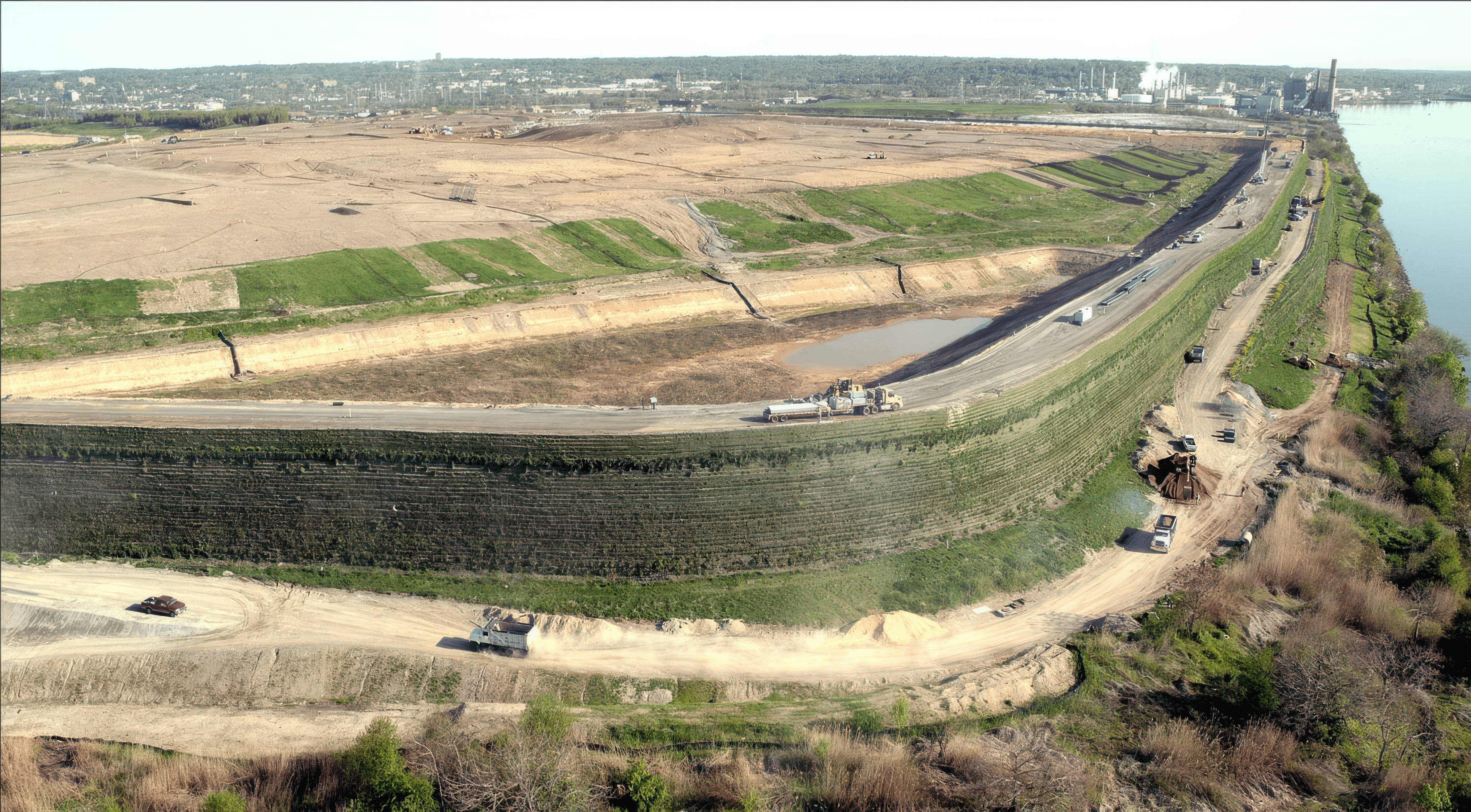
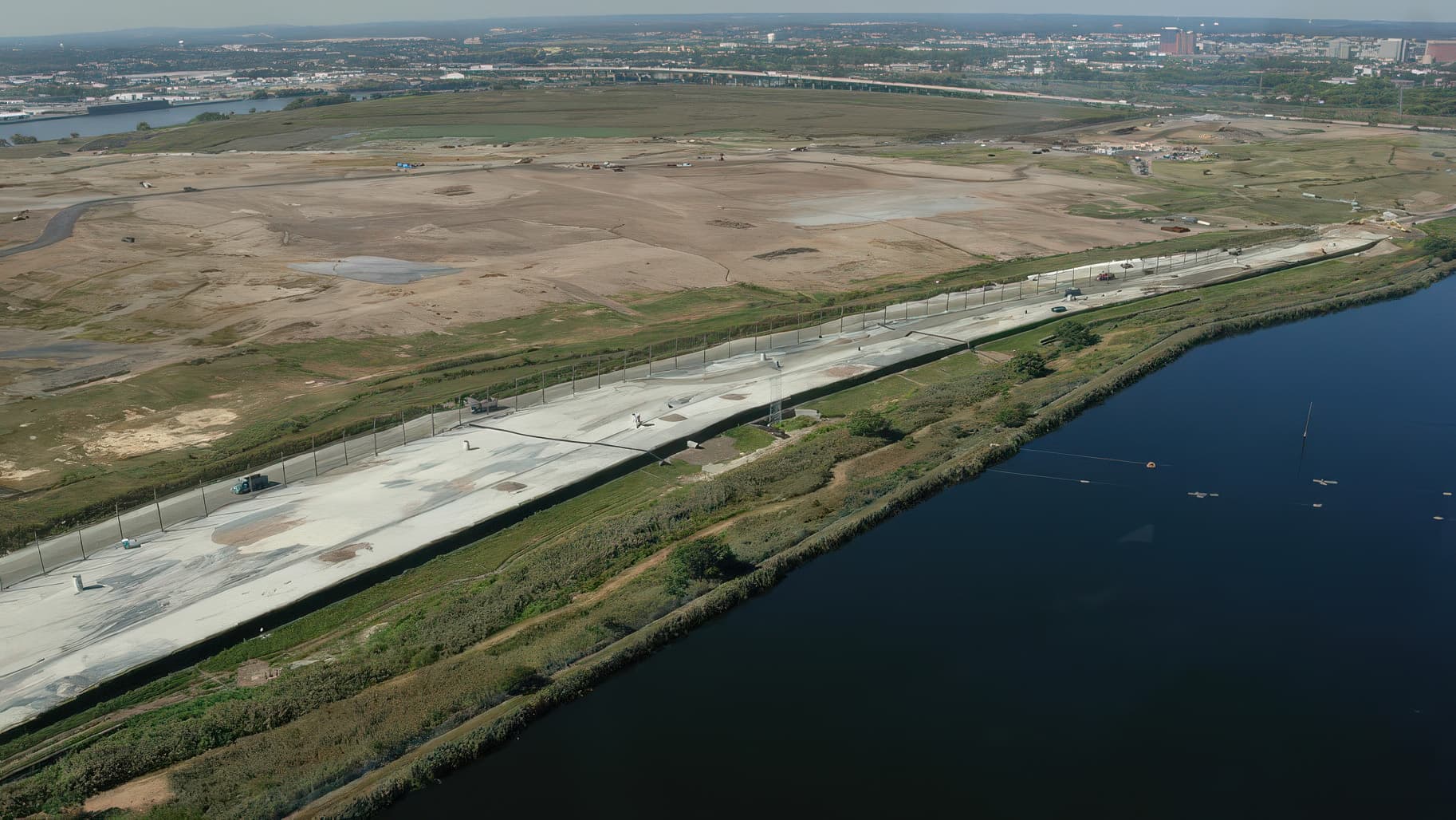
Cherry Island Landfill in Wilmington, Delaware, had a clear need: create additional disposal capacity in a highly constrained footprint. The site had operated since the mid-1980s and served as a critical solid waste facility for the state. However, horizontal expansion was not practical. The landfill was bordered by the Delaware River, the Christina River, Interstate 495 and nearby dredge lagoons, leaving vertical expansion as the only viable path forward.
That option brought a major geotechnical challenge. Cherry Island was built on an old dredged material disposal site, and the subsurface profile included approximately 40 feet (12 m) of dredged material over about 45 feet (14 m) of alluvial deposits, underlain by residual sand. Together, these layers formed a 60- to 100-foot-thick (18 m – 30 m) foundation of weak, low-permeability, highly compressible soils with undrained shear strengths reported as low as 200 pounds per square foot. Without ground improvement and reinforcement, the landfill side slopes could not be built steeper than 8H:1V.
In practical terms, the project team had to solve several problems at once. The foundation soils needed to gain enough stability to support a major vertical expansion. Excess pore water pressures had to dissipate in a controlled way during construction. Large settlements had to be anticipated and managed. At the same time, the final design needed to create meaningful additional airspace and remain constructible at full scale. This was not a conventional reinforcement application. It required a system capable of performing under very soft ground conditions and over a structure of exceptional size.
Solution
The selected solution combined prefabricated vertical drains (PVDs) with a massive mechanically stabilized earth berm reinforced with high-performance geosynthetics. This approach improved the foundation while also creating the containment geometry needed for vertical landfill expansion. The PVDs accelerated drainage from the weak dredged and alluvial soils to the underlying sand layer, allowing excess pore water pressures to dissipate as the embankment load increased. Instrumentation, including piezometers and other monitoring devices, helped the team track stability and control the rate of construction.
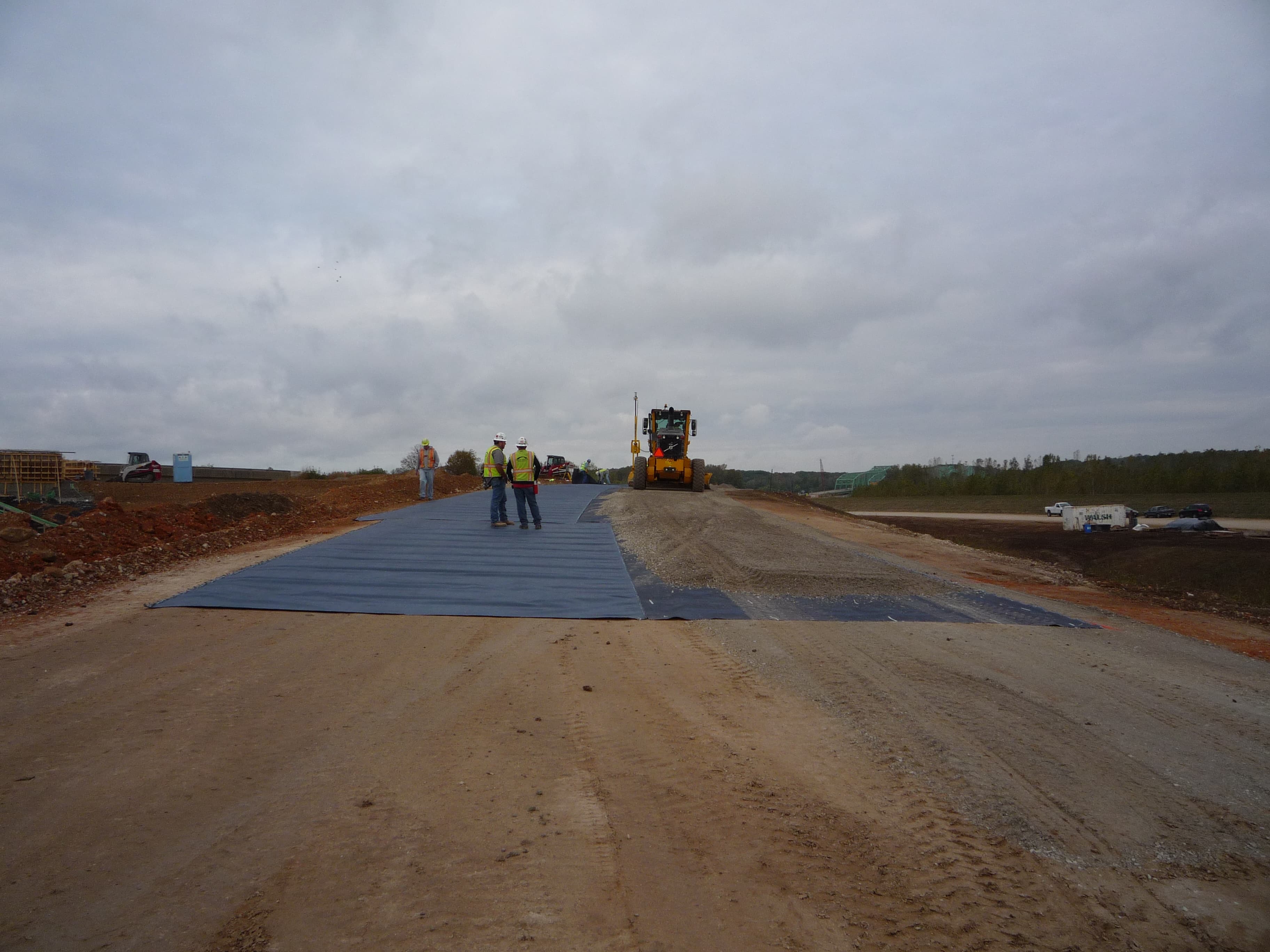
Construction began with installation of more than 81,000 PVDs totaling 6.8 million linear feet around the landfill perimeter in the berm foundation zone. On top of that improved foundation, the team placed high-strength reinforcement geotextile with drainage sand. The drainage sand served two purposes: it provided competent working and backfill support at the base of the berm and created a pathway for water exiting the PVD system.
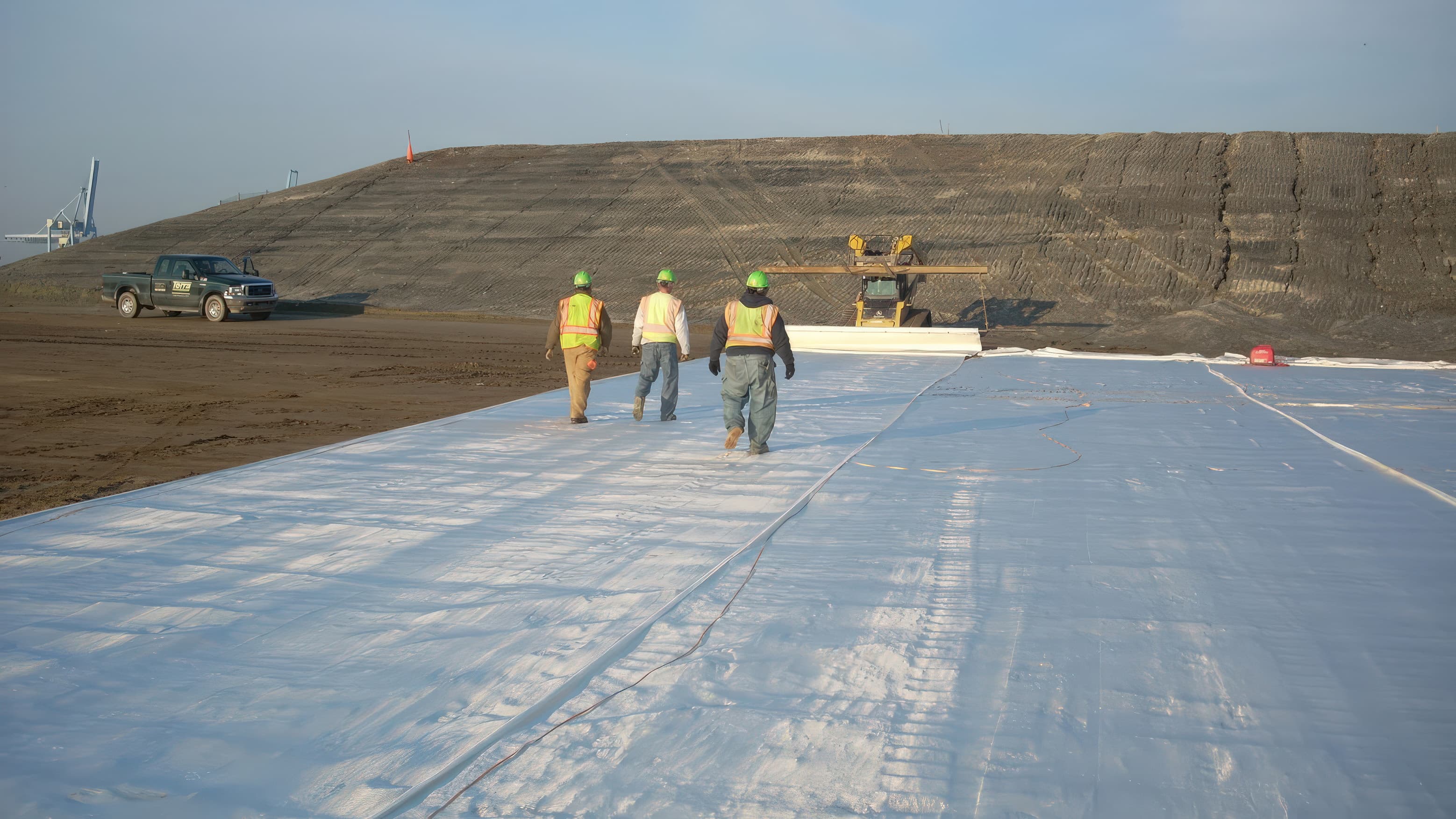
MIRAFI® PET1170 played a critical role in the lower portion of the reinforced berm. The bottom two reinforcement layers were especially important to overall stability because they had to bridge extremely soft subgrade conditions and resist the forces generated by a very tall structure. These layers used high-strength woven polyester geotextile with an ultimate tensile strength of 1,170 kN/m, or 80,000 pounds per foot. Each of the bottom two layers used an embedment length of 140 feet, reflecting the need for deep anchorage in weak foundation soils. Two additional long embedment layers of the same high-strength geotextile were installed at mid-height for added stability.
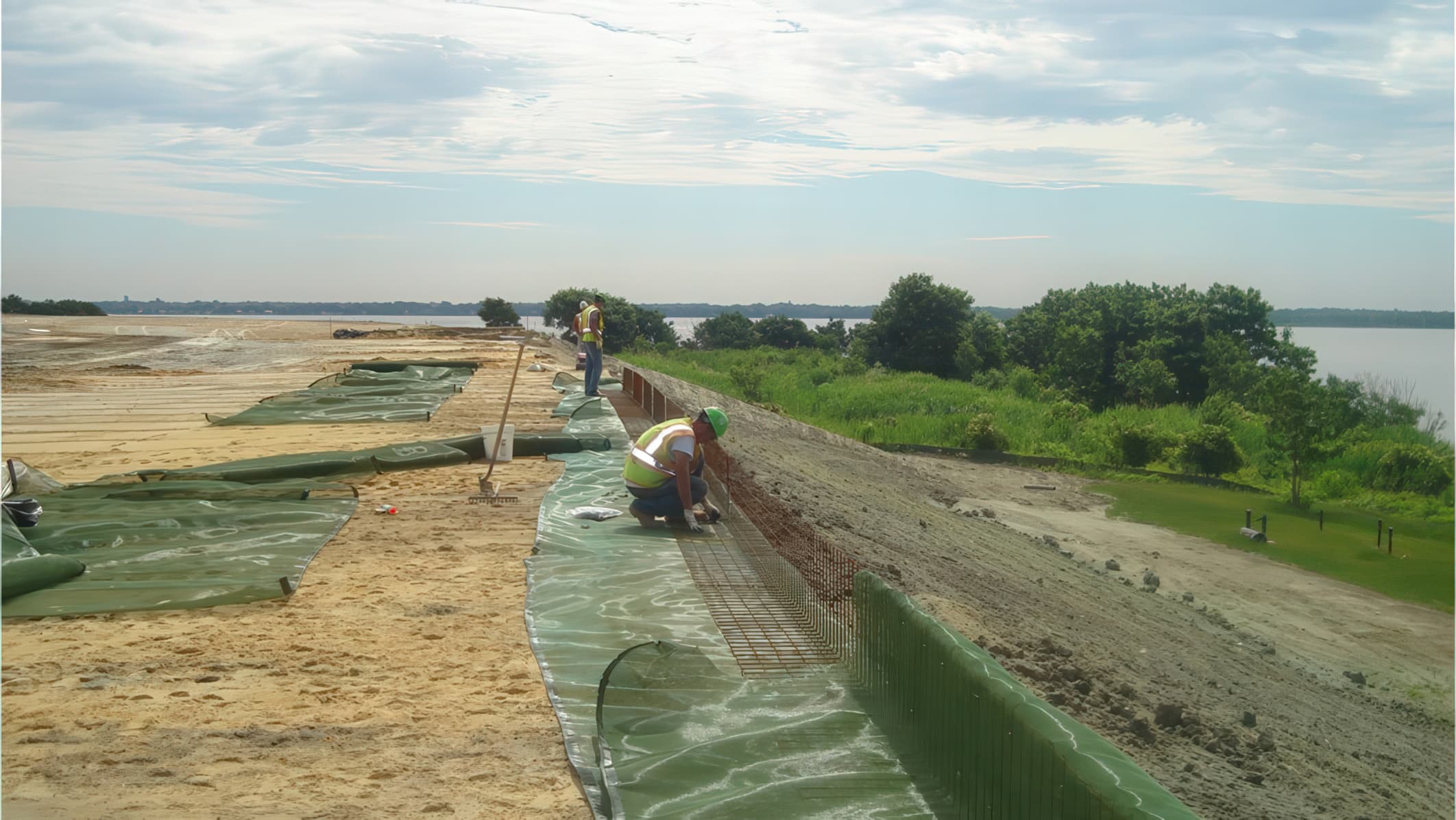
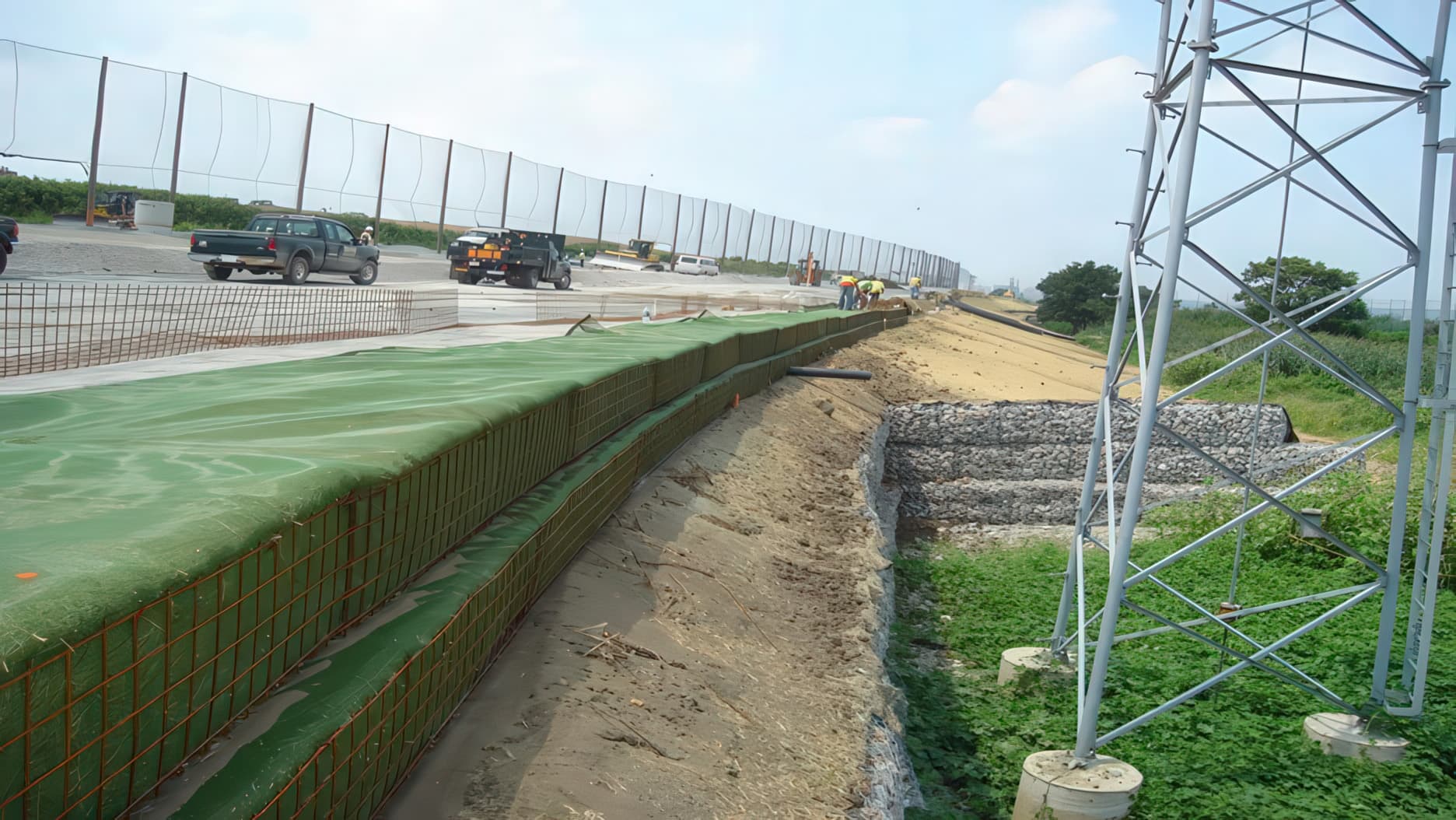
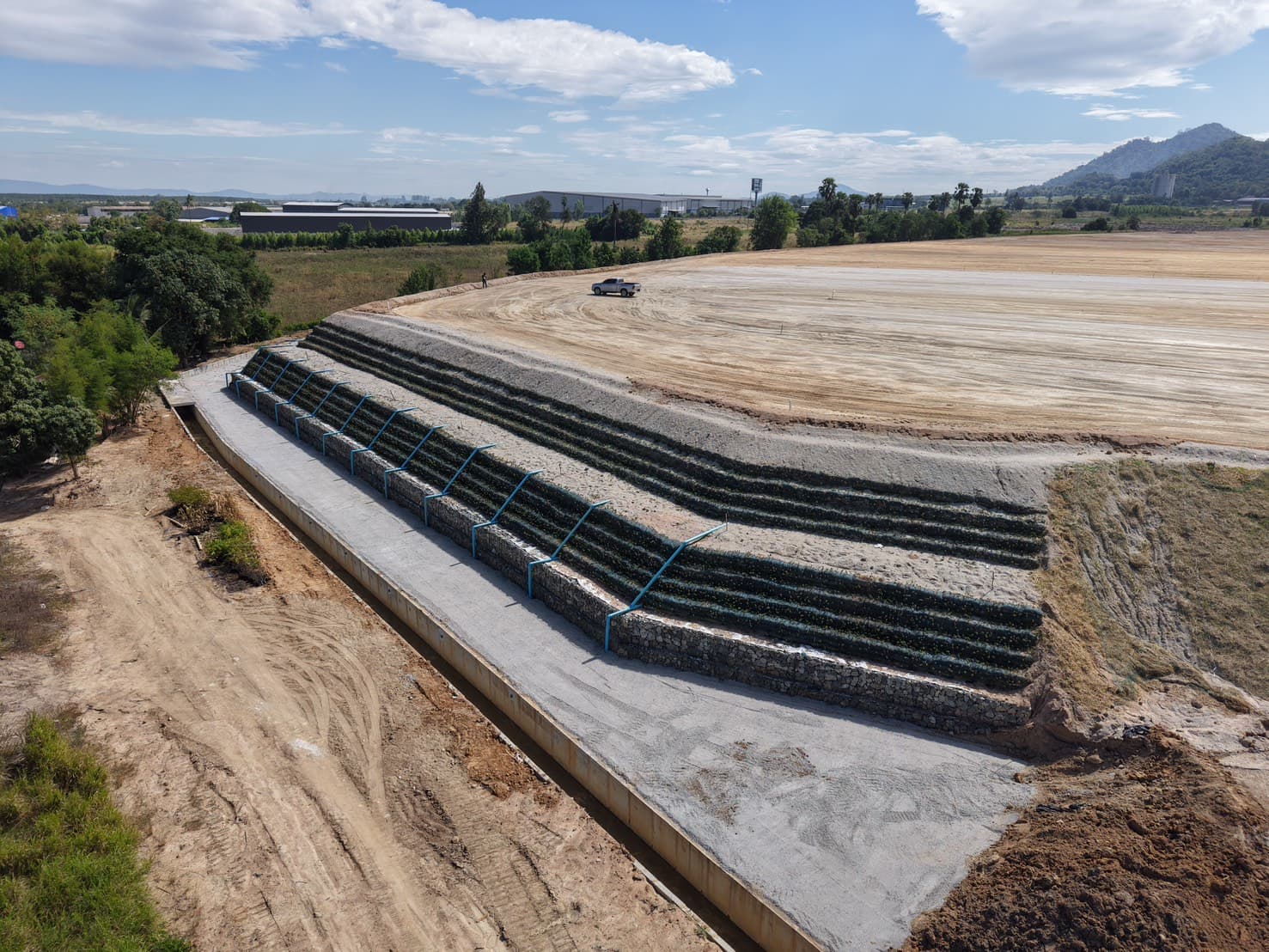
Higher in the structure, MIRAGRID® 20XT reinforced the berm with embedment lengths ranging from 20 to 80 ft (6 m – 24m). The final berm was built with a 1H:3V face batter, approximately 72 degrees from horizontal. The face system used L-shaped wire baskets for formwork together with wrapped geogrid reinforcement to provide stability, erosion protection and support for vegetation establishment. This configuration helped create a reinforced structure that was both constructible and durable under demanding landfill conditions.
Performance
The completed MSE berm reached heights of 60 ft - 70 ft (18 – 21 m) and extended approximately 8,700 ft (2,651 m), or about 1.6 mi (2.5 km), around the landfill. It incorporated more than 2,000,000 y3 (1,500,000 m3) of fill and required more than 370,000 y2 (301,000 m2) of polyester geotextile, 670,000 y2 (560,000 m2) of woven polyester geogrid and 315,000 y2 (263,380 m2) of woven polypropylene geogrid. By any measure, this was a large-scale geosynthetic reinforcement project carried out on exceptionally soft soils.
Most importantly, the system performed as intended. Project documentation states that the vertical expansion could not have been accomplished without high-performance geosynthetic reinforcement, and subsequent geotechnical monitoring verified that the berm behaved as predicted during design and construction. The completed expansion delivered more than 20 years of additional disposal life for the Delaware Solid Waste Authority while also supporting new leachate, landfill gas, electrical and SCADA systems at the site.
Cherry Island shows how Solmax solutions can do more than reinforce soil. In this project, MIRAFI PET1170 and MIRAGRID 20XT helped make vertical expansion possible where weak subsurface conditions would otherwise have limited the landfill’s future. Together with foundation drainage and field monitoring, these products formed the backbone of a robust reinforcement system that turned a constrained site into a long-term waste management asset.