Overview
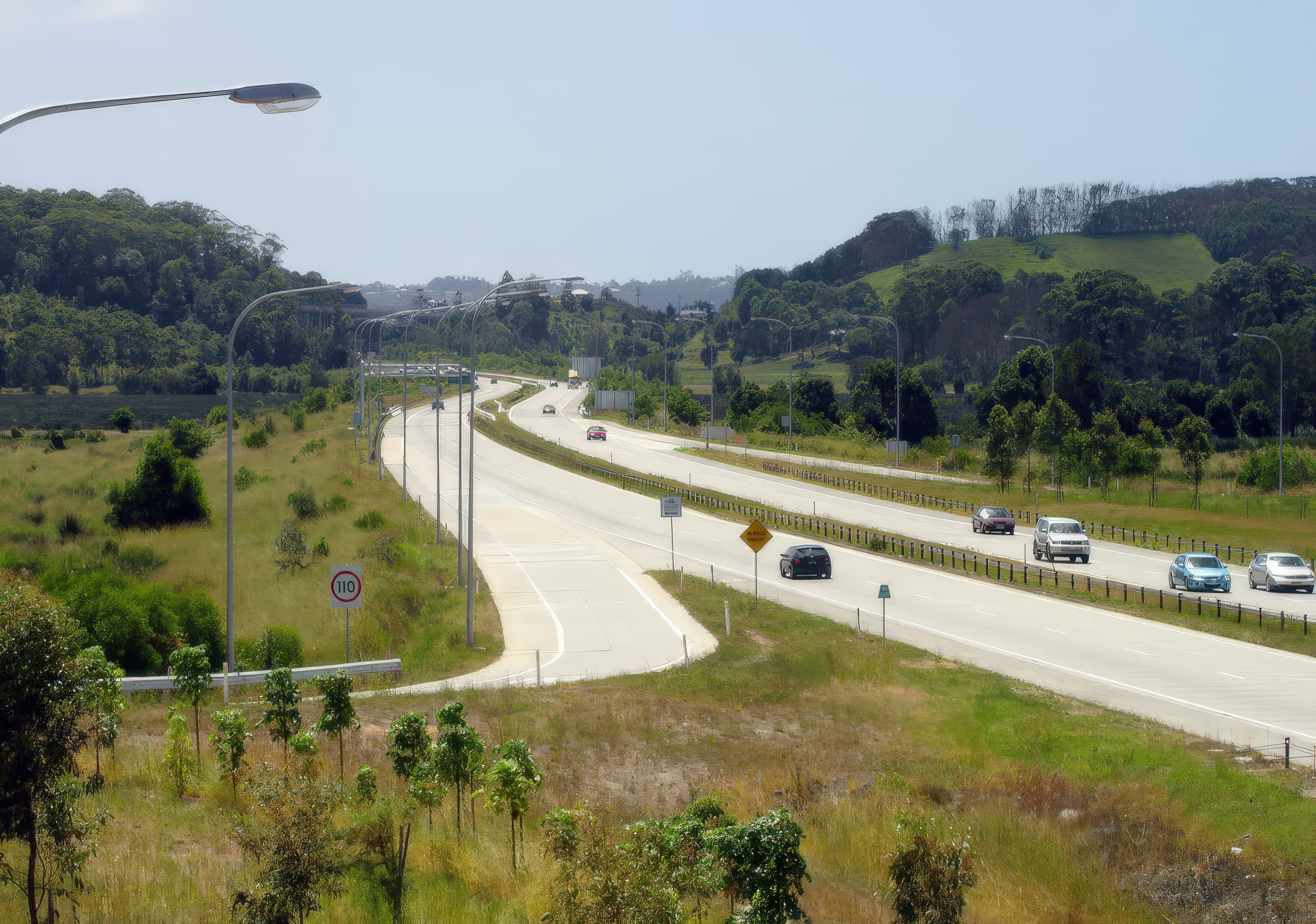
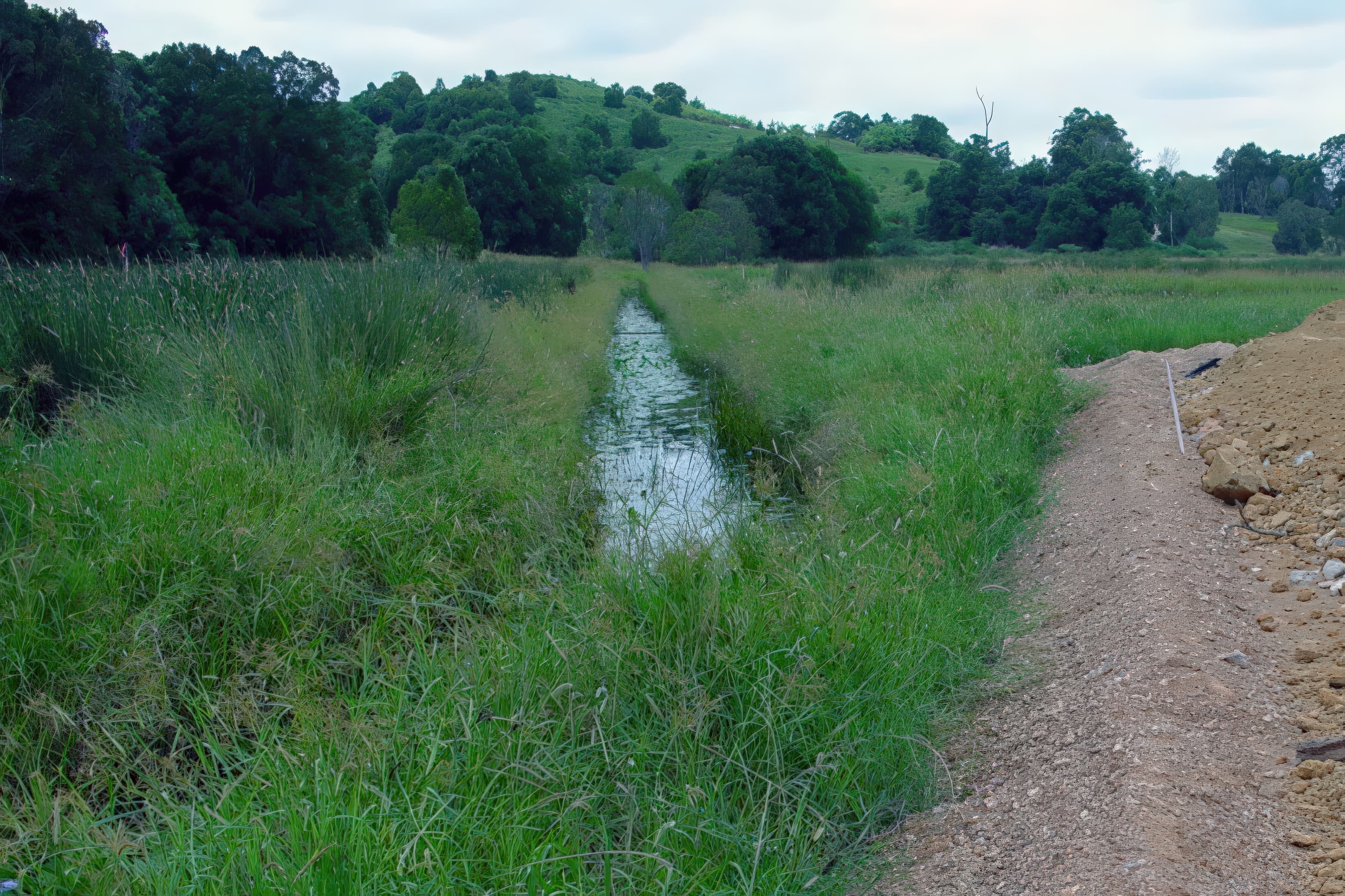
The Pacific Highway in Australia has undergone major upgrading between Sydney and Brisbane to transform the route into a dual-carriage freeway. As part of this larger initiative, the construction works between Yelgun and Chinderah in the northern region of New South Wales consisted of developing a dual-carriageway freeway approximately 30 km in length. A significant portion of this alignment, roughly 10 km, crossed geologically old river valleys and flood plains. These areas contained foundation soils composed of soft silty clays with depths ranging from 5 to 15 m. The undrained shear strength of these soft silty clays ranged from 8 to 12 kPa and increased with depth, while a 1 m thick over consolidated crust exhibited a shear strength of approximately 15 kPa. Within these sections, embankment heights varied between 2 and 5 m, and the embankment geometry included a 30 m wide crest with side slopes of 1V:2H. These conditions created a challenging setting for freeway construction, and the project required a combination of geotechnical strategies to meet both performance and scheduling expectations. To achieve this, the design incorporated basal reinforcement, surcharge placement, and foundation consolidation acceleration through prefabricated vertical drains. The approach enabled the embankment to be built rapidly while maintaining stability and providing sufficient time for the underlying soils to consolidate before the pavement structure was applied.
Challenge
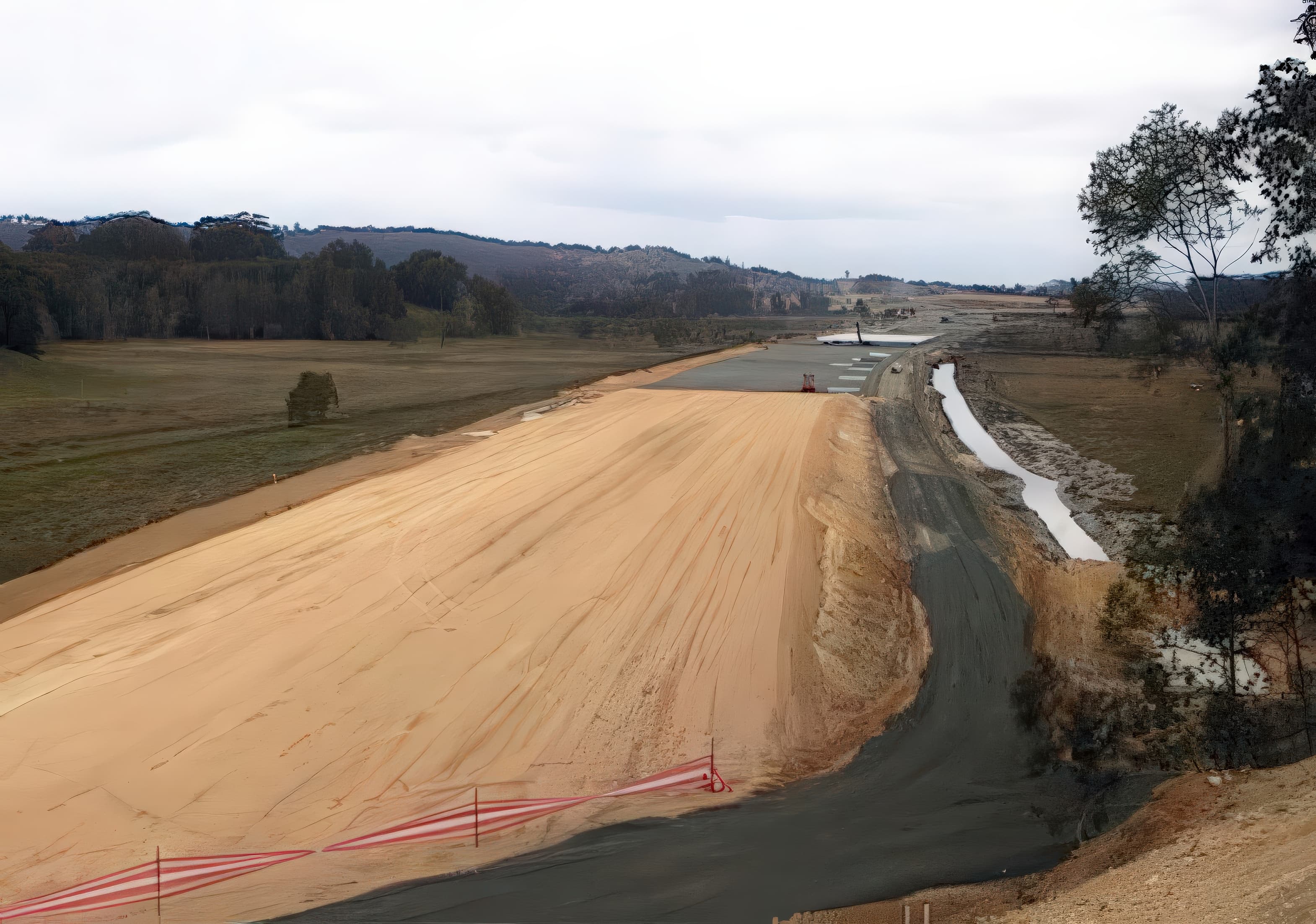
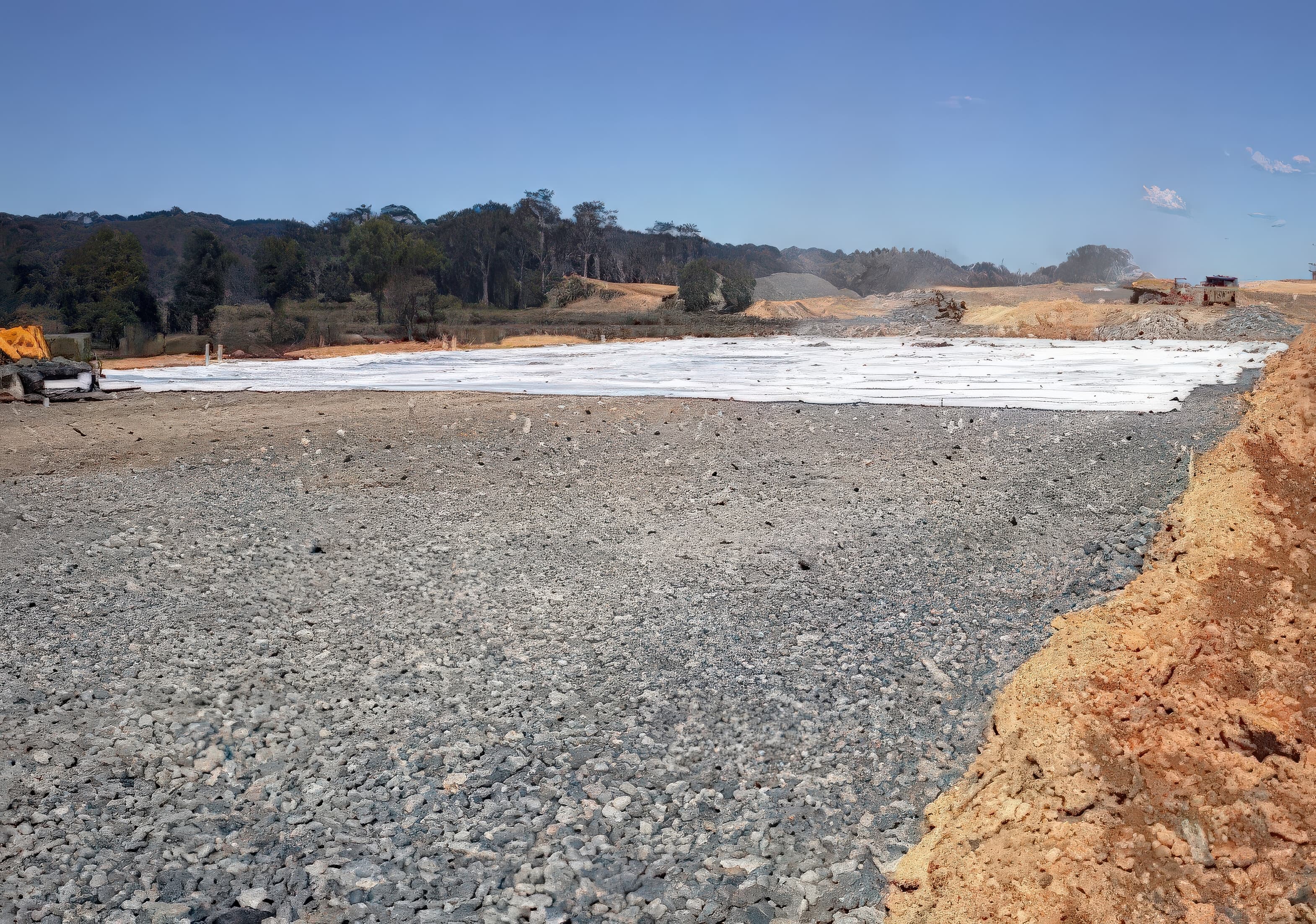
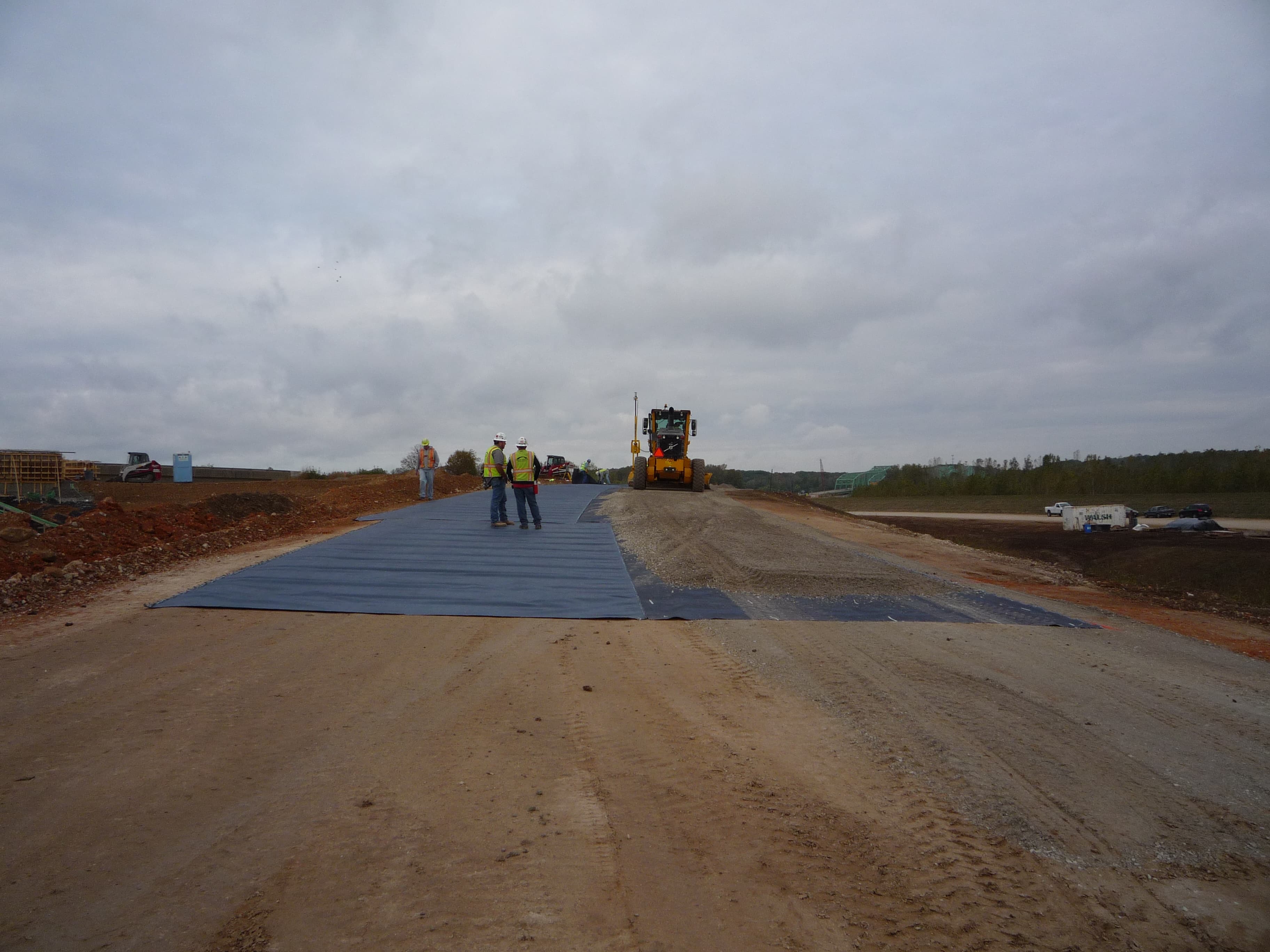
The project team needed to satisfy both construction time constraints and performance criteria while working in areas dominated by soft silty clay foundations. The decision was made to construct a basal reinforced, 1 m surcharged embankment wherever soft foundation soils were present. This choice addressed the need for stability while allowing rapid construction to full embankment height with the specified 1V:2H side slopes. Building the embankment quickly was crucial because doing so maximized the time available for foundation consolidation during the construction phase. Achieving consolidation during this period was essential for long-term pavement performance. The project therefore required measures that could accelerate consolidation, leading to the use of prefabricated vertical drains installed into the soft foundation layer. Another challenge involved the initial preparation of the soft foundation surface. A MIRAFI® PET 500X geotextile separator was to be placed directly over the grass vegetation. Trees and large vegetation were removed in advance, but the grass itself was intentionally left undisturbed to avoid compromising the surface integrity of the soft foundation layer. This approach allowed the separator to function effectively without altering the natural condition of the soil surface. The separator was overlapped by 0.5 m to ensure continuous coverage and to prepare the area for the subsequent placement of the bridging layer. Managing these steps in a coordinated manner was necessary to create a stable working environment on ground that would otherwise have been incapable of supporting construction equipment. The later phases of work also demanded geotechnical solutions tailored to the variability of embankment heights and the different depths and strengths of the soft foundation soils encountered along the alignment.
Solution
To establish a stable base, the project team placed a 0.5 m thick bridging layer of local clayey fill directly on top of the separation geotextile. This bridging layer provided a firm working platform that could support the equipment required to install the prefabricated vertical drains. The use of this clayey fill also allowed the project to reduce the amount of granular material needed for the drainage blanket. After placing the bridging layer, a 0.2 m thick drainage layer composed of crushed gravel was added. This gravel came from crushing rock from cut sections of the freeway project, and its role was to enable excess pore water emerging from the prefabricated vertical drains to be released efficiently to the edges of the embankment. Once the drainage and bridging layers were complete, prefabricated vertical drains were installed through them into the underlying soft foundation soils. Installation followed a square grid pattern with spacings that ranged from 1 to 3 m. These drains were essential to accelerating consolidation within the soft foundation layer. Over the drainage layer, MIRAFI PET woven polyester geotextiles were placed to provide basal reinforcement for the embankments. The selection of geotextile strength was based on embankment height, soil depth, and soil strength. Strengths of 200 kN/m, 400 kN/m, 600 kN/m, and 800 kN/m were used in different locations. The geotextiles were installed across the full width of the embankments, ensuring continuous basal reinforcement. Along the embankment length, overlaps of at least 0.5 m were maintained. After placement of the basal reinforcement was complete, embankment fill was placed on top. The fill material varied and included over consolidated clay as well as crushed rock, both obtained from cut sections along the freeway route. To enhance the rate of consolidation, an additional surcharge of 1 m of fill was placed over the embankment. This surcharge, combined with the action of the prefabricated vertical drains, ensured that most settlement occurred during construction rather than after the freeway became operational. Following a consolidation period of 9 to 12 months, the excess surcharge material was removed. The embankment surface was then graded and prepared for the final phase of pavement construction. Once the concrete pavement and ancillary structures were in place, the freeway was opened to traffic. The sequencing of reinforcement, drainage, consolidation, and embankment construction demonstrates the effectiveness of using layered geosynthetic systems and controlled surcharge loading to construct freeway embankments over weak foundation soils.