Overview
As part of the ever-increasing expansion of Antwerp Harbour, increased capacity of disposal facilities for dredged material and excavated soil had to be found. A solution to this problem involved the construction of a partially submerged containment dam across an old, existing dock to contain spoil and other dredged material. The containment dam has a total height of 27 m, of which 19 m was constructed underwater.
Challenge
The major challenge for this project was that the containment dam had to be constructed on very soft sediments, approximately 9 m thick, in the base of the existing dock; and these could not be removed for environmental reasons. In their natural state, these very soft sediments had consolidated under their own buoyant weight only. Undrained shear strengths ranged from 2 to 4 kPa, increasing linearly with depth. Due to the very low bearing capacity and undrained shear strength of these sediments, it became clear that some kind of foundation layer reinforcement was required to ensure stability of the containment dam.
Solution
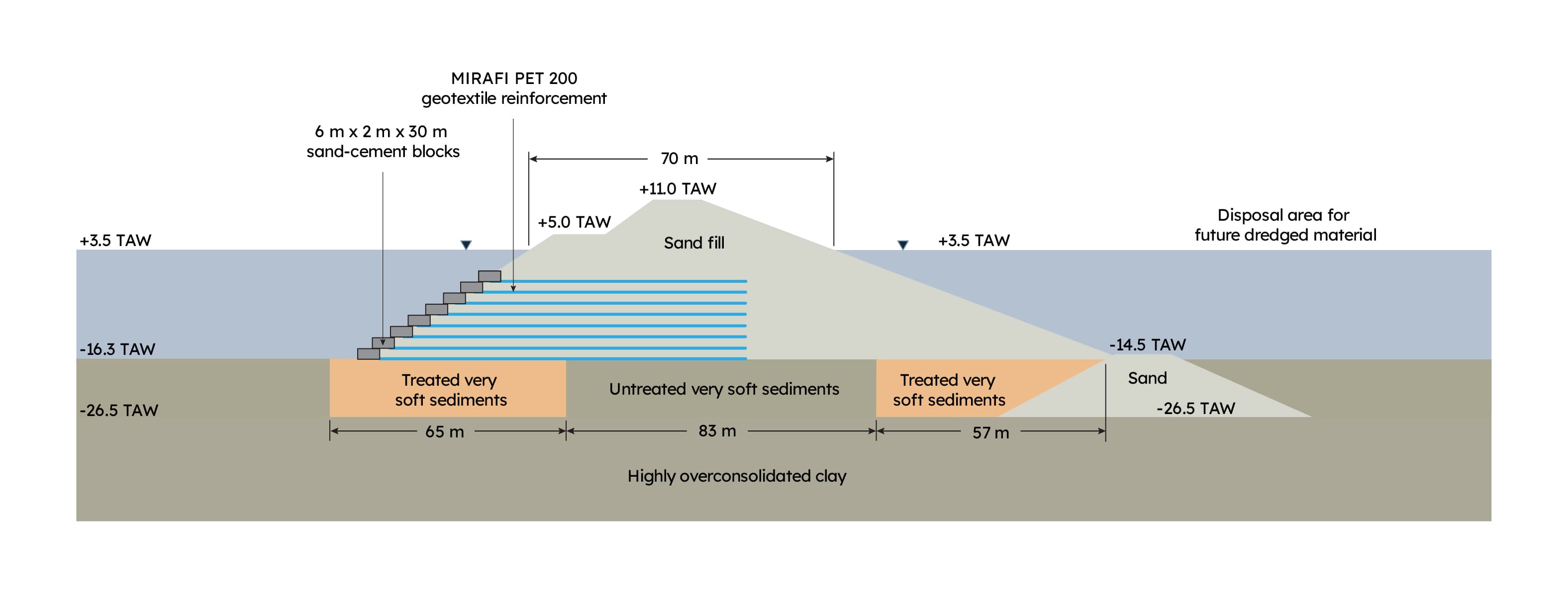
The solution adopted was to combine deep soil mixing beneath the side slopes of the containment dam with geotextile reinforcement in the outer (steeper) slope of the dam. The inner slope of the dam was constructed with a flatter side slope, and thus only deep soil mixing was carried out there. The combination of the two treatments at the outer slope of the dam ensured there was adequate stability during the controlled construction of the containment dam. Once the deep soil mixing had been carried out beneath the future side slopes of the containment dam, construction was carried out using sand fill placed in stages to control stability.
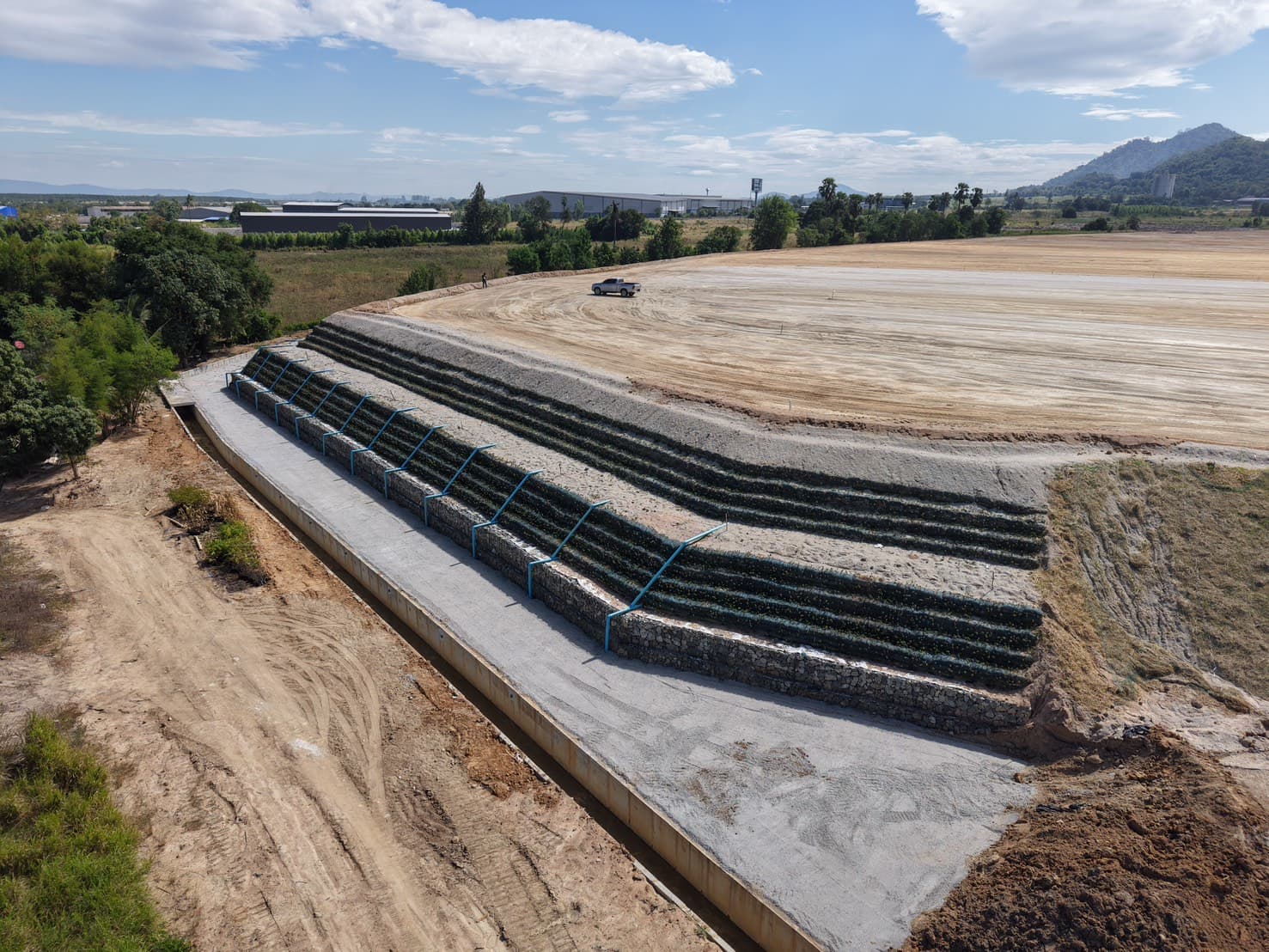
On the outer side of the containment dam, stability was maintained by using large sand-cement segmental block facing units attached to layers of MIRAFI® Geolon PET200 geotextile reinforcement. The use of the segmental facing units enabled the outer side slope to be constructed at a slope angle of 1V:2.5H, and also prevented erosion of the sand fill. The layers of MIRAFI Geolon PET200 geotextile reinforcement provided additional shear stability to the outer slope of the containment dam. MIRAFI Geolon PET200 geotextile reinforcement consists of high modulus polyester yarns with an ultimate tensile strength of 200 kN/m. To provide the required stability, eight layers of MIRAFI Geolon PET200 geotextile reinforcement were installed at 2 m vertical spacings and extended continuously between 65 m and 100 m into the containment dam.
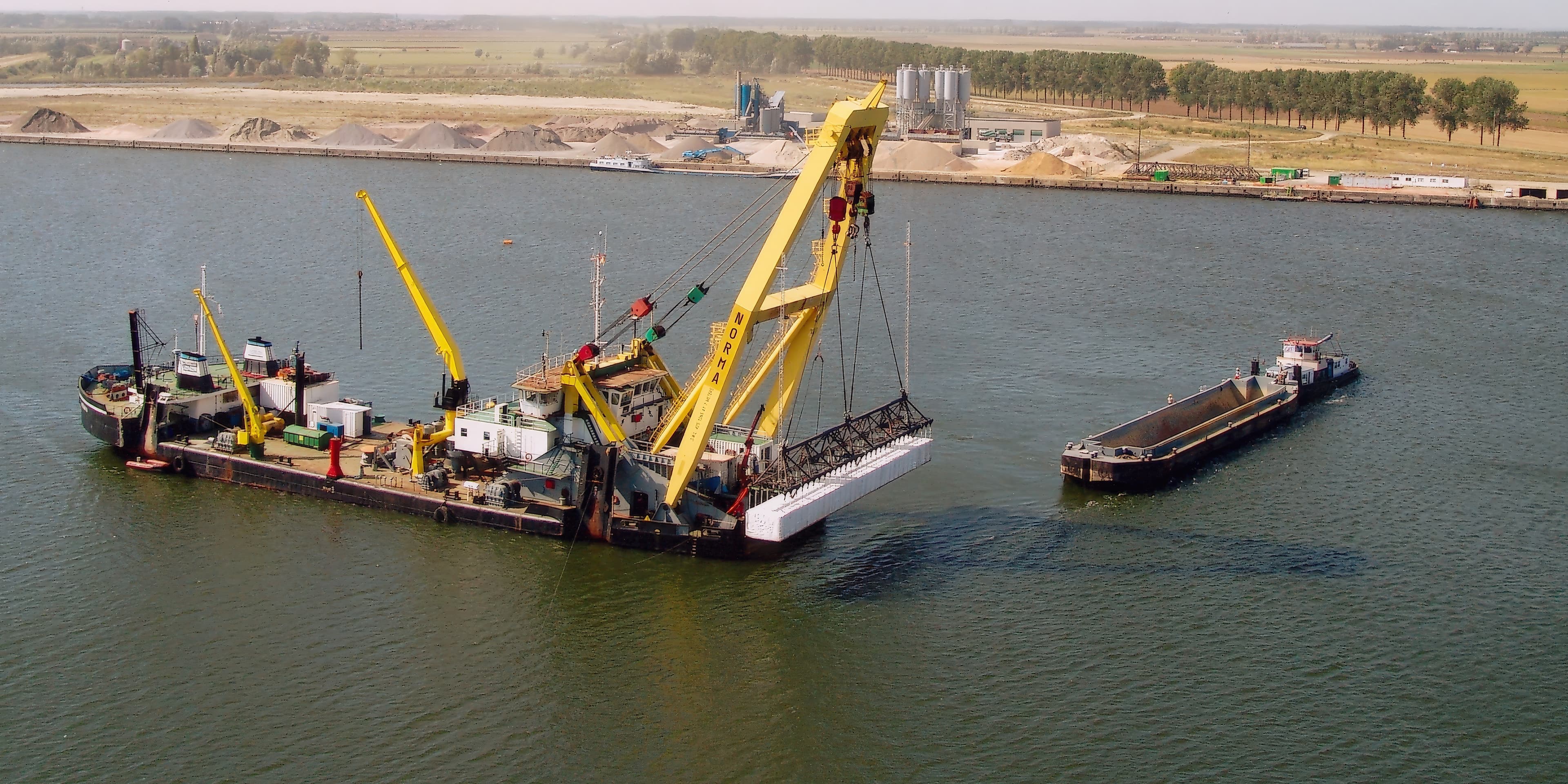
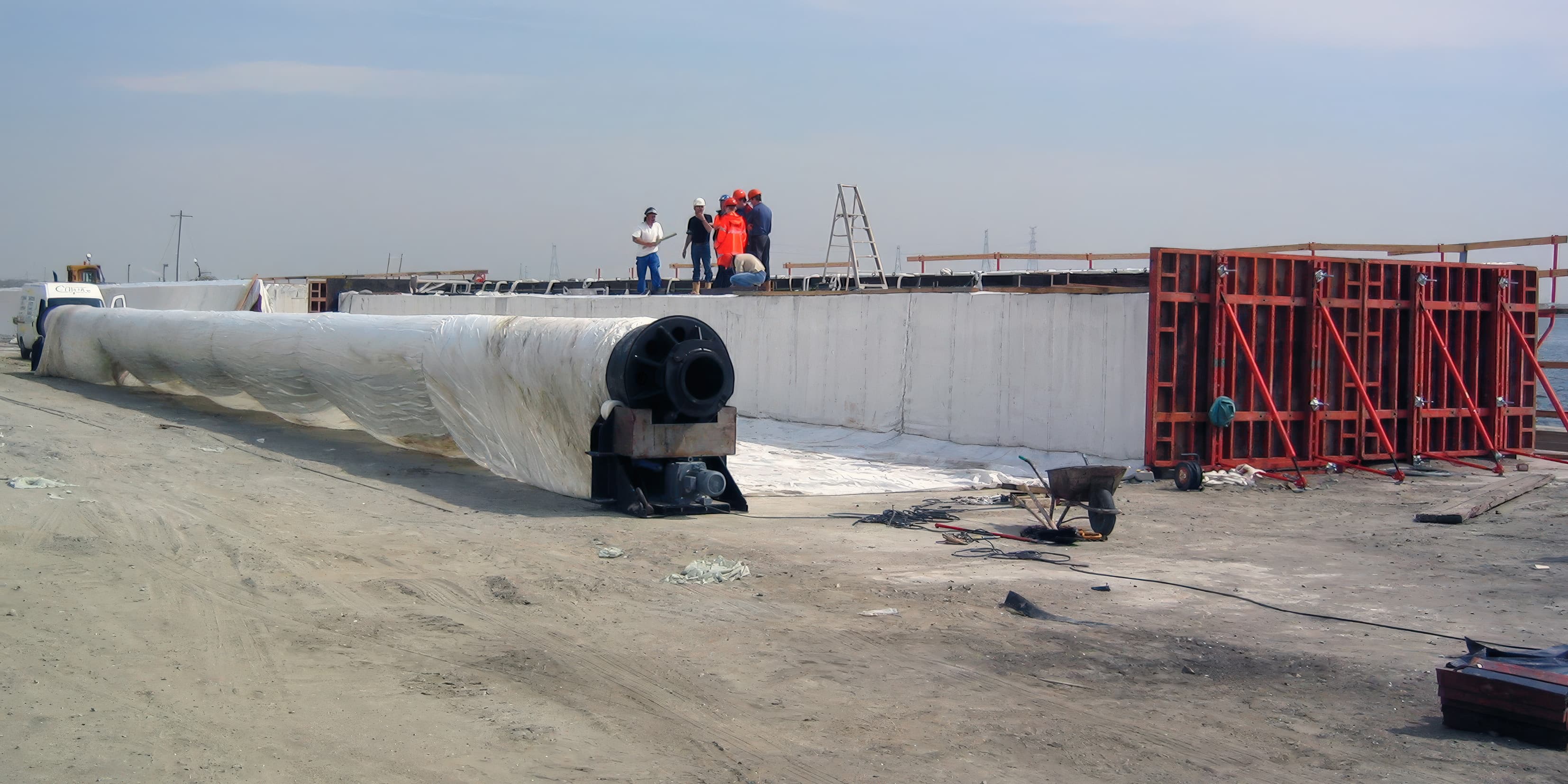
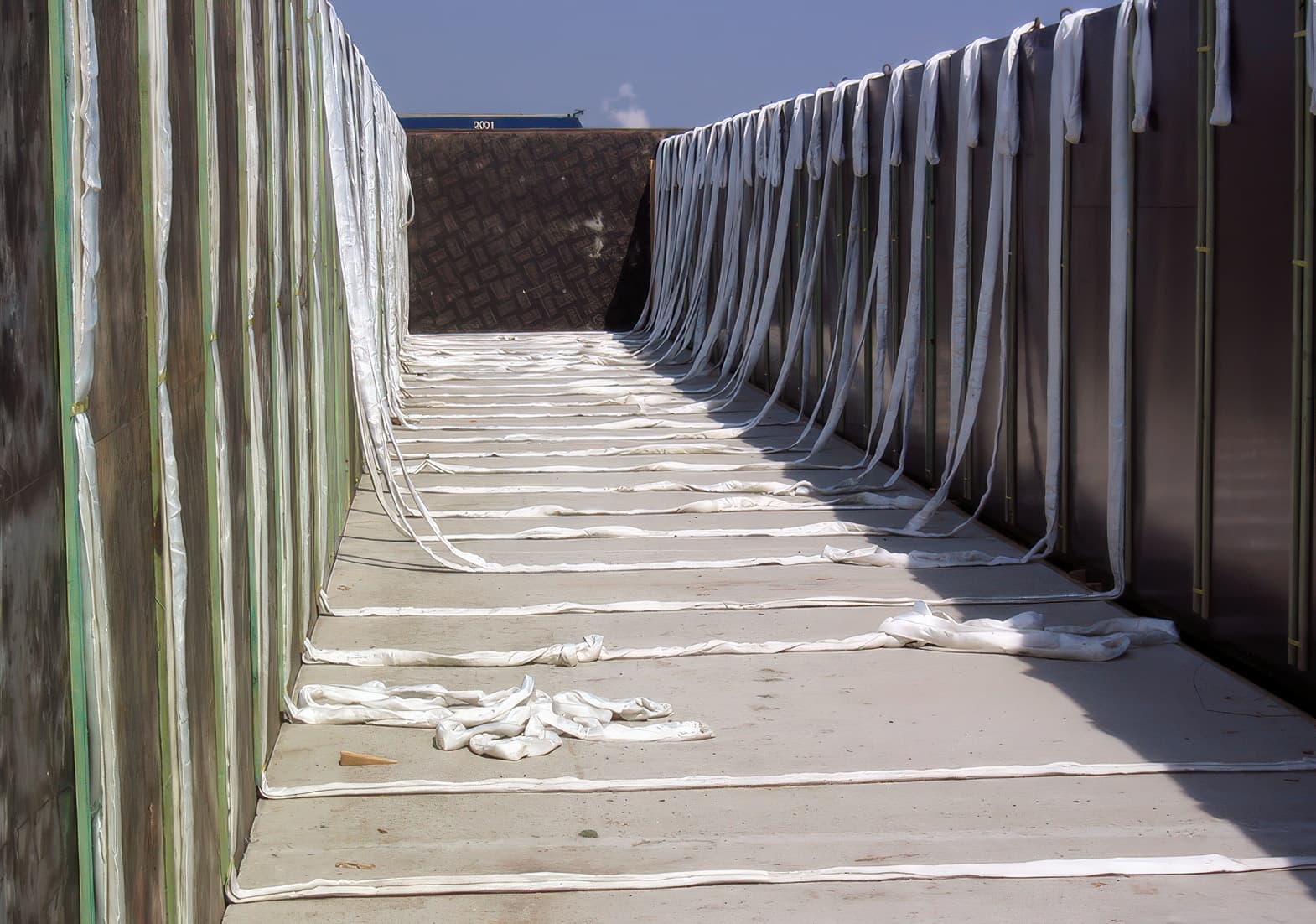
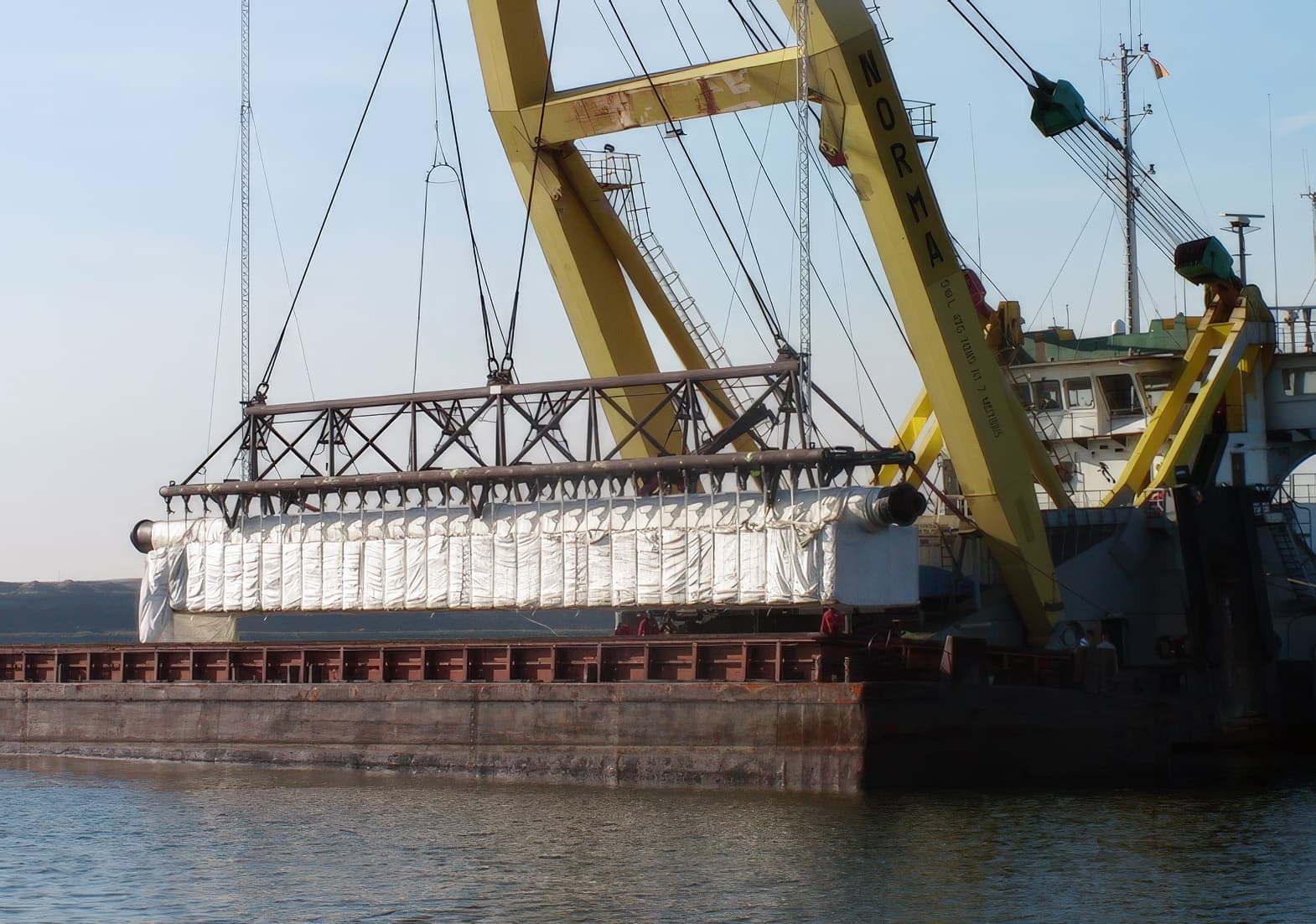
To enable efficient placement underwater, large sand-cement segmental blocks and their MIRAFI Geolon PET200 geotextile reinforcement attachments were fabricated on land prior to placement. The segmental blocks were fabricated in sizes of 2 m high by 3 m wide by 30 m long, with the MIRAFI Geolon PET200 geotextile reinforcement attached in widths of 30 m and to the continuous lengths required. The weight of these block units, along with the rolled-up geotextile reinforcement, approximated 380 tonnes and was lifted by a large floating crane used on the project. To facilitate lifting, high-strength slings were placed around the block units prior to casting, and the units were then lifted by means of a detachable steel loading frame.
On the outside of the wall, the large block facings with the attached geotextile reinforcement were installed using the floating crane. After partial placement, another large block unit was installed immediately behind the outer wall face, resulting in a total installed block size of 6 m width and 2 m height. The MIRAFI Geolon PET200 geotextile reinforcement was then completely rolled out across the sand fill surface in one continuous sheet, to the length required, using a second floating crane.
The sand fill used for the filling operations was obtained from excavation works for the construction of a new dock nearby in Antwerp Harbour. The sand was selected based on its grain size distribution and fines content. This was important to ensure the placed fill in the containment dam met the shear resistance requirements assumed at the design stage. The sand fill was placed in 2 m thick layers using hydraulic filling. At each 2 m lift, the foundation was allowed to consolidate for a period of 1 to 2 months. Following this, another block facing layer was placed with the MIRAFI Geolon PET200 geotextile reinforcement, and the sand filling procedure was repeated.
The construction of the containment dam was divided into two main phases. The first phase covered the construction of the dam up to water surface level. The second phase completed the construction of the containment dam to a height of 7 m above surface water level. The second phase only proceeded once adequate consolidation had occurred in the very soft sediments beneath the containment dam.