
Lake bank stabilization at Vivid Shores
At Vivid Shores in Bonita Springs, Florida, PROPEX® Armormax®, MIRAFI® FW403 and MIRAFI 140N stabilize lake banks exposed to wind-driven wave erosion. Completed sections are performing as designed.
Incheon Grand Bridge: Constructing Artificial Island
Incheon Grand Bridge: Constructing Artificial Island
Incheon Grand Bridge: Constructing Artificial Island
Incheon Grand Bridge: Constructing Artificial Island
Incheon Grand Bridge: Constructing Artificial Island
Lake bank stabilization at Vivid Shores
At Vivid Shores in Bonita Springs, Florida, PROPEX® Armormax®, MIRAFI® FW403 and MIRAFI 140N stabilize lake banks exposed to wind-driven wave erosion. Completed sections are performing as designed.
Crowne point country club case study
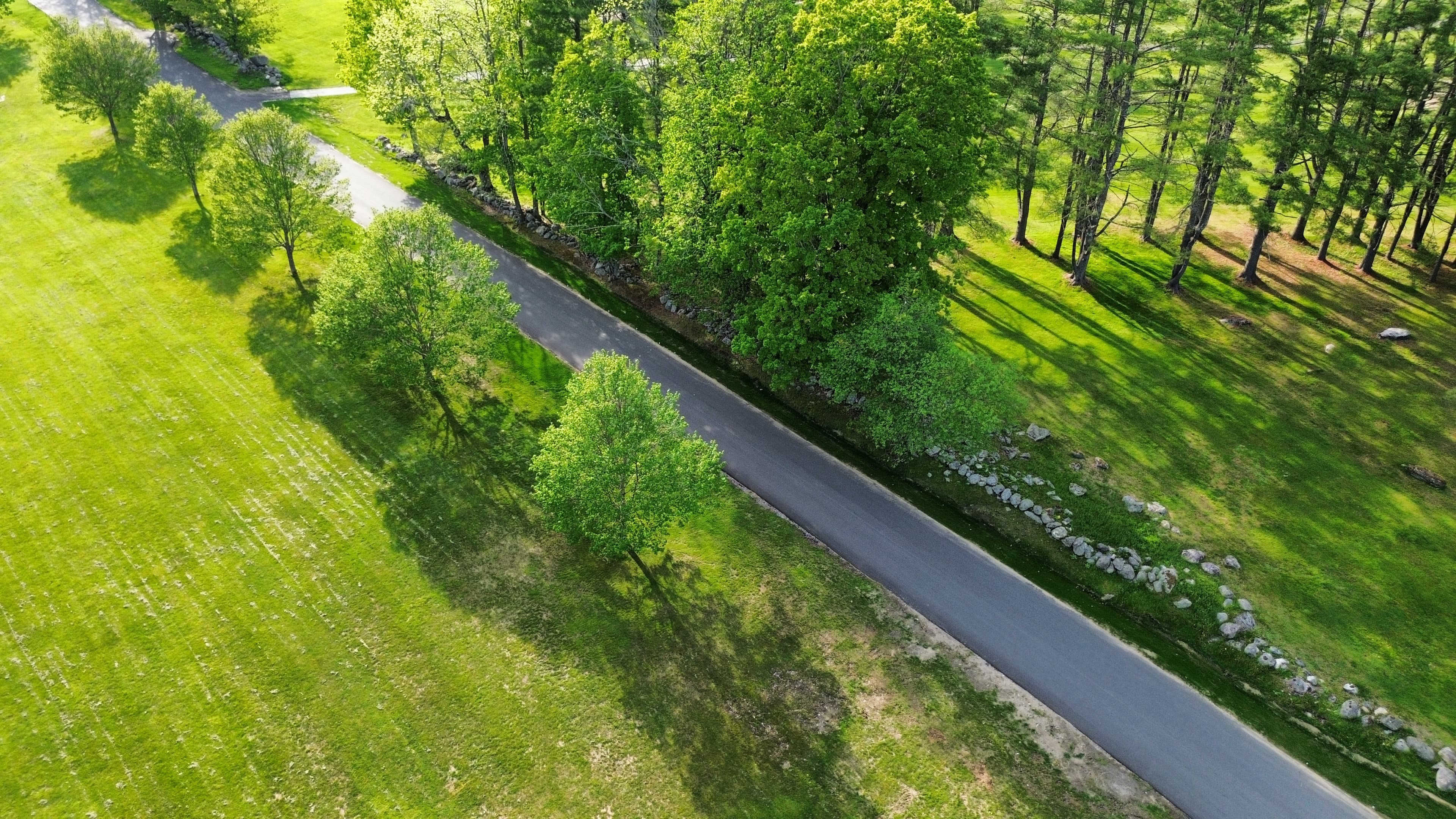
Crowne Point Country Club rehabilitated a deteriorated Vermont access road with MIRAFI H2Ri, using active moisture management to address saturated soils, frost-related distress and subgrade instability.

GSE HD geomembrane lined salt ponds ensure long-term brine containment
GSE® HD geomembrane lined over 3.4 million m² of evaporation ponds to prevent brine seepage under extreme heat and UV exposure. This continuous barrier eliminated salt discharge and protected the surrounding environment.
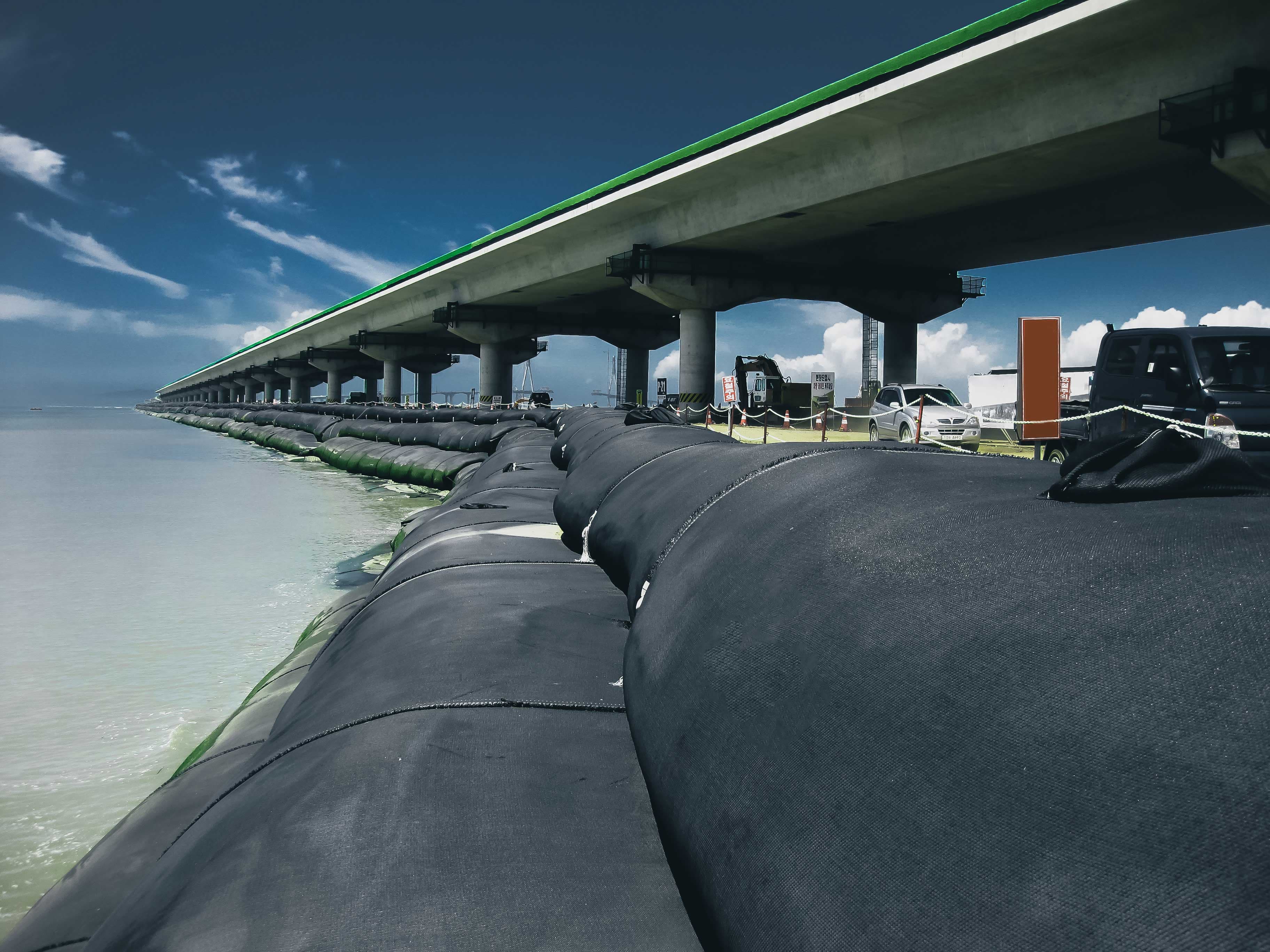
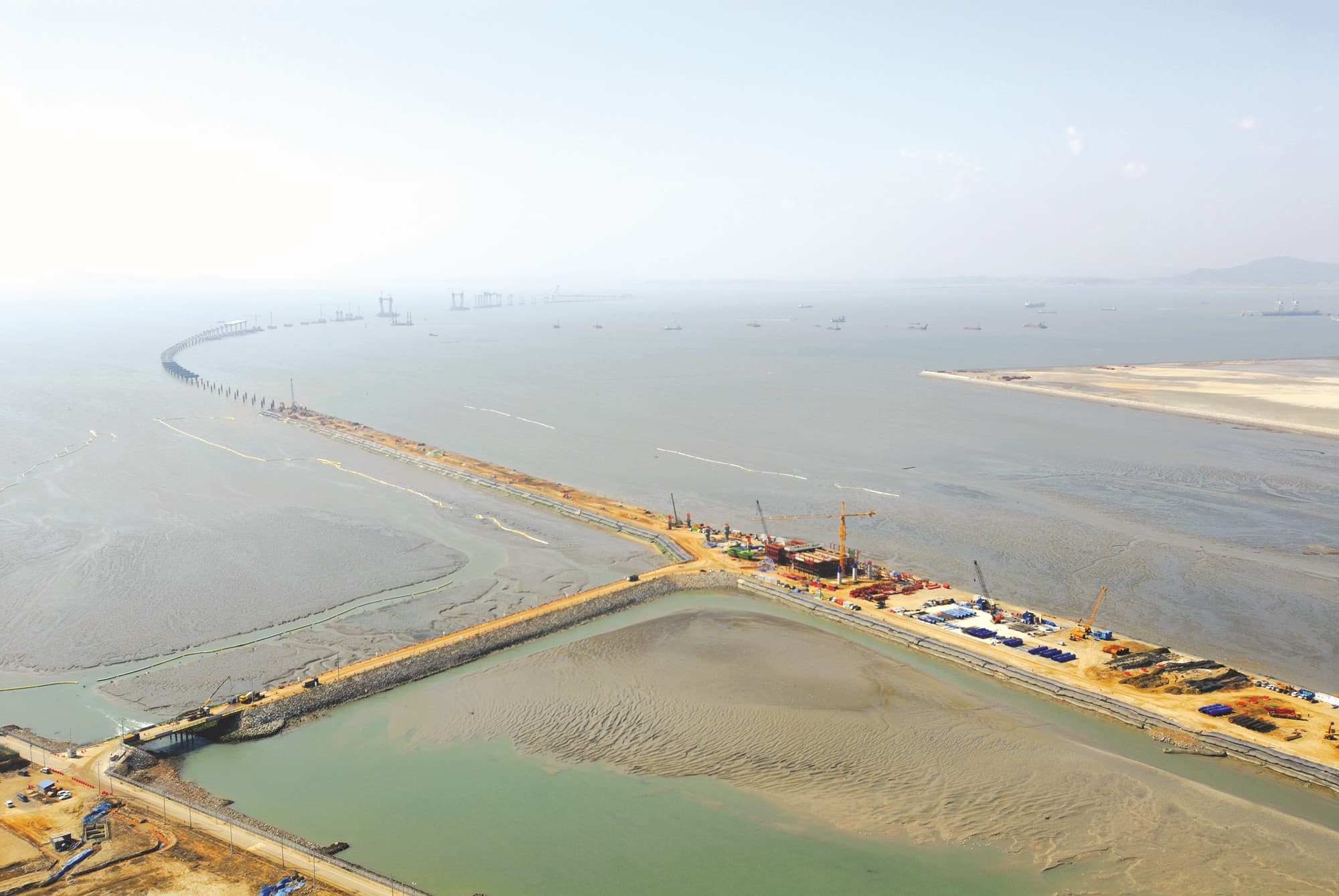
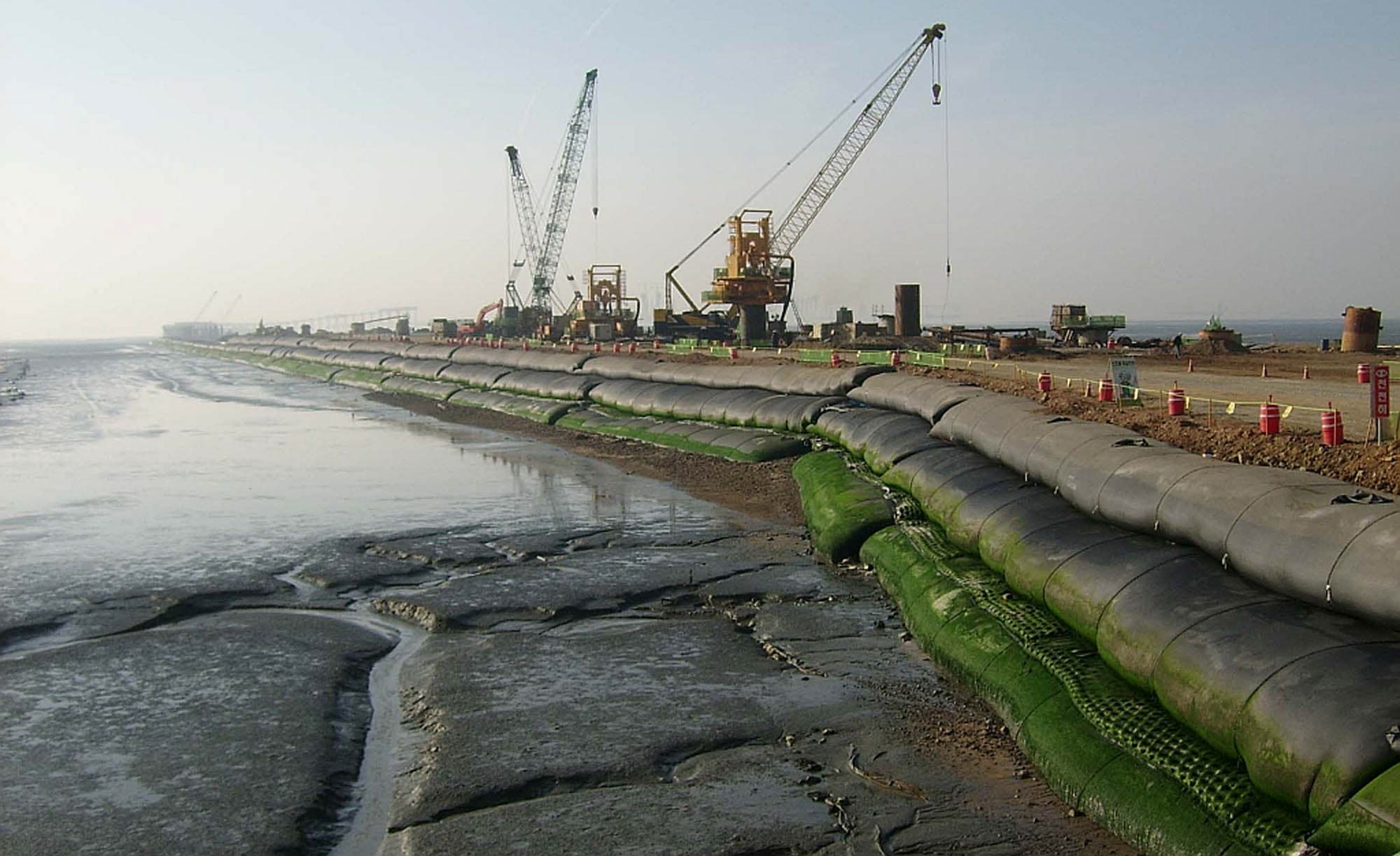
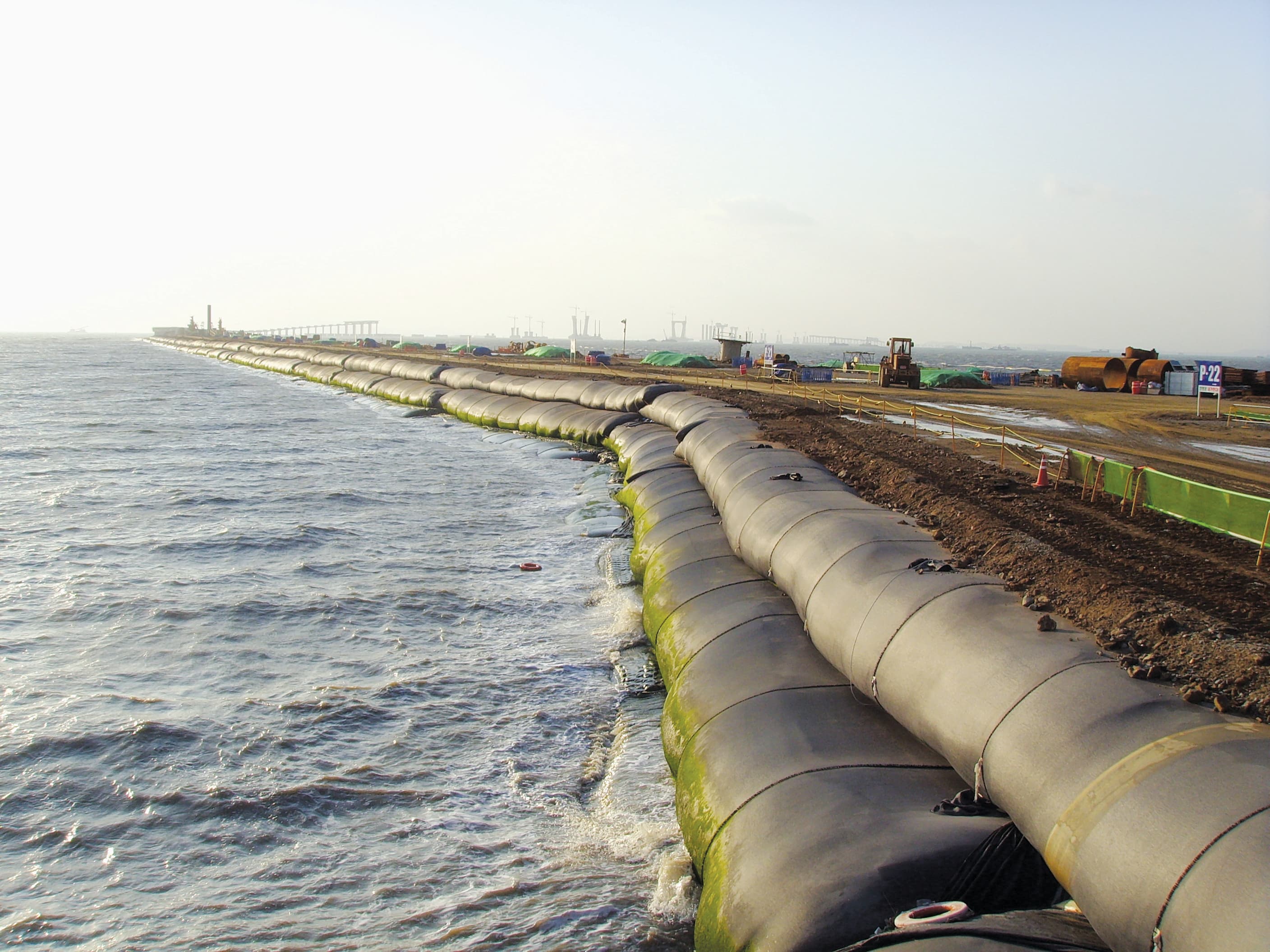
The Incheon Grand Bridge is a major project that connects Incheon International Airport with Songdo City in the Incheon Free Economic Zone. Instead of using heavy marine equipment to build the bridge piers over open water, an alternative solution was proposed. It involved constructing an artificial island reclaimed from the sea as a temporary platform for the construction process. This option proved to be more cost-effective than alternatives like sheet piles or rock levees.
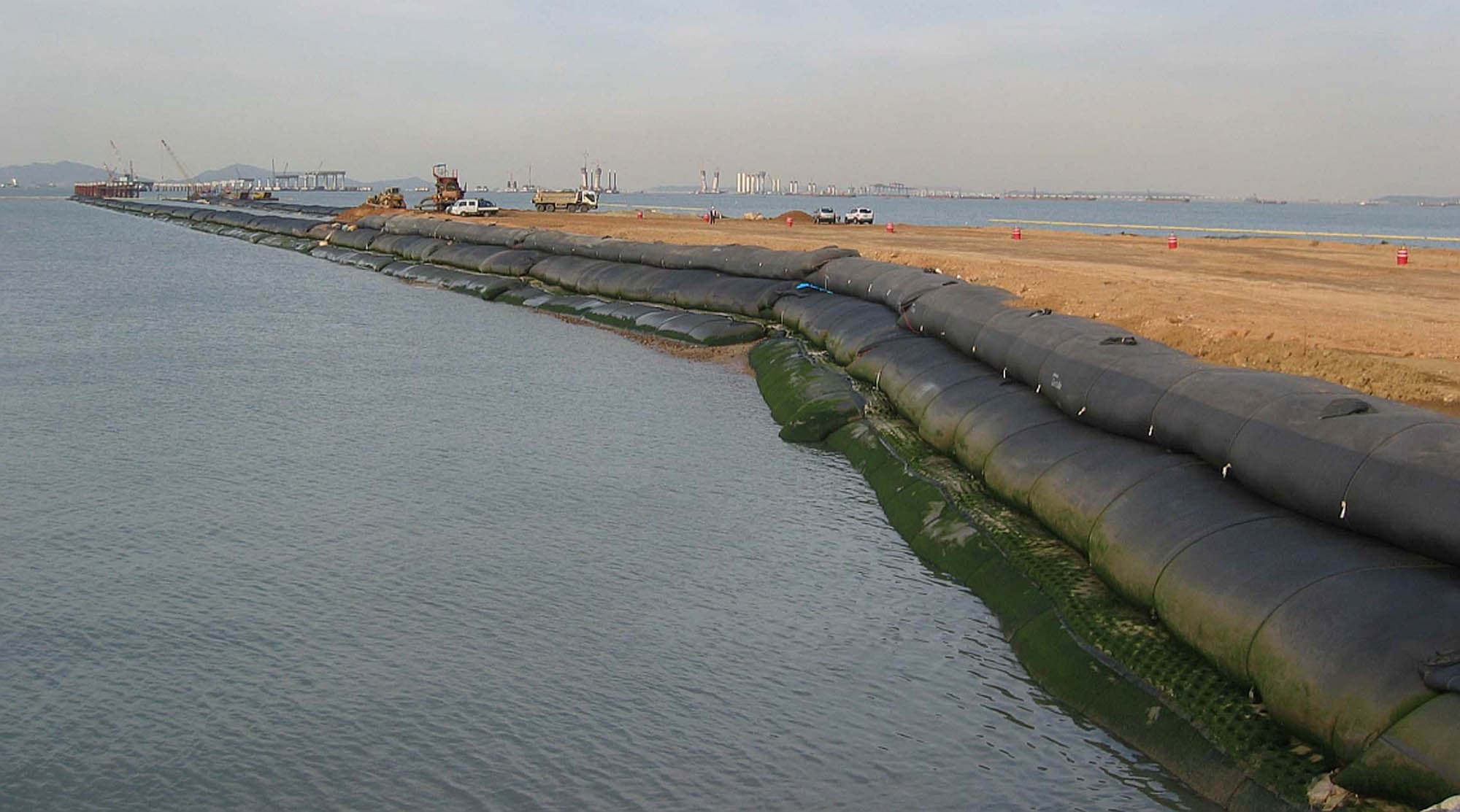
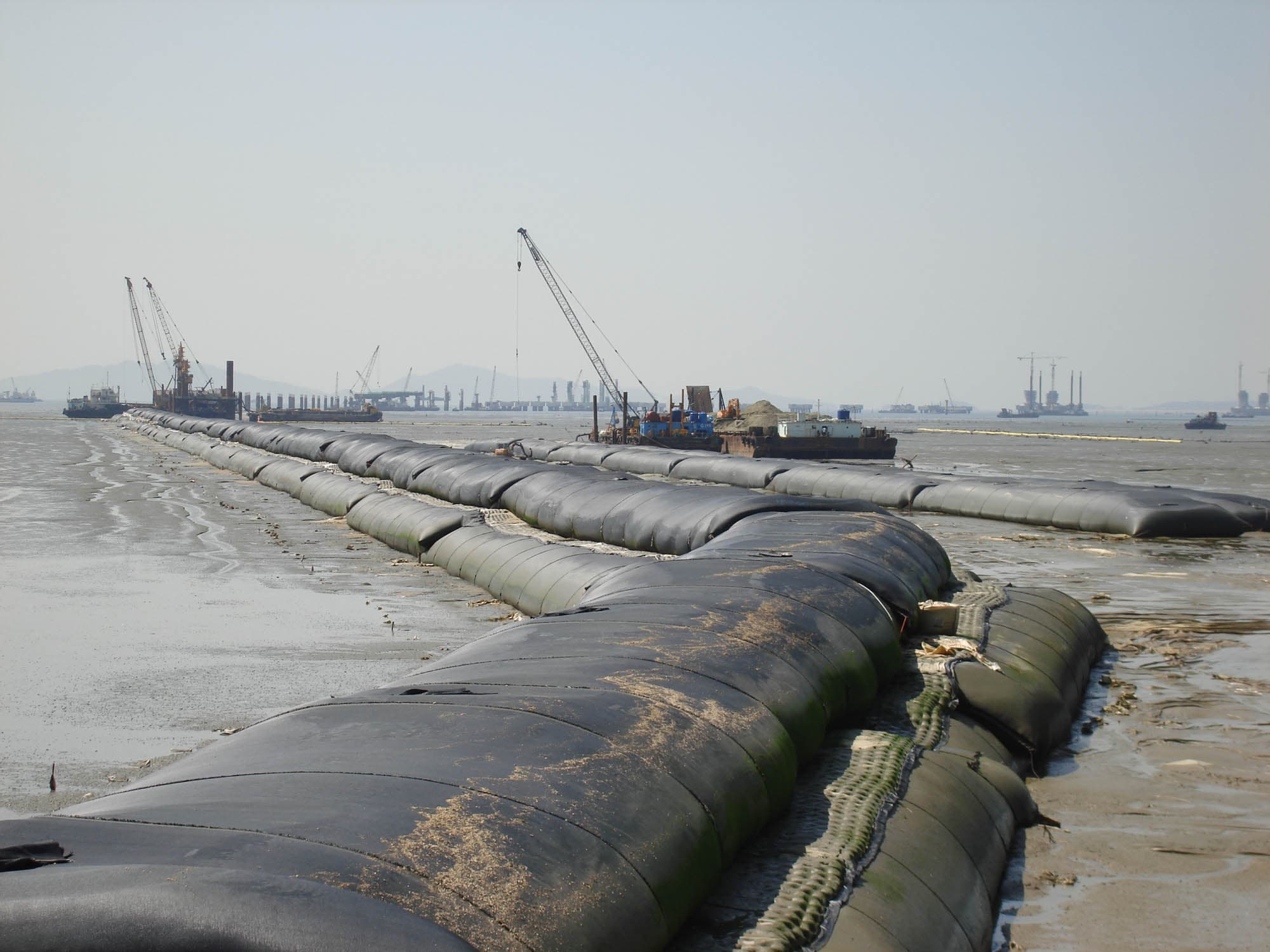
For constructing the edge levees that formed the temporary platform, GEOTUBE® GT1000 was chosen. The GEOTUBE containers used varied in diameter (3 m [9.8 ft], 4 m [13.1 ft], and 5 m [16.4 ft]) and length (15 m [49.2 ft] to 60 m [196.9 ft]). They were stacked in tiers, reaching a height of approximately 7 m [23 ft] above the soft estuarial deposits. The tubes were installed below sea level, about -1.0 m [-3.3 ft] at the shallow end and -2.8 m [-9.2 ft] at the deeper end. In total, over 14 km [8.7 miles] of GEOTUBE engineered tubes were used.
The tubes were filled with sand, which was delivered by barges to the construction sites. The sand was mixed with seawater to create a slurry and pumped into the GEOTUBE containers. The space within the tubes was then filled with residual soil to complete the platform.
GEOTUBE installation began in April 2006, and at the peak of construction, three installation equipment set-ups were used to fill three tubes simultaneously. By the end of 2006, the full 14 km [8.7 miles] of filled tubes was completed ahead of schedule and within budget.