Overview
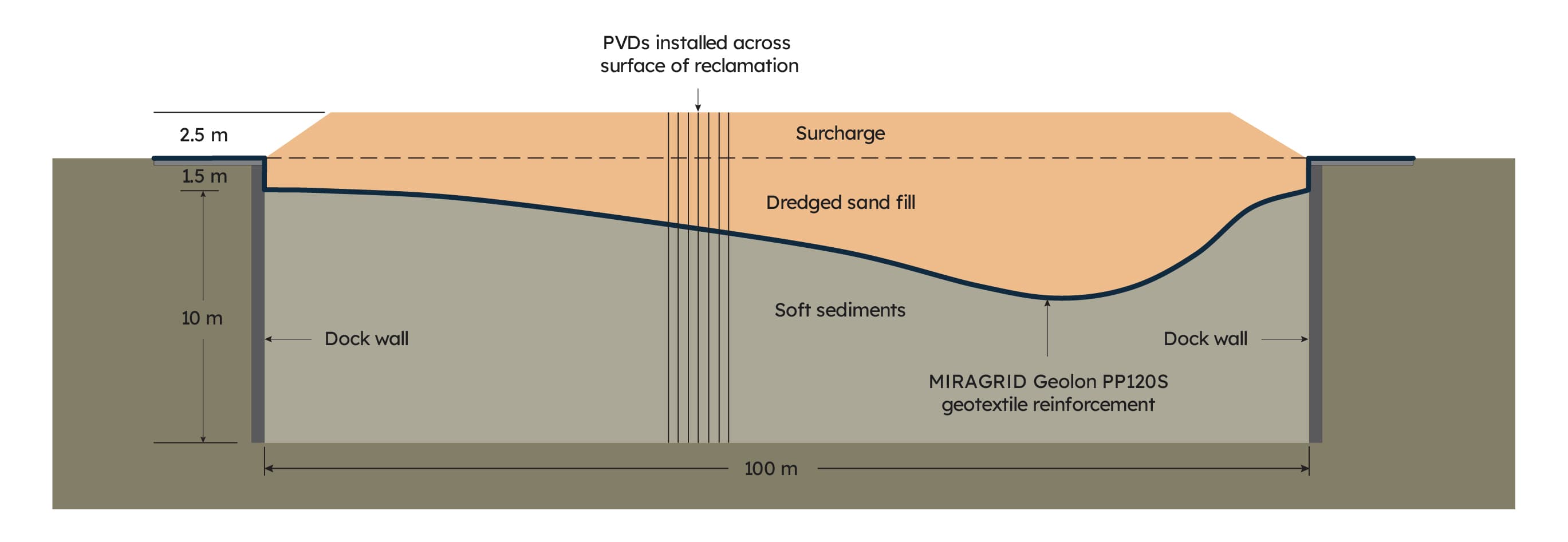
During the late 19th and early 20th centuries the Wallasey Docks area on the River Mersey was one of Europe’s largest cattle handling facilities. However, by the end of the 1960s this trade had seriously declined, forcing partial closure of the docks. In 2001 it was decided to construct a new roll-on, roll-off ferry terminal on the site of the disused docks. The dock basin has dimensions of 500 m by 100 m. The depth of the basin is between 2 m and 12 m; however, because of its disuse, there is up to 10 m depth of very soft sediments within the dock basin.
Challenge
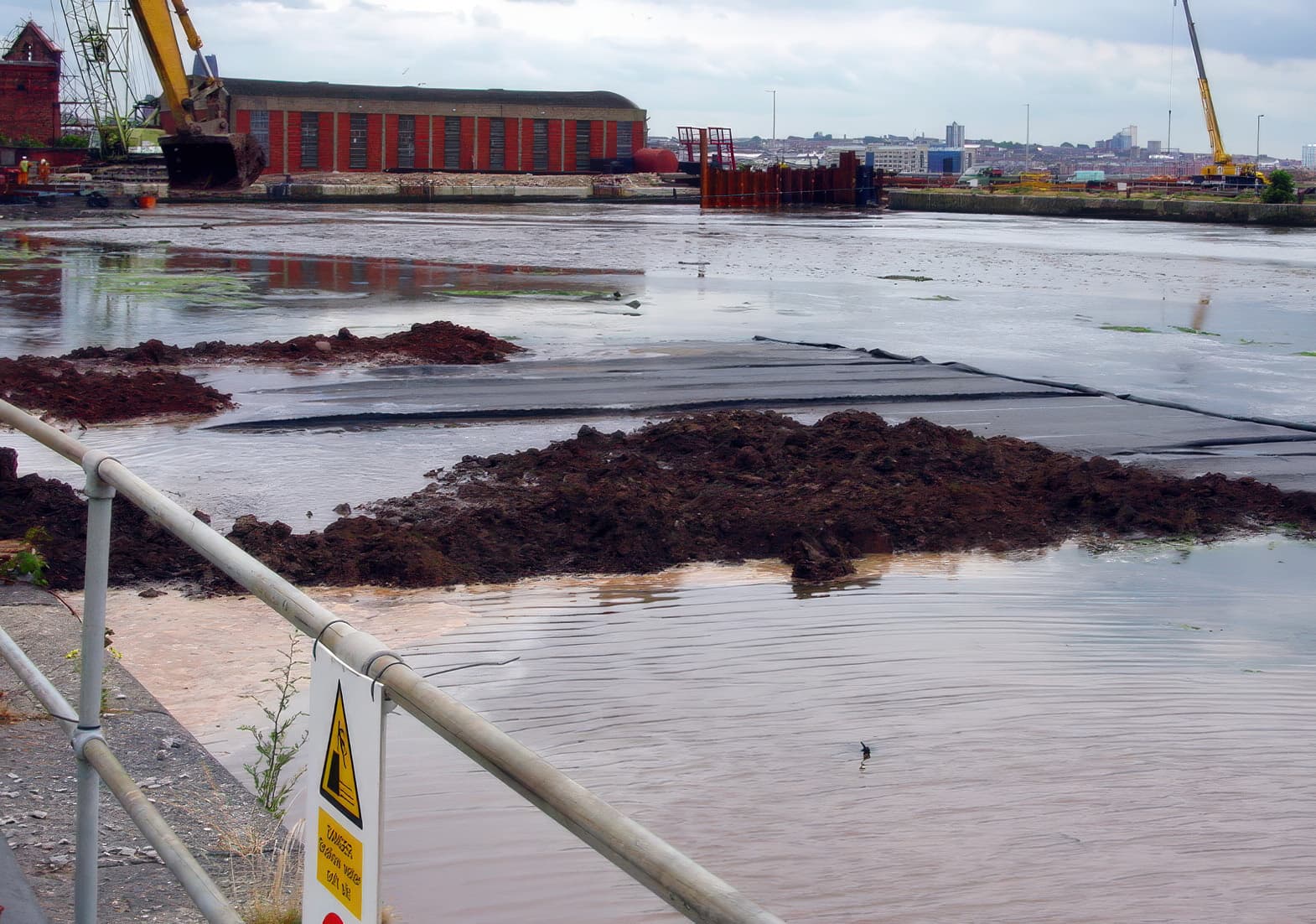
A number of options were investigated on how to deal with these very soft sediments, including complete removal. The best option was to leave the sediments undisturbed, cap them, and fill the dock basin to the required height with sand fill. A geotextile reinforcement solution gave the best opportunity to cap the sediments in an undisturbed manner. The prime concern was how to spread the geotextile reinforcement across the dock basin without disturbing the soft sediments. The water level in the dock basin was normally maintained at a low level, varying from below sediment surface level near the edges of the basin to around 1.5 m depth in the natural drainage channel that had formed within the basin.
Solution
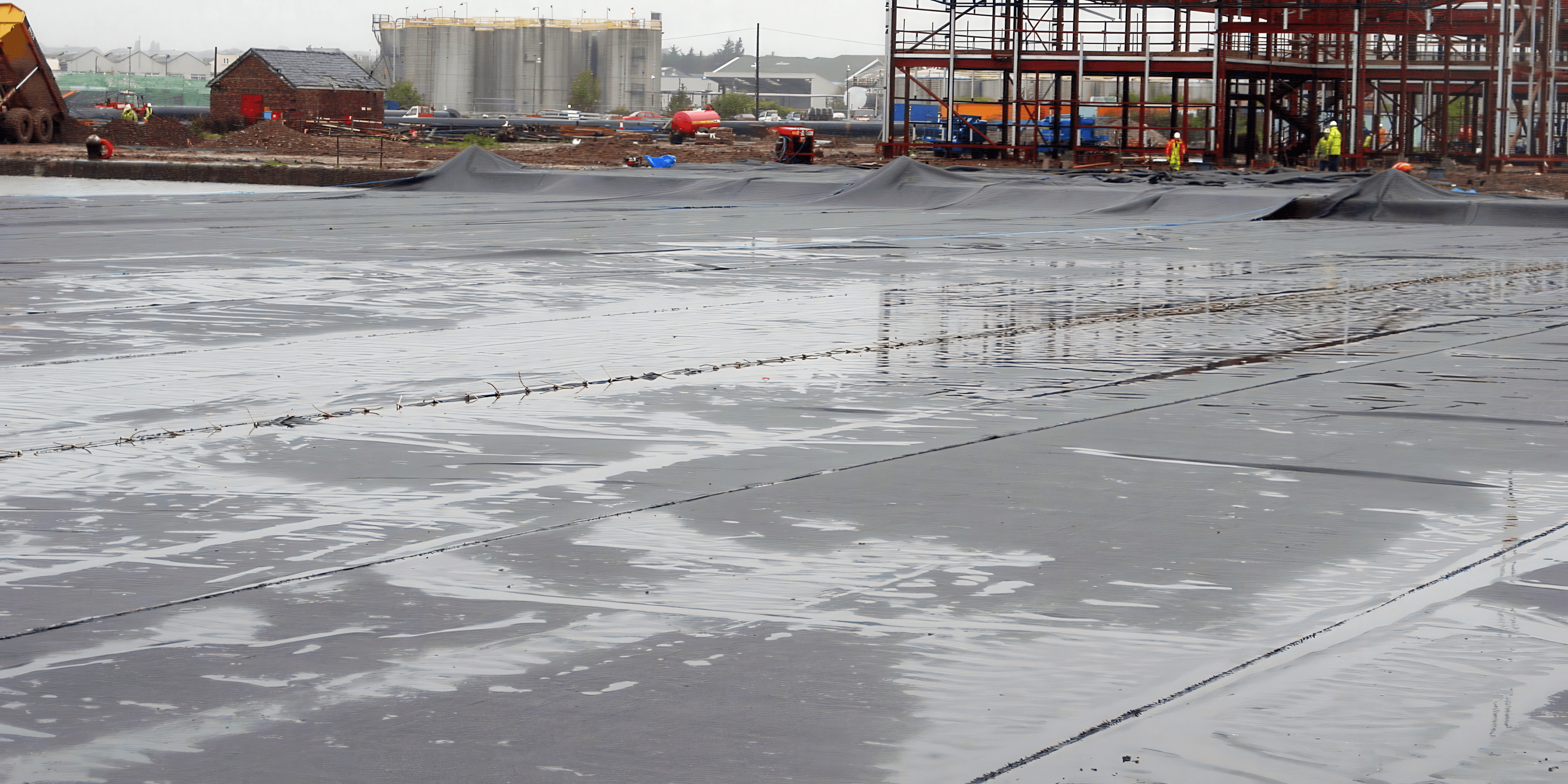
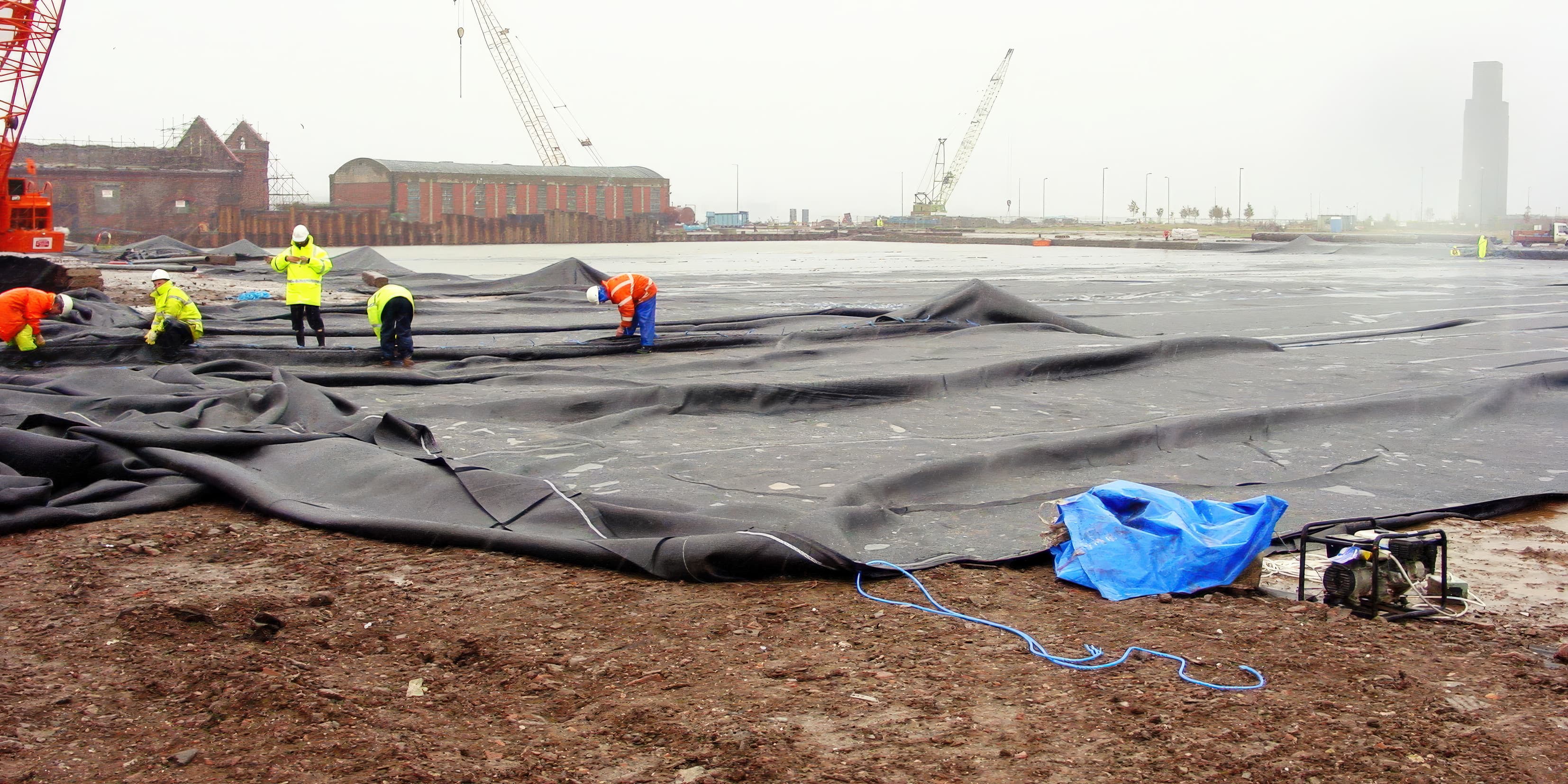
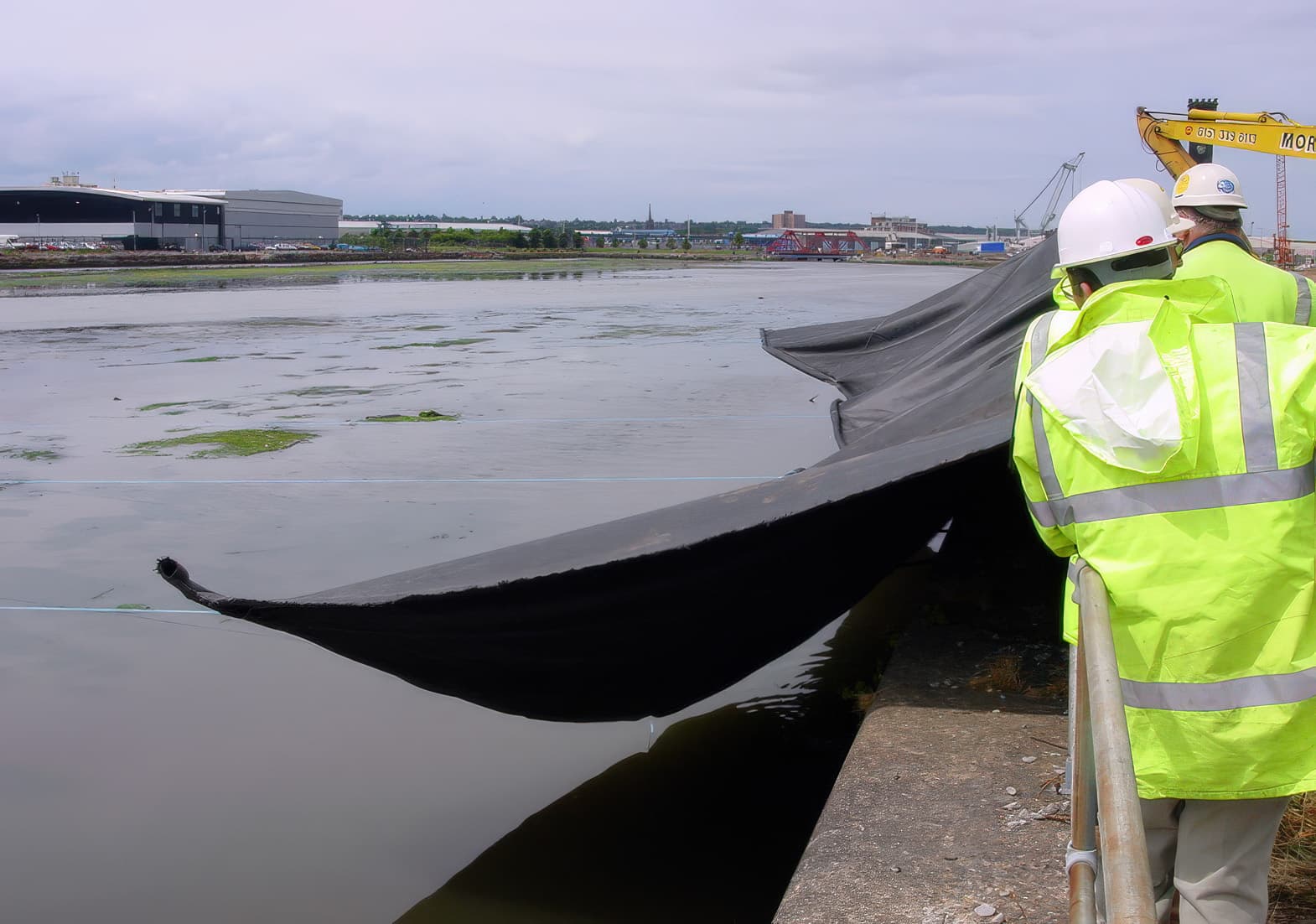
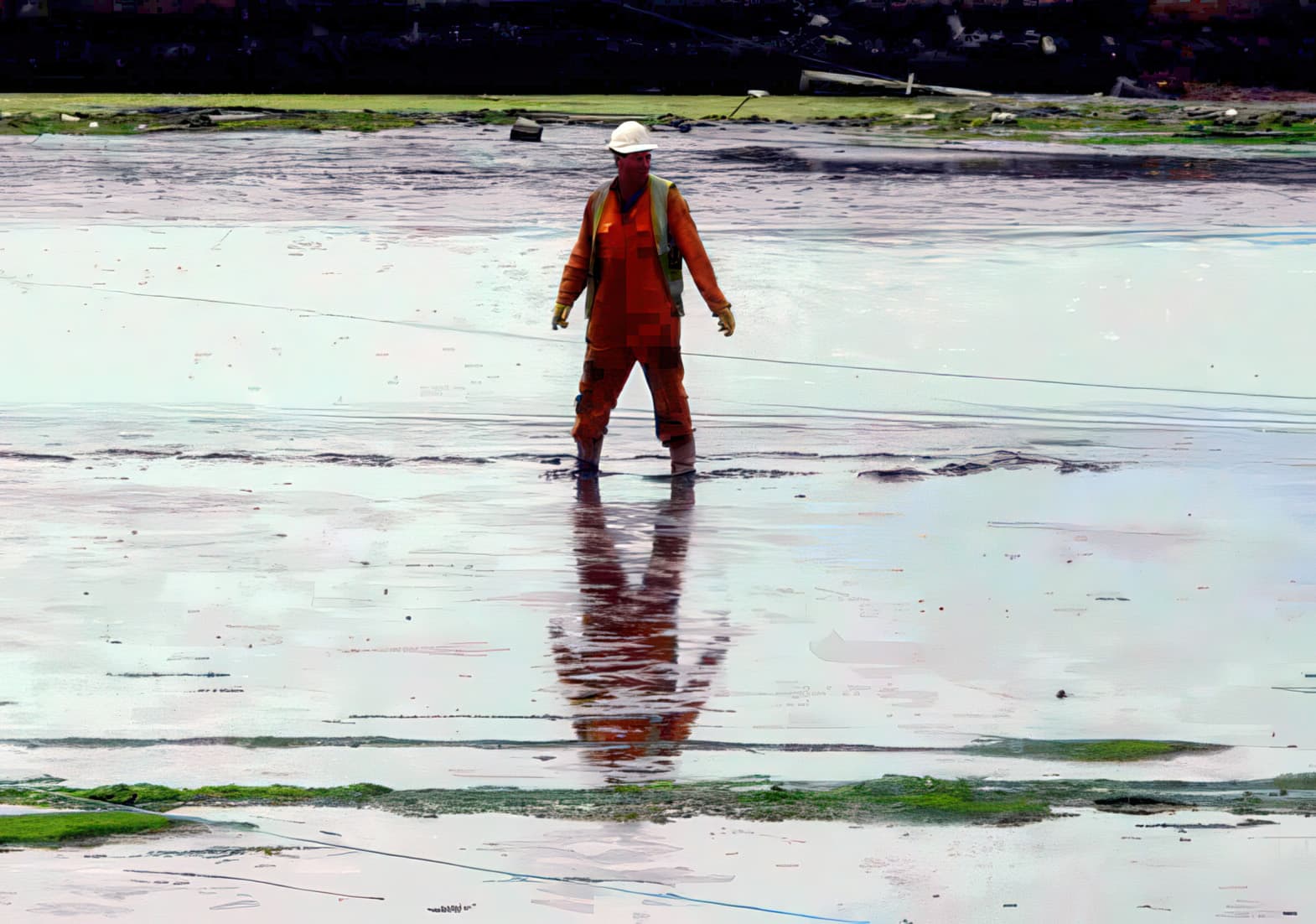
It was decided to raise the level of the water in the dock basin and float the geotextile reinforcement across, thereby leaving the soft sediments undisturbed. The water level in the dock basin was raised to around 1 m below the edges of the dock by blocking off the water exit culvert from the dock. MIRAFI® Geolon PP was chosen as the geotextile reinforcement for two major reasons. First, the material has a tensile strength of 120 kN/m in both the length and cross directions, and low extension, making the geotextile strong enough to resist any localized instability in the soft sediments that might occur. Second, the material was composed of 100 percent polypropylene and thus had a specific gravity less than water, allowing it to float naturally. It was planned to float the MIRAFI Geolon PP geotextile reinforcement across the 100 m width of the dock basin using ropes to pull the geotextile sheets across. The geotextile was fabricated into 120 m long by 15 m wide sheets in the factory. The length of the geotextile panels was long enough to span the 100 m of the dock basin and provide around 10 m of extra length on either side to accommodate later settlements of the soft sediments. On site, the MIRAFI Geolon PP geotextile reinforcement sheets were fabricated into wider panels at the edge of the basin, with ropes introduced at every 15 m join. The geotextile panels were then pulled across the flooded dock basin using ropes connected to excavators on the opposite side. Once all the panels were in place, the water level was lowered back to its natural level. Marine sand dredged from the River Mersey was used as the fill material to bring the dock floor up to its desired level. Because of the low undrained shear strength of the soft sediments, this filling was carried out in several layers to maintain stability. First, a sand layer varying in thickness from 400 mm to 700 mm was spread hydraulically across the surface of the geotextile to ensure a stable base layer. Next, a second layer of sand was hydraulically placed to bring the fill level up to the height of the existing dock walls (around 1.5 m above the geotextile at the edges). Finally, the sand fill was raised to a level 2.5 m above the surrounding dock level using a swamp dozer. This final layer acted as a surcharge to accelerate consolidation of the soft sediments in the base. It was estimated that settlement of the fill would approximate 1.4 m. To achieve this in a short period, Prefabricated Vertical Drains (PVDs) were installed over the dock basin at 2.1 m centers. These were installed from the top of the surcharge layer down through the geotextile and to the bottom of the soft sediments. After 6 to 7 months, the settlement requirements were met, and the surcharge layer was removed. The pavements for the roll-on, roll-off terminal were subsequently constructed on top of the sand fill.