Overview
In Austria alone, approximately 8,000 avalanche corridors experience countless avalanches each year. With climate change exacerbating the situation, the threat of avalanches to inhabited areas is ever-present in the Alpine regions. The destructive potential of avalanches poses a significant risk to residential areas and critical infrastructure.
Common measures to mitigate the risk include constructing barriers to restrict access to danger zones, strategic planting in vulnerable areas, installing snow bridges in the mountains, and building protective structures like snowslide roofing over roads.
Challenge
Water storage reservoirs are located close to ski slopes to store water for artificial snow production prior to the start of the ski season.
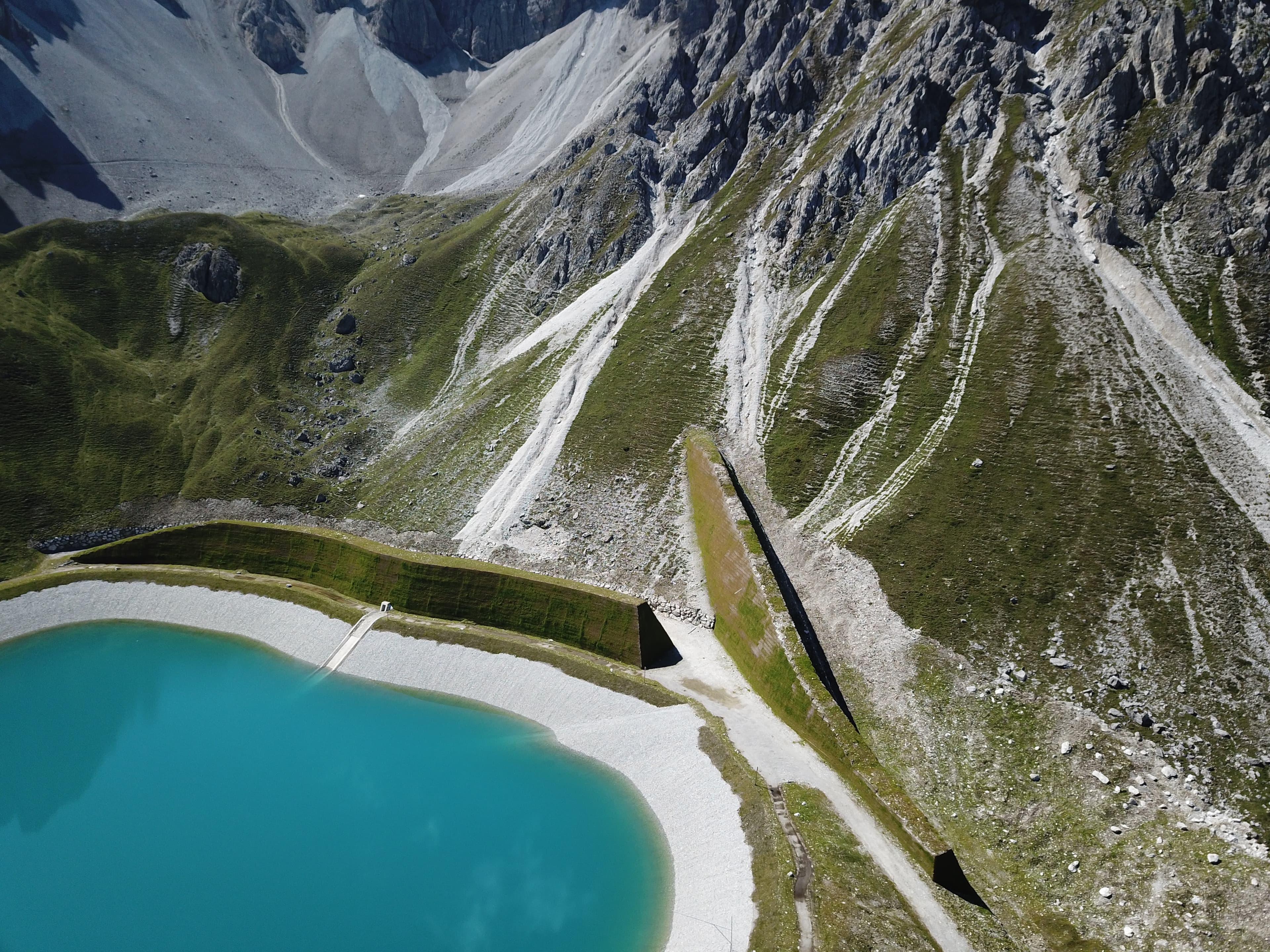
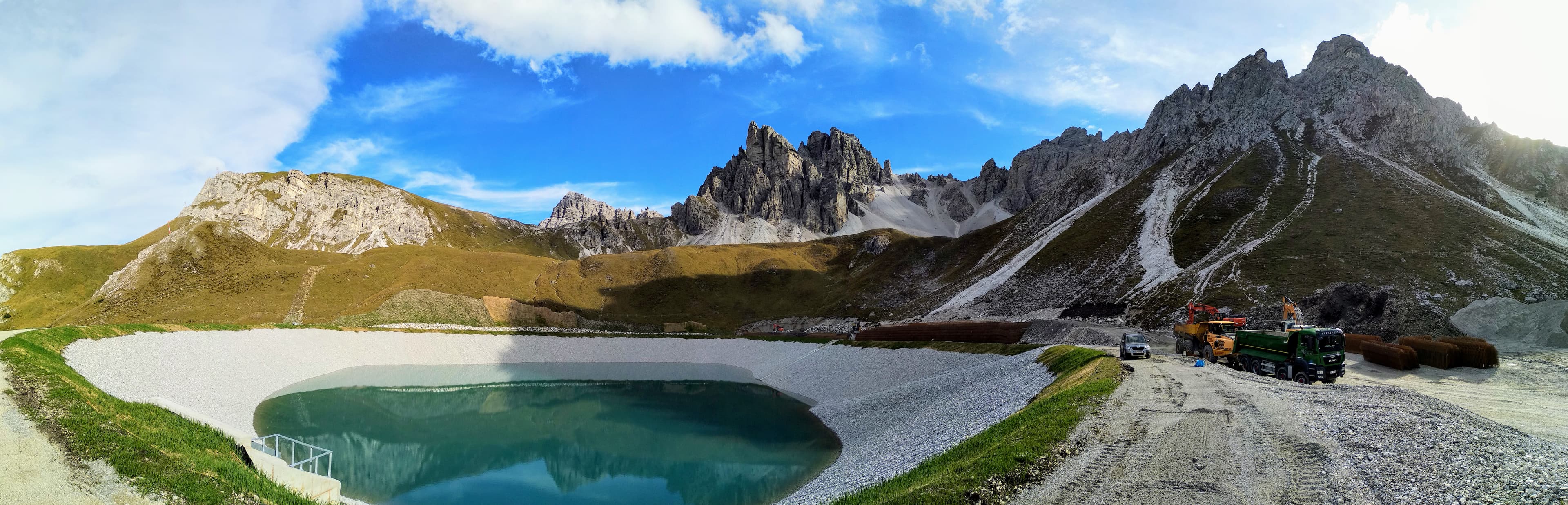
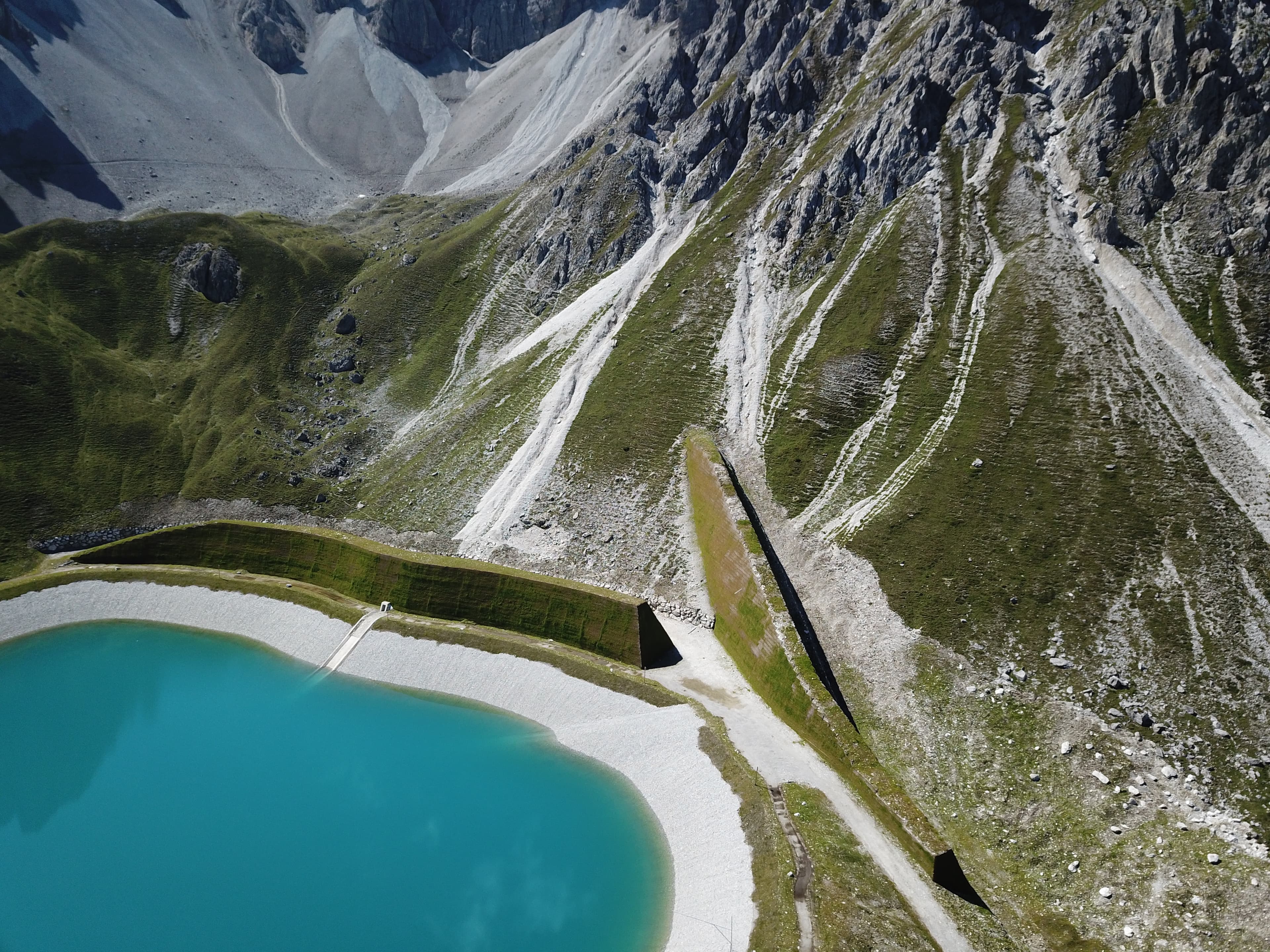
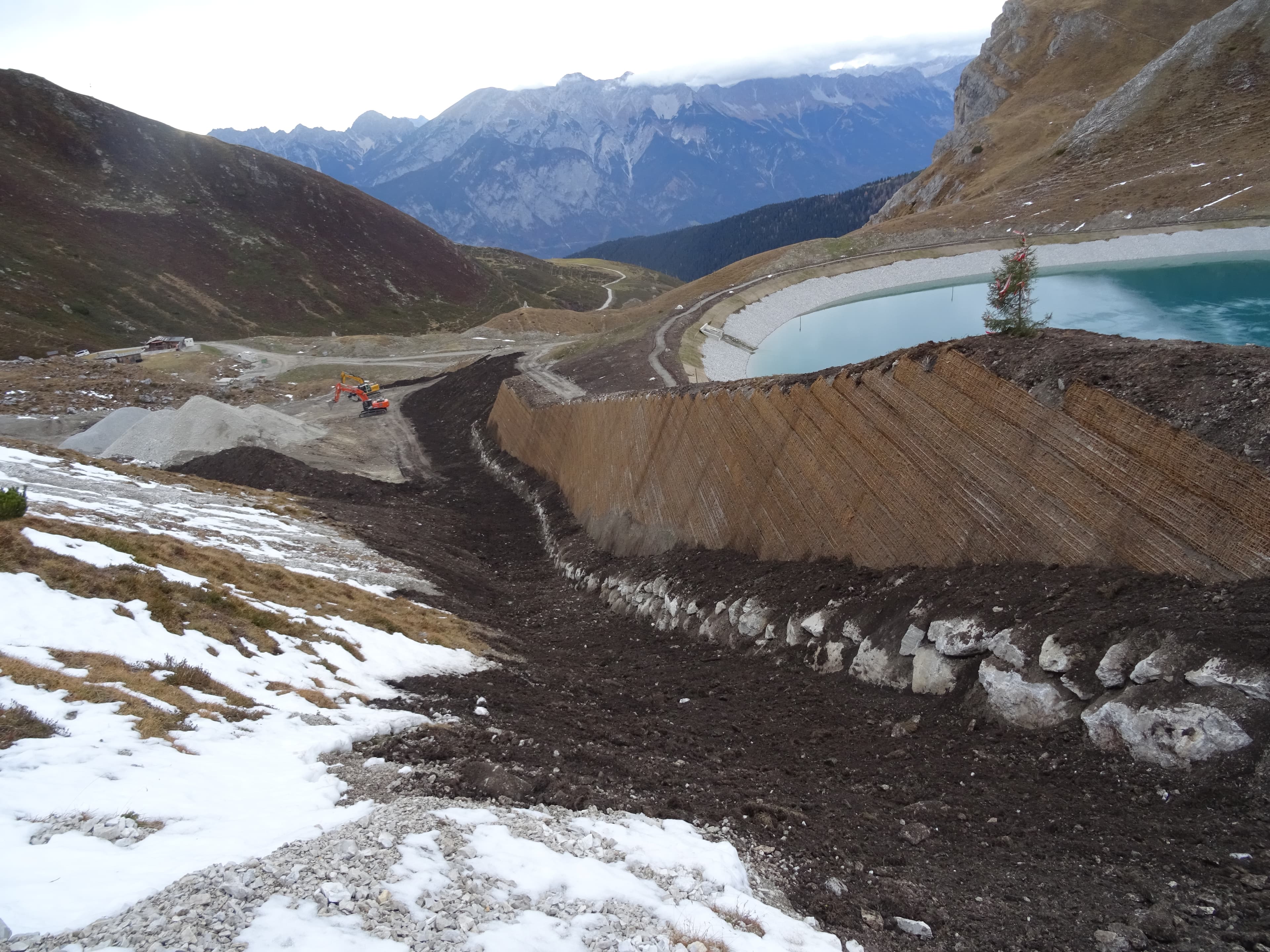
The Dohlennest water storage reservoir was built at the Axamer Lizum ski resort, close to the Tyrolean capital of Innsbruck, Austria. The storage reservoir and the pumping station are situated in the Malgruben mountain, which is surrounded by the steep slopes and rugged peaks of the Kalkkögel.
The area southwest of the storage reservoir has rocky peaks and steep scree slopes with debris flow channels. This puts the reservoir at high risk of being in the path of an avalanche.
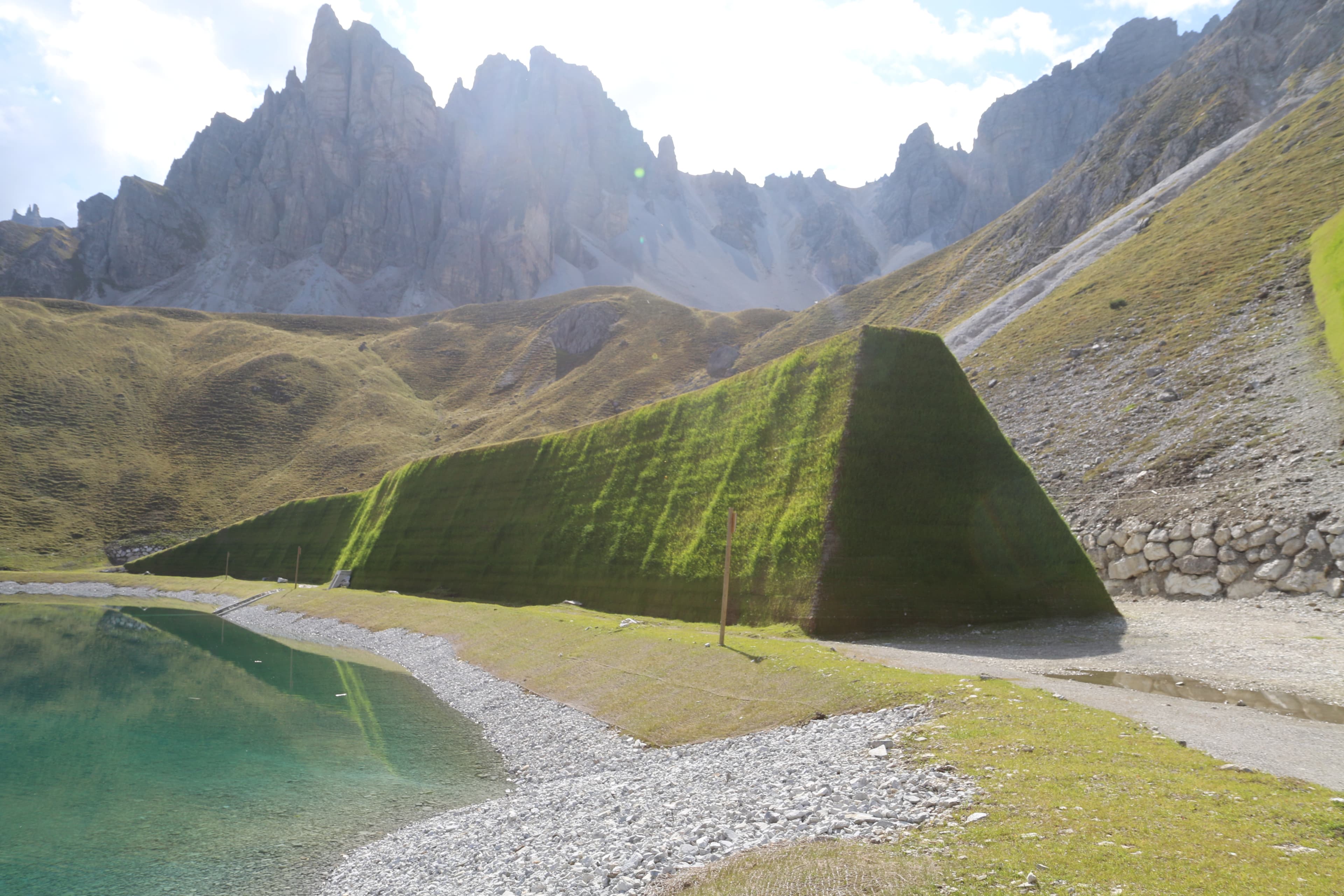
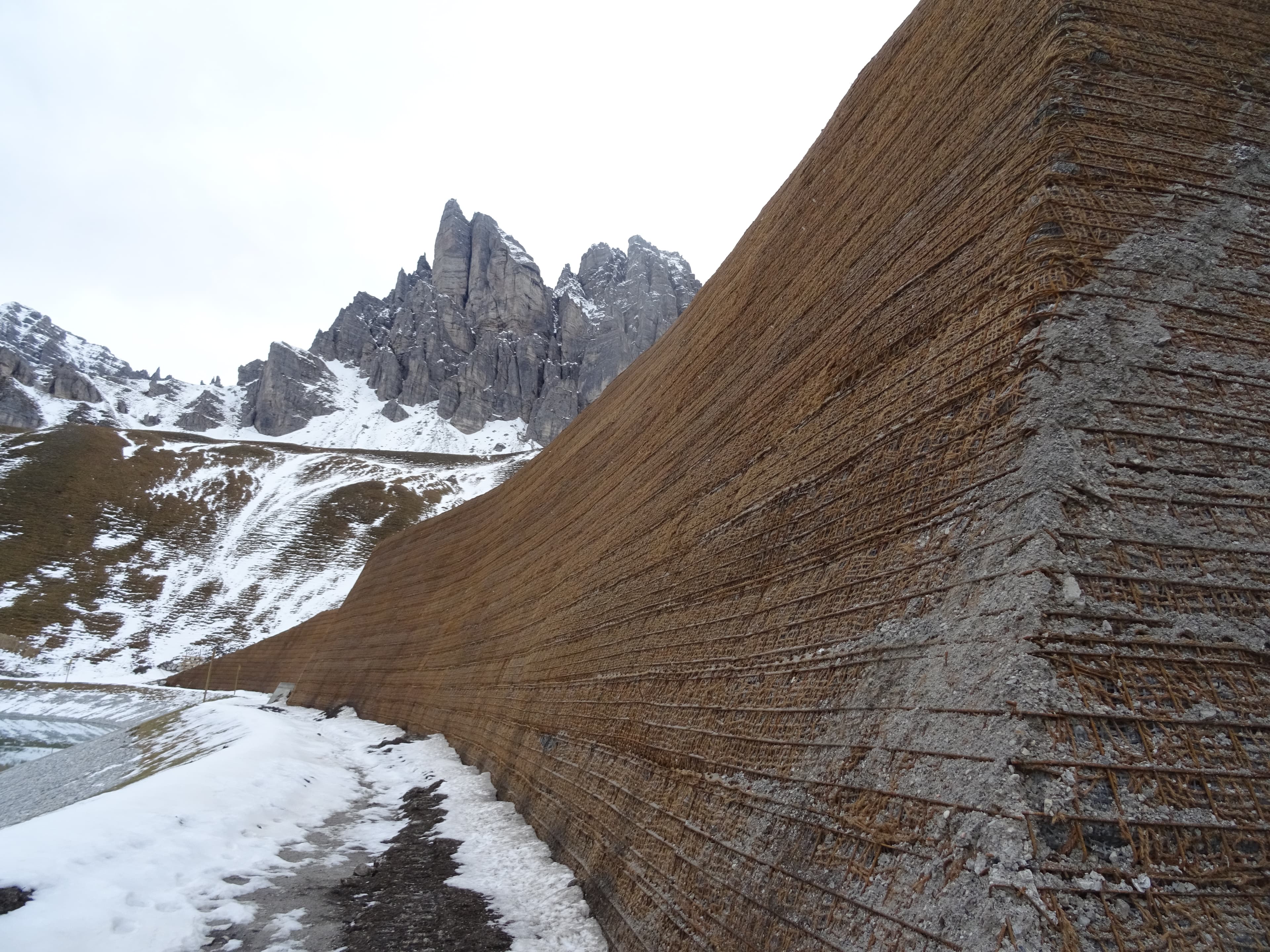
To secure the storage reservoir against snow avalanche impacts, two protection barriers were constructed to deflect avalanches from entering the reservoir and prevent them from creating a tsunami wave.
Simulations of the design avalanche (using a 150-year return period) showed that avalanches from the break-off areas could penetrate the reservoir. For this design return period, the avalanche flow velocity around the reservoir crest is 22 m/s* (776 ft/s**). Avalanche flows into the storage reservoir could cause a tsunami wave that could spill over the reservoir crest if the freeboard was insufficient. The magnitude of the maximum generated tsunami wave height is related to the depth of the water body and its shape, and the momentum of the avalanche flow.
Solution
The protection barriers were constructed using a reinforced slope system with MIRAGRID® GX110 geogrid reinforcement.
This combination allowed for efficient shaping of over-steep earth barriers and distributed local stress throughout the cross-section, providing long-term stability. This resource-friendly solution utilized local granular material for reinforced fill and large rocks at the base of slopes to protect against erosion.
Since soil from the mountain could be used directly for constructing these protective barriers more than 20 m (65 ft) high, the project reduced its CO2 emissions. This is because the alternative requires material to be flown in by helicopter.
The visible outer layer of the barriers was customized to blend with the natural surroundings, enhancing aesthetics. With an expected service life of up to 120 years, this innovative avalanche protection approach offers sustainable, durable, and effective results.
* Meters per second
** Feet per Second