Overview
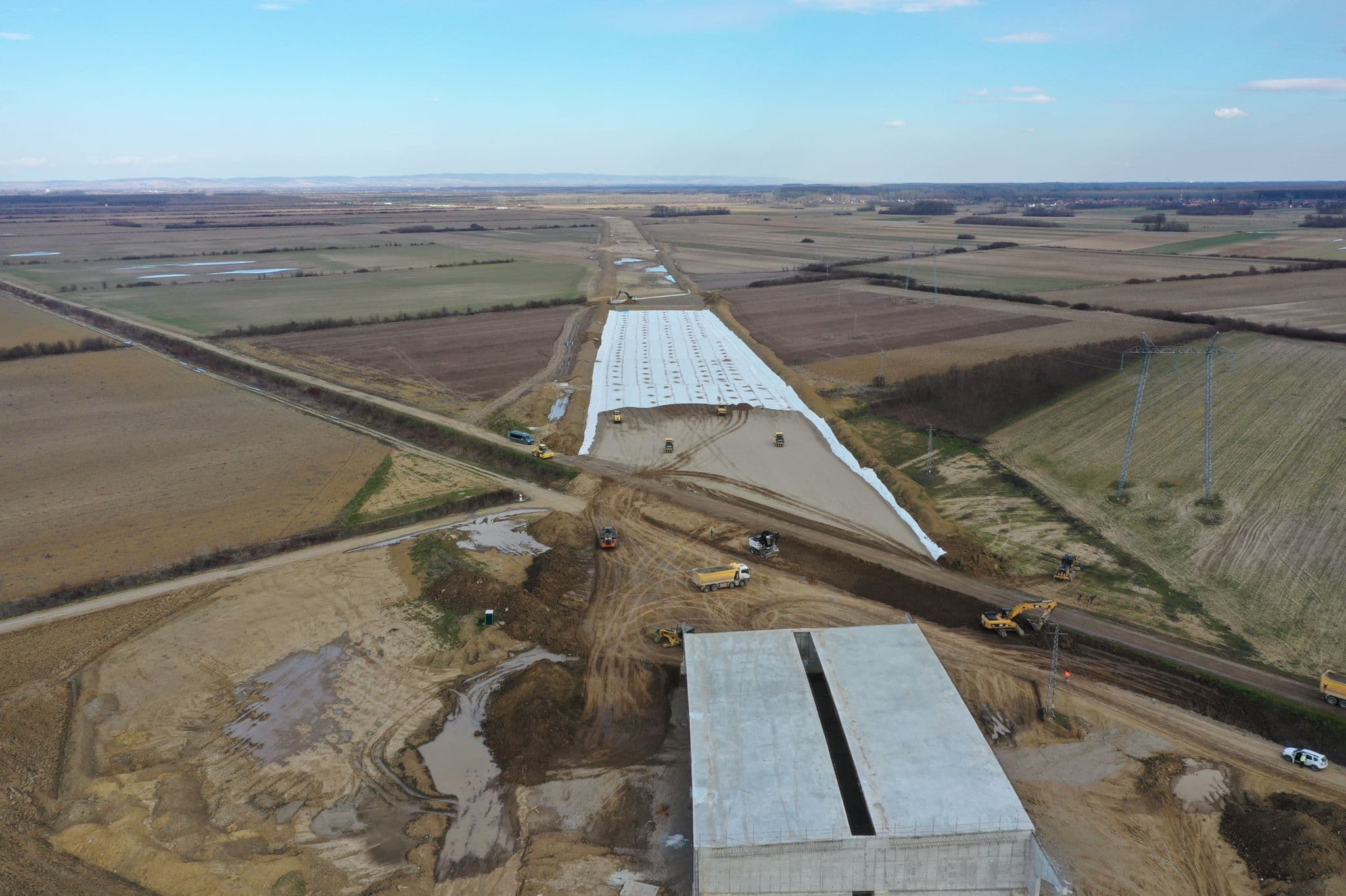
The Kuzmin-Sremska Raca project (Motorway A7) began in 2021 in Serbia to improve connectivity between Serbia and Bosnia and Herzegovina. The project aimed to bridge Belgrade and Sarajevo, the capitals of Serbia and Bosnia-Herzegovina, through an innovative transportation network. This included the construction of a new 1,310 m (4,298 ft) bridge over the Sava River, eight smaller bridges, eleven culverts, five overpasses, and two large interchanges at Bosut and Kuzmin. Designed to significantly bolster regional economic growth and mobility, the project had an estimated investment of 930 million euros.
Challenge
The main challenge was selecting the most strategic route that aligned with the project's objectives amidst a complex geographical and socio-economic landscape. The project explored two primary route alternatives to integrate seamlessly with Serbia's existing infrastructure and introduce new pathways for enhanced regional access. The biggest geotechnical challenge arose from the weak subsoil combined with a high groundwater level, which complicated the construction of a stable highway embankment. The initial specification for basal reinforcement was restrictive, recommending only one type of geogrid product.
Solution
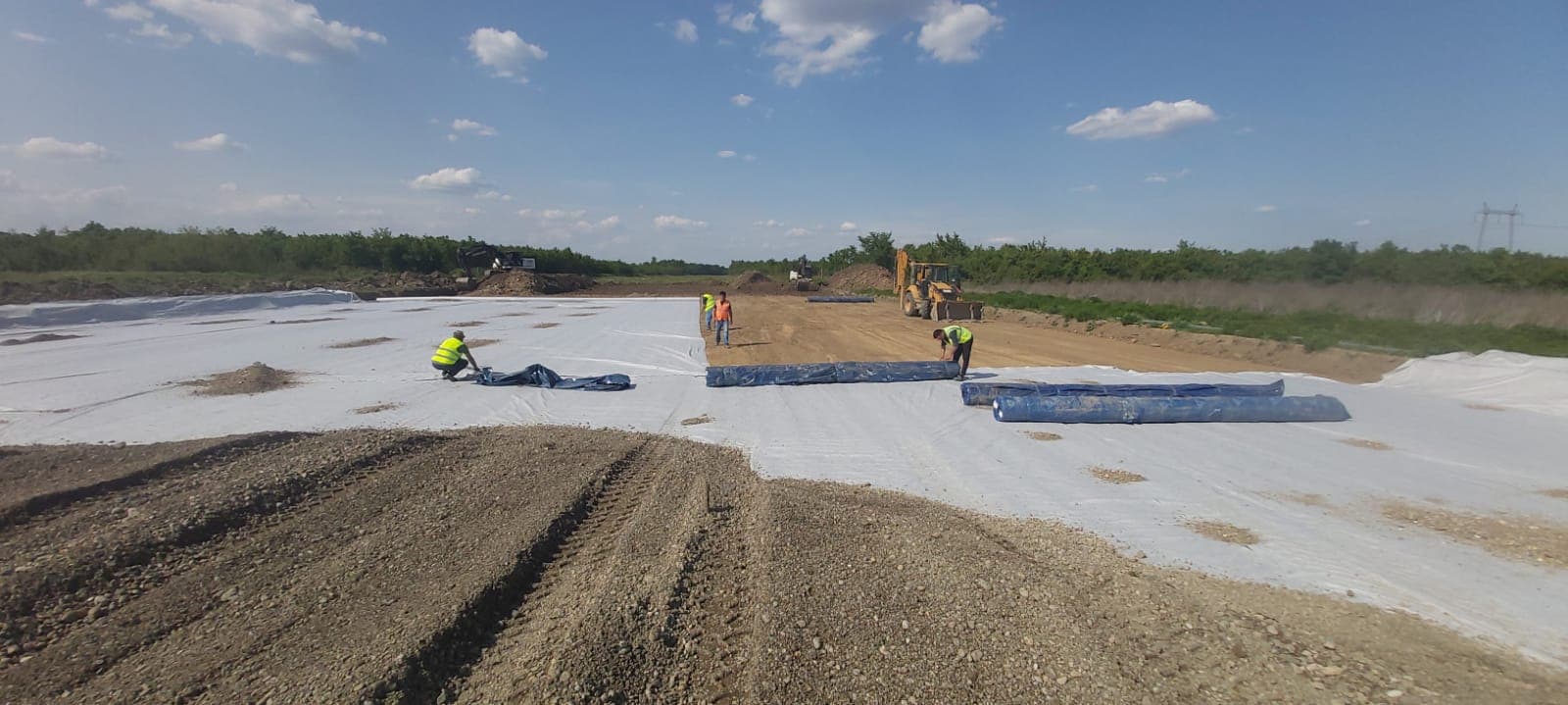
In response to the contractor's request for an optimized geotechnical solution, Solmax's engineering department proposed the geogrid MIRAGRID® PEC. This product is composed of a PP continuous filament non-woven, combined with high-strength PET yarns, offering functions of separation, filtration, in-plane drainage, and reinforcement. The unique fiber-structure ensures optimal filtration behavior and robustness against installation stress, while the PET yarns provide high strength and excellent creep behavior.
MIRAGRID PEC was selected for this project because the product garnered excellent test results from the IMS Institute in Belgrade. Its appeal is further enhanced by the ease of installation and the rapid response and delivery capabilities Solmax provides, along with robust technical support from the very beginning of a project. Additionally, there was strong cooperation between Solmax’s Technical and Commercial Teams and their distributor for Serbia, ensuring seamless execution and service delivery.
Products used:
- 2021: MIRAGRID PEC 55/55, 143,100 m² (1,540,494 ft²)
- 2022: MIRAGRID PEC 40/40, 391,140 m² (4,209,990 ft²)
- 2023: MIRAGRID PEC 40/40, 358,810 m² (3,861,637 ft²)
Solmax’s solution was supported by extensive references, technical documentation, and quality certifications, including CE marking and an Environmental Product Declaration (EPD). These factors played a crucial role in convincing both the designer and the project owner of the proposed solution.
The Kuzmin-Sremska Raca project is expected to be completed by 2025. This initiative stands as a testament to the potential of collaborative engineering and planning in overcoming geographical and logistical challenges, thereby laying the foundation for a more interconnected and prosperous Balkan peninsula. The use of innovative geotechnical solutions such as MIRAGRID PEC has set a benchmark for similar projects worldwide in terms of economic efficiency and high-quality construction under challenging conditions.