Overview
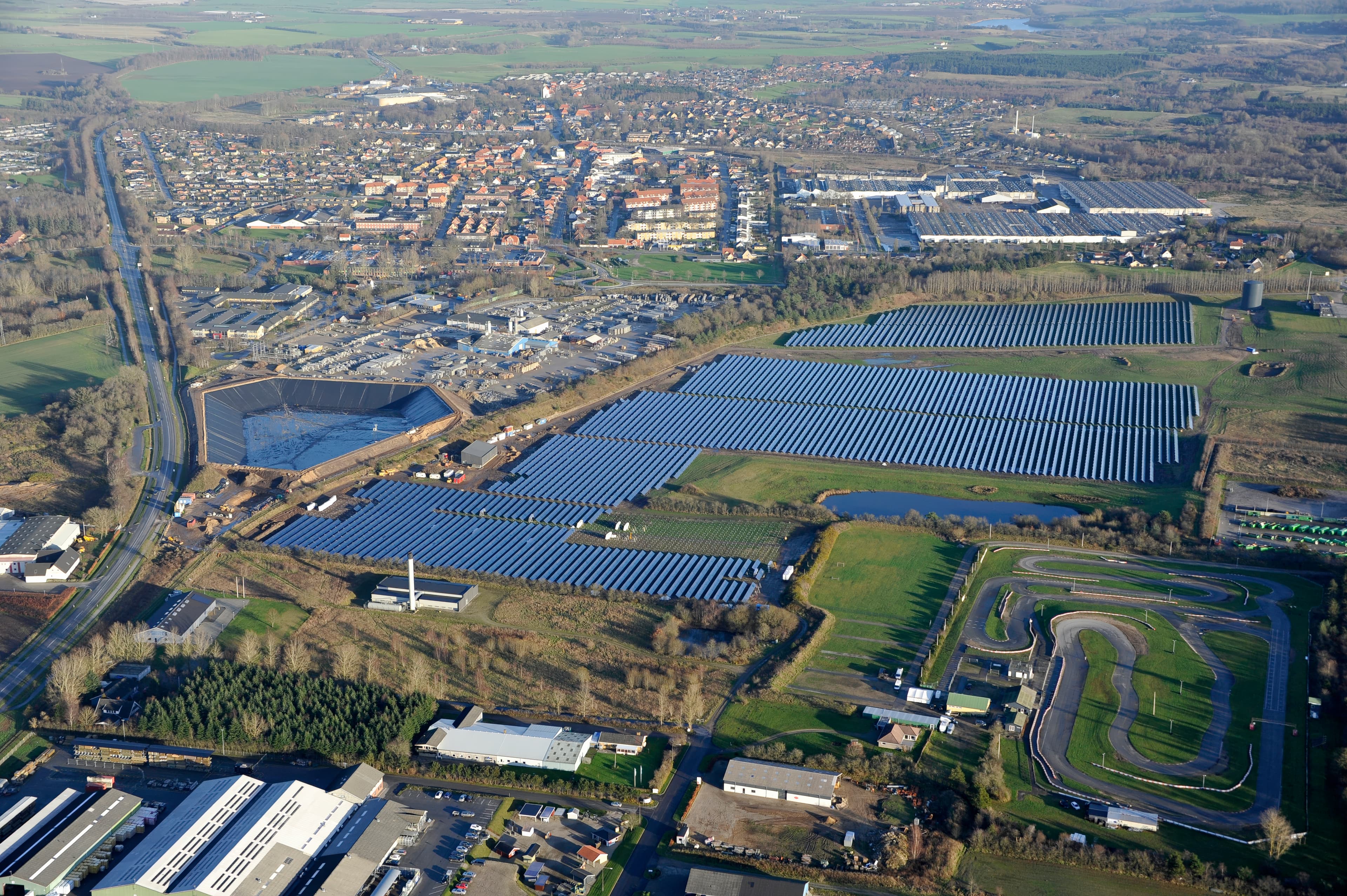
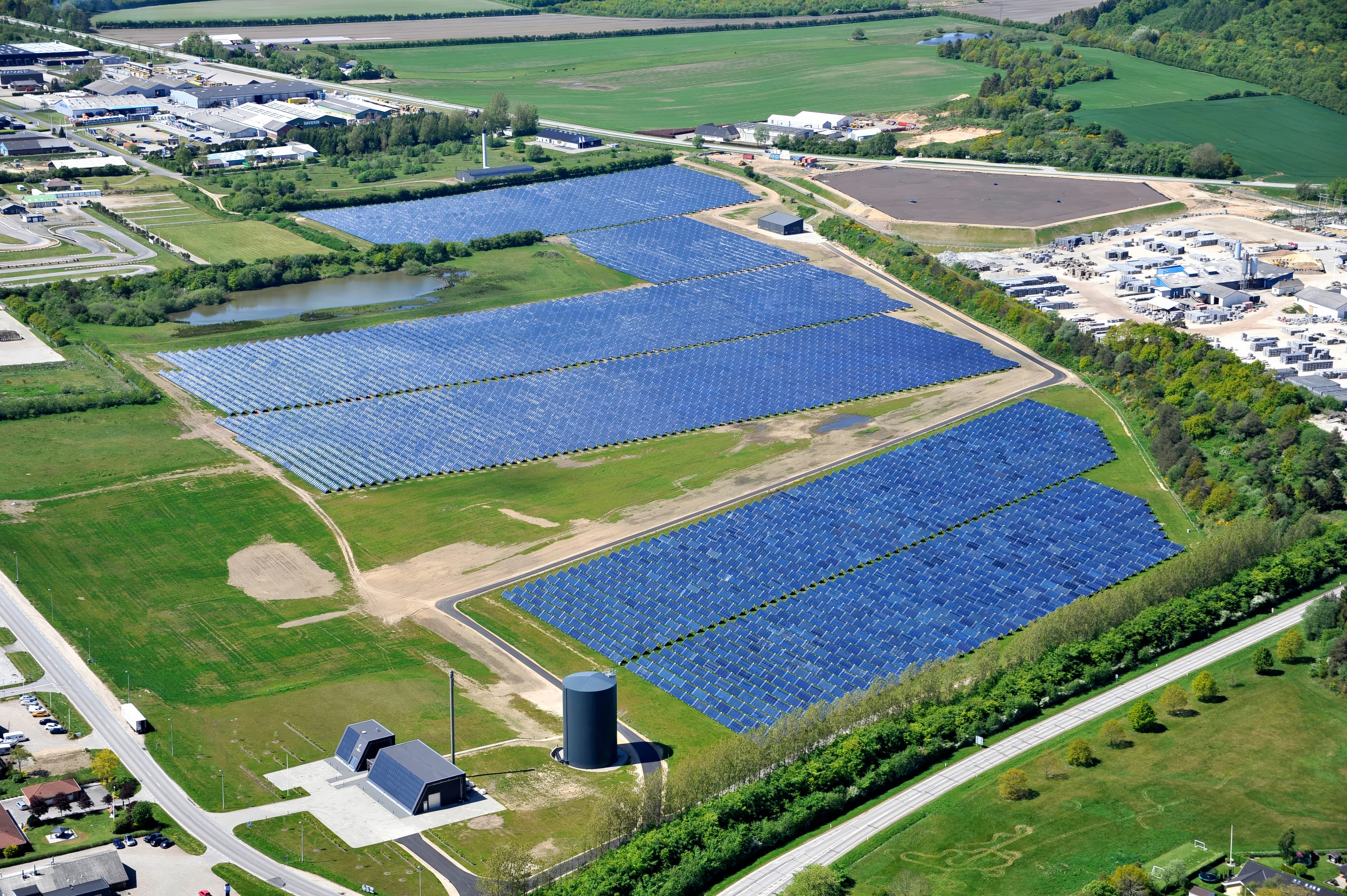
In the Danish town of Vojens, the world’s largest pit thermal energy storage (PTES) facility was completed. Commissioned by Vojens Fjernvarme AMBA, the 200,000 m³ storage basin represents a milestone for seasonal energy storage in district heating. The basin captures surplus solar thermal energy produced in summer and retains it for use in winter, ensuring reliable supply when demand peaks.
The facility is charged by a 70,000 m² solar collector field, one of the largest in Europe. At times of high solar radiation, this field generates more heat than the district heating grid requires. The PTES allows this surplus to be stored and later discharged to households and industries. By enabling the seasonal shift, the system strengthens the integration of renewable heat into Denmark’s district heating infrastructure.
From an environmental perspective, the benefits are substantial. By displacing fossil fuels, the Vojens PTES reduces annual carbon dioxide emissions by around 6,000 tons. This outcome supports Denmark’s climate objectives while stabilizing local energy costs.
Solmax was responsible for prefabrication, material supply, installation, and quality assurance of the geosynthetics that form the basin and cover system. Advanced geomembranes and multifunctional protection layers were deployed to create a reliable, high-performance sealing solution that enables long-term, high-temperature storage at this unprecedented scale.
Challenge
Building the largest PTES ever constructed introduced both technical and logistical challenges. The basin was designed as a hexagon to balance excavation efficiency with structural stability, but this geometry added complexity for lining installation and detailing. With a total capacity of 200,000 m³, the hydrostatic pressure acting on the sealing system was significant, requiring materials with proven long-term resistance.
Thermal stress was a central issue. Stored water can reach 90 C, far beyond the limits of conventional liners. Prolonged exposure at these temperatures leads to stress cracking, creep, and accelerated material degradation. For Vojens, impermeability and mechanical integrity over decades of operation were essential.
The collector field also created seasonal cycling requirements. The PTES had to withstand both dynamic charging and discharging cycles and long durations of static high-temperature storage. Seam integrity across very large panels became a critical factor, as even minor defects would compromise performance.
Finally, the cover system had to do more than close the basin. It needed to insulate the water, minimize thermal losses, and protect the geomembrane from ultraviolet radiation, settlement, and environmental loads. Integrating multilayer protection, drainage, and UV-resistant liners demanded careful material selection and expert installation.
Solution
The solution at Vojens combined one of the world’s largest solar collector fields with a 200,000 m³ storage basin lined and protected by Solmax geosynthetics. Nearly 135,000 m² of materials were delivered and installed under strict quality control to ensure safe, efficient, and durable operation.
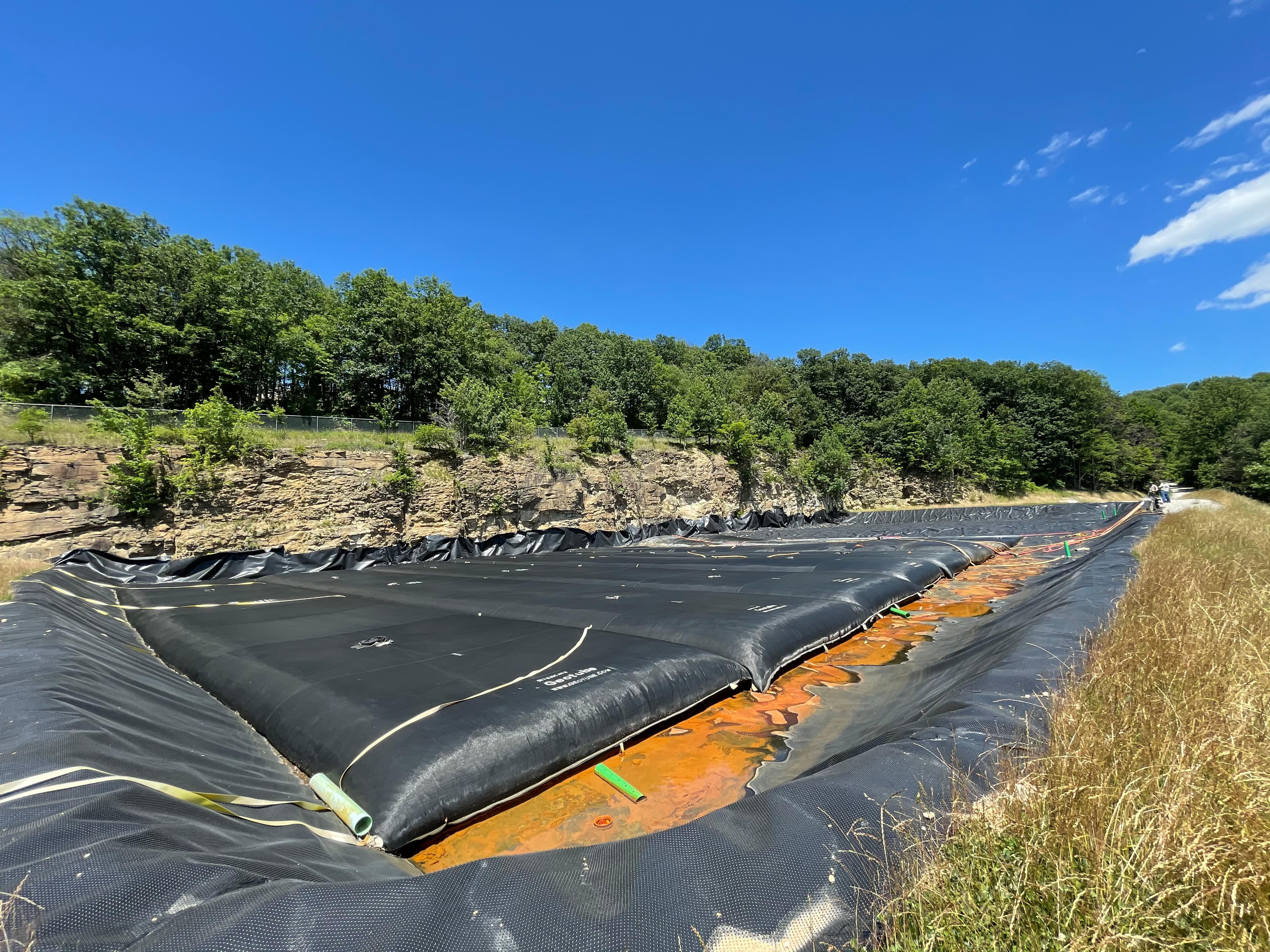
The sealing system relied on GSE® HDH high-temperature geomembranes, installed in two thicknesses to match performance requirements. Around 30,000 m² of GSE HDH 2.0 mm was used as a primary sealing layer, with a further 30,000 m² of GSE HDH 2.5 mm deployed in critical areas for added resistance to long-term creep and thermal stress.
To protect and reinforce the system, Solmax installed FABRINET® geocomposites in multiple layers. Approximately 27,000 m² of FABRINET BP 50 2000 and 24,000 m² of FABRINET BP 50 1200 were used to provide drainage, filtration, and puncture protection. These layers safeguarded the geomembrane against subgrade irregularities and enhanced mechanical stability across the basin.
The cover system integrated 23,500 m² of GSE HD Color 1.5 mm (light grey). This geomembrane provided both impermeability and UV resistance, with the light color minimizing solar heat absorption. Combined with insulation, it reduced thermal losses and extended the service life of the cover.
Solmax’s services included prefabrication of geomembrane panels, precise on-site welding, and continuous quality assurance. Seam integrity was critical, and every weld was tested to ensure impermeability. The installation team adapted techniques to manage the unique hexagonal geometry, where edge detailing required careful execution.
The completed PTES stores surplus heat from the 70,000 m² solar field and delivers renewable energy during winter demand peaks. With a capacity of 200,000 m³, the facility displaces natural gas and reduces CO₂ emissions by around 6,000 tons per year.
From an engineering perspective, Vojens demonstrates that very large-scale PTES can be built to operate reliably when supported by advanced geosynthetics. Solmax’s GSE HDH liners and FABRINET protection layers provide the containment, durability, and performance that make seasonal storage viable. For Denmark’s energy transition, the project stands as proof that solar heat can be captured and stored at scale, moving district heating closer to a fossil-free future.