Overview
Guangzhou, the third largest city in China, is a major manufacturing and commercial center with over 10 million residents. The city generates a significant amount of municipal solid waste (MSW), most of which has traditionally been sent to the Xinfeng MSW Landfill for disposal. Located about 38 kilometers (23.6 miles) from the city center, the Xinfeng Landfill is the second largest landfill in China in terms of capacity and daily MSW intake. Originally developed in 2003 with a 20-year lifespan, the landfill has been receiving 75% of the daily MSW generated in Guangzhou.
The Xinfeng Landfill features a double geomembrane system for liner protection. It consists of a GSE® HD 1.5 mm thick high-density polyethylene (HDPE) geomembrane as the primary liner and a 1 mm thick GSE HD geomembrane as the secondary liner. A leachate drainage layer with perforated drainage pipes and a filter geotextile separates the primary liner and the solid waste. A leachate detection layer with perforated drainage pipes is placed between the primary and secondary liners. Cushion geotextiles protect the liners from punctures. The landfill also includes an on-site leachate treatment plant and a methane recovery system.
Challenge
The landfill site is situated on hilly ground with two river valleys running in a north-south direction. The elevation ranges from Reduced Level (RL) 70 m (229.7 ft) to RL 185 m (606.9 ft), with groundwater typically found between 1 to 6 m (3.3 to 19.7 ft) below ground level. The geology consists of Quaternary Alluvium overlying weathered granite. The completely weathered granite layer has a thickness of about 1.5 to 6 m (4.9 to 19.7 ft), while the overlying alluvium is brownish red sandy clay with a thickness of 1 to 11.5 m (3.3 to 37.7 ft). Controlling leachate is a significant design consideration due to the outlet of a nearby stream and its proximity to the Jinkeng Reservoir.
Solution
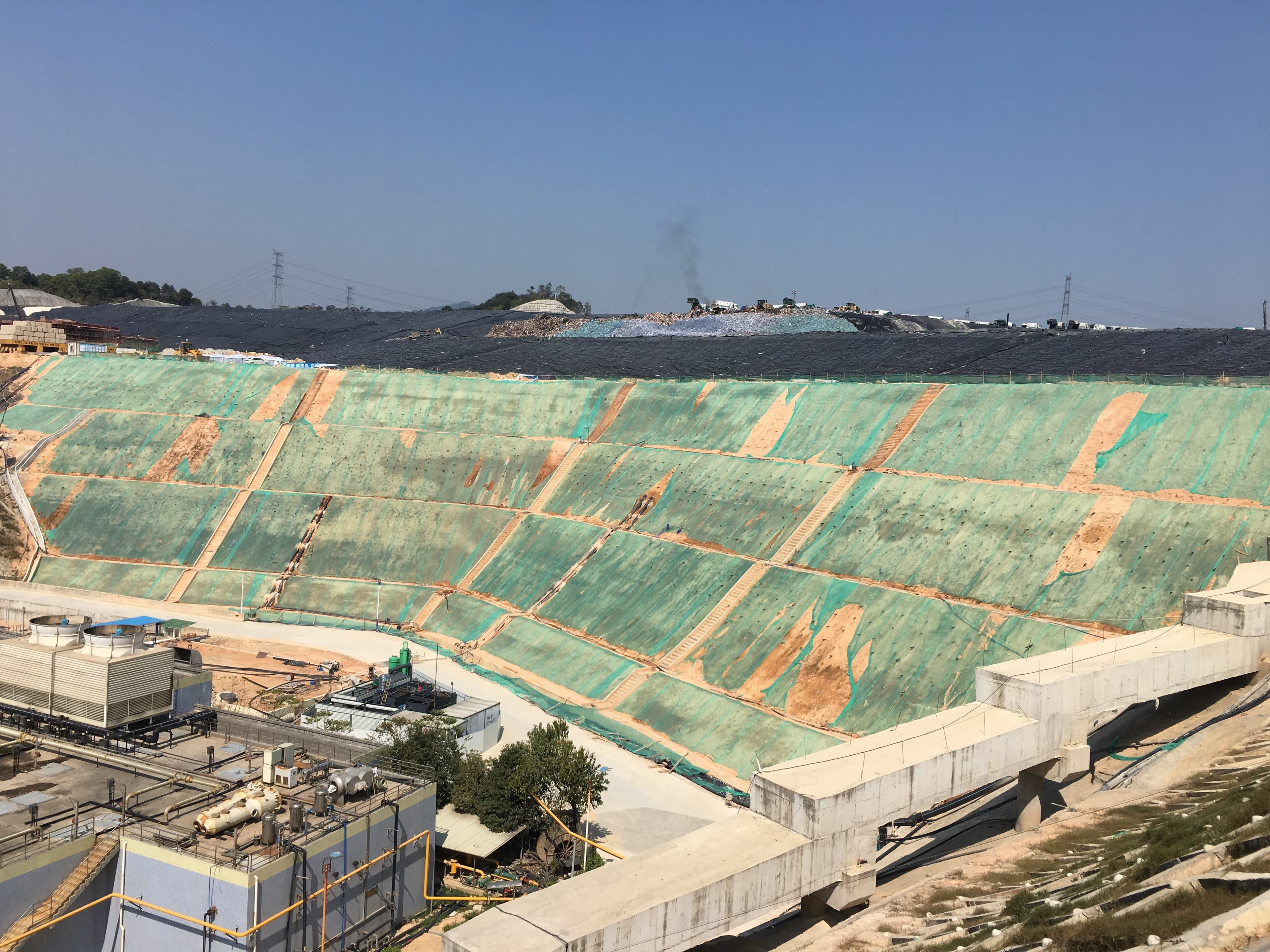
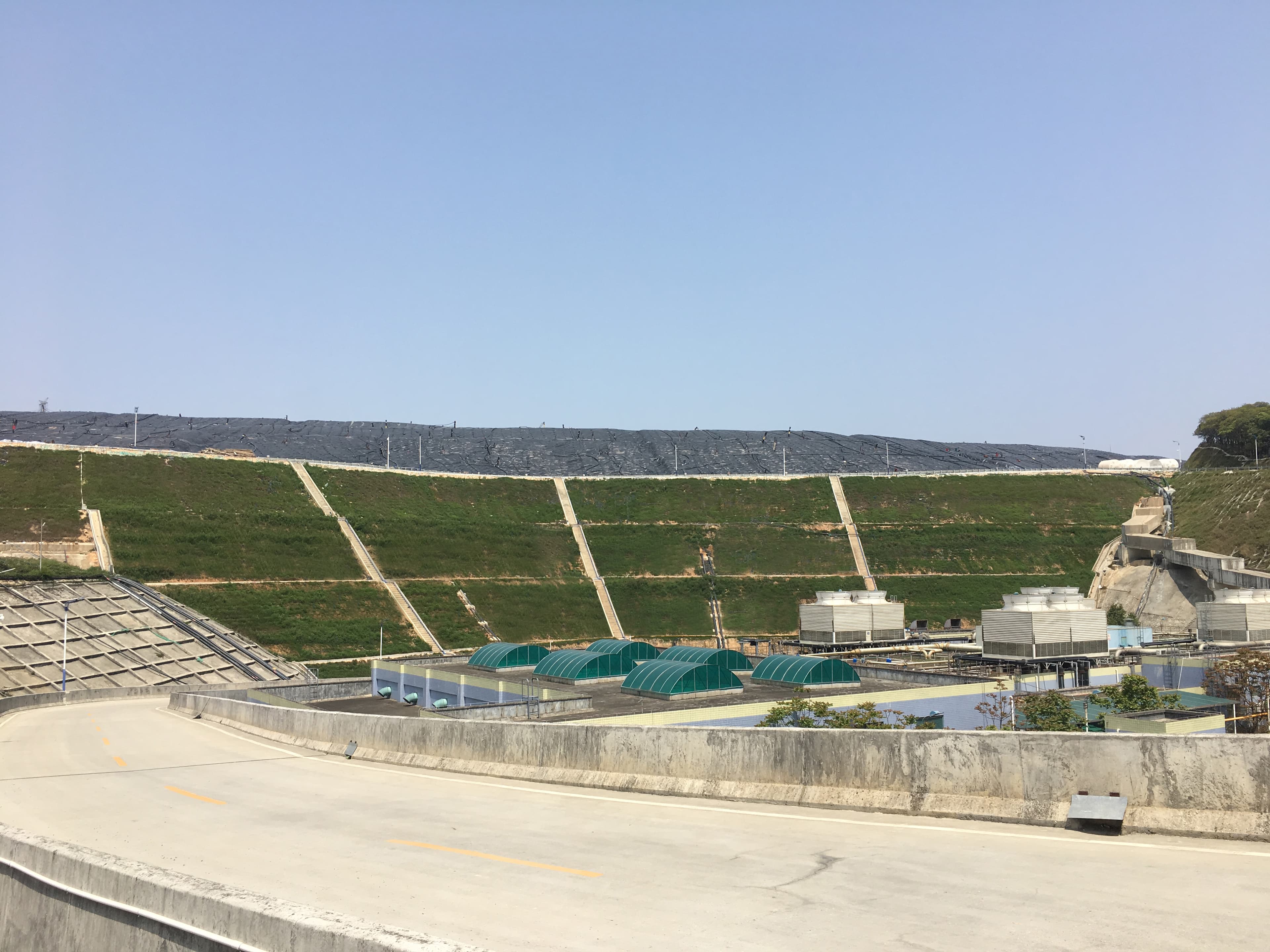
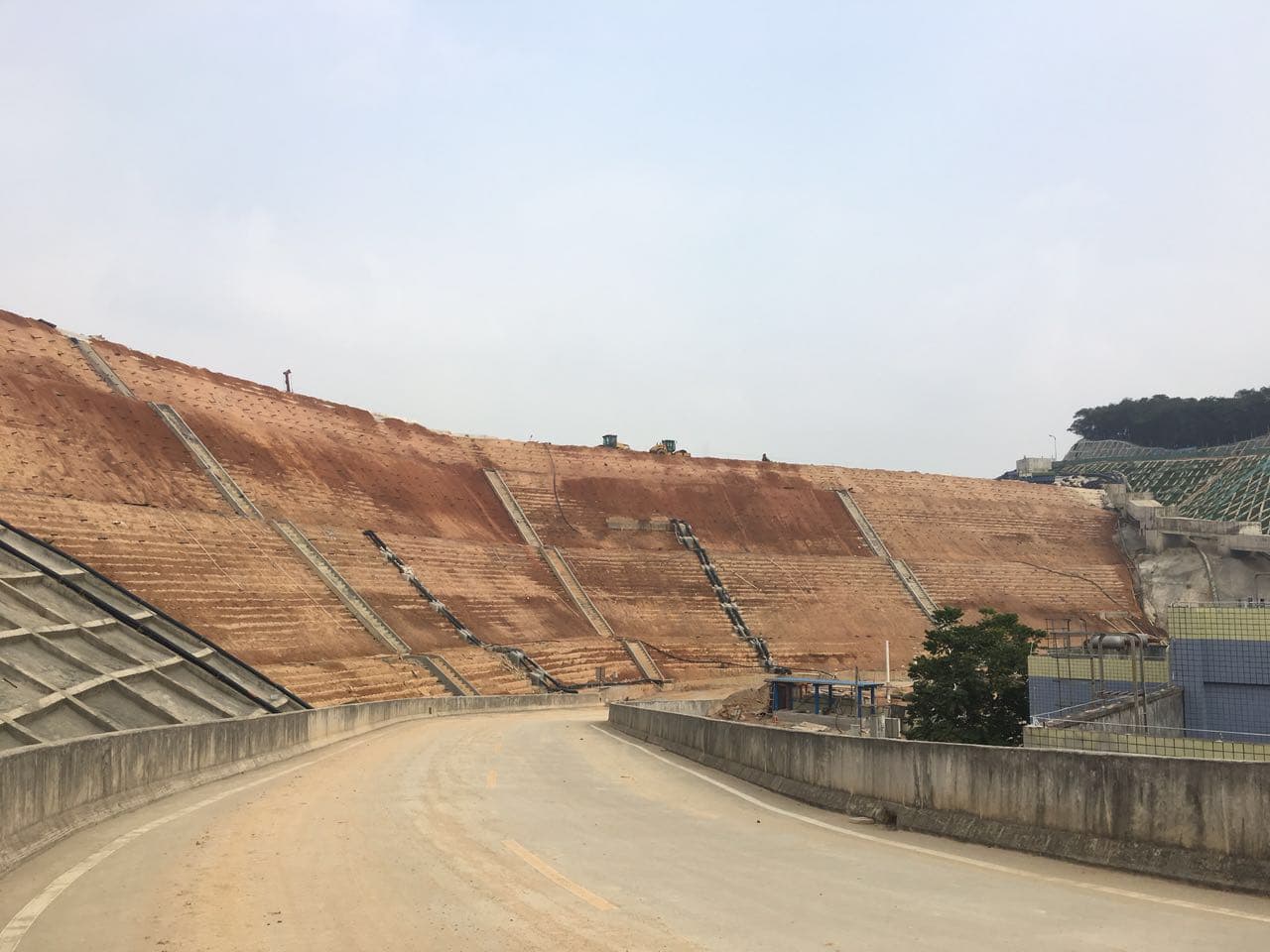
To address the diminishing capacity of the Xinfeng Landfill, a containment bund was constructed in 2012. This 37 m (121.4 ft) high and over 300 m (984.3 ft) long bund provides an additional capacity of 7.5 million m3 (9.8 million yd3). It is positioned between the existing leachate treatment plant and the low containment bund at the southern end of the landfill. The bund's sides are designed with a slope angle of approximately 45 degrees to optimize capacity increase. Reinforced soil technology was used, with bored piles acting as shear keys at the toe of the bund for stability. The maximum height of the bund is 37 m (121.4 ft), with 2 m (6.6 ft) below ground level and three intermediate berm setbacks. Two different grades of geotextile reinforcement are used; MIRAFI® SR5000 with ultimate tensile strength of 500 kN/m (34,242 lbf/ft) below RL 105 m and MIRAFI SR2500 with ultimate tensile strength of 250 kN/m (17,121 lbf/ft) at and above RL 105 m. When completed, a layer of topsoil was placed over the external face and vegetated over.
Construction of the new containment bund began in April 2016, with reinforcement geotextile installation and subsequent elevation of the bund. By August, the bund had reached RL 120 m (393.7 ft), enabling the extension of the liner system and commencement of waste placement.