Overview
PT Kaltim Prima Coal located at Sangatta, on the East coast of Kalimantan, has been mining coal in this location since the early 1990’s, and is today one of the largest coal mining companies in Indonesia. At Sangatta, the company has developed a fully integrated and self-supporting mine with a series of open-cut pits and coal preparation and processing facilities, supported by a 10 MW coal fired power station. The coal at the Sangatta mine is delivered to the coal crushing plant where it is crushed and, if necessary, screened and washed at the coal washing plant before it is placed onto a 13 km long overland conveyor belt for transportation to the shipping terminal.
Challenge
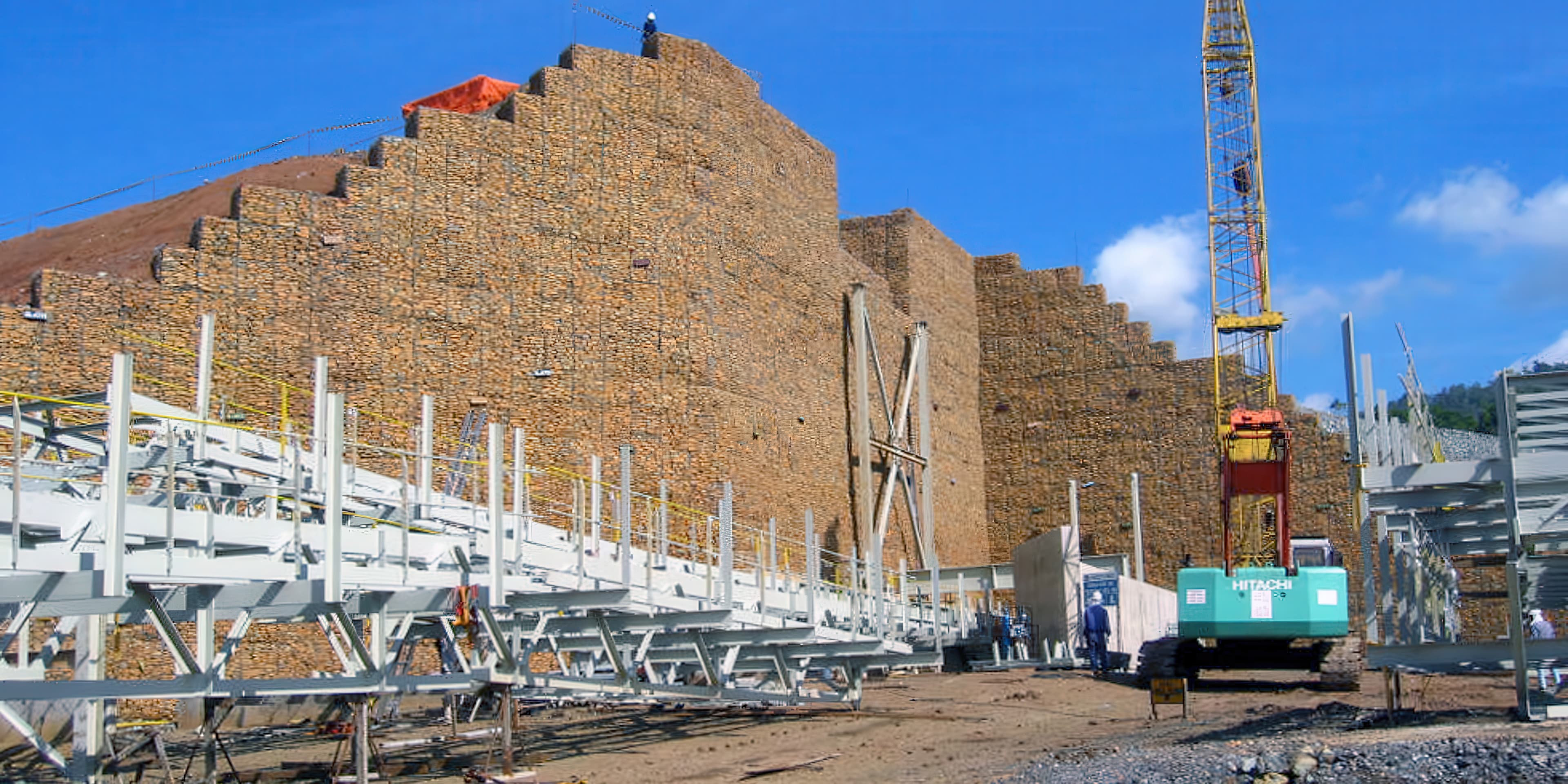
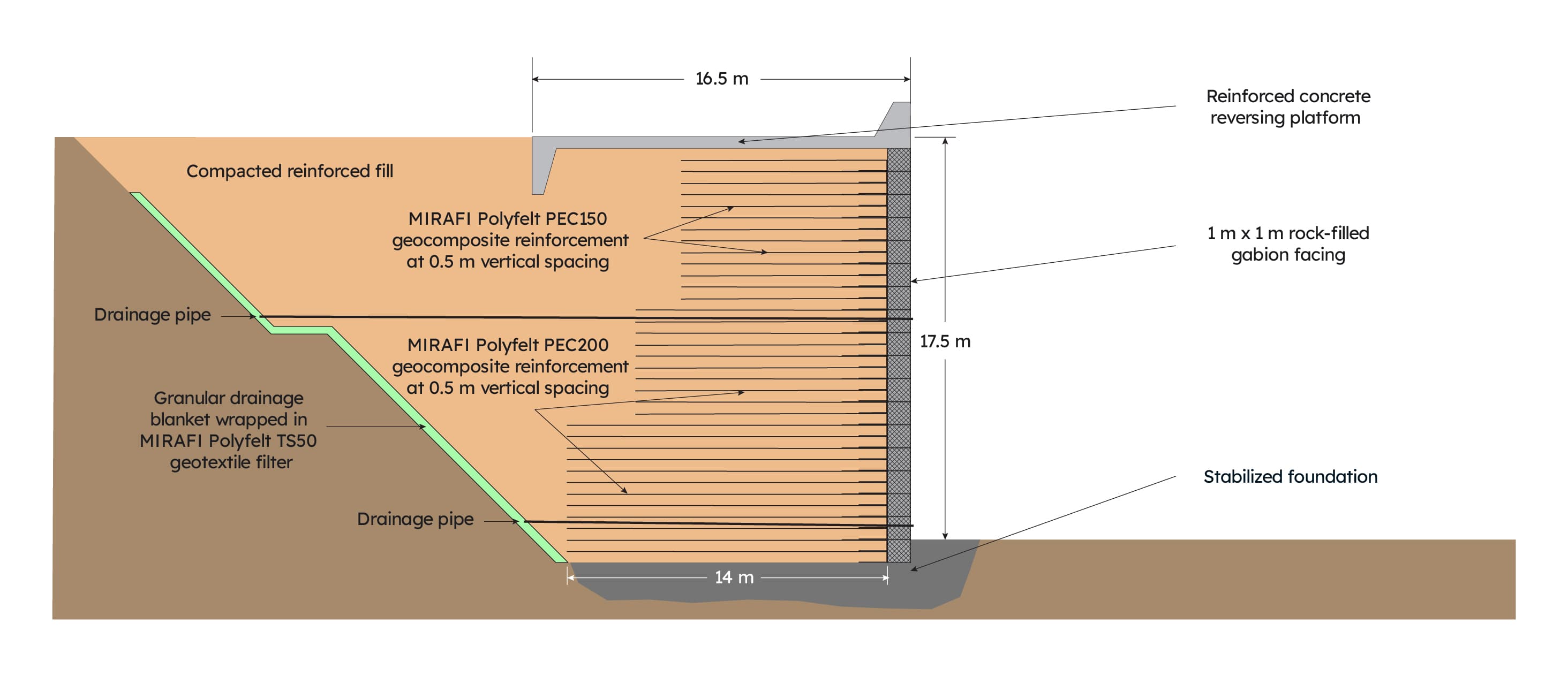
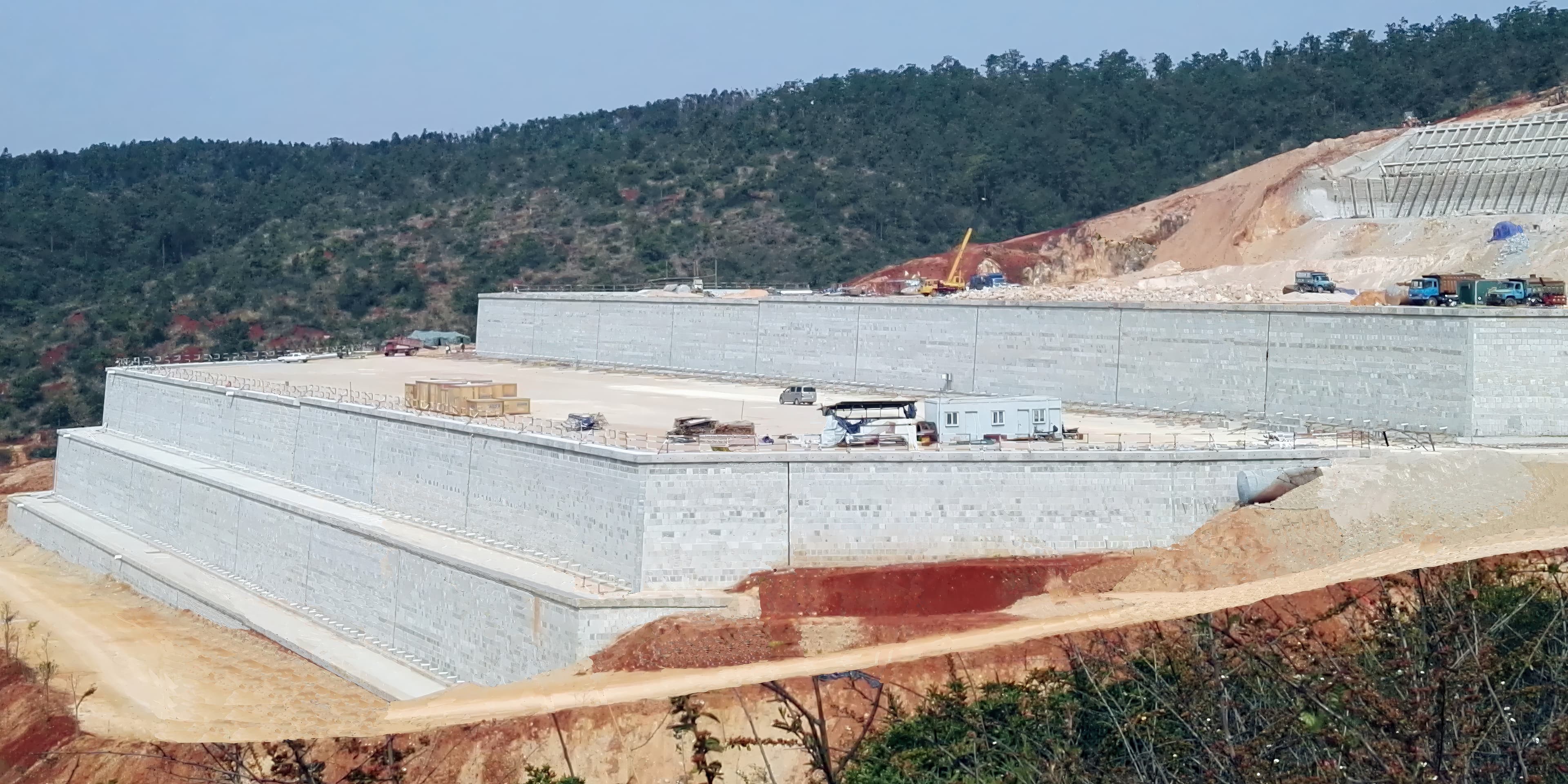
To increase the handling and transportation capacity at the mine site a new vertical dump wall had to be constructed. To minimize earthworks, the vertical dump wall was to be constructed by excavating into a hill side slope. On top of the hill an access road would lead large dump trucks up to the top edge of the dump wall. A hopper chamber would receive the dumped coal and this chamber would funnel and deliver the coal at a constant rate onto the conveyor belt located at the foot of the vertical dump wall. Various retaining wall options were investigated for the dump wall. The retaining wall has a maximum height of 17.5 m and is required to support the vertical loads of the heavy dump trucks working close to the top of the wall face.
Solution
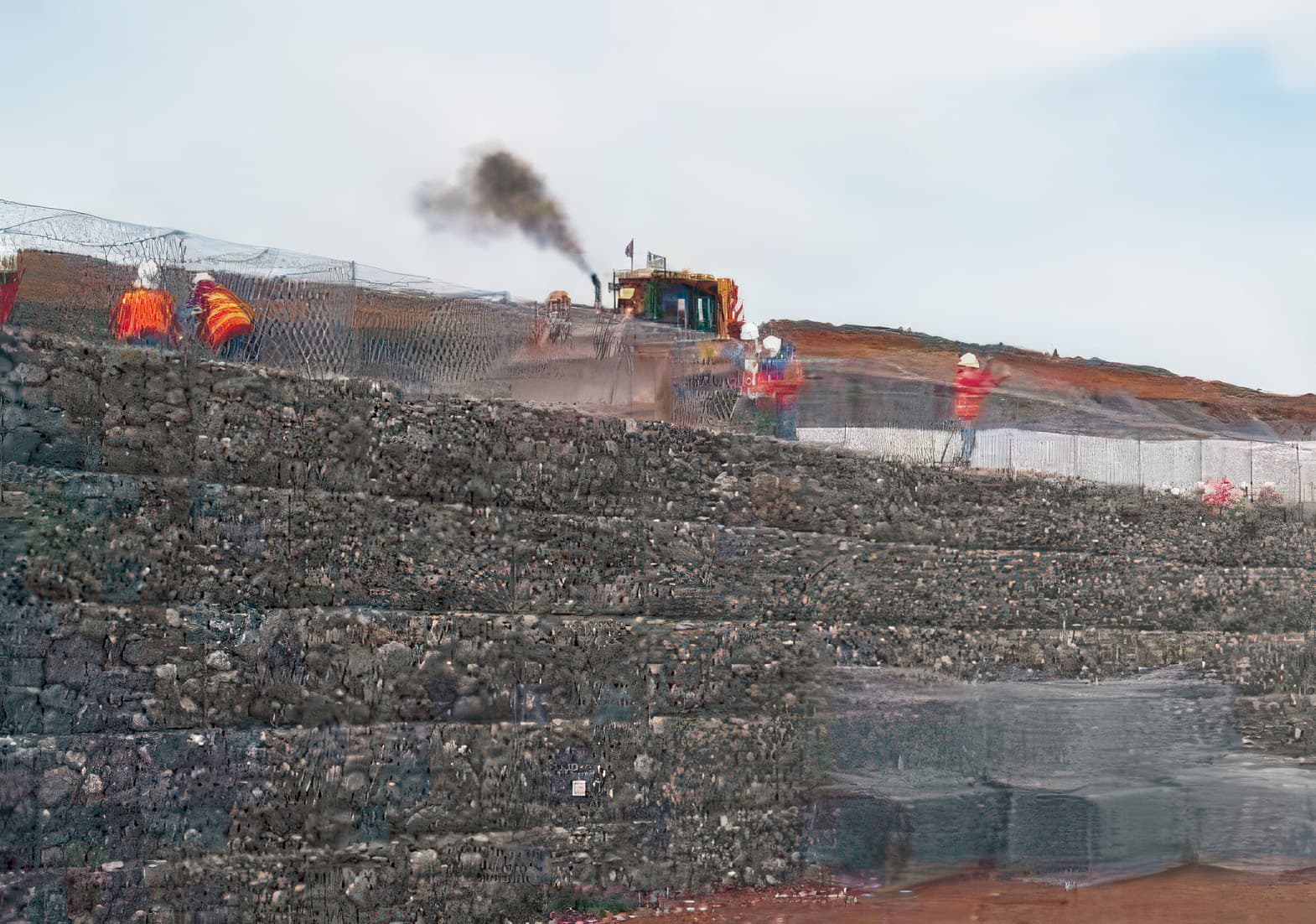
A reinforced soil retaining wall system was chosen using a rock-filled gabion facing with MIRAFI® Polyfelt PEC geocomposite reinforcements. The unusual feature of the wall was that the MIRAFI Polyfelt PEC geocomposite reinforcements were not structurally connected to the gabion facing. Instead, the gabion facing was connected to the geosynthetic reinforced soil structure by the short embedment of wire mesh tails into the reinforced fill zone. The foundation base of the reinforced soil retaining wall was stabilized, leveled and then compacted to achieve a minimum undrained shear strength of 200 kPa. The lowest level of the gabion facing was set 1 m below surrounding ground level.
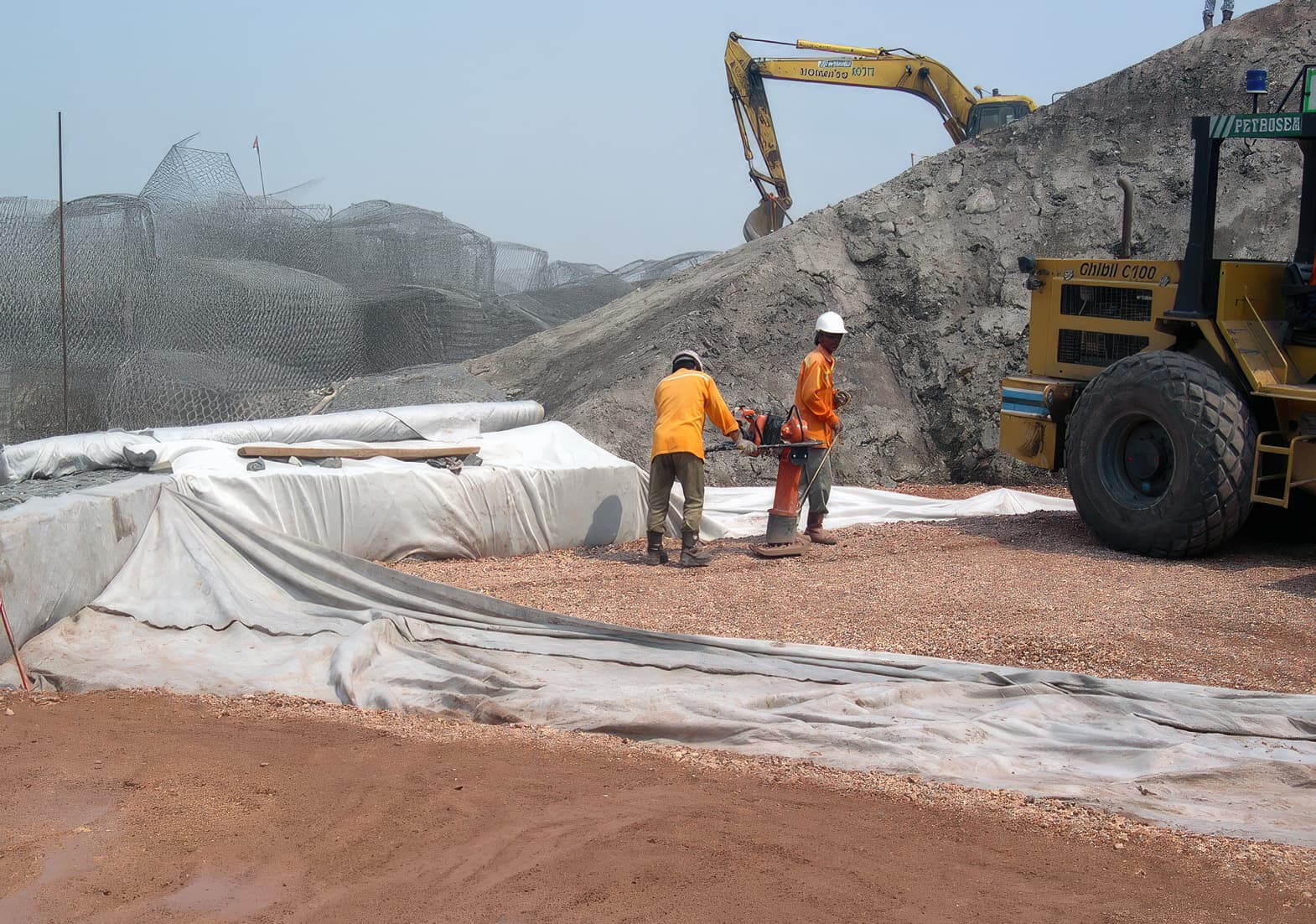
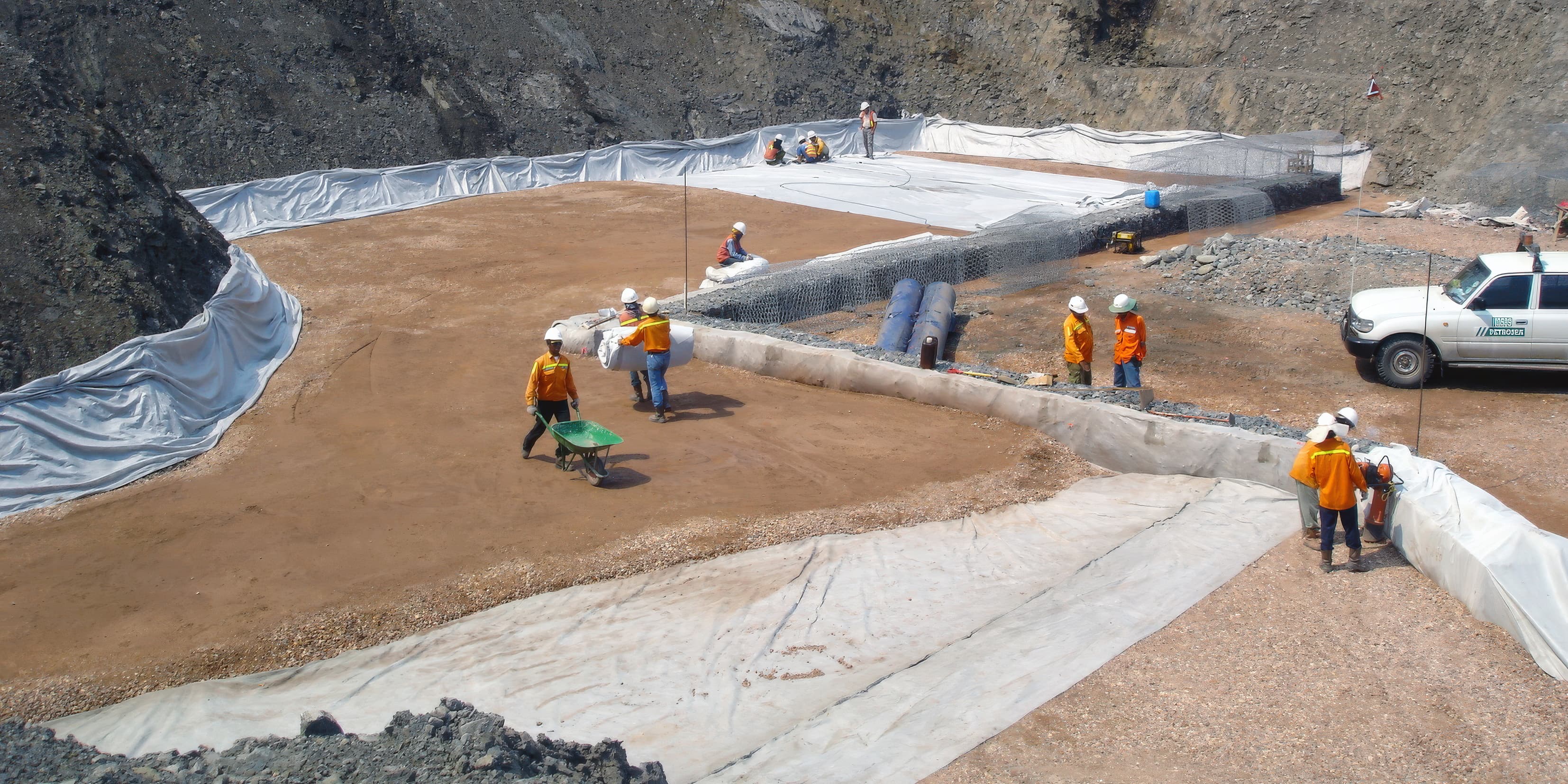
MIRAFI Polyfelt PEC geocomposite reinforcements were installed at 0.5 m vertical spacings throughout the height of the wall. At the face of the reinforced fill zone, immediately behind the gabion facing, the MIRAFI Polyfelt PEC geocomposite reinforcements were wrapped around the face of the compacted reinforced fill and anchored back into the fill to the required embedment length at the next reinforcement level. MIRAFI Polyfelt PEC200 (200 kN/m tensile strength) was used for the lower courses of the reinforcement while MIRAFI Polyfelt PEC150 (150 kN/m tensile strength) was used for the upper courses of the reinforcement. At each gabion level, the wire mesh tails of the gabion units were laid 2 m into the compacted reinforced fill at each 1 m gabion height.
The reinforced fill used for the construction of the reinforced soil retaining wall was a residual soil obtained from a borrow area within the mine site. The residual soil was of a silty sand gradation and was considered appropriate provided good compaction was carried out and good drainage measures were provided. Compaction was carried out using a 10 tonne compactor to achieve 90% Standard Proctor compaction.
A drainage blanket to intercept groundwater seepage at the rear of the reinforced soil wall was provided. This consisted of granular material wrapped in a MIRAFI Polyfelt TS50 geotextile filter. At two levels within the wall a series of drainage pipes at 4 m horizontal spacings were installed to drain the water captured in the drainage blanket out through the face of the retaining wall.
The choice of MIRAFI Polyfelt PEC geocomposite reinforcement enabled the use of the local residual soil as the reinforced fill material even though it contained a significant fine fraction. It was considered that if water penetrated the reinforced fill zone at a later time, then it could be dissipated out of the wall structure using the geocomposite structure of the MIRAFI Polyfelt PEC reinforcement.
A 0.5 m thick reinforced concrete slab was cast on top of the retaining wall. This served as a reversing platform for the coal dump trucks. The choice of a rock-filled gabion facing permitted the facing erection process to be done manually, without the use of lifting cranes. Besides being the most cost effective option for the client, the reinforced soil wall structure was successfully completed to good engineering tolerances without any contractual delays.