Overview
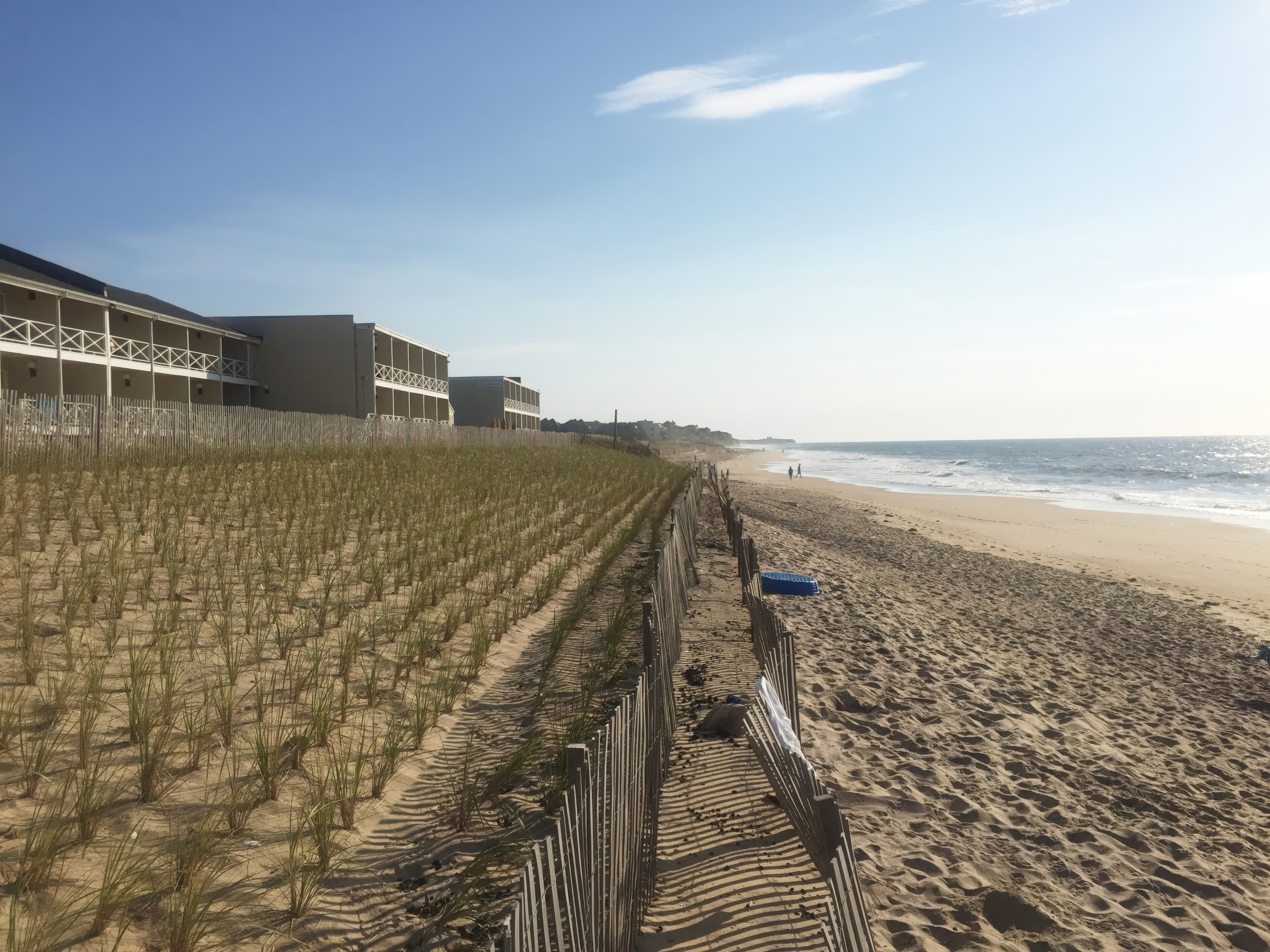
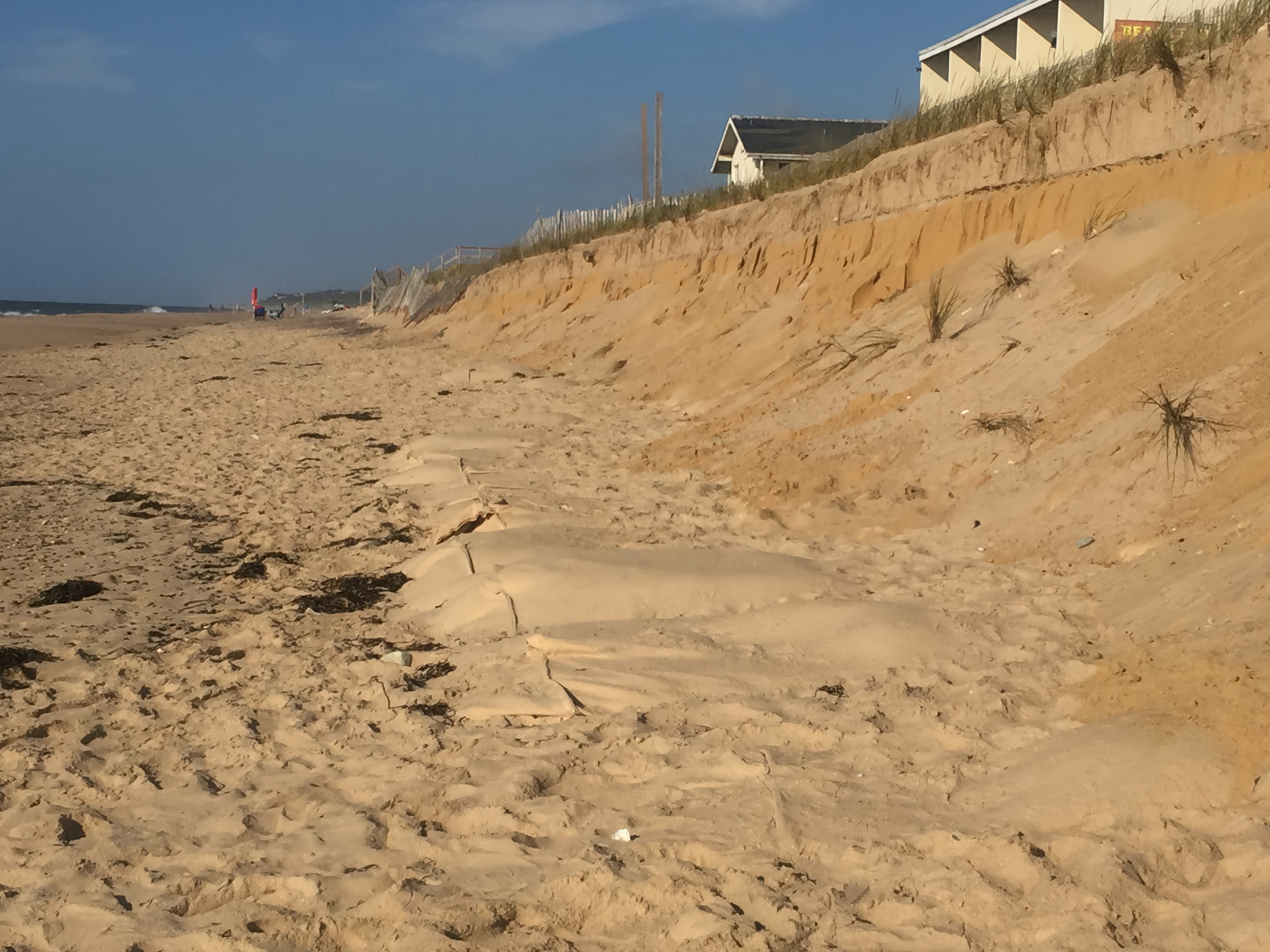
The United States Army Corps of Engineers (USACE), the New York State Department of Environmental Conservation, and the Town of East Hampton implemented an emergency coastal protection project along the Montauk, NY shoreline. The area, approximately one mile long and a quarter mile wide, had experienced severe dune and beach erosion during multiple storm events, including Superstorm Sandy. The erosion created a direct hazard to commercial infrastructure along the waterfront. To stabilize the shoreline and reduce vulnerability to future storm impacts, the project team selected modular geotextile sand containers as the engineered core of a reinforced dune system.
Challenge
Montauk’s downtown shoreline had undergone repeated storm-driven erosion, progressively lowering dune elevations and exposing buildings to wave run-up, overtopping, and scour erosion. The urgency increased after the storm season and Superstorm Sandy, where dune losses left structures directly exposed to future coastal events.
The hamlet required an immediate, constructible solution that could integrate with future long-term coastal management plans, minimize visual impact, and withstand coastal loading. The stabilization measures needed to be deployed quickly, under constrained site access, and with careful coordination among federal, state, and municipal agencies.
Solution
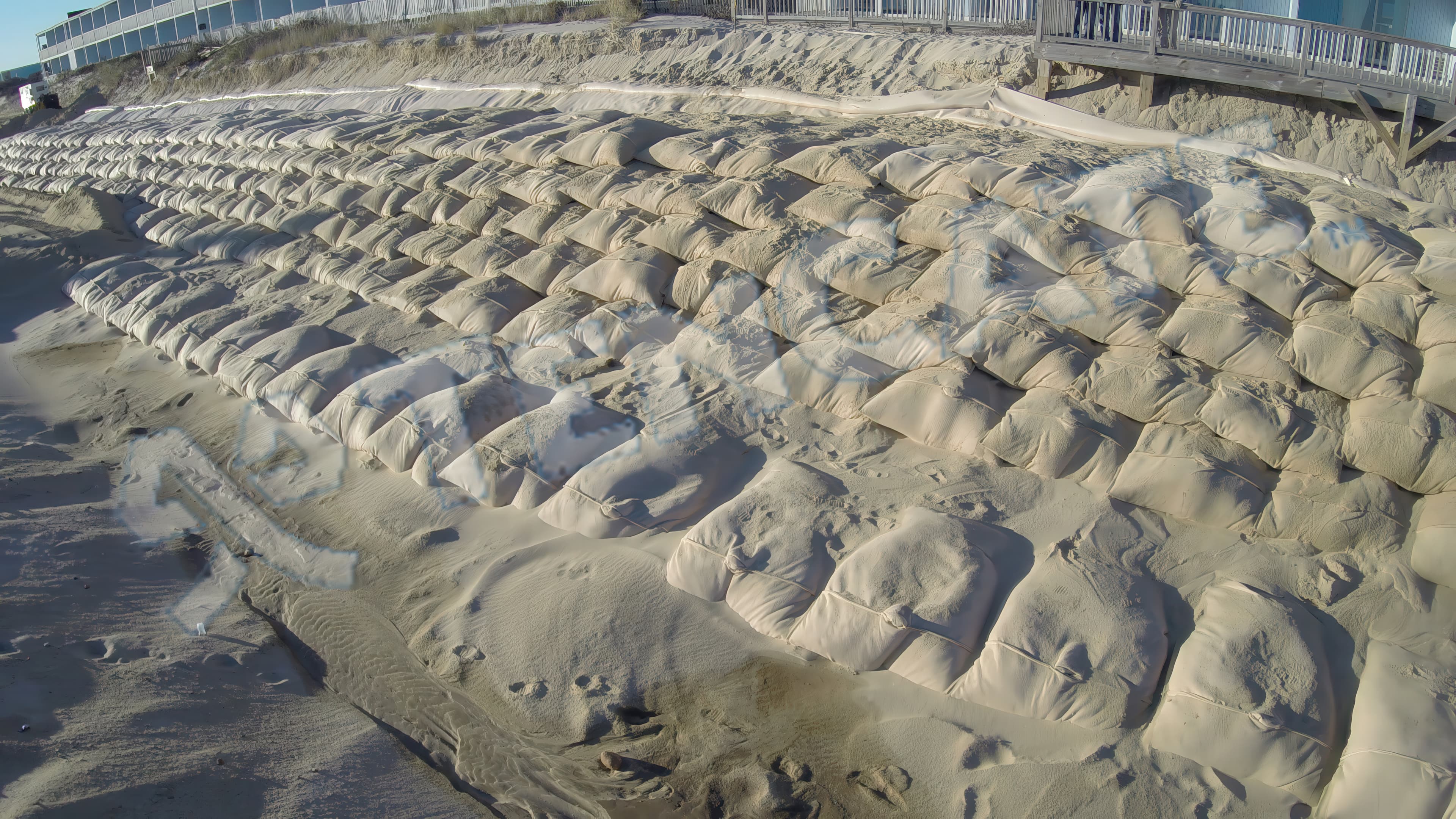
The project team adopted an engineered dune core system constructed with modular GEOTUBE® Geobag sand containers, rather than continuous geotextile tubes. Each GEOTUBE Geobag unit was fabricated from a high-capacity, composite geosynthetic designed for marine environments. The composite provided improved UV stability, abrasion resistance, and durability under cyclic wave action. To maintain visual consistency with the natural shoreline, both the GEOTUBE Geobag containers and scour aprons were manufactured in a sand-colored woven fabric.
Over 11,000 GEOTUBE Geobag units and approximately 3,200 linear feet (976 m) of scour aprons were installed within a three-month construction window. After filling and placement, the entire revetment was overlaid with sand to recreate the geometry and appearance of a natural dune system while maintaining a stable core.
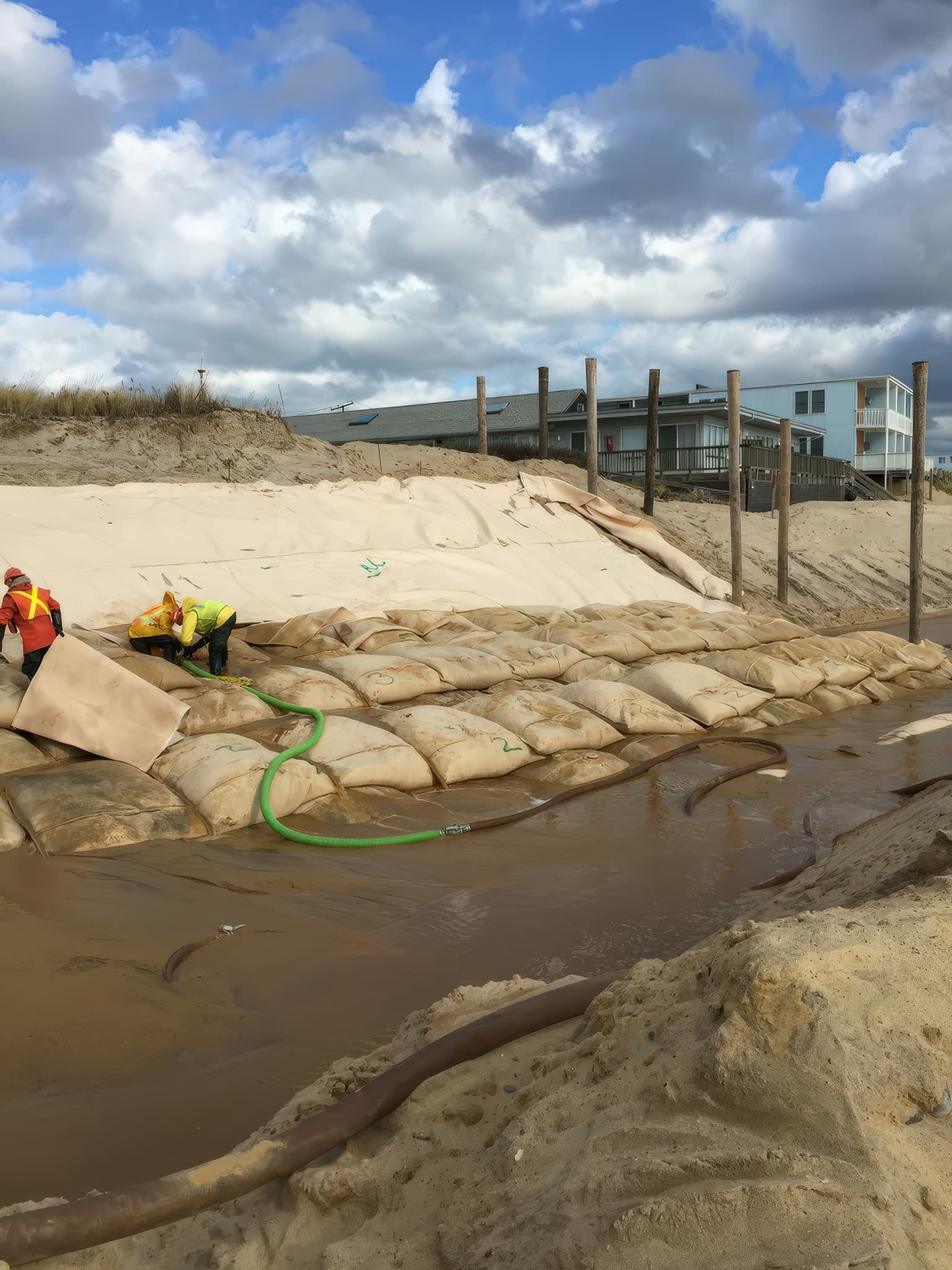
The installation process followed the typical GEOTUBE marine containment methodology:
Filling stage: Each container was hydraulically filled with dredged sand or equivalent material.
Containment stage: The engineered fabric retained solids while releasing water, allowing rapid densification.
Structural stage: The compacted sand mass formed a stable structural element capable of functioning as a dune core when combined with a scour apron.
This approach delivered a robust, rapidly deployable, and visually unobtrusive protection system. The Town of Montauk and USACE reported the GEOTUBE Geobag system, with the engineered composite material, as a significant success, providing immediate risk reduction while supporting long-term coastal resilience objectives.