Do you care if it leaks?
Natural disasters test infrastructure long before recovery begins. Hurricanes can erode slopes and overwhelm drainage paths, flooding can undermine roads and embankments, and wildfires can strip vegetation and leave disturbed ground vulnerable to severe erosion. Preparing for these events means designing systems that do more than perform under ideal conditions. It means building resilience into the ground itself.
That is where geosynthetics play a critical role. In transportation, site development, water management, and erosion control applications, geosynthetics help strengthen weak soils, manage water, control erosion, and protect critical assets in high-risk areas. When selected appropriately, they support infrastructure before, during, and after extreme weather events, helping reduce damage, extend service life, and improve long-term performance.
A review of 25 disaster scenarios across the United States by the U.S. Chamber of Commerce shows just how valuable early investment in resilience can be. On average, the study found that every $1 invested in resilience saves communities $7 in economic costs alone, with further savings from reduced damage and cleanup costs. In practical terms, that means resilience investments do more than prepare communities for natural disasters. They help protect infrastructure, reduce the financial burden of recovery, and allow limited emergency funding to be used more effectively when disasters occur.
Severe precipitation events do not damage infrastructure in just one way. They combine water, wind, and saturated ground conditions into a single event that can trigger erosion, slope instability, and pavement deterioration all at once. That combination is what makes preparation so important. A road or embankment may appear sound under ordinary conditions, but when rainfall intensifies and moisture infiltrates the structure, the performance of the entire system can begin to change.
Geosynthetics like MIRAFI® geotextiles reduce that vulnerability by giving the structure more stability where it matters most. Reinforcement and stabilization solutions help distribute loads more effectively over weak or moisture-sensitive soils, which is especially important when a storm leaves subgrades soft and prone to deformation. Separation and filtration layers help preserve the integrity of aggregate layers, preventing the kind of contamination that can accelerate deterioration after repeated flood events. In this sense, MIRAFI geotextiles and geosynthetics are not just accessories to the system. They help preserve the primary function of the system when storm conditions would otherwise begin to break it down.
This is also why long-term pavement design matters in regions exposed to hurricanes and heavy rainfall. Moisture is often one of the most damaging forces acting on pavement foundations because it can weaken support conditions long before failure is visible on the surface. For further information on strengthening roadways for long-term performance, read here.
Flooding is not only destructive because water rises, but also because it changes the behavior of the ground. Soil can be displaced, slopes can unravel, and surfaces that once appeared stable can begin to lose strength and cohesion. The challenge is not simply resisting water for a short period of time. It is maintaining stability as hydraulic conditions change and as the interaction between soil, water, and structure becomes more severe.
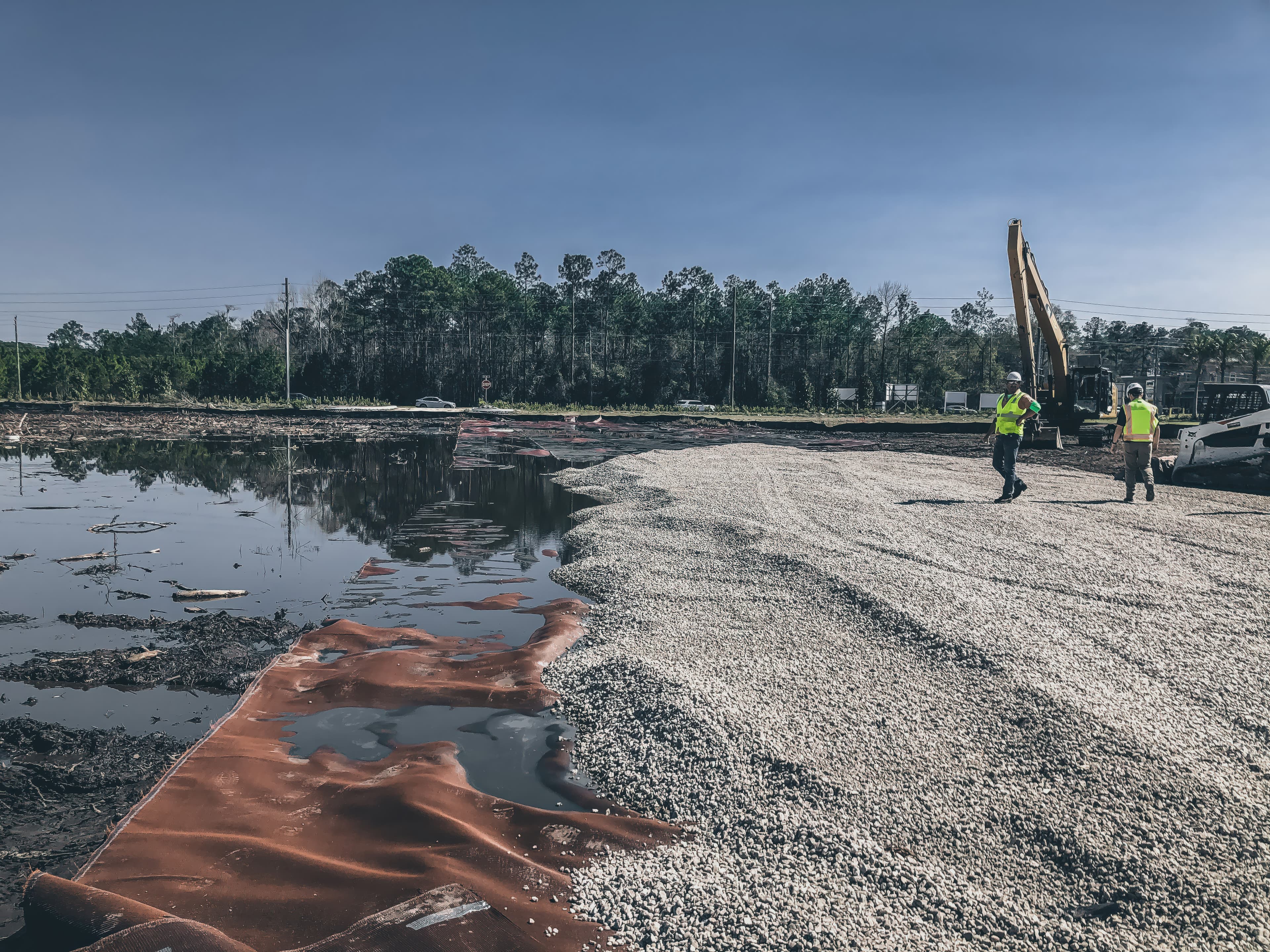
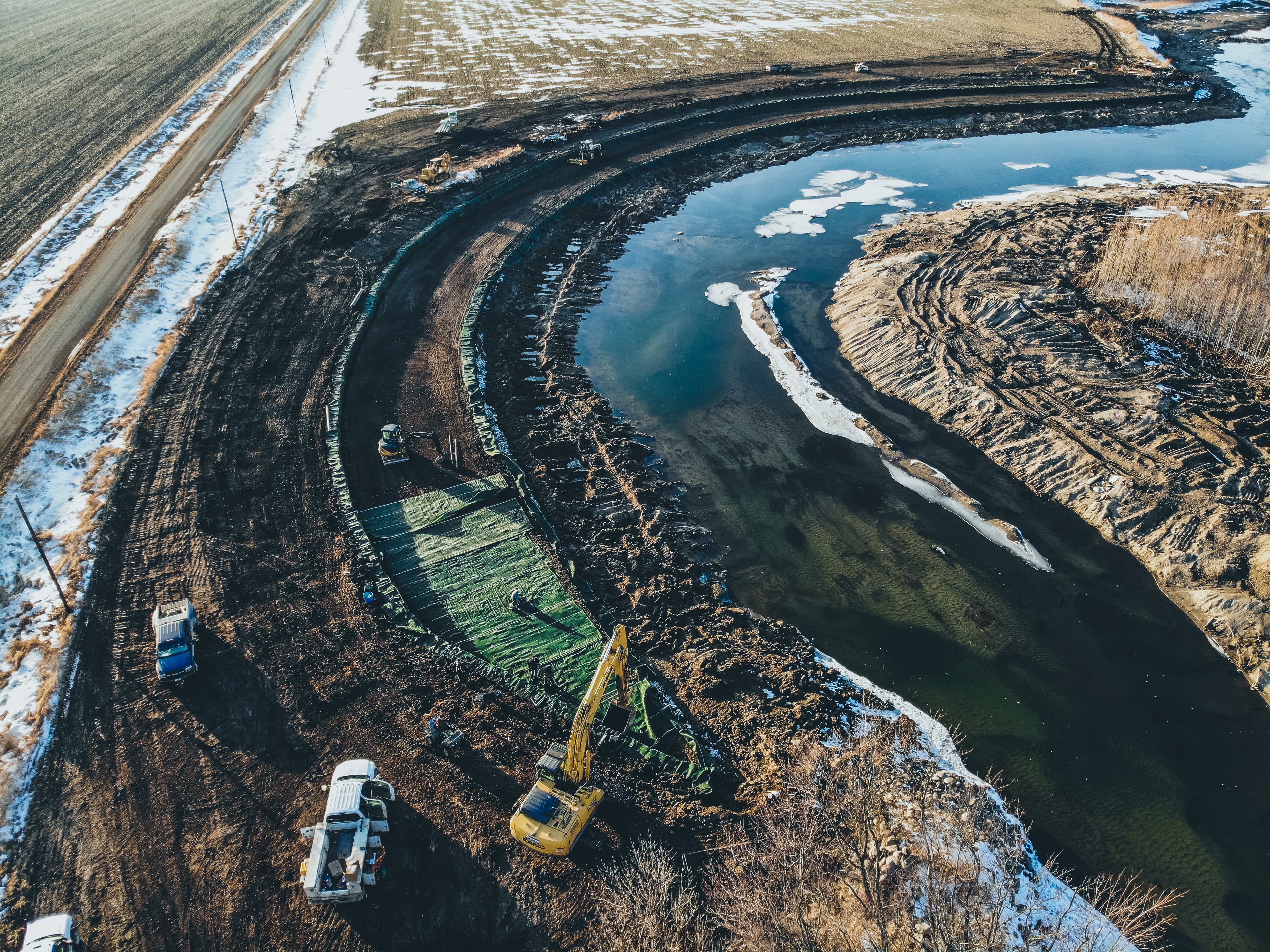
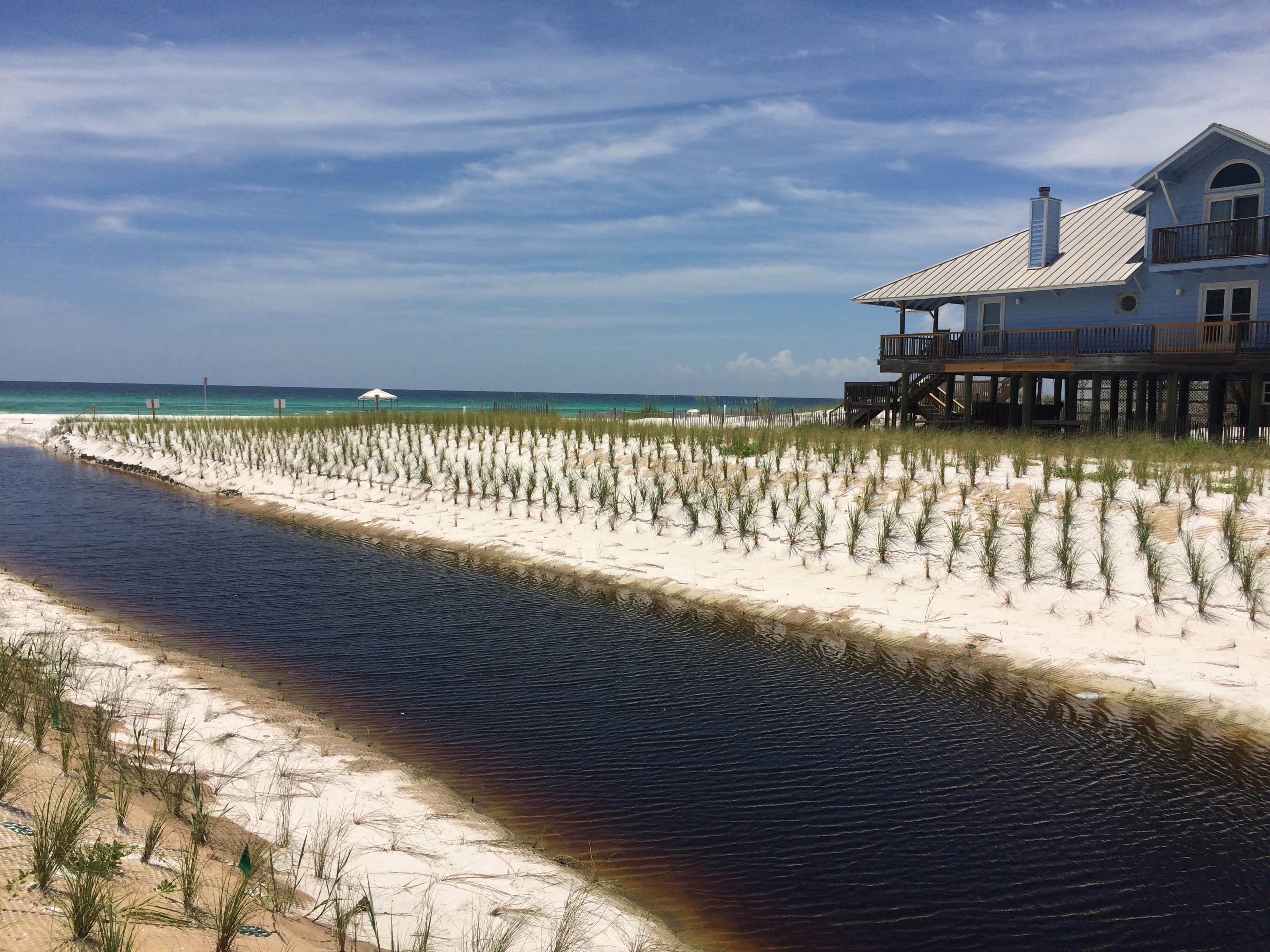
This is where MIRAFI geotextiles enter the equation. They help infrastructure resist the chain reaction that often follows flood exposure. Erosion control systems help protect channels, slopes, and shorelines from continued soil loss. MIRAFI geotextiles, as well as other geosynthetics, and reinforcement solutions help maintain the distinction between structural layers, preserve the strength of aggregate sections, and reduce the instability that comes when saturated soils begin to move where they should not. Their importance lies not in the fact that they can be used in flood-prone areas, but in the fact that they help mitigate the mechanisms that turn high water into lasting damage.
Resilient flood design should never be approached as a temporary fix. Many flood mitigation projects are designed to withstand what is called a 100-year flood event. While that term is widely understood in engineering circles, it is often mistaken for a flood that occurs only once every 100 years. In reality, a 100-year flood has a 1% chance of occurring in any given year. It is a statistical projection, which means it can happen in consecutive years. Some infrastructure is designed to meet an even more demanding benchmark, such as a 500-year flood event, which has a 0.2% annual probability. This is exactly why long-term resilience matters. Flood design is not about preparing for a single isolated event. It is about helping infrastructure continue to perform when severe conditions occur more than once over its service life.
Systems that support drainage, erosion control and surface stability over time help communities move beyond reactive repair and toward infrastructure that is better prepared for what comes next.
Wildfires are often understood only through the damage caused by flames, but the most serious infrastructure impacts frequently emerge afterward. Once vegetation is lost, the ground is left exposed, less cohesive, sometimes hydrophobic, and susceptible to increased runoff. A slope that survived the fire may still fail during the next major rainfall event because the natural protection that once slowed erosion and held soil in place is gone. In wildfire-prone regions, this post-fire period can create a second wave of risk, one that threatens roads, drainage paths, and embankments surrounding infrastructure even after the fire itself has passed.
Geosynthetics address that reality by supporting stability when the landscape has lost its natural defenses. They help restore control over how the surface behaves once the site becomes vulnerable to runoff, sediment transport, and continued ground loss. In other words, they interrupt the progression from burn damage to erosion damage to broader infrastructure failure.
Here, the fire-resistant properties within the PROPEX® portfolio become especially relevant. In wildfire-prone environments, fire resistance is important not as a standalone feature, but because it supports broader resilience in locations where infrastructure may face both ignition risk and post-fire erosion exposure. PROPEX solutions help strengthen that strategy by contributing to surface protection and long-term stability where conditions can remain severe after the fire event ends. Learn more about the PROPEX line of fire mitigation products and solutions here.
The strongest infrastructure is not infrastructure that never faces stress. It is infrastructure that is designed to keep functioning when stress arrives. Severe storms, flooding and wildfires all create different hazards, but they share one important trait: each one tests whether the relationship between soil, water, surface protection and structural support can hold together under changing conditions. When that relationship fails, damage spreads quickly. When it is reinforced, managed and protected, infrastructure has a far better chance of enduring the event and recovering with less disruption.
That is why geosynthetics play such a critical role in natural disaster preparedness. They help transform resilience from a reactive goal into a design strategy. They strengthen weak ground before it softens, protect surfaces before erosion accelerates, and support recovery by limiting the extent of failure when extreme events occur. Most importantly, they help infrastructure continue doing what it was built to do, even when the environment around it becomes less predictable.
We do not prepare for natural disasters simply by planning for repair. We prepare by building systems that are ready to perform when the ground is saturated, when water is moving with force, and when landscapes have been stripped of their natural protection. That is the value geosynthetics bring to resilient design, and it is why they remain an essential part of preparing infrastructure for a future shaped by more extreme conditions.