How geosynthetics help prepare for natural disasters
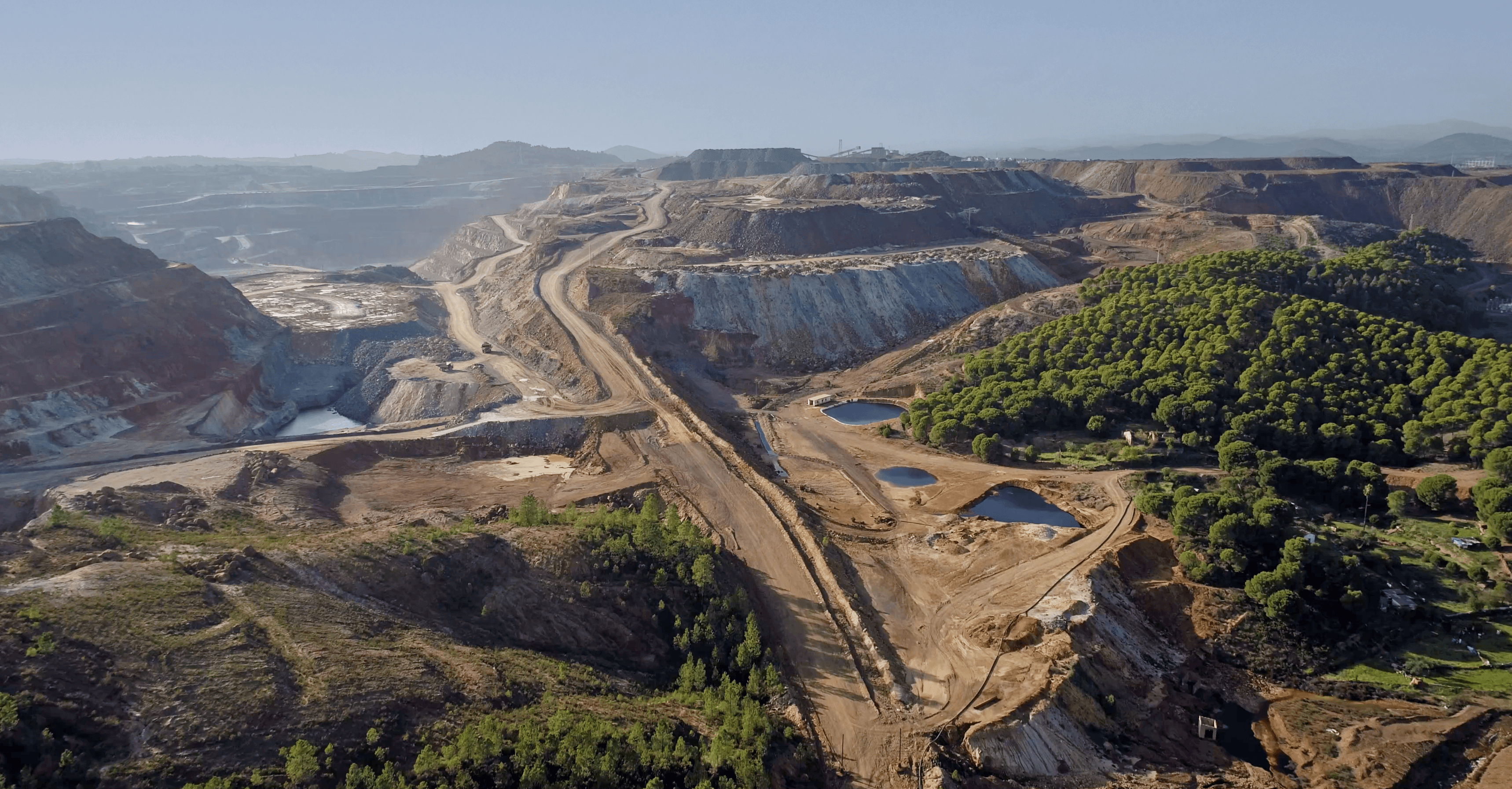
Resin is the "backbone" of a geomembrane, making up roughly 97 percent of its composition. Its quality is the primary factor determining how long the liner remains a functional barrier before mechanical failure occurs. For demanding applications such as mining containments, the right resin must be selected to balance chemical resistance with mechanical durability to prevent catastrophic leaks and environmental contamination
Material discussions often focus on whether a geomembrane is made from bimodal or unimodal HDPE. While this distinction is relevant, it does not on its own determine long-term performance. For containment applications where durability is mission-critical, a deeper understanding is required.
The long-term performance of an HDPE geomembrane is largely governed by its resistance to slow crack growth (SCG) - the primary failure mechanism in high density polyethylene liners. SCG is a form of brittle failures that occur when small defects develop into cracks under sustained tensile stress over time. These failures are not immediate and may become critical only after years in service.
To evaluate this behavior the industry relies on standardized SCG testing methods, such as Single-Point Notched Constant Tensile Load (SP-NCTL) ASTM D5397, which provide reliable, comparable indicators of a geomembrane’s long-term performance.
Bimodal HDPE
Bimodal resins combine two molecular weight fractions. A high molecular weight component improves toughness and crack resistance, while a lower molecular weight fraction enhances processability.
This combination delivers a strong balance of mechanical properties and is commonly used in high-performance geomembranes.
Unimodal HDPE
Unimodal resins feature a more uniform molecular structure. They are associated with consistent processing behavior and uniform material properties.
With advances in catalyst technology, unimodal resins today can also achieve excellent resistance to slow crack growth demonstrating that durability is not exclusive to bimodal HDPE.
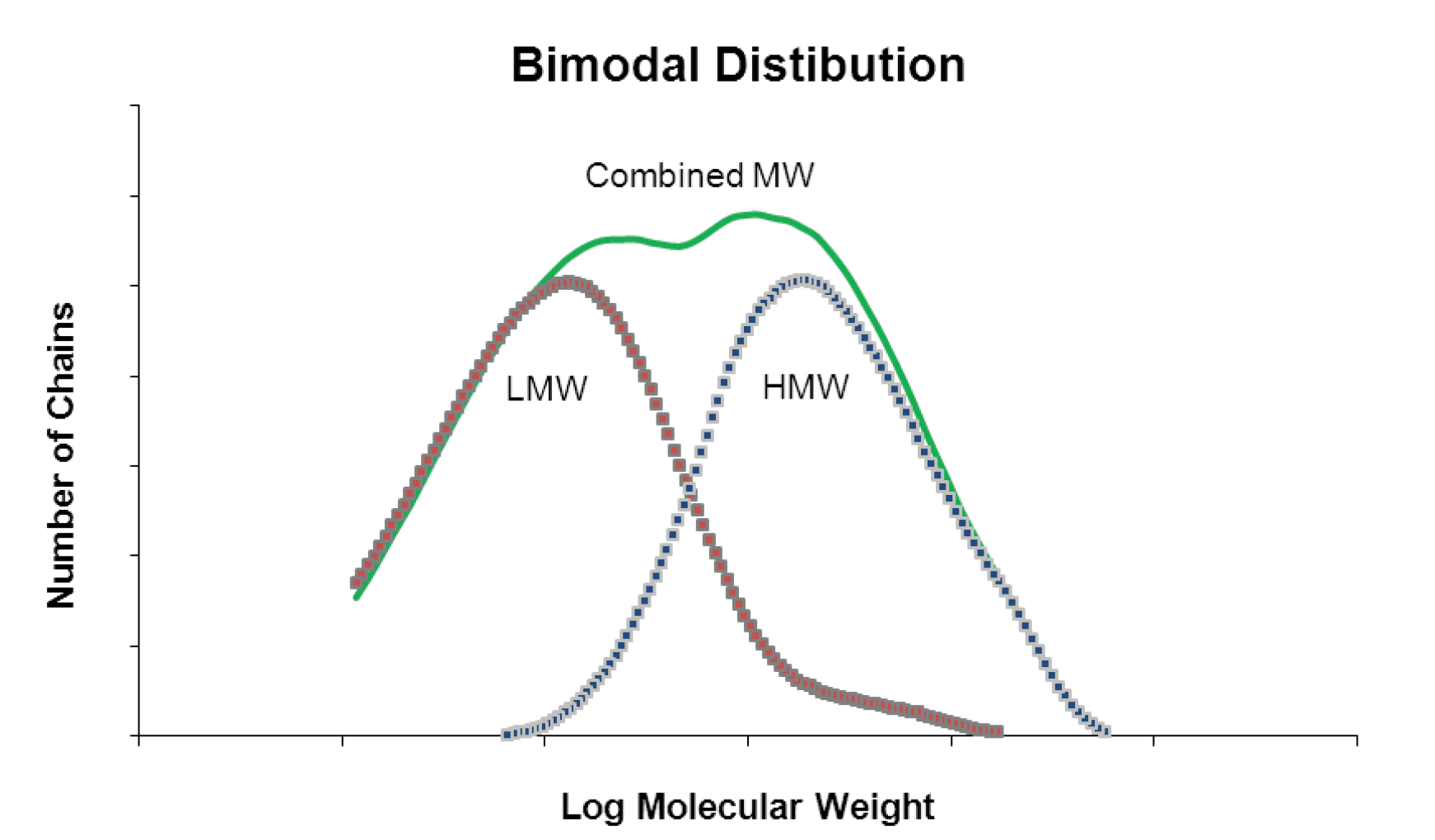
While bimodal HDPE is often linked to higher performance, it is important to recognize:
“Resin modality alone does not determine durability.”
Two geomembranes described as “bimodal” may perform very differently in the field. Conversely, a well-engineered unimodal resin can meet or exceed performance expectations for demanding containment applications. A geomembrane formulation is a blend of components engineered to achieve performance at the right cost with resins as main component. Ultimately, the performance differences lie in how the geomembrane is formulated and manufactured, not simply from resin classification.
Molecular architecture
Several factors influence how an HDPE geomembrane performs over time:
Comonomer integration and distribution: Performance depends lesser on type of comonomer and more on how it is incorporated within the polymer structure, influencing molecular connectivity and subsequently achieving better stress crack resistance.
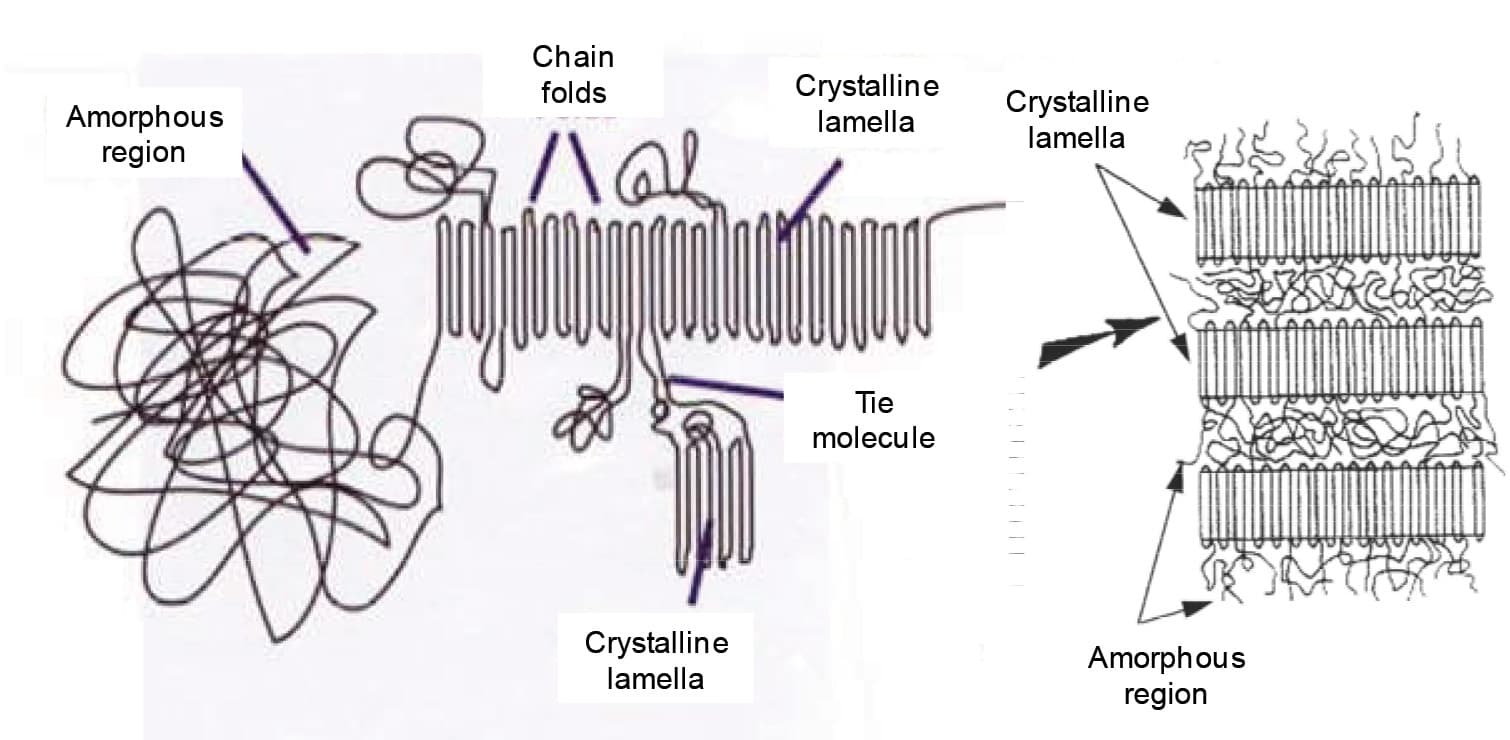
Tie molecule density: These molecular links connect crystalline regions and play a central role in resisting crack growth.
Molecular weight distribution: The interaction between different molecular fractions affects mechanical performance and processability.
Crystalline morphology: The structure and connectivity of crystalline and amorphous regions influence durability under stress.
Stabilization system
Long-term performance also depends on the geomembrane’s ability to resist degradation, such as oxidation and UV exposure.
Effective stabilization systems include antioxidants to delay thermal oxidation and carbon black and titanium dioxide for UV resistance. These components are essential for achieving the extended service life required in containment applications.
Geomembranes are commonly specified to meet established industry standards such as GRI-GM13 & GRI-GM42. The former defines minimum requirements for mechanical strength, oxidative resistance and baseline stress crack performance. GRI-GM42 provides a more stringent benchmark for High Performance HDPE in extreme conditions, emphasizing enhanced resistance to slow crack growth, oxidation performances and chemical compatibility.
However, meeting minimum standards alone is not enough for high-stakes containment projects. Consultants and project owners must focus on long-term stability not just short-term compliance.
Some manufacturers promote extremely high initial SCR values in technical data sheets as a mark of superiority. While SCR is important, chasing “unlimited” initial values can be misleading.
SCR testing, as defined in ASTM D5397, measures performance under controlled laboratory conditions. It does not necessarily reflect field conditions. Overemphasis on initial SCR can mask other critical properties, such as oxidative stability, chemical resistance, and strain tolerance.
Industry research, including Ian Peggs et al. (2005),, demonstrates that SCR values above 1500 hours provide sufficient resistance to support higher strain limits in geomembranes, aligning with GRI-GM42 guidance. Beyond this, higher initial SCR offers diminishing returns and can mislead decision-making.
NCTL values exceeding ~3000 hours should be viewed in context as resin manufacturers do not typically define performance at these levels. This suggests that such values may extend beyond practical design requirements and may not provide additional benefit in real-world geomembrane applications.
“The priority for consultants and project owners is long-term stability, not marketing-driven peaks.”
By focusing on verified performance and consistency, engineers can select geomembranes that maintain integrity over decades to centuries, rather than those that only look impressive on paper.
While resin design is critical, it presents a practical limitation:
“The most important performance drivers are not directly visible or easily verified by engineers and specifiers.”
Parameters such as comonomer distribution, tie molecule density, molecular weight distribution and stabilization formulation are controlled during manufacturing and not typically disclosed in datasheets. Therefore, relying solely on material classification like “bimodal HDPE” is insufficient.
For mission-critical projects, the industry increasingly emphasizes performance-based evaluation:
Verified stress crack resistance in accordance with ASTM D5397
Oxidative induction time (OIT)
Application-specific testing, including chemical immersion tests (as discussed in Part 1)
This ensures that geomembrane selection is driven by measurable performance and fit-for-purpose data, not marketing claims.
“The goal is not the highest initial SCR value- but a geomembrane that consistently performs over decades to centuries of service.”
For containment projects where long-term reliability is non-negotiable, geomembrane performance must be assessed holistically. While bimodal HDPE is often associated with high-performance materials, it is not inherently superior to unimodal alternatives. True durability depends on:
Molecular design and tie-molecule density
Comonomer distribution
Stabilization and processing quality
Performance-based verification
Equally important is interpreting SCR values realistically. Rather than chasing inflated initial SCR numbers, consultants and project owners should focus on:
Verified performance aligned with relevant targets (i.e: SCR 1500 hours)
Stability over decades to centuries
Suitability for the specific application environment
Long-term performance is driven by consistent, validated material behavior - not marketing-led specifications. This approach ensures that geomembranes deliver the durability and reliability demanded by today’s high-stakes containment projects.
ASTM D5397, Standard Test Method for Evaluation of Stress Crack Resistance of Polyolefin Geomembranes Using Notched Constant Tensile Load (NCTL) Test Method, ASTM International, 2021.
Atwood. S.A., Microstructure, Mechanical Behavior and Clinical Trade-offs in Ultra-High Molecular Weight Polyethylene for Total Joint Replacement, University of California, Berkeley, 2010.
Erika. P., Rheological Behavior of Bimodal HDPE Resins and An Exploratory Study of Its Relation with Blown Film Stability, Instituto Technologio Y De Estudios Superiores De Monterrey, 2008.
GRI-GM13, Standard Specification for Test Methods, Test Properties, and Frequencies for HDPE Smooth and Textured Geomembranes, Geosynthetic Research Institute, 2020.
GRI-GM42, Standard Specification for Test Methods, Test Properties, and Testing Frequency for High-Performance HDPE Geomembranes Used in Extreme Conditions, Geosynthetic Research Institute, 2020.
Peggs. I.D., Schmucker, B., Carey. P., Assessment of Maximum Allowable Strains in Polyethylene and Polypropylene Geomembranes, GeoFrontiers 2005.
Rowe. R.K., Sangam. H.P., Durability of HDPE Geomembranes, Geotextiles and Geomembranes, 2002;20(2):77–95.