Overview
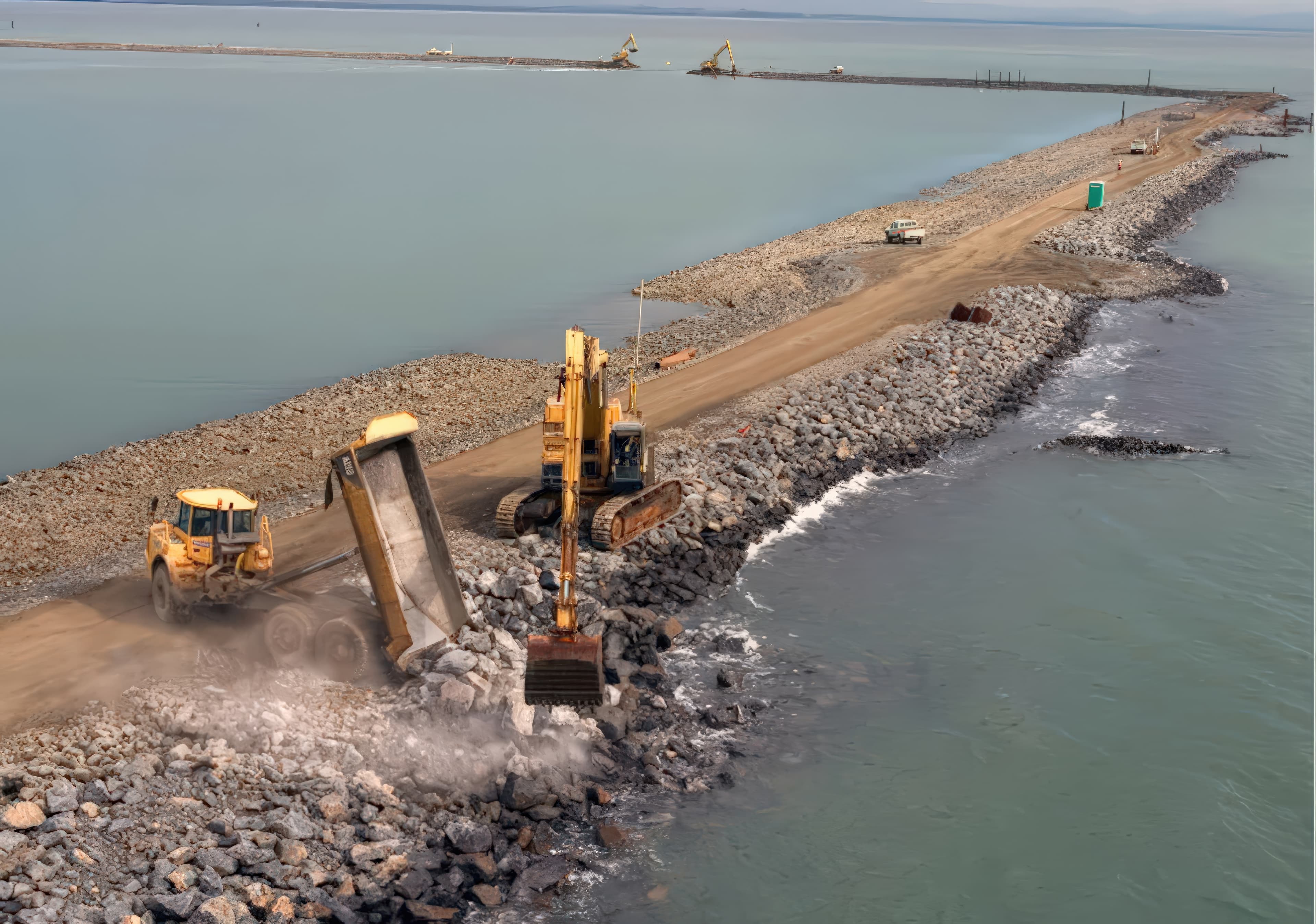
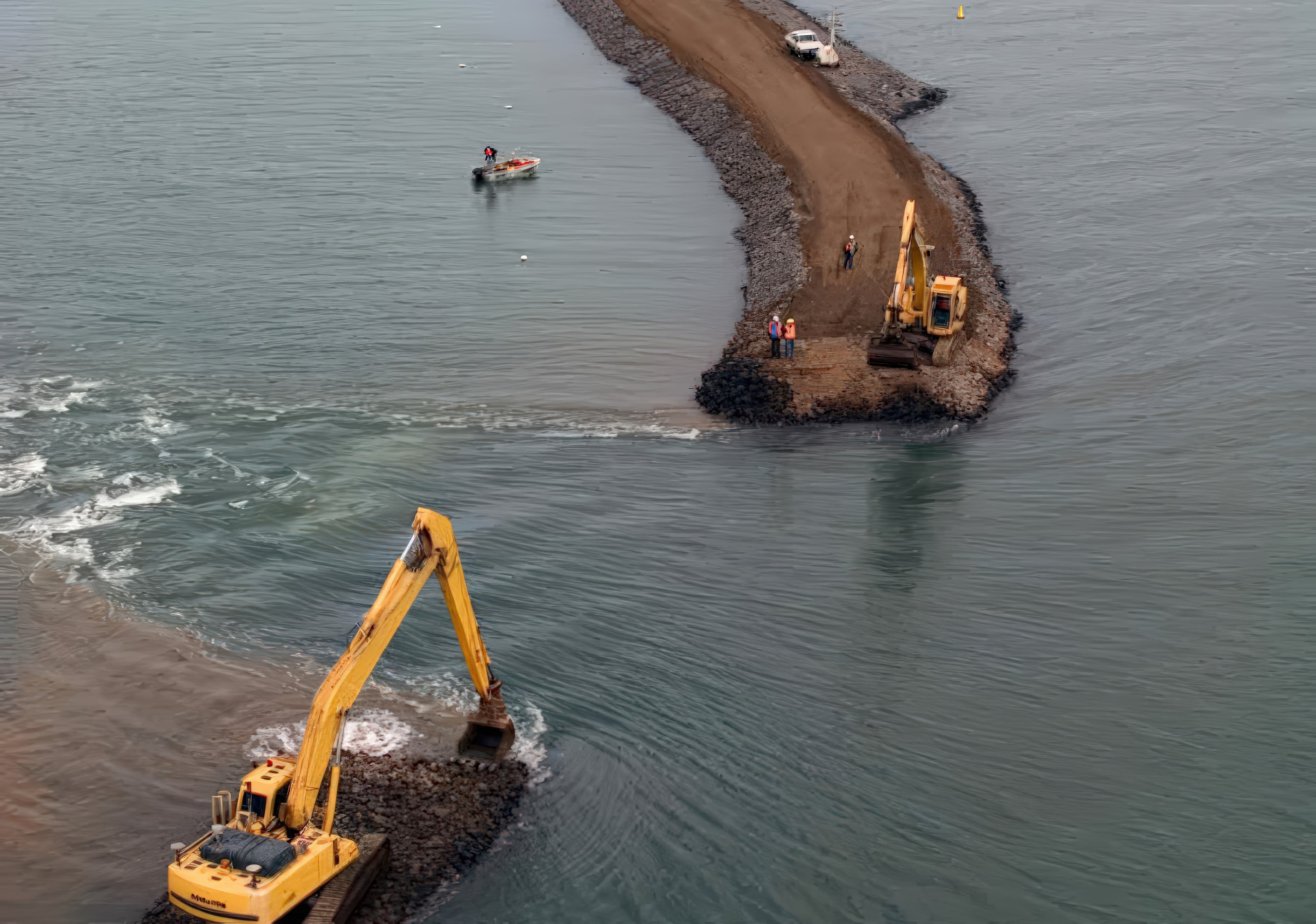
The Port of Brisbane is located at the mouth of the Brisbane River has seen rapid development over the last 20 years, and this growth is expected to continue in the future. To keep up with the pace of growth, the Future Port Expansion Project was conceived. This project has the ultimate objective of allowing the port to expand by reclaiming and developing an additional 230 ha of port land, including the extension of the current shipping quay by a further 1800 m. The reclamation will be formed from channel maintenance dredging materials. The first stage of this process involved the construction of a 4.6 km long and up to 7.5 m high perimeter seawall in order to contain the reclamation fill in an environmentally friendly and controlled manner.
Challenge
There were significant geotechnical, environmental and construction risk issues associated with the project. These included highly variable very soft and soft marine clays extending over 30 m below the seabed on the eastern wall alignment; the close proximity of the Moreton Bay Marine Park, which could not tolerate any sediment contamination; and varying water depths and unpredictable sea conditions during construction. Preliminary analyzes indicated the marine clay foundation to be generally too weak to support high embankment loadings without ground improvement works. A number of options were evaluated, but the use of a high strength geotextile as the basal reinforcement for the seawall was ultimately assessed to be the most cost-effective solution and the one with the least associated risk. The main geological formations across the project site can be summarized as Holocene deposits overlying Pleistocene deposits, which in turn overlie basalt bedrock of the Petrie Formation. The Holocene alluvial deposit consists of two sublayers. The upper sub-layer comprises mainly sands with interlayered soft clays and silts. The lower sub-layer comprises very soft to firm compressible clay, generally normally consolidated from about 3 m depth below the seabed. Along the eastern seawall, the soft clay at shallow depth is weak, having undrained shear strength values of 3 to 5 kPa at the surface, and increasing towards the shoreline. The thickness of the soft layer varies from about 8 m to 30 m along the alignment.
Solution
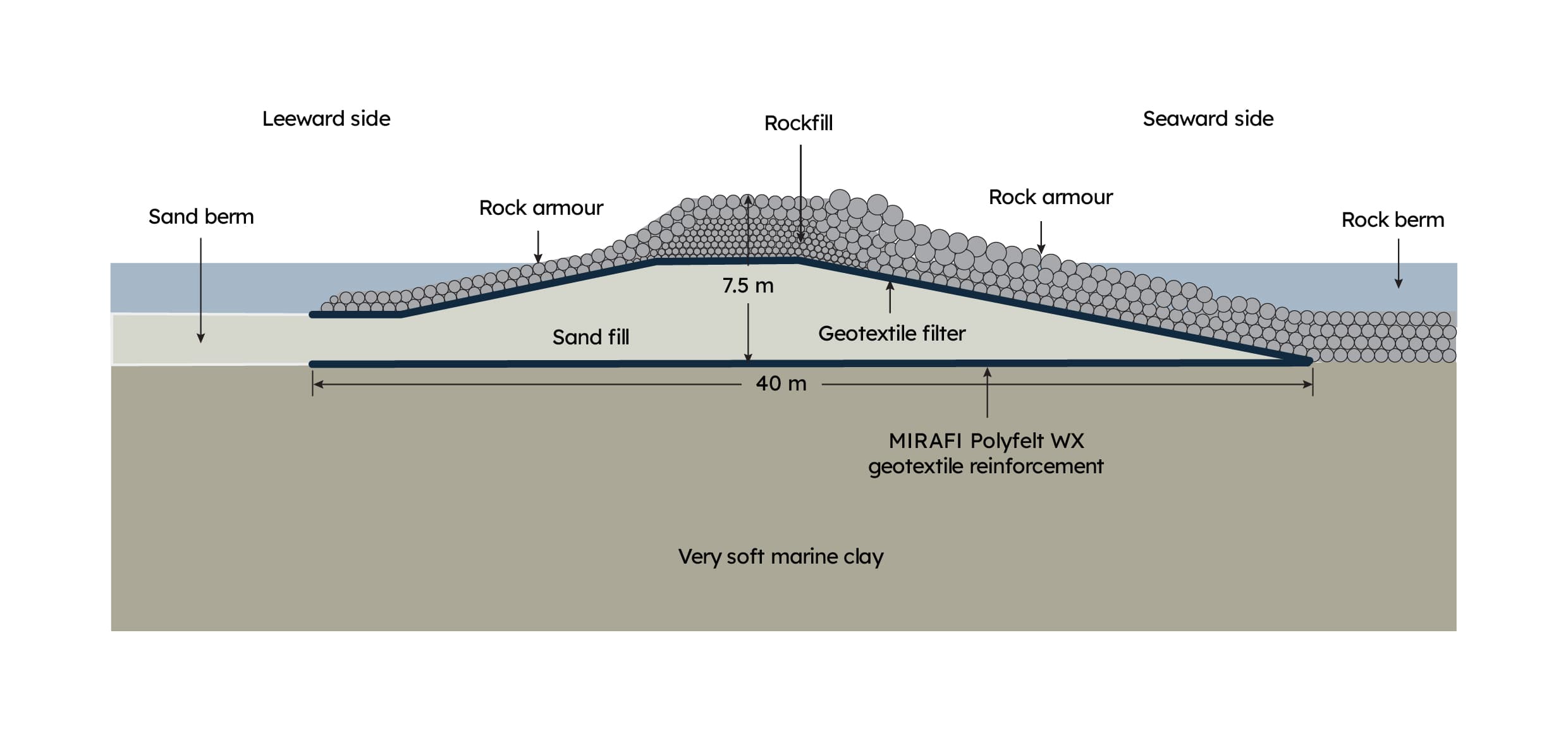
The final seawall design required the use of basal geotextile reinforcement of tensile strength ranging between 400 kN/m and 850 kN/m, depending on the location and water depth. MIRAFI® Polyfelt WX polyester geotextile reinforcement was used for the basal reinforcement. In shallow water (seabed at 1 m below low water level), MIRAFI Polyfelt WX geotextile reinforcement was placed on the seabed directly beneath the rock dyke seawall. However, in deeper areas (seabed at 3.5 m below low water level), the seawall was designed with a wide based sand embankment that was then topped up with the rock dyke.
MIRAFI Polyfelt WX geotextile reinforcement was placed directly on the seabed beneath the sand embankment in this case. To install the MIRAFI Polyfelt WX geotextile reinforcement below water level, a shallow-draft barge was modified to enable both the geotextile reinforcement and the sand fill to be placed in a single operation. The geotextile reinforcement was sewn offsite to form panels up to 42 m wide by 100 m long.
These were then rerolled for deployment from the barge. The geotextile reinforcement was unrolled, dropped over the port side of the barge, and then taken beneath the barge past the starboard side by divers. To avoid the geotextile folding transversely, 12 mm reinforcement bars were attached to the geotextile reinforcement with cable ties at 10 m spacing to hold the geotextile flat and help sink it to the seabed. Ballast was then placed to hold the geotextile reinforcement in place on the seabed. Once the sand fill had been placed to the required levels, the barge was then used to place the geotextile filter up the sides and over the top of the sand embankment prior to holding it in place with rock fill.
The placing of the rock fill upper layer of the seawall was carried out in the dry by end-dumping the rock fill and then spreading it using excavators. At the same time as the upper rock fill was placed, the rock armor layers were also placed using end-dumping and excavators. The armor protection was continued at the same time as the rock fill placement in order to protect the seawall from unforeseen storm activity during construction. Following completion of the seawall, the reclamation for the port expansion has progressed as planned. The spoil from the maintenance dredging operations has been used to build a land bank area for future port expansion programs. The seawall has also prevented any sediment contamination of the nearby Moreton Bay Marine Park.