Overview
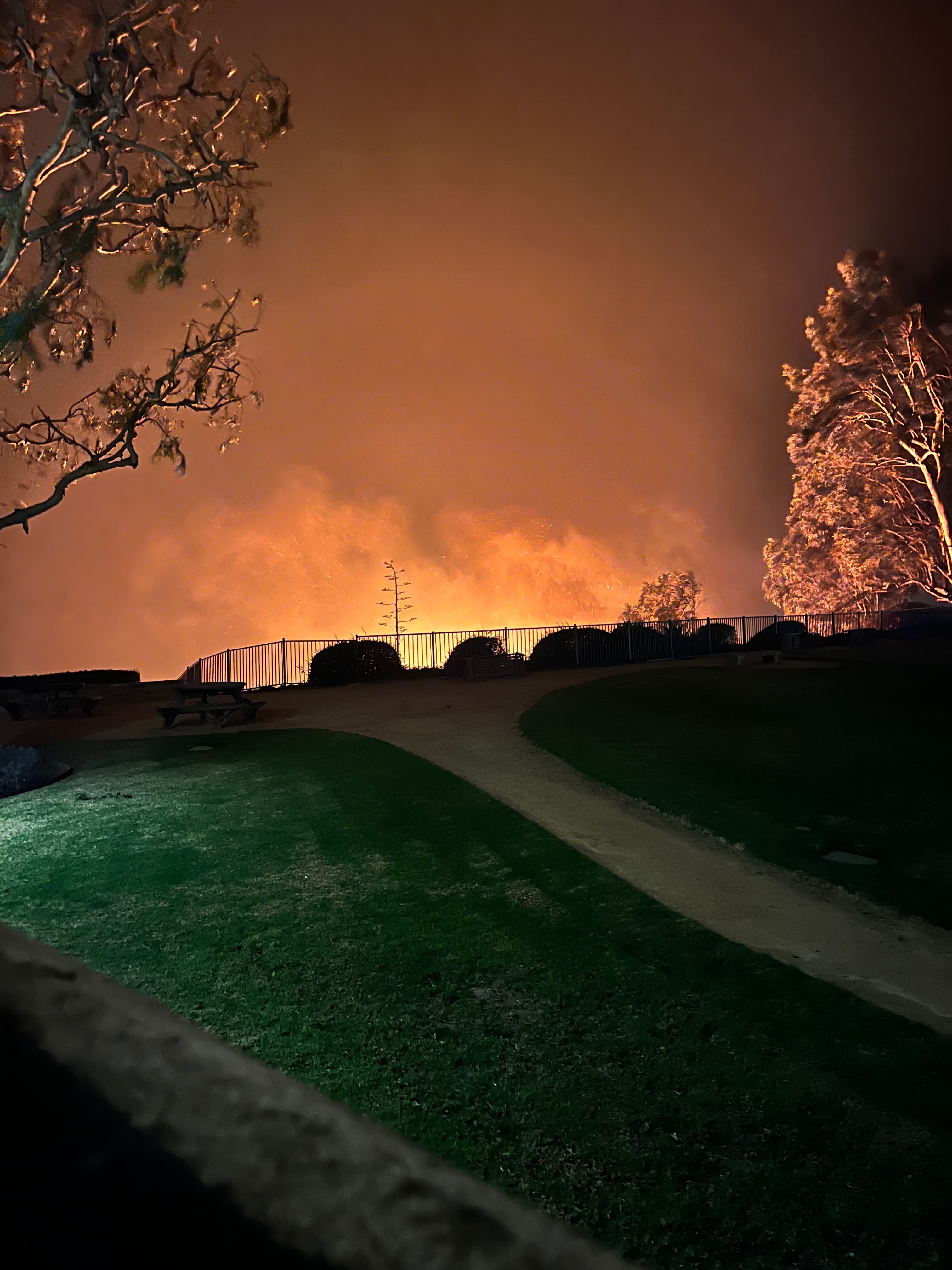
In early January of 2025, a wildfire began in the Santa Monica Mountains of Los Angeles County. Due to a combination of severe drought and strong Santa Ana winds, the fire rapidly grew. The Pacific Palisades fire burned for nearly one month before it was contained, destroying nearly 7,000 structures including homes, churches, schools and museums, making it the third-most destructive wildfire in the history of California.
Challenge
The effects of wildfires linger after they have been contained and extinguished. Burn scars are areas where vegetation has been stripped and soil properties may become more water repellent post-wildfire. Without vegetation to stabilize the slope, the risk of landslides and significant erosion is greatly increased. According to the National Weather Service, the increased risk for flash flooding usually lasts for two years, but risks can persist for up to five years or until vegetation is fully re-established.
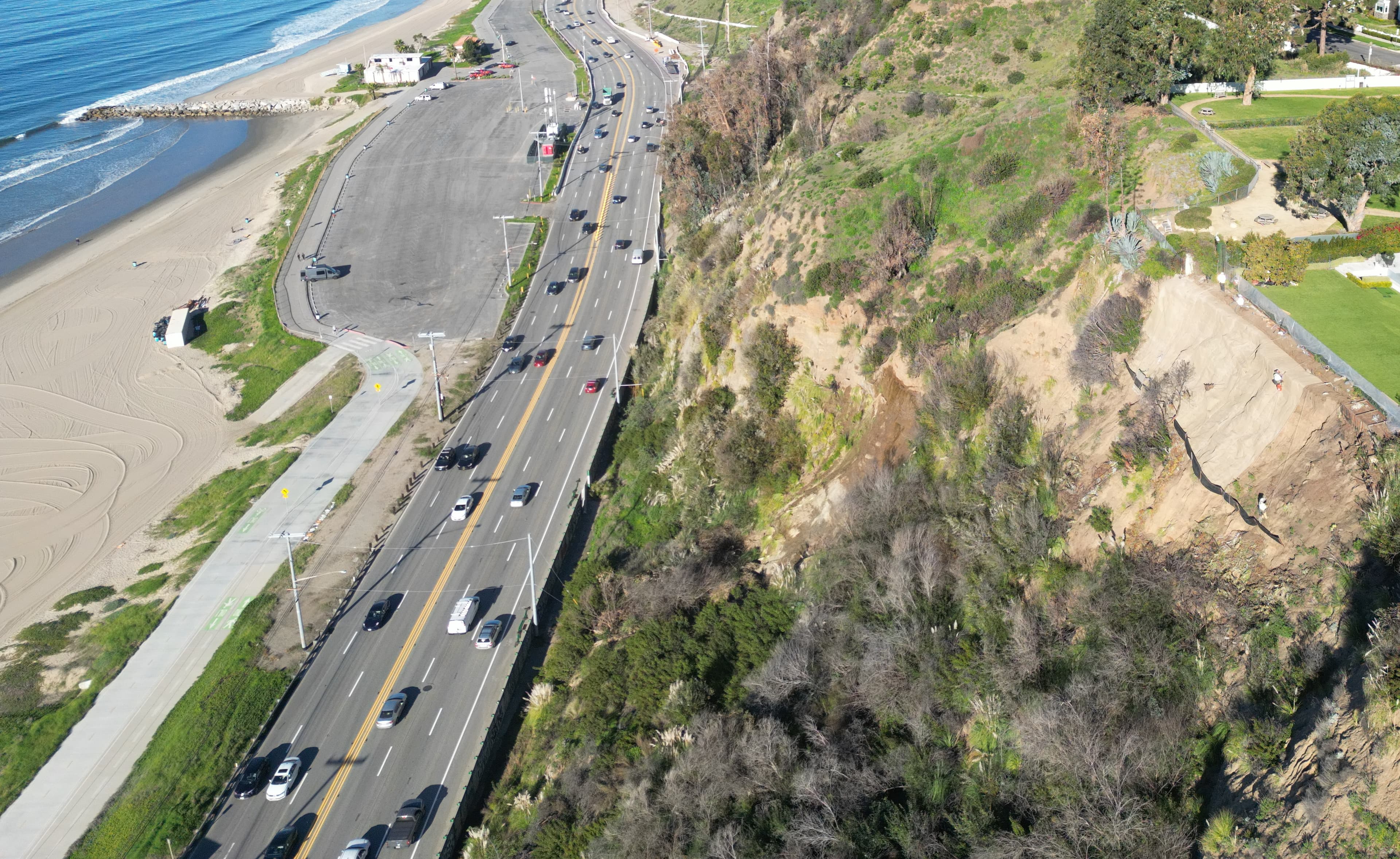
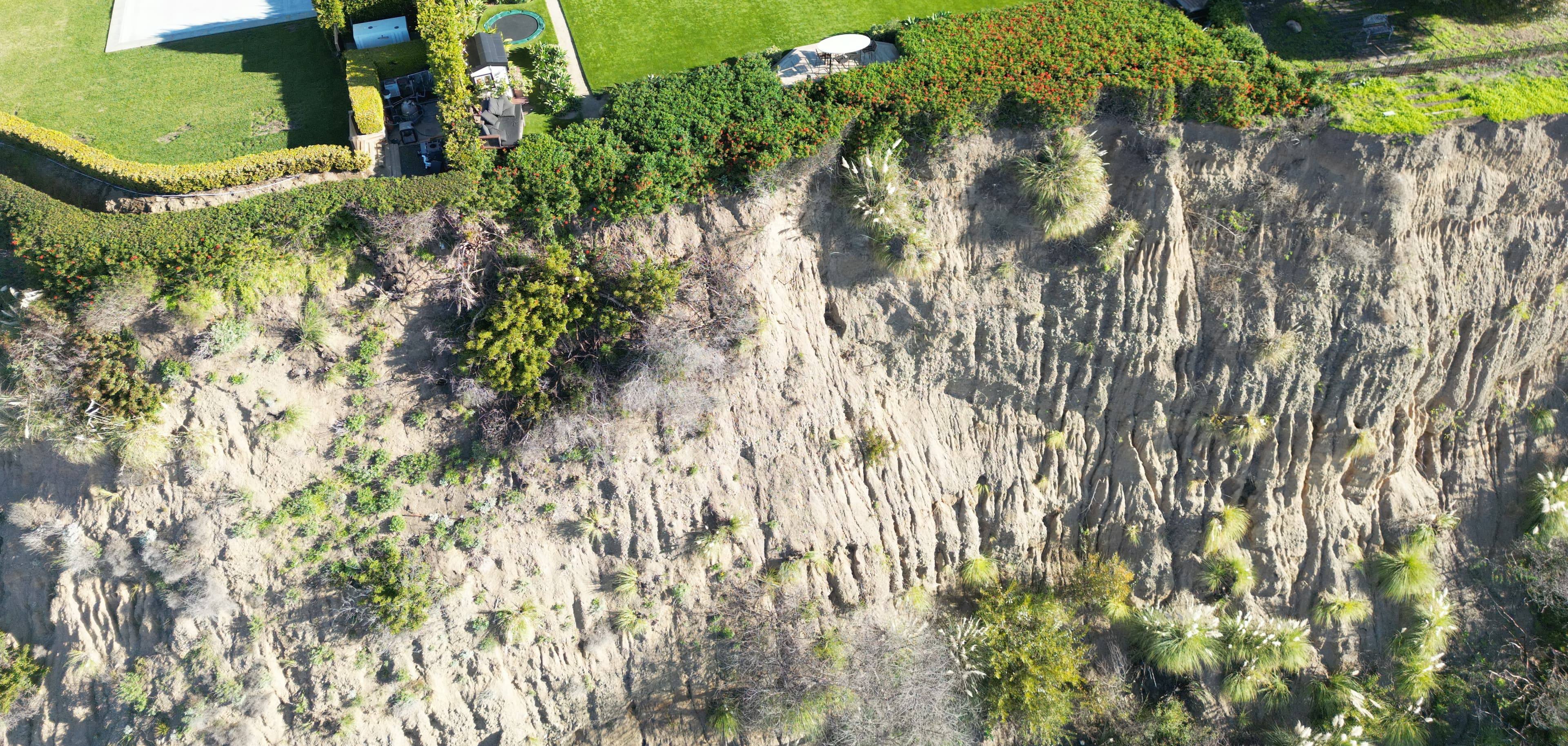
One Pacific Palisades homeowner was concerned about potential erosion and property loss due to a large burn scar that spanned the bluff adjacent to their backyard. The slopes of the bluff are irregular and nearly vertical in some areas. The homeowner wanted a solution that would provide erosion protection and mitigate future wildfires. Additionally, the homeowner wanted a solution that would not obstruct or contrast their view of the ocean.
Solution
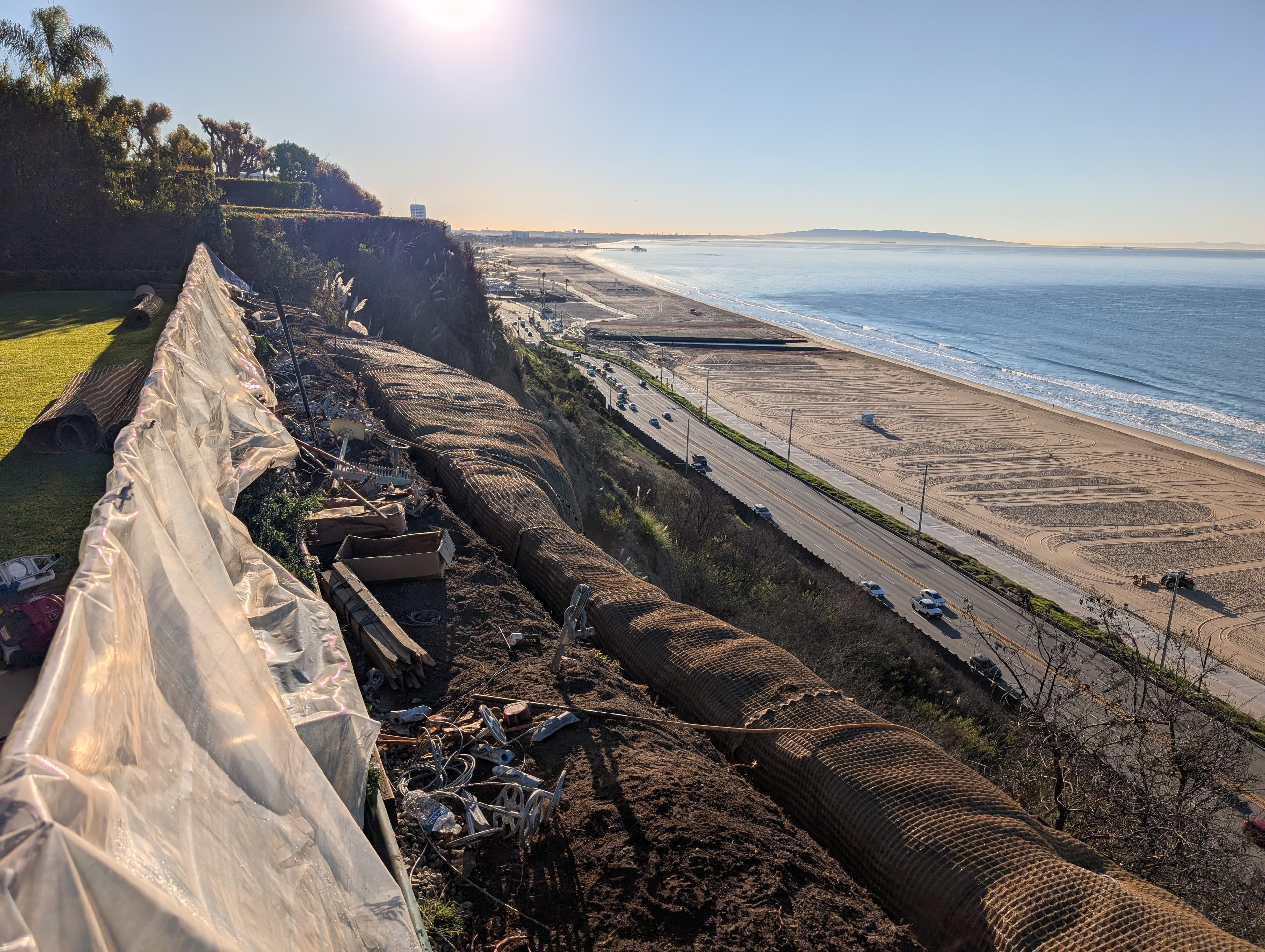
To prevent erosion and revegetate the slope, PROPEX® Armormax® was selected as a permanent erosion control and surficial slope stabilization solution that provides vegetated reinforcement, improves the factor of safety, and significantly reduces the probability of failure. This system combines a patented High Performance Turf Reinforcement Mat (HPTRM) with PROPEX Armormax Engineered Earth Anchors®, that work together to lock soil in place and protect against hydraulic stresses.
The HPTRM component of PROPEX Armormax is engineered with fire mitigation technology that is ignition resistant and self-extinguishing. Using non-halogenated flame retardants that work by interfering with the chemistry of the flame to produce less heat and suppress smoke, the system helps increase the resilience of wildfire prone areas.
Additionally, the HPTRM component is designed to promote root development and accelerate vegetative growth, providing a nature-based solution that supports and compliments the environment. According to the U.S. Department of Agriculture, re-establishing vegetation after a wildfire provides long-term erosion control.
Due to the steepness of the slopes, B3 Engineered Earth Anchors were used in combination with the HPTRM. These robust anchors are engineered for permanent erosion protection and have a working load of up to 2,000 lbs.
Performance
The success of this installation has been noticed by neighboring property owners, leading four neighbors to utilize PROPEX Armormax to protect their property.