Overview
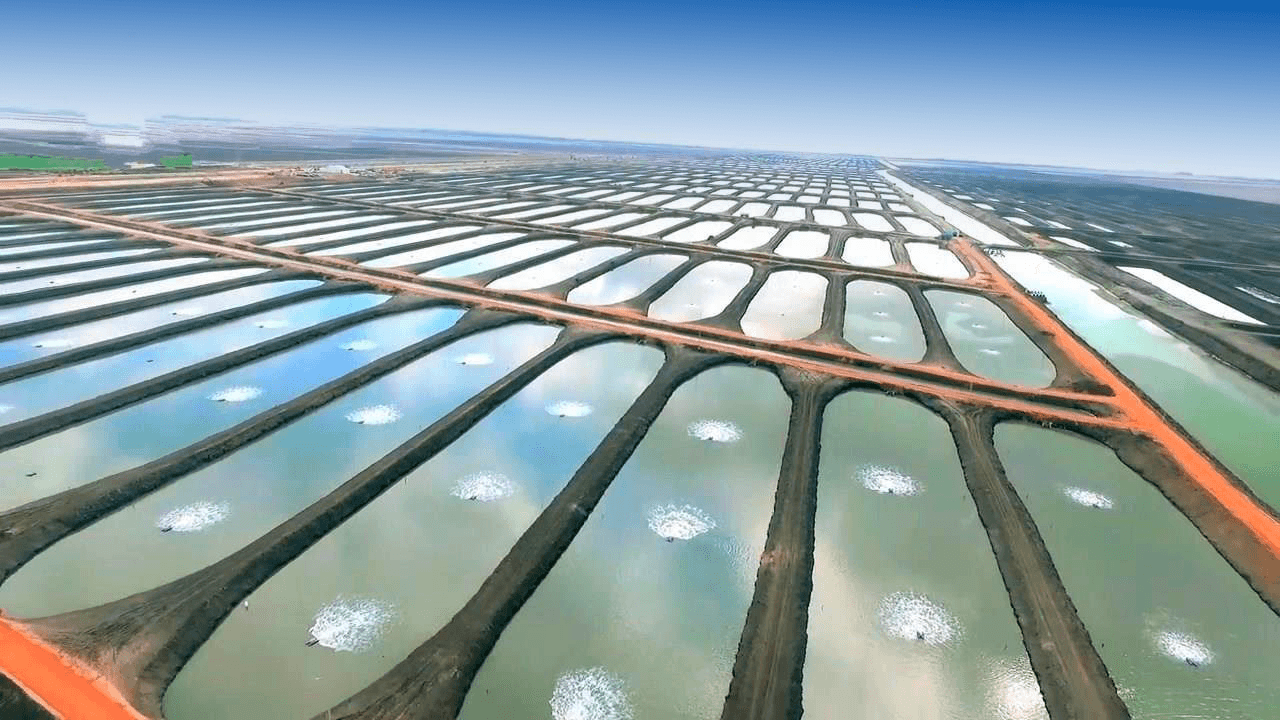
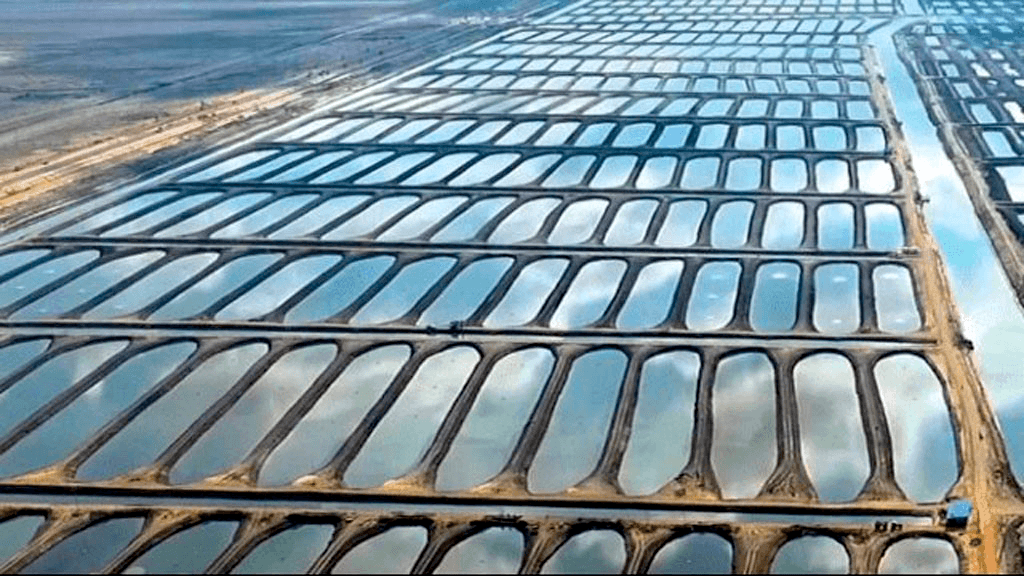
In Egypt, phase two of the mega aquaculture project in East Port Said launched by government in 2017 was completed. Twenty thousand acres were set aside for this project, which was managed by state agency the Suez Canal Fish Farming and Aquaculture Company and aimed to supply up to 70 percent of Egypt’s domestic demand.
Challenge
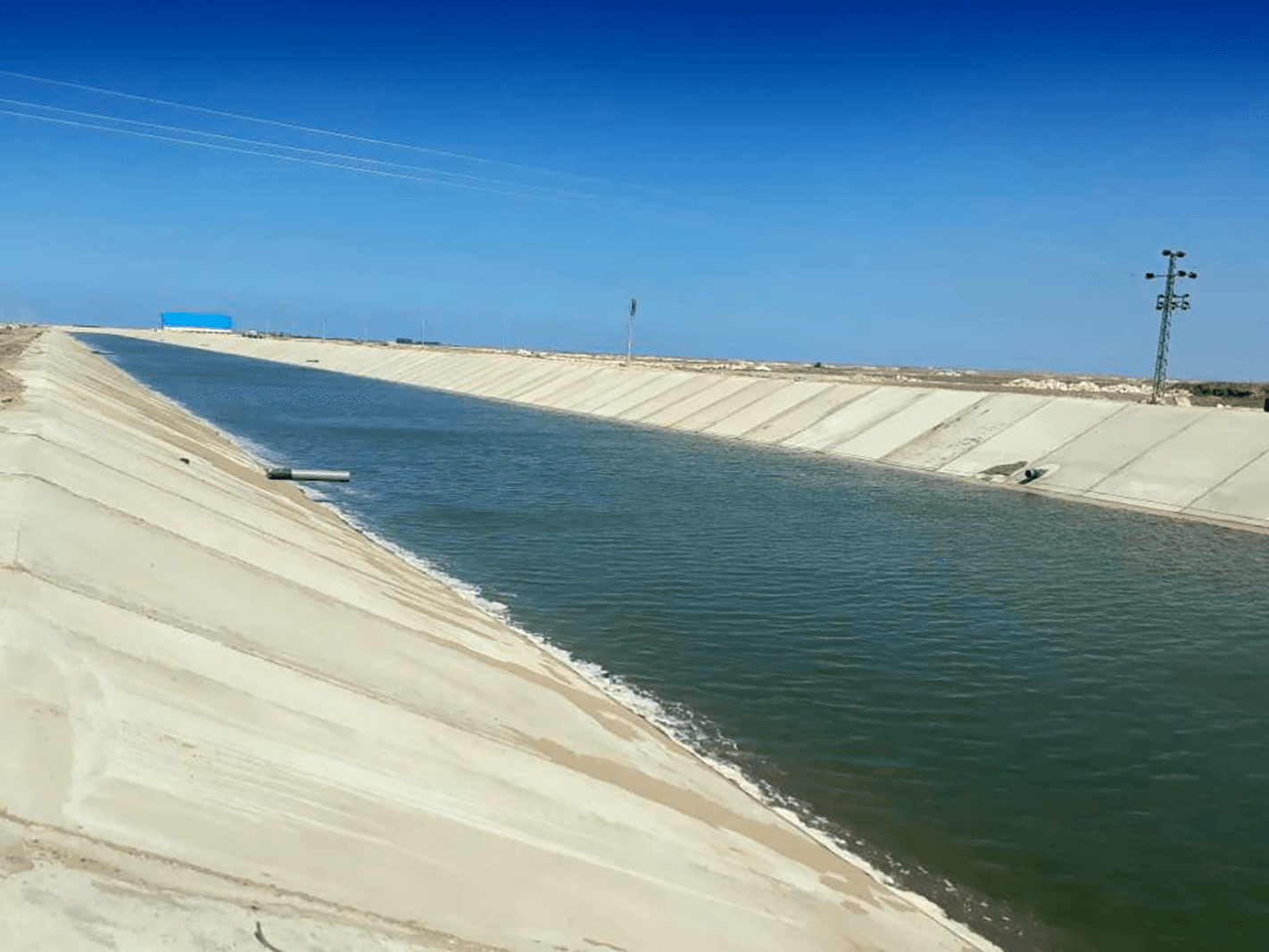
The project included construction of a hatchery for fish and shrimp on 4,000 acres of land, which were supplied with fresh sea water by a system of canals. Lining those canals are 3 million m² (32 million ft²) of black, 1 mm, double-sided textured GSE® HD geomembrane.
The fish farm has capacity for 20 million fish and two billion shrimp. As water continually evaporates from the ponds, keeping them well supplied with fresh sea water is critical to keeping fish healthy, to keep production up, and keep the facilities disease free. The performance of the intake channel and canals for water supply and drainage were thus central to the success of this project.
The geomembrane was important to the design of the canals – it helped ensure the integrity of the canals, the pond system, and the environment.
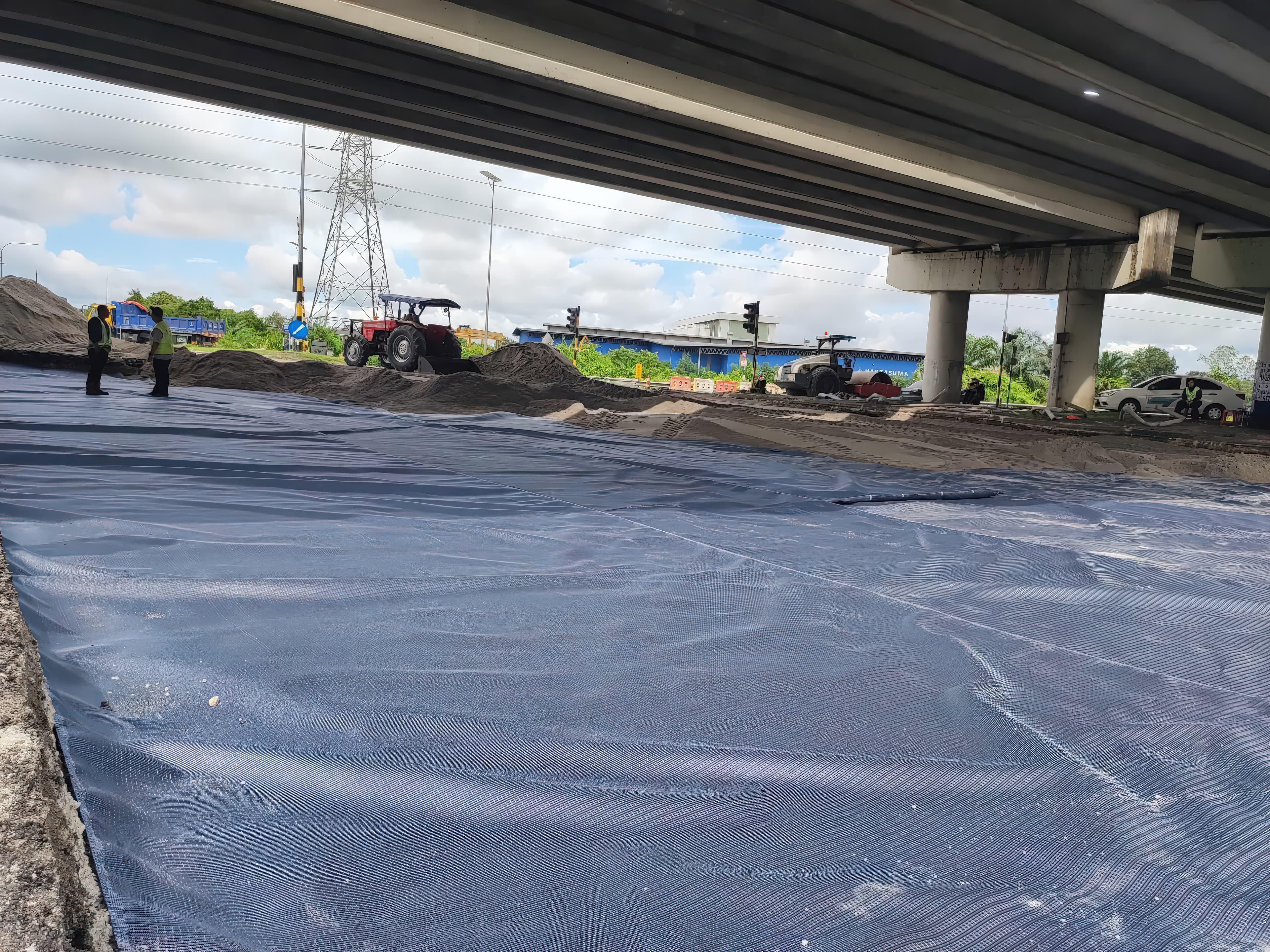
The textured surfaces of the geomembrane played a role in construction, helping with slope containment and stability through increased friction between the material and the soil, and to improve concrete adhesion at placement.
As clean water becomes more expensive to pump and transport, the need for secure water containment grows. Installing a low permeability geomembrane in the canals will help keep fresh-water volumes consistent and prevent intrusion of groundwater-borne pollutants from entering the aquaculture pond systems.
The low permeability geomembrane will also keep the waste products being drained from the ponds contained. In addition, GSE HD geomembranes contain no additives or chemicals that can leach out or impact water quality or harm animal life.
The project took 36 months to complete, with 1,350 km² (520 mi²) of geosynthetics used in 2018, 1,800 km² (695 mi²) in 2019, and 300 km² (116 mi²) in 2020. The project was completed on time, with success leading to Solmax geomembranes being selected for related projects. El Maseria For Insulation Company, Solmax’s distributor in Egypt, supplied this project.