Overview
Peninsular Malaysia boasts a well-developed road Peninsular Malaysia has a well-developed road transportation system, but the railroad system has not been developed to the same standard. This has resulted in an overdependence on road transportation, which accounts for over 90%, while the current railroad system accounts for only 3% of total transportation. To correct this transportation imbalance, the Malaysian Government is upgrading the Peninsular western railway line that runs from the Malaysian–Thailand border town of Padang Besar to Johor Bahru at the southern tip of Peninsular Malaysia. This railway line will eventually form part of the Trans- Asia railway line spanning from Singapore to Kunming in China. The USD 4 billion Electrified Double Track Railway Project covers the design and construction of the infrastructure and system works for a 330 km long electrified double-tracking railway line between Ipoh and Padang Besar in the northern half of Peninsular Malaysia, passing through the Malaysian states of Perak, Penang, Kedah and Perlis.
Challenge
This railway project involves laying two new parallel tracks, replacing the existing single track. It includes extensive foundation improvement works as well as the construction of bridges and tunnels over a wide variety of geological and ground conditions. Construction of new stations and installation of modern electrification and signalling systems also form part of the project. Approximately 180 km of the railway alignment passes over alluvial river valleys and low-lying coastal plains where normally or slightly over consolidated alluvial and marine clay deposits predominate. Commonly, these soft soil deposits are 20 m or more in depth, exhibit undrained shear strengths ranging from 5 kPa to 20 kPa, and are essentially normally consolidated. All of these areas required ground improvement works to ensure stability and deformations are maintained within specific limits for the railway embankments.
Solution
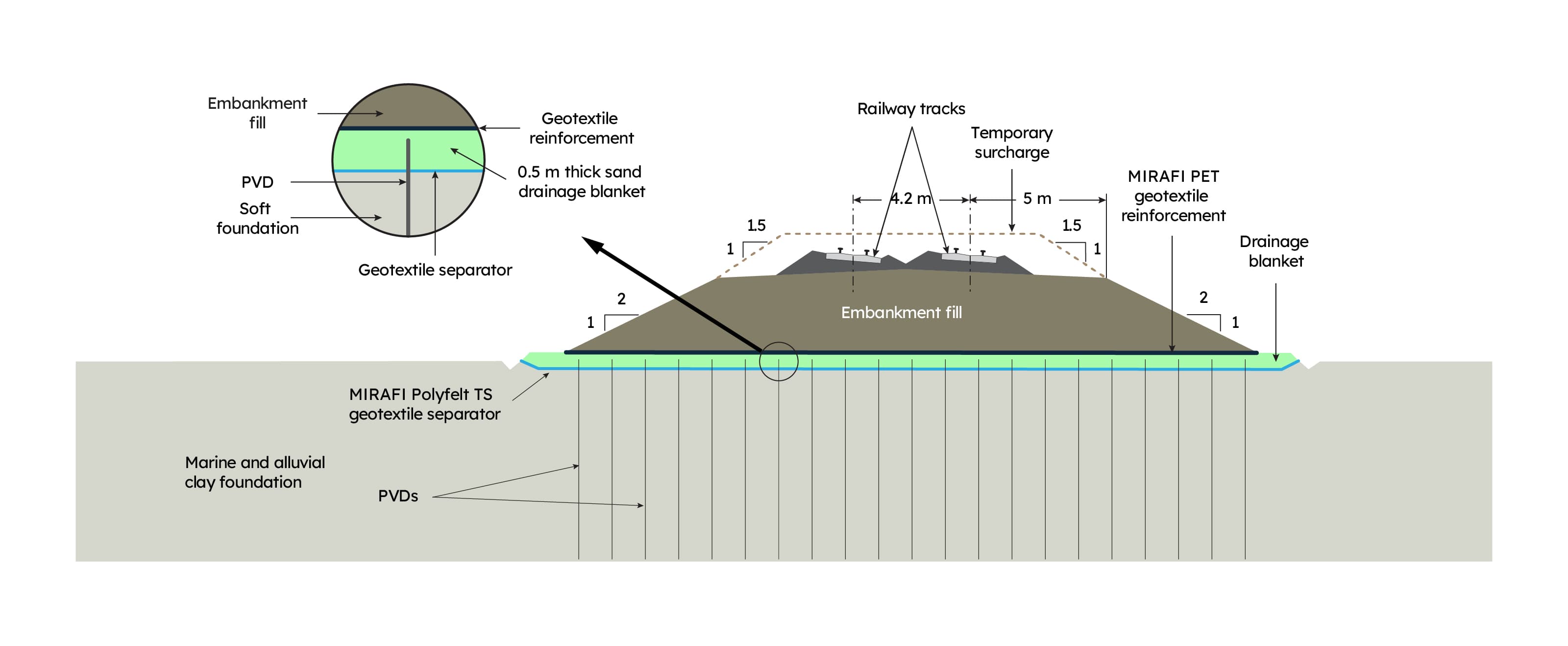
The ground improvement method used in the construction of the railway embankment over these soft clay foundation soils involved the use of prefabricated vertical drains (PVDs) and preloading the embankment by surcharging to ensure consolidation of the soft foundations occurs in a relatively short period of time during the construction project. To maintain stability of the surcharged embankment while the soft foundation soils were undergoing consolidation, a layer of MIRAFI® PET or MIRAFI Polyfelt TS reinforcement was placed at the base of the embankment prior to placement of the embankment fill. In areas close to associated structures (e.g. bridges, etc.), piling or stone columns were used for ground improvement depending on the ground conditions.
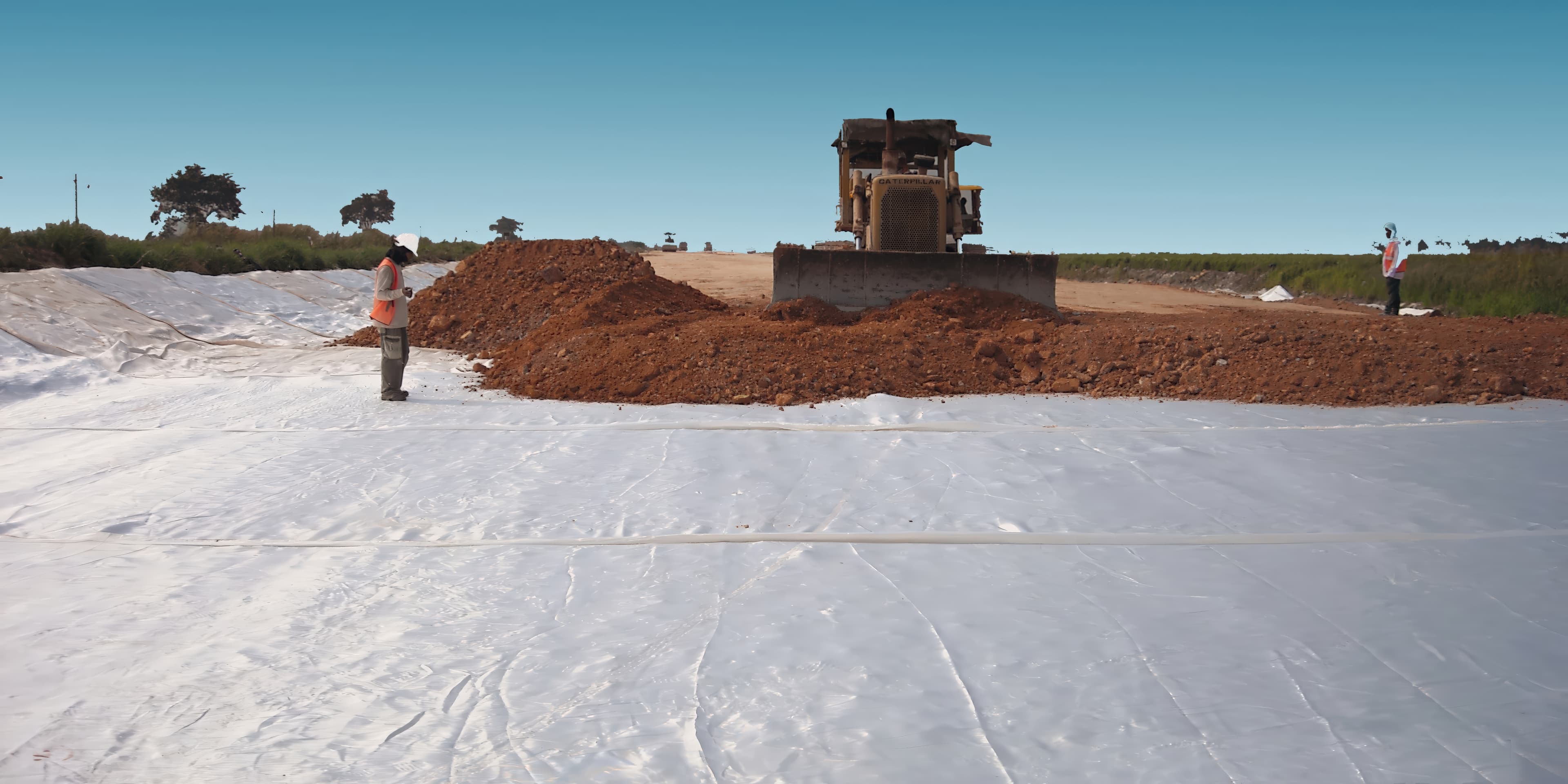
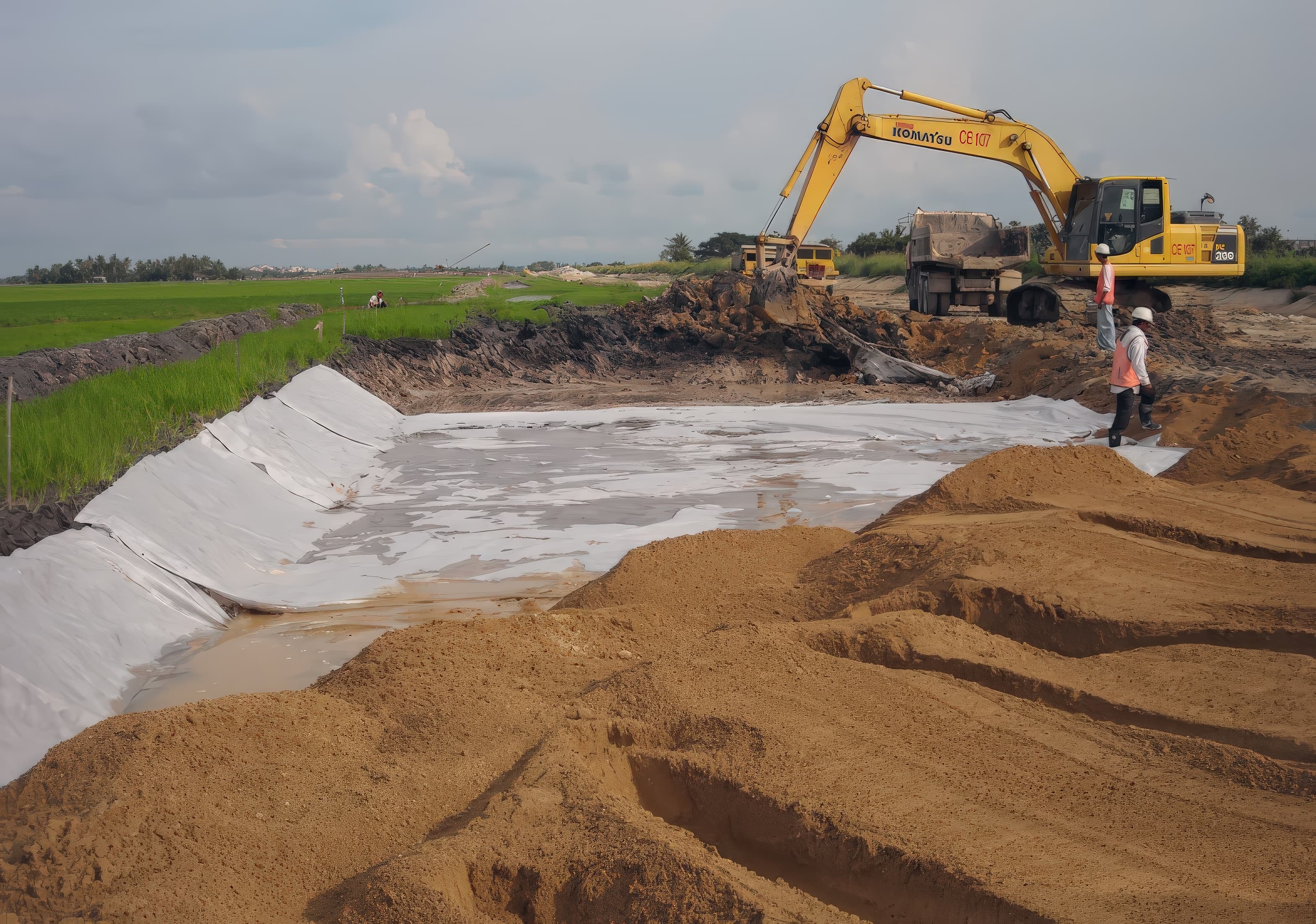
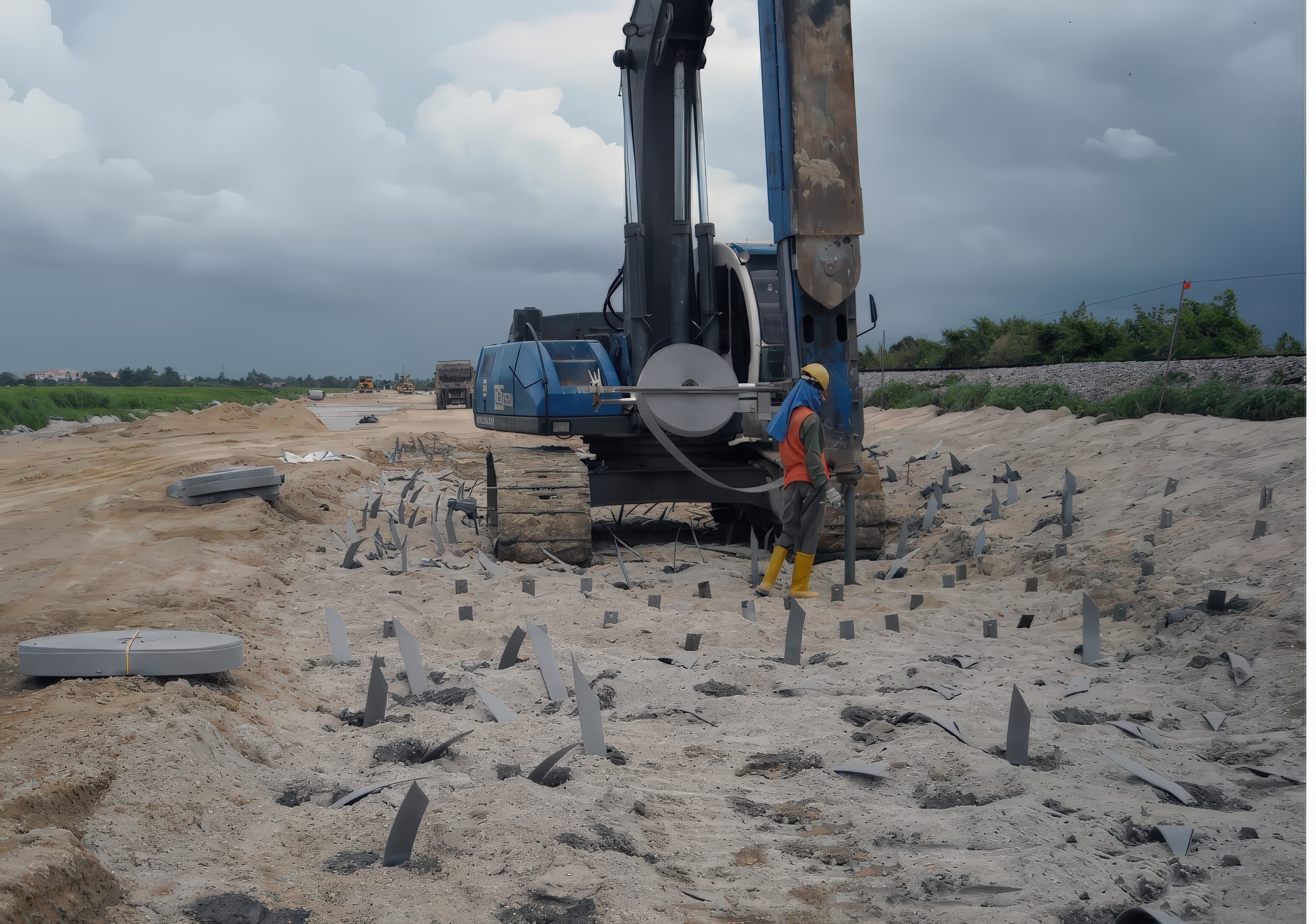
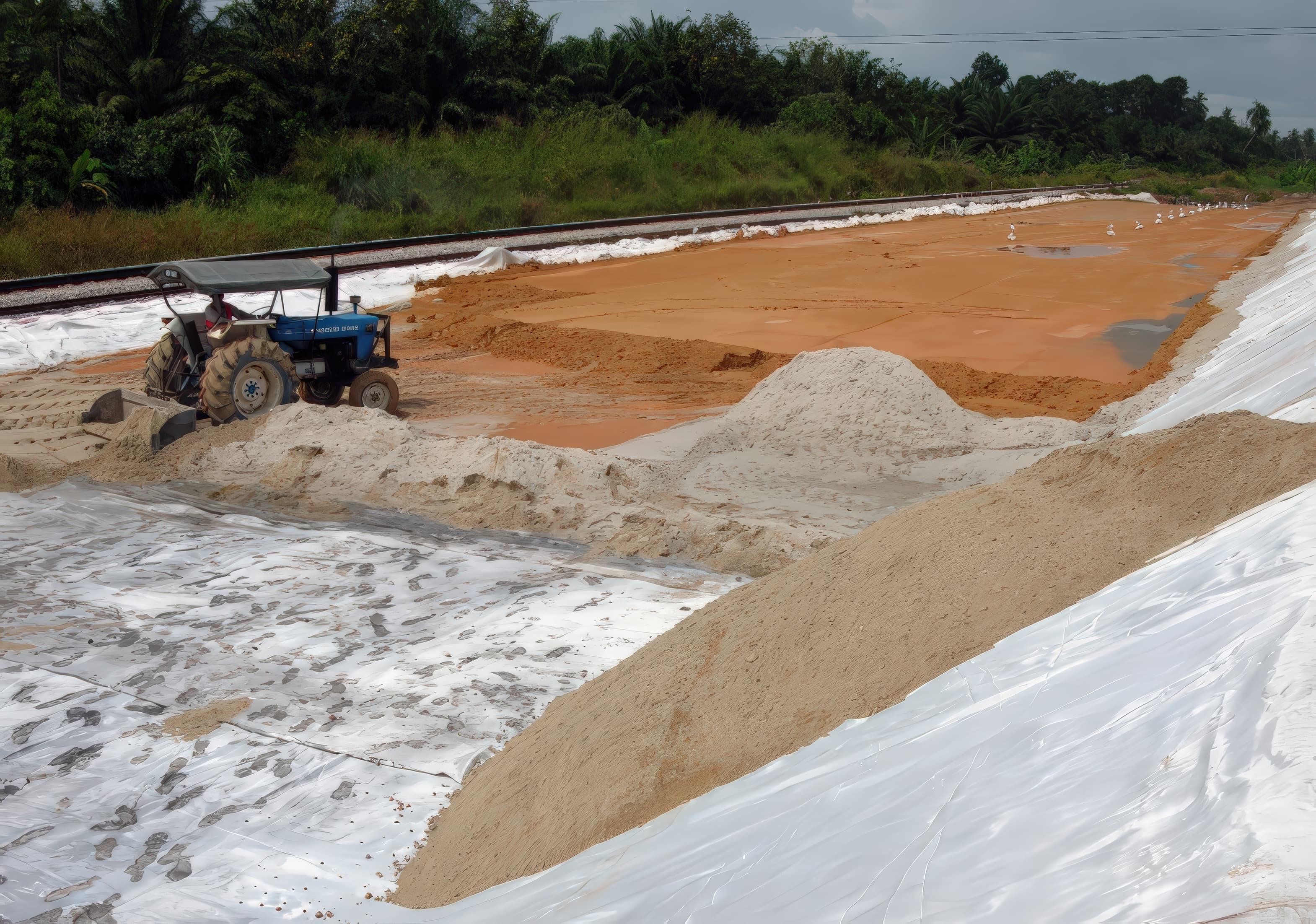
Construction of the basal reinforced railway embankments started with the stripping of vegetation and topsoil to provide a level surface. A MIRAFI Polyfelt TS separator was placed on the soft ground surface prior to the placement of a 500 mm thick layer of sand. This sand layer acts as a drainage blanket to drain out excess pore water from the base of the embankment and also acts as a working platform to support the PVD installation equipment. The PVDs were installed through the sand layer and geotextile separator into the soft foundation soils on a 1.2 m grid and to a depth that coincided with the bottom of the soft foundation layer.
Following installation of the PVDs, a thin layer of sand was then placed over the sand platform prior to placement of the geotextile reinforcement. The MIRAFI PET or MIRAFI Polyfelt TS reinforcement was placed across the surface of the sand drainage blanket at right angles to the direction of the embankment. Depending on the strength and extent of the soft foundation soils and the height of the surcharged embankment, different strengths of geotextile reinforcement were used, varying from 100 kN/m to 800 kN/m in the machine direction.
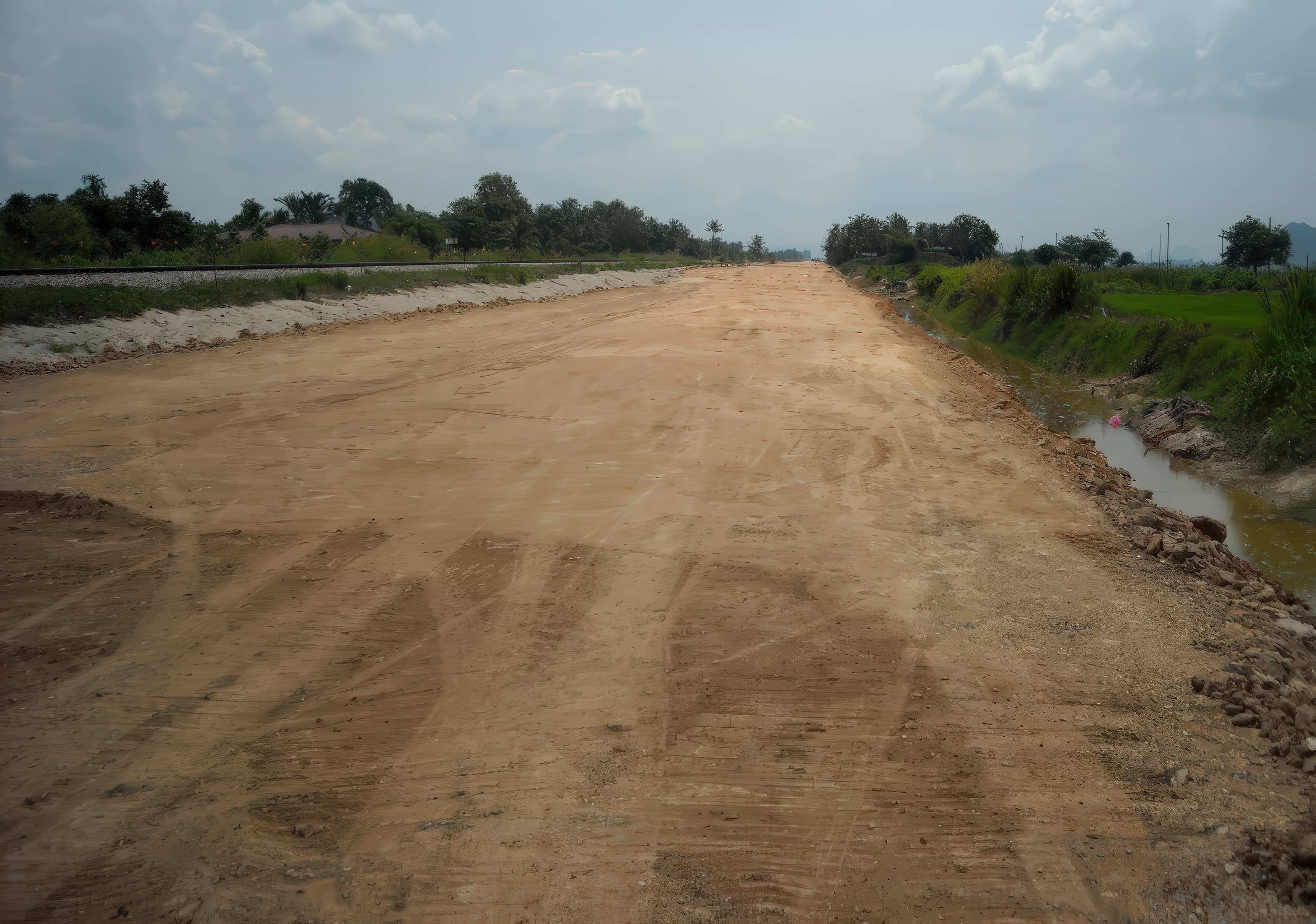
After the basal geotextile reinforcement was installed, general fill was placed and compacted in layers to construct the surcharged embankments. Typically, the surcharged embankments were 5 m to 6 m in height, of which 2 m to 3 m was surcharge. After the preloading period was completed, which was typically 3 to 6 months, the surcharge was removed from the embankments. Then the ballast and tracking works were carried out, followed by the electrification works.
Where possible, the alignment of the new double track ran alongside the existing single track. When this was not possible, two alternatives could be adopted. One alternative involved the new embankment overlapping the existing single track. This involved a sequenced construction where one of the new tracks was built alongside the old single track so that trains could be diverted to run on this new track before the second new track could be constructed over the top of the existing single track. The second alternative involved total realignment of the track with completely new embankments.