Rebuilding resilience: post-wildfire erosion control on Pacific Palisades bluff
A homeowner used PROPEX Armormax to protect a bluff damaged by the Pacific Palisades fire to reduce erosion risk, support revegetation and mitigate future wildfires.

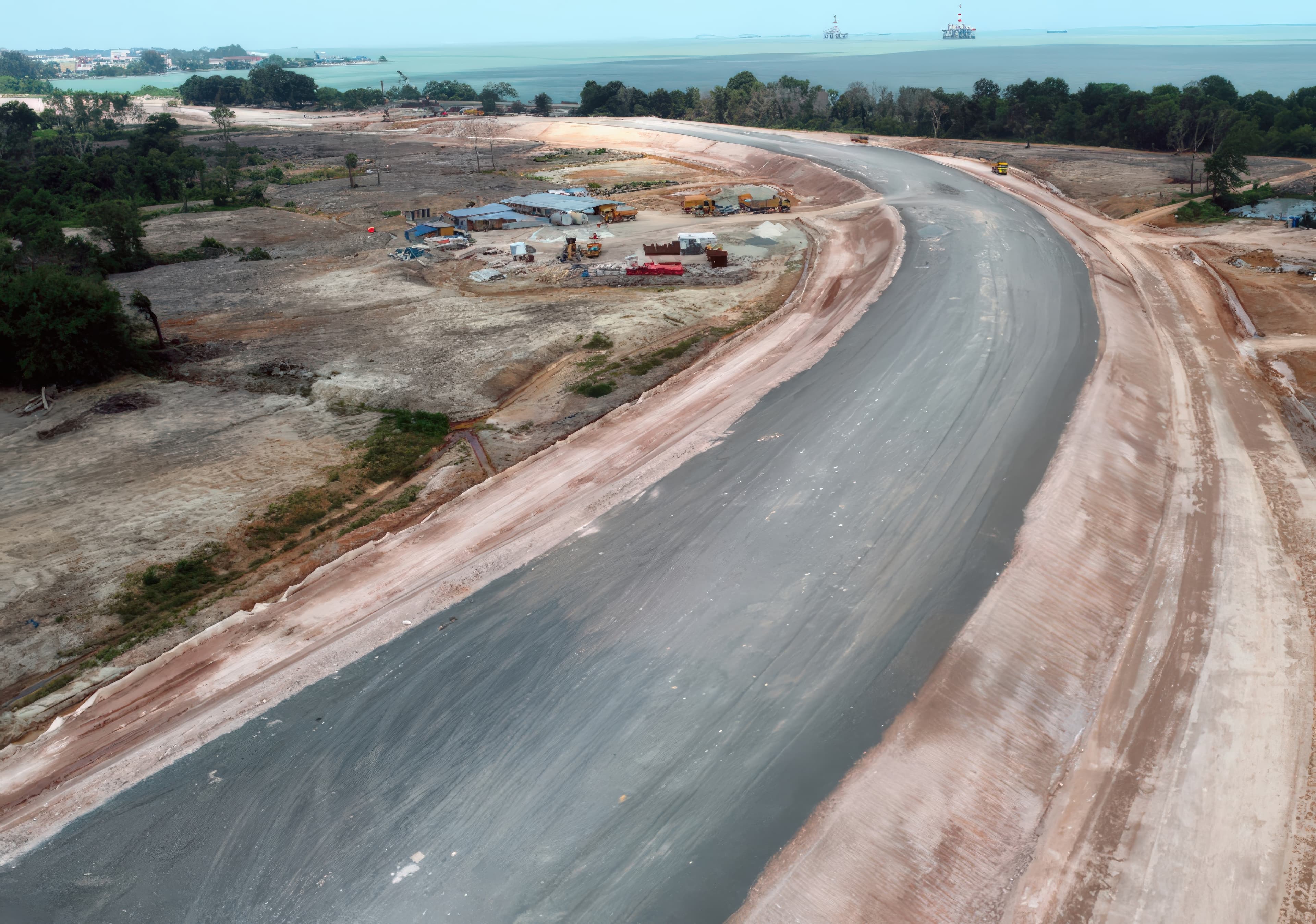
Pengerang Integrated Petroleum Complex (PIPC) is a large project development located in the southeast tip of Johor, Peninsular Malaysia, opposite Singapore. It is one of the largest investments in the area and is located on a single plot of land measuring about 8,000 ha. The site offers strategic access to existing major international shipping lanes and an excellent road network to Singapore and other major ports in Peninsular Malaysia. Approximately, a 22 km access road network had to be constructed to fully realize the infrastructure requirements of the development project.
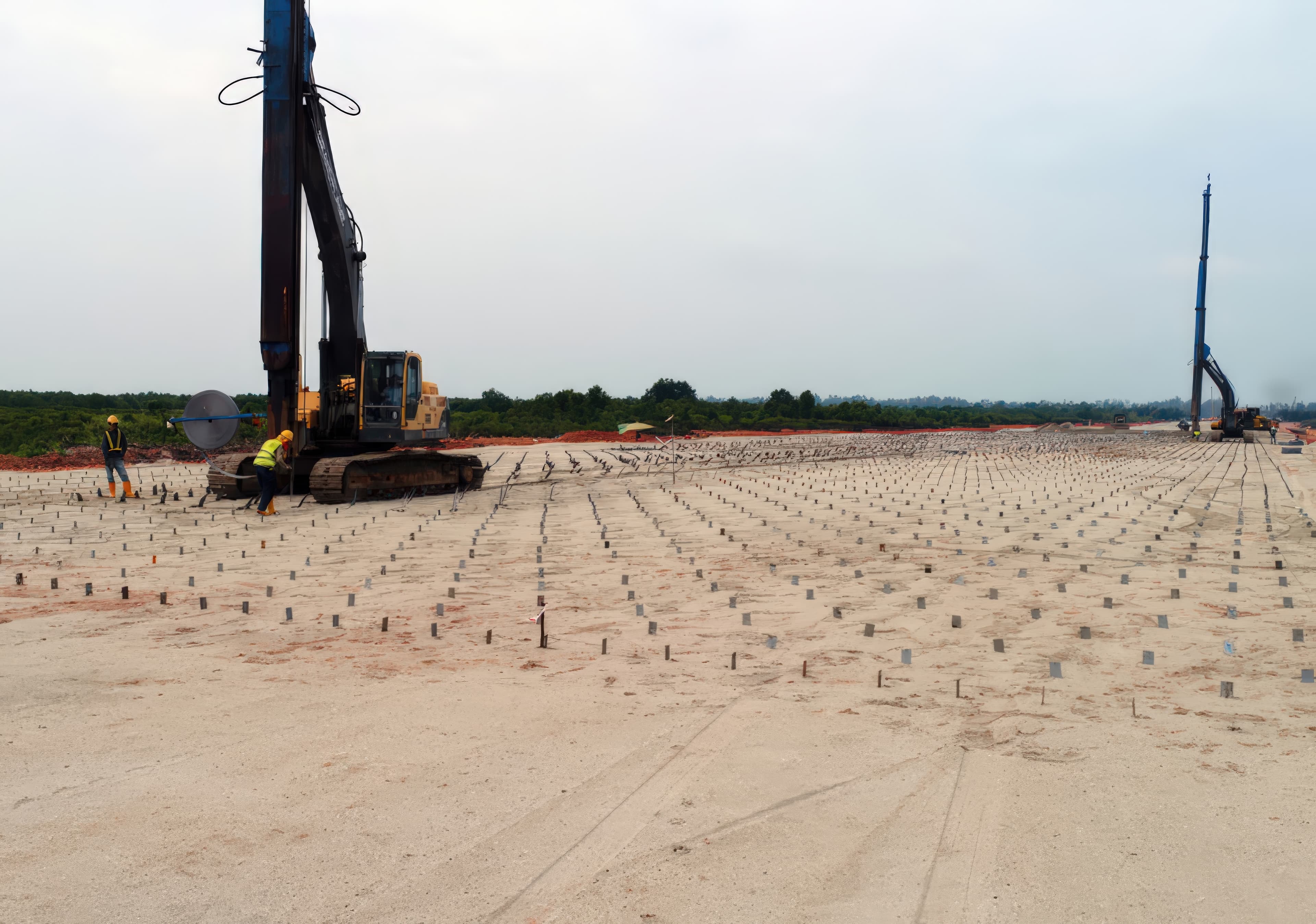
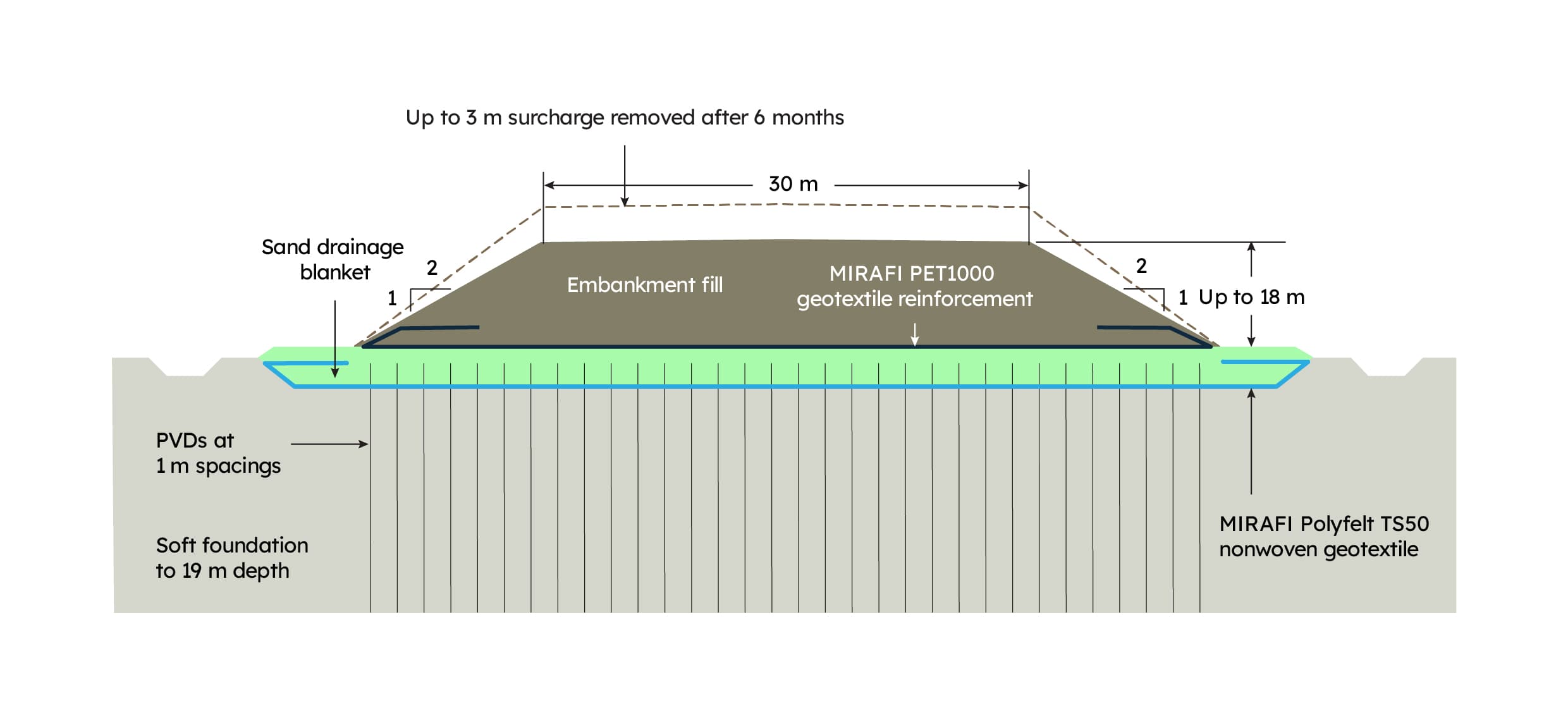
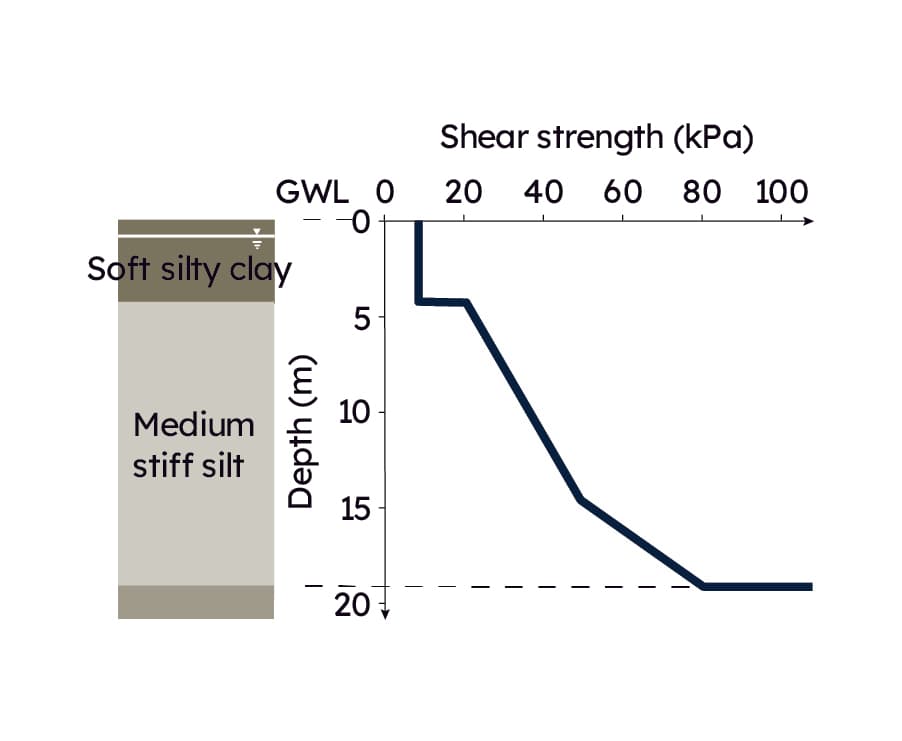
The ground conditions across the PIPC site consist of a very soft alluvial soil layer to around 4 m in depth. It can consist of silt, clay or peat and has an undrained shear strength of around 8 kPa and is constant with depth. The groundwater level (GWL) is around 1 m below surface level. Below this upper layer is a layer of medium stiff silt extending down to around 19 m below surface level. The undrained shear strength of this layer increases linearly with depth starting at around 20 kPa at the top of the layer. Below this layer is a firm foundation stratum. To construct the access road network, a series of basal reinforced embankments was designed over the soft foundation soils. Based on the required road surface elevation, these embankment heights ranged from 1 m to 18 m. Prefabricated vertical drains (PVDs) were proposed for around 50% of the access road embankments to accelerate the consolidation of the soft foundation soils. For the remaining 50%, no PVDs were used with the MIRAFI® PET geotextile reinforcement, as it was considered that foundation consolidation and shear strength gain did not require this treatment in these locations. Further, embankment surcharging was also applied to accelerate foundation consolidation. A surcharge of up to 3 m was applied depending on embankment height with a view to it being removed after 6 months application.
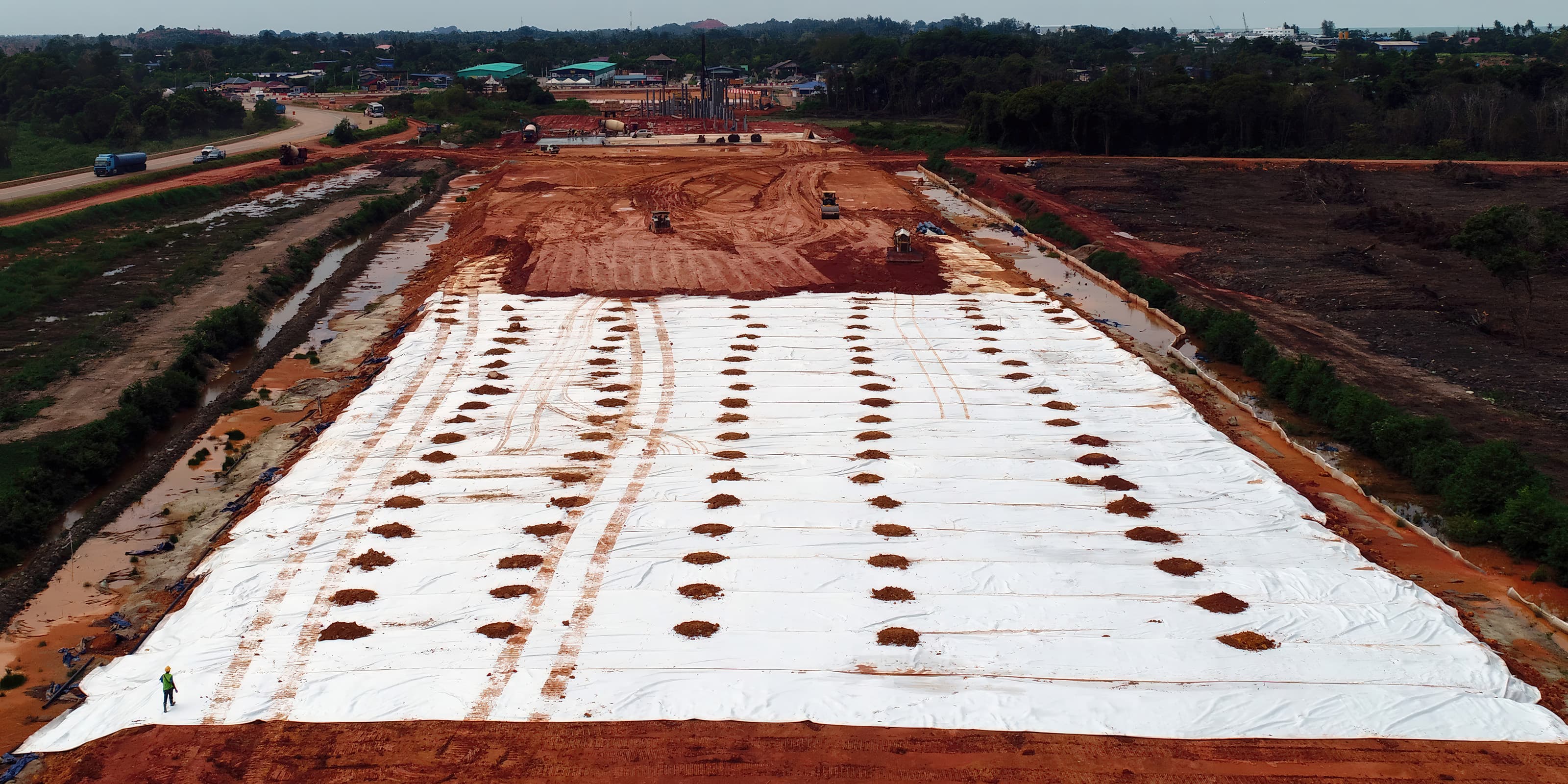
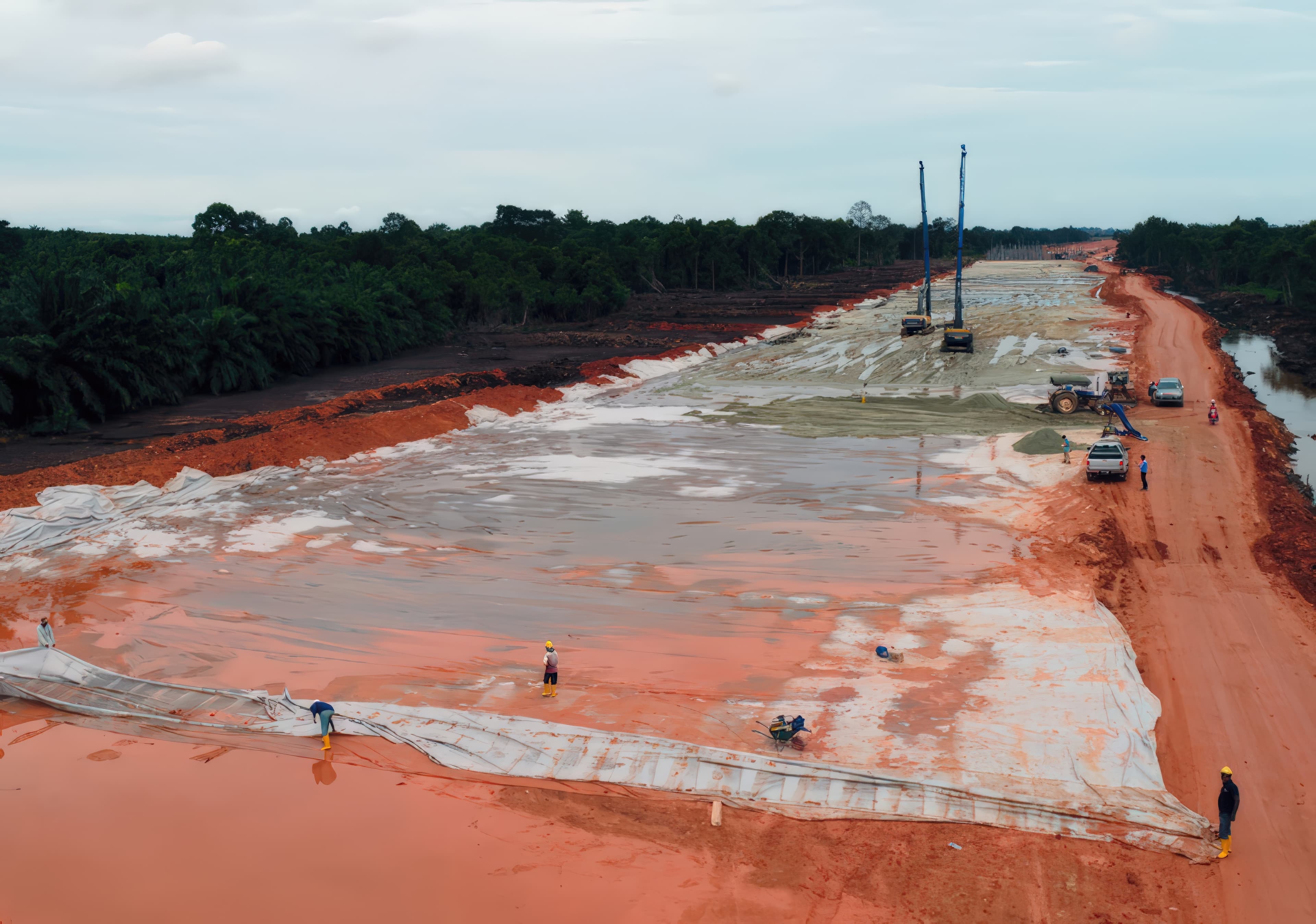
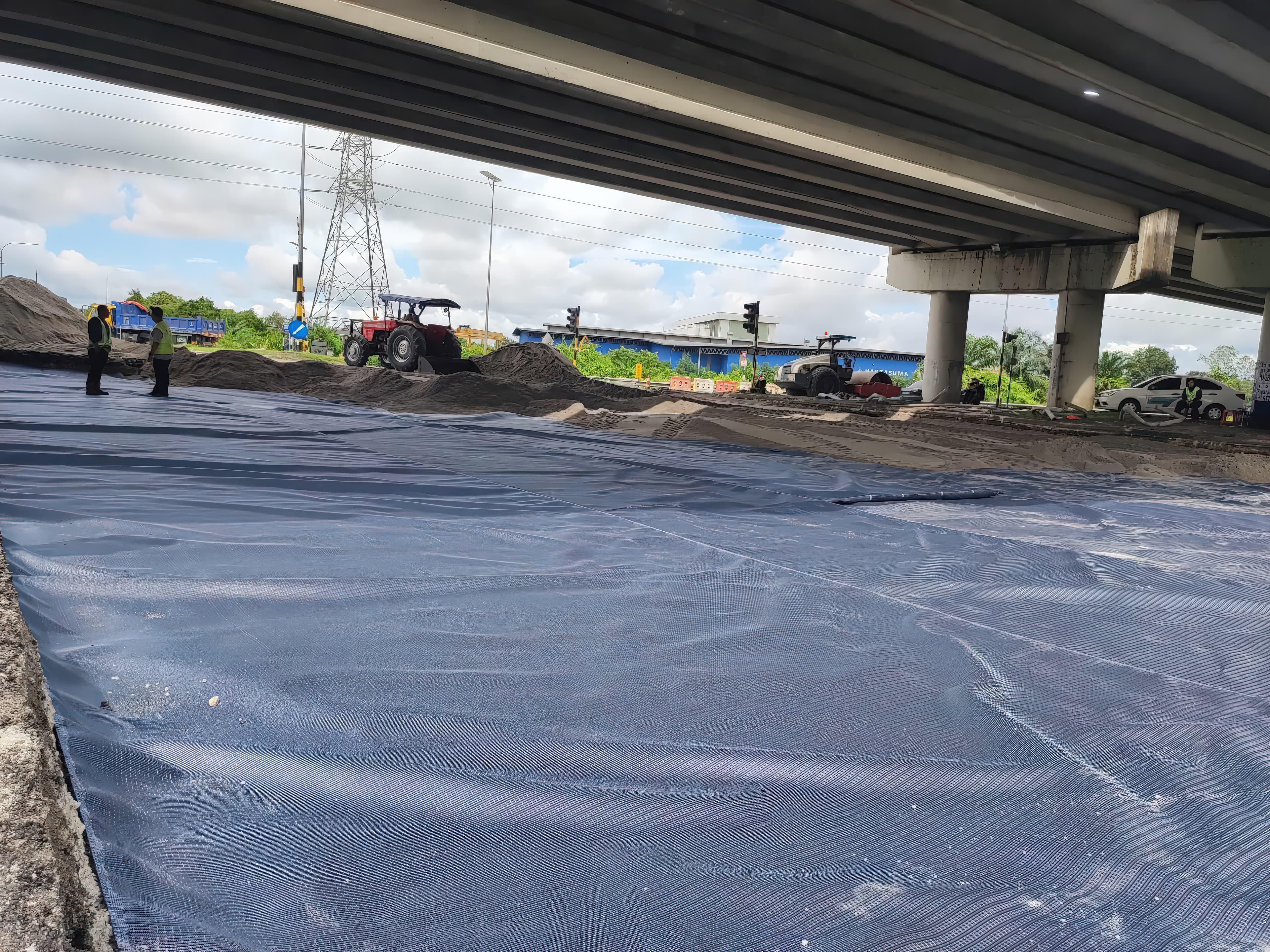
In the areas where PVDs were used, a MIRAFI Polyfelt TS50 nonwoven geotextile was placed on the soft foundation as a separator/filter geotextile to prevent the intermixing of the sand drainage blanket with the in situ soft foundation soil. Prior to placement of the MIRAFI Polyfelt TS50 nonwoven geotextile, large and sharp objects were removed from the surface of the soft foundation. The sand drainage blanket was then spread across the installed MIRAFI Polyfelt TS50 nonwoven geotextile to create a combined drainage/working platform layer to support the PVD installation equipment. A range of MIRAFI PET geotextile reinforcements were used for the various basal reinforced embankments throughout the site. Different MIRAFI PET grades and layers were applied depending on embankment geometry and soft foundation conditions. Single or multiple layers of MIRAFI PET200, MIRAFI PET400 and MIRAFI PET1000 were incorporated into the base of the embankments where appropriate. These MIRAFI PET grades were installed in two configurations depending on whether PVDs were used or not. First, if PVDs were used, the MIRAFI PET grades were installed across the top of the sand drainage blanket prior to placement of the embankment fill. Second, if no PVDs were used, the MIRAFI PET grades were installed directly on the soft foundation surface with embankment fill placed directly on top. Select engineered fill was used to construct the embankments. This was spread in lifts and compacted to 95% Standard Proctor compaction. Embankments with more than a single layer of MIRAFI PET geotextile reinforcement were required to have 0.5 m of engineered fill placed between each layer. The embankments with surcharging were constructed to completion. Following the required surcharging period, the surcharge was removed, with the road pavements constructed on top.

MIRAFI Polyfelt TS50 was placed on the soft foundation, followed by a sand drainage blanket that created a working platform for installing prefabricated vertical drains.

MIRAFI PET geotextile reinforcement layers, ranging from PET200 to PET1000, were installed either on the sand blanket or directly on the soft soil, depending on whether PVDs were used.

Engineered fill was placed and compacted in lifts, with 0.5 m of fill required between multiple reinforcement layers, and surcharging added where needed before final pavement construction.

Typical cross section through access road embankments using PVDs

Typical undrained shear strength profile at site
Rebuilding resilience: post-wildfire erosion control on Pacific Palisades bluff
A homeowner used PROPEX Armormax to protect a bluff damaged by the Pacific Palisades fire to reduce erosion risk, support revegetation and mitigate future wildfires.
Seawall construction, Brisbane Port expansion, QLD, Australia
The Port of Brisbane expanded by constructing a reinforced seawall to enable 230 ha of land reclamation using dredged materials while managing soft clay foundations and protecting the Moreton Bay Marine Park.
High speed railway embankment over karst foundation, Guizhou Province, China
The Anshun–Liupanshui high-speed railway crosses challenging karst terrain in Guizhou Province. Two layers of MIRAFI PET600 geotextile reinforcement were installed at the embankment base to limit deformation and manage subsidence risk under strict settlement criteria.