Highway earthworks widening, A3 Hindhead, Surrey, UK

4 Min read

Share

Highway earthworks widening, A3 Hindhead, Surrey, UK

Overview

Much of the land surrounding Hindhead lies within a designated area of natural beauty, a site of special scientific interest and a special protection area for the conservation of wild birds. Consequently, these designation areas place severe constraints on any local construction development. To improve traffic dispersal through the area of Hindhead a major road works scheme was developed that accounted fully for the local environmental requirements as well as the provision of a dual two-lane carriageway throughout. The highway scheme is 6.8 km in length with a 1.8 km tunnel under a specific sensitive environmental area, and involves the movement and placement of over 1 million m3 of earth fill. To maximize the effectiveness of the earth fill embankments reinforced fill slopes were constructed for structural, economic and aesthetic reasons. Depending on the highway earthworks alignment geometry these reinforced fill slopes were divided into shallow and steep reinforced fill slopes according to their slope angle.

Challenge

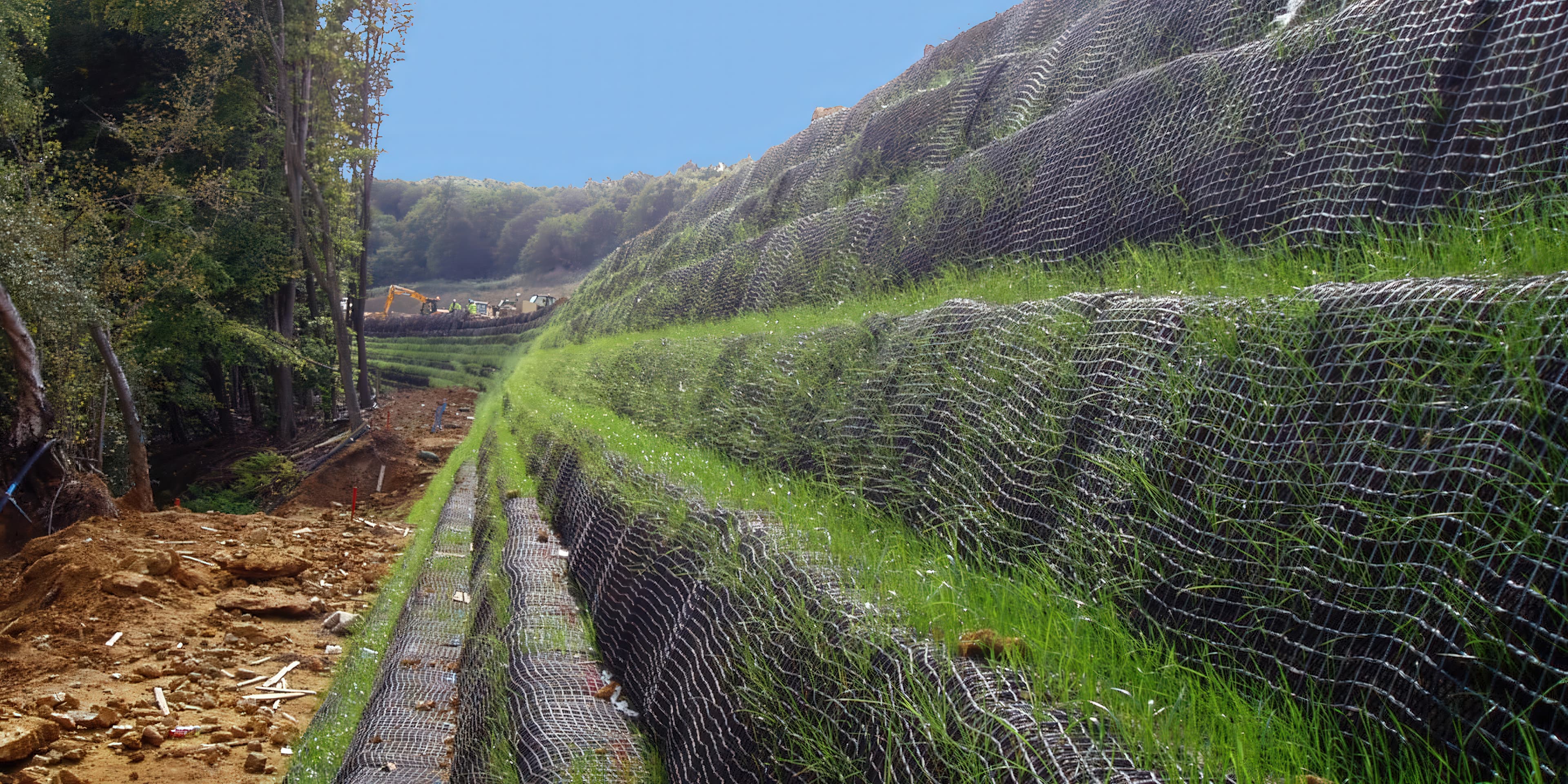
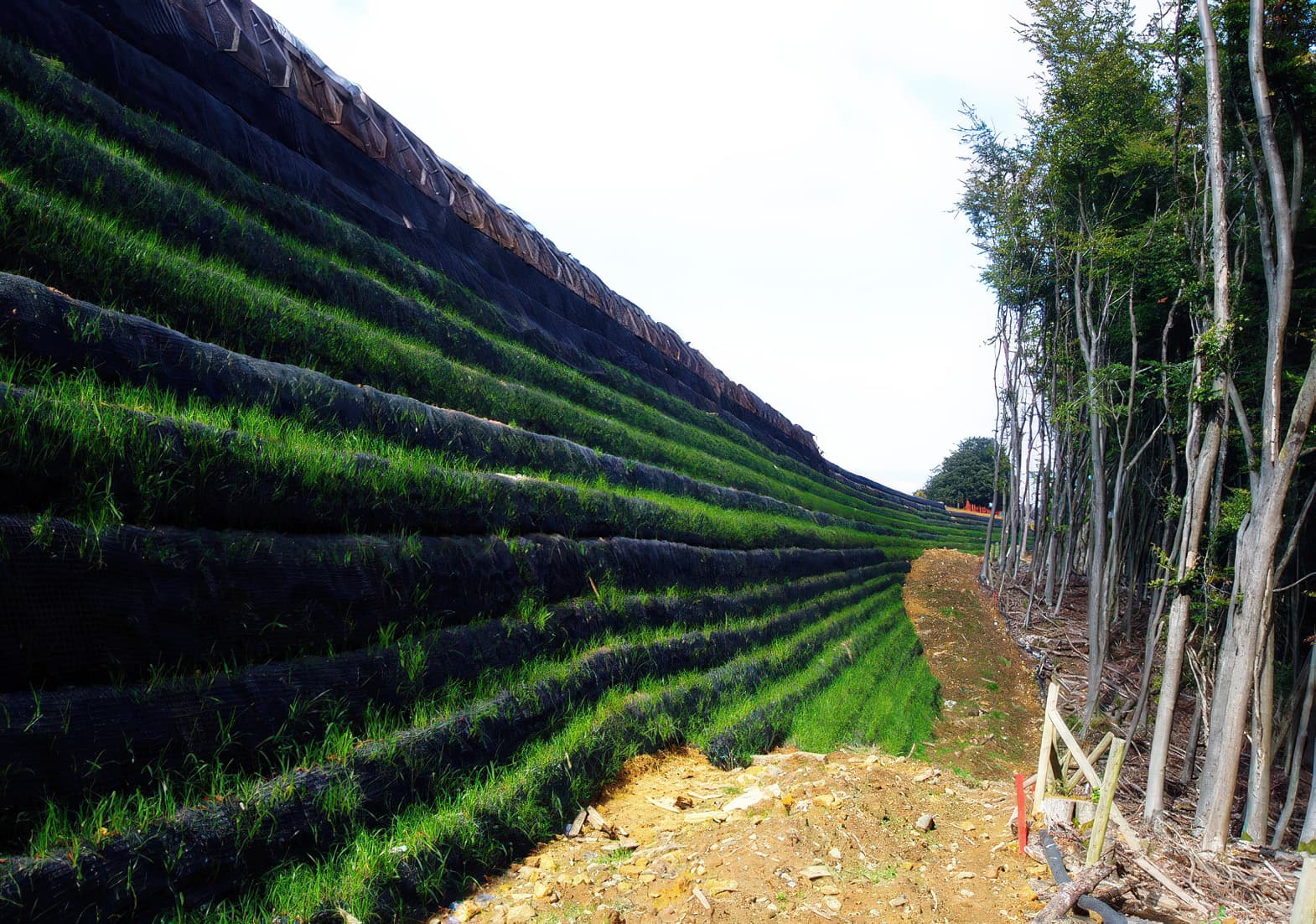
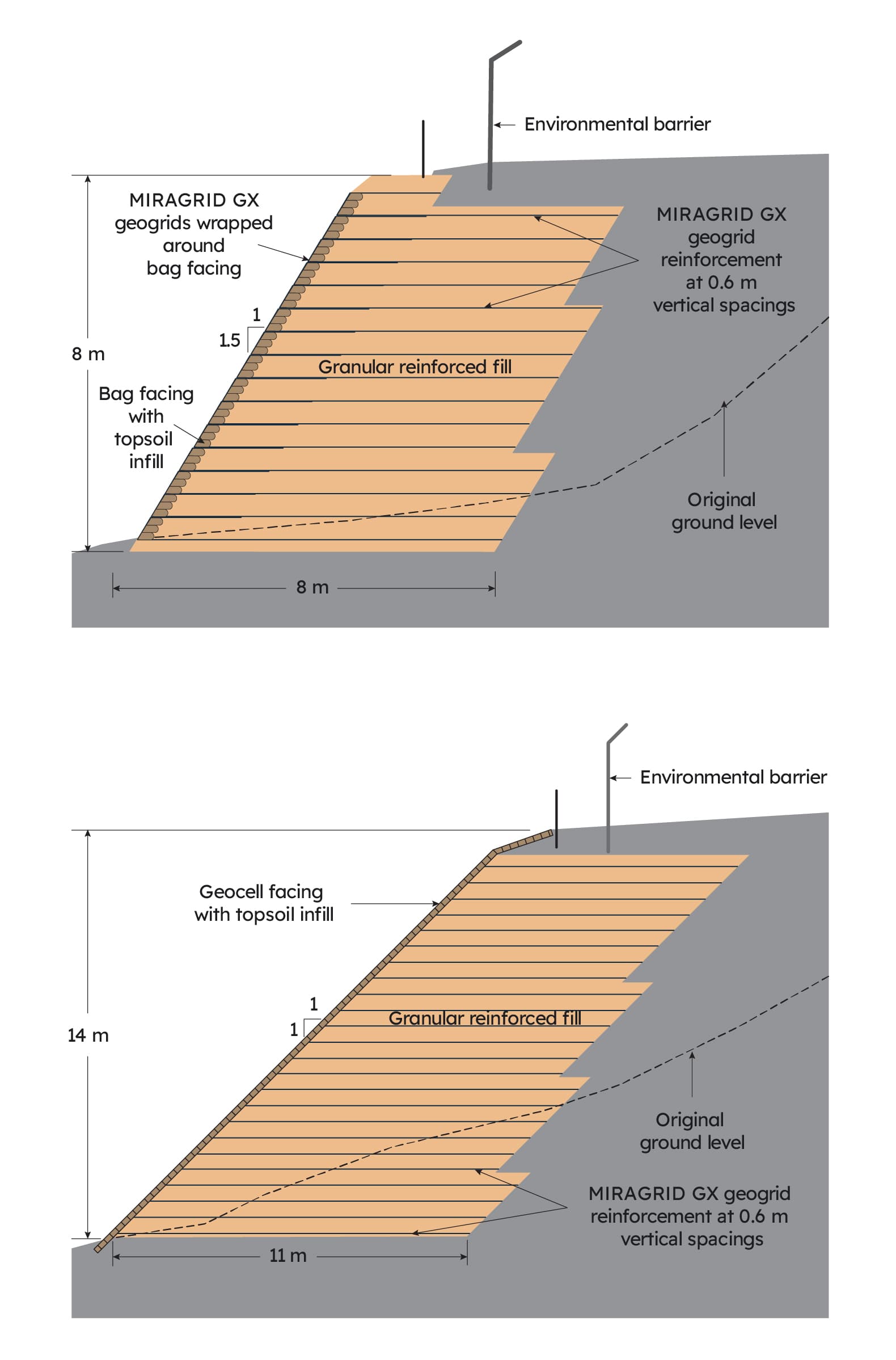
Shallow reinforced fill slopes At specific locations along the length of the highway earthworks embankments shallow reinforced fill side slopes were constructed at slope angles of 1V:1.5H or 1V:1H depending on the slope requirements. These fill slopes were constructed up to 15 m in height depending on the earthworks geometry. The foundations for the reinforced fill slopes were prepared by top soil stripping, excavation and proof rolling. Any soft spots were removed and replaced with compacted general fill.

Solution

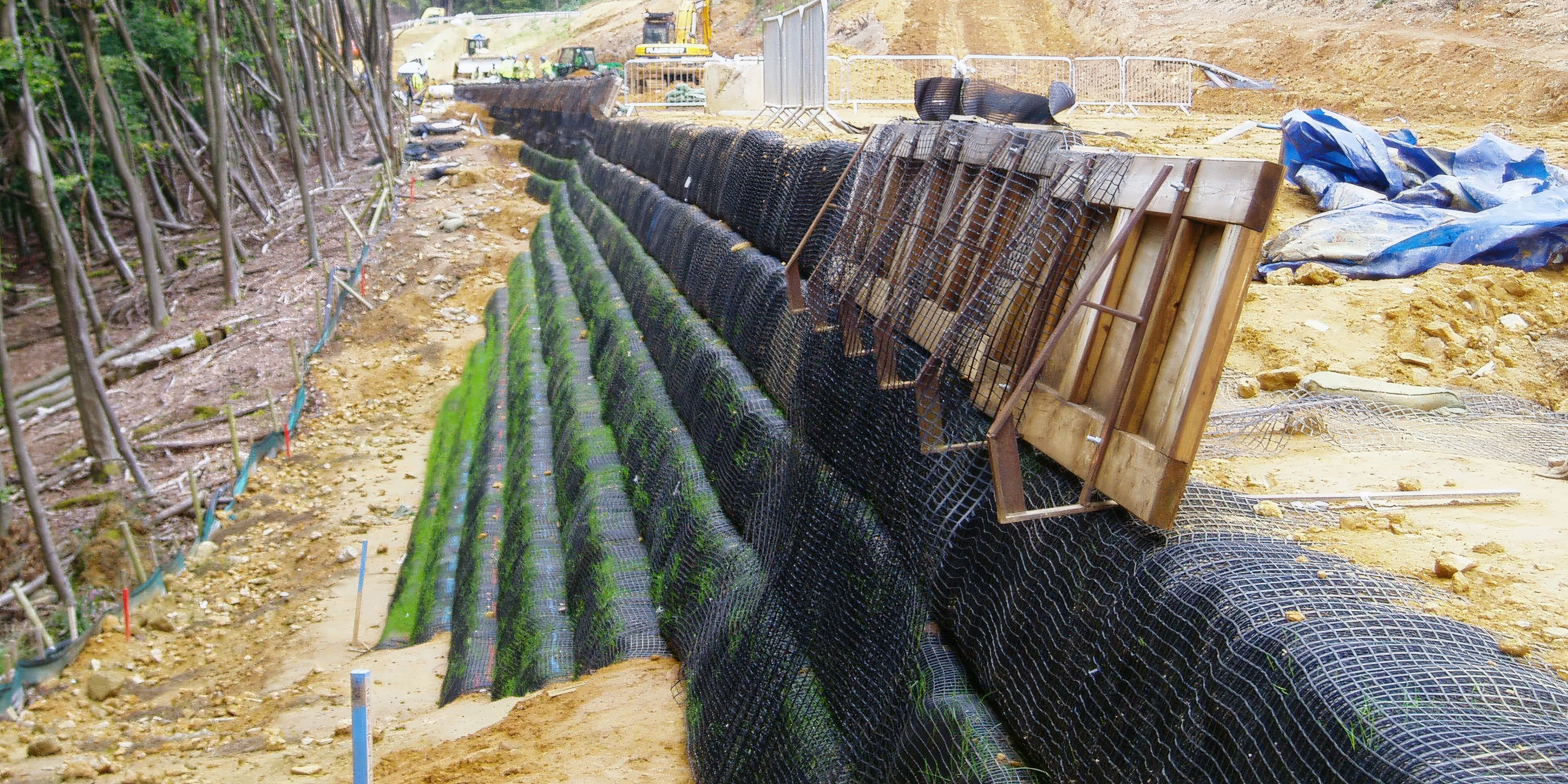
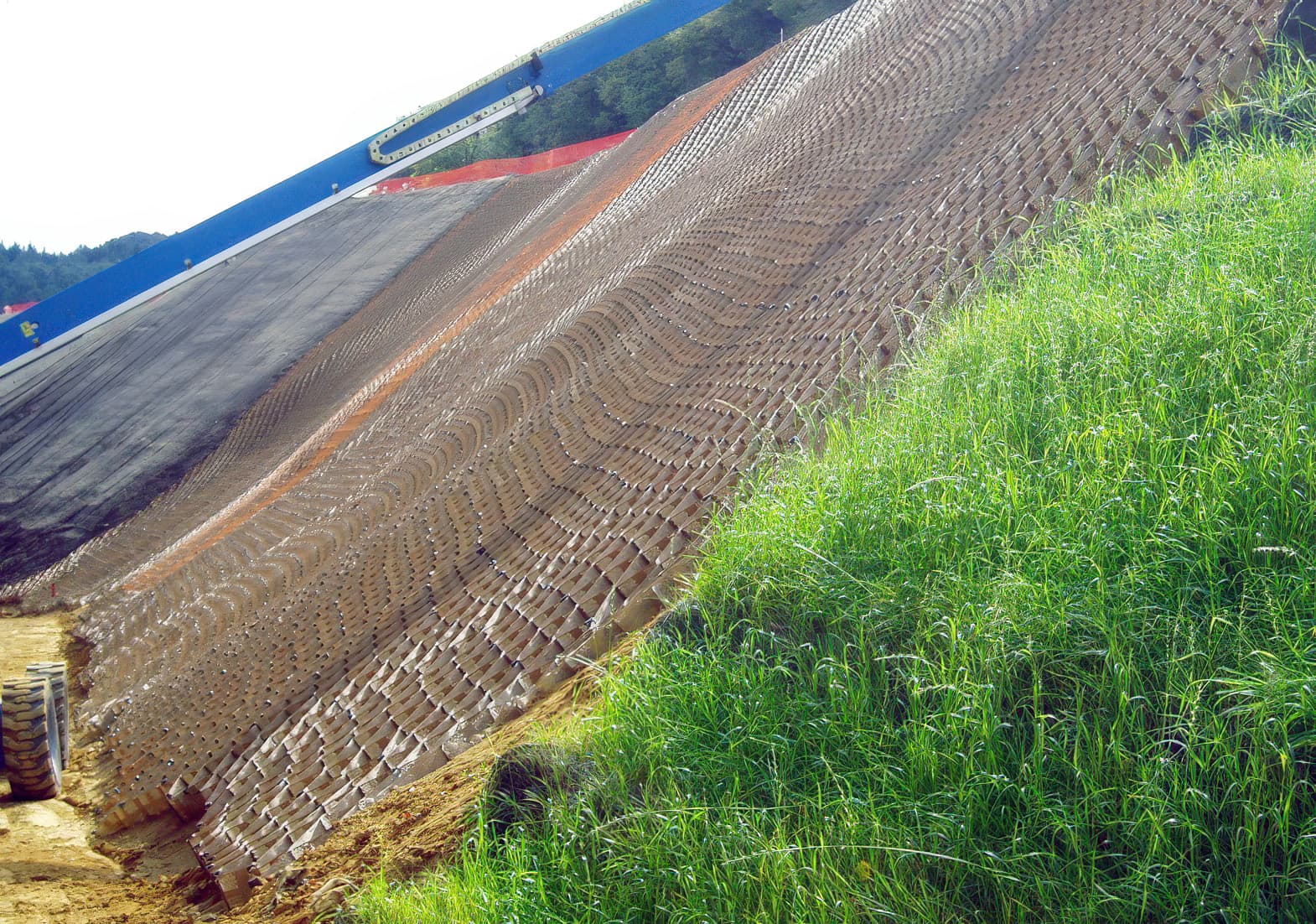
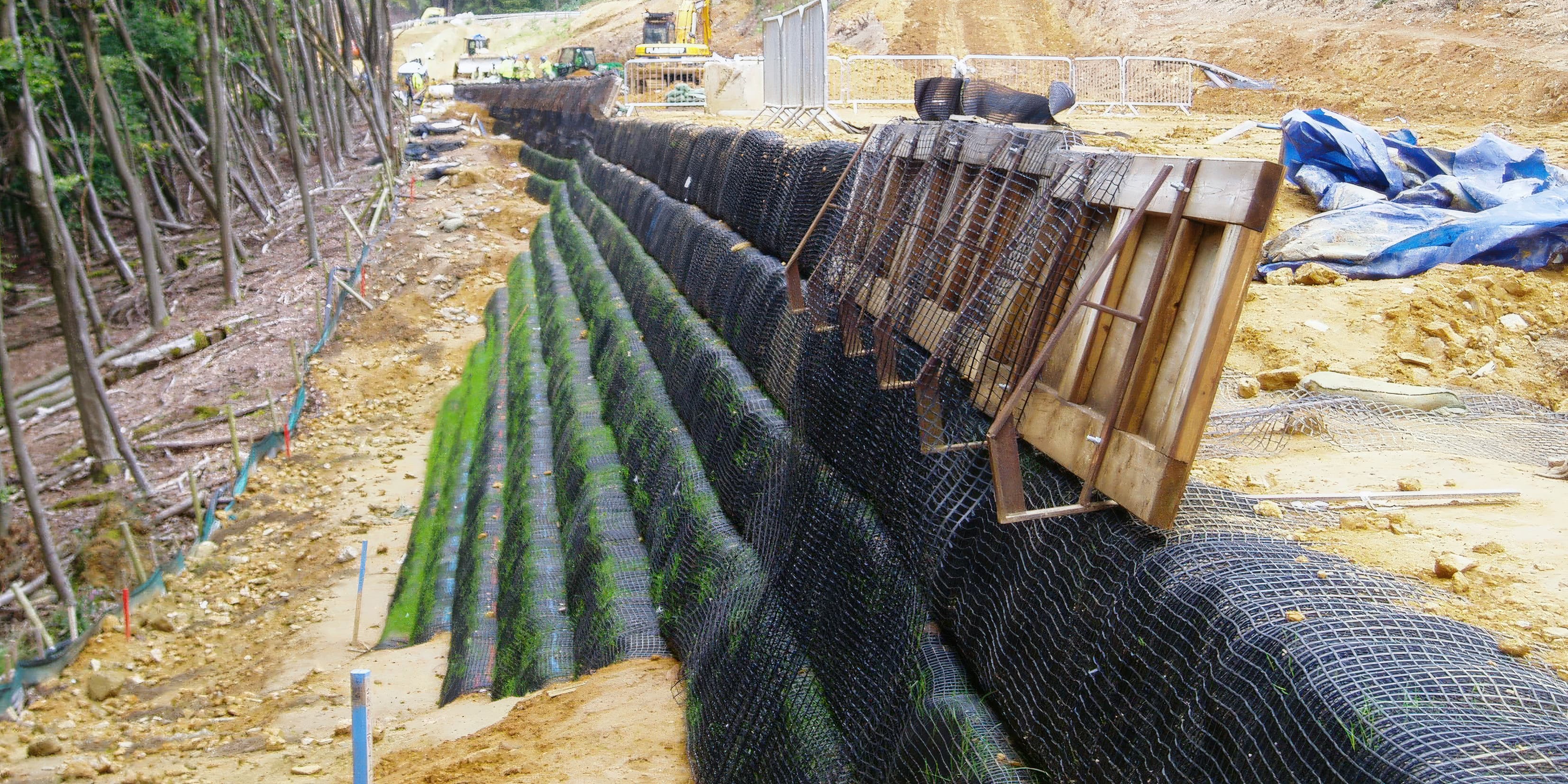
The reinforced fill slopes were constructed using granular fill reinforced with MIRAGRID® GX geogrid reinforcements. The reinforced fill had to meet specific grading and durability requirements, and was placed and compacted according to specification. The MIRAGRID GX geogrid reinforcement was placed at 0.6 m vertical spacings in the reinforced fill extending from the rear of the reinforced fill to the slope face where it was truncated. Depending on the height of the reinforced slopes, up to four different strengths of MIRAGRID GX geogrid reinforcement was used. These were 35 kN/m (near the top of the slope), 55 kN/m, 80 kN/m and 110 kN/m strengths. The slope facing consisted of a 200 mm deep geocell containing topsoil infill. The geocell was placed down the slope face and fixed to the reinforced soil slope surface by means of galvanized steel anchor pins of 750 mm in length. The topsoil was seeded and then placed within the geocell structure. Steep reinforced fill slopes At other locations along the length of the highway earthworks embankments steep reinforced fill side slopes were constructed at a slope angle of 1.5V:1H. These fill slopes were constructed up to 9 m in height depending on the earthworks geometry. The foundations for the steep reinforced fill slopes were prepared in the same manner as for the shallow reinforced fill slopes to provide a firm, stable foundation platform. The steep reinforced fill slopes were constructed using compacted granular fill with MIRAGRID GX geogrid reinforcement placed at 0.6 m vertical spacings. The tensile strengths of the MIRAGRID GX geogrid grades used varied from 35 kN/m to 110 kN/m depending on the location in the slope and the slope height. The facing of the steep reinforced slopes consisted of the layers of MIRAGRID GX geogrid reinforcement wrapped around hessian bags filled with seeded topsoil. The MIRAGRID GX geogrid was then embedded 1.5 m at the top of each reinforced soil lift. This provided a stable, structural facing for the steep slope, and enabled surface vegetation to grow quickly. To maintain the alignment of the reinforced fill slope face during construction a timber shutter system was used. This shutter system enabled the hessian bag facing to be easily placed along with the MIRAGRID GX geogrid wrap-around to the correct slope angle. It also enabled compaction of the reinforced fill immediately behind the hessian bags without deformation of the slope face.


Explore more case studies

View all