Avalanche protection barrier, Diasbach, Tyrol, Austria
 Avalanche protection barrier, Diasbach, Tyrol, Austria

3 Min read

Share

Avalanche protection barrier, Diasbach, Tyrol, Austria

Overview

Historically, the side of the Diasbach Alp in the Tyrol region of Austria had been prone to avalanches during Winter. These avalanches have caused major damage to the resort village of Kappl located in the valley below. A solution had to be found to prevent this problem from recurring in the future. Avalanche protection systems are complicated by their high altitude location and the difficult terrain in which they must be engineered.

Challenge

Primary protection measures, such as foresting, are designed to prevent initial avalanche movement. Secondary protection measures, such as dykes and retaining walls constructed across the path and/or along the peripheries of avalanche movements, are designed to withstand the forces of avalanches with the aim of restricting, splitting and/or deviating the already moving mass. Secondary protection barriers can be constructed quickly provided the proposed site is accessible to construction equipment.

Solution

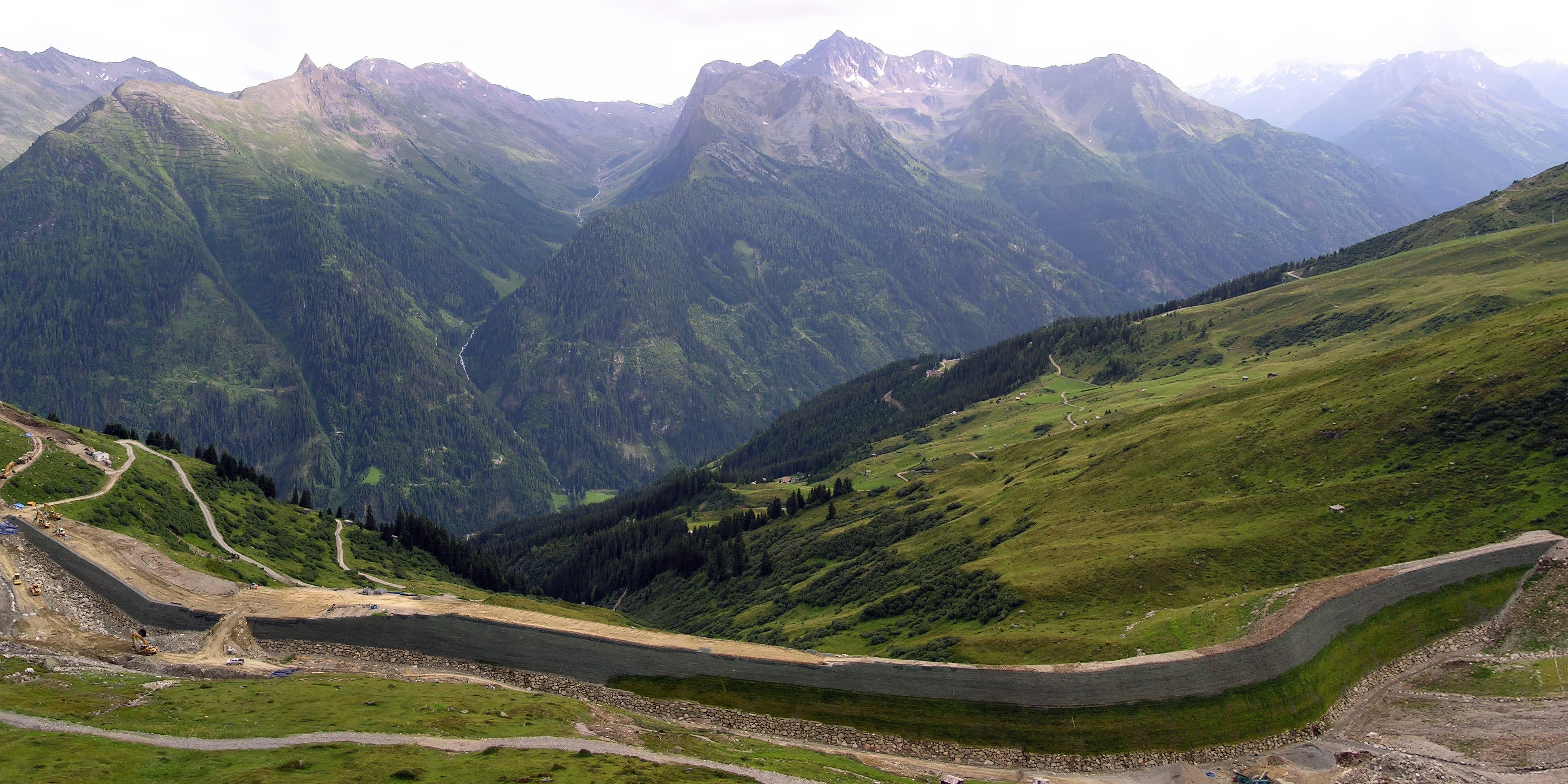
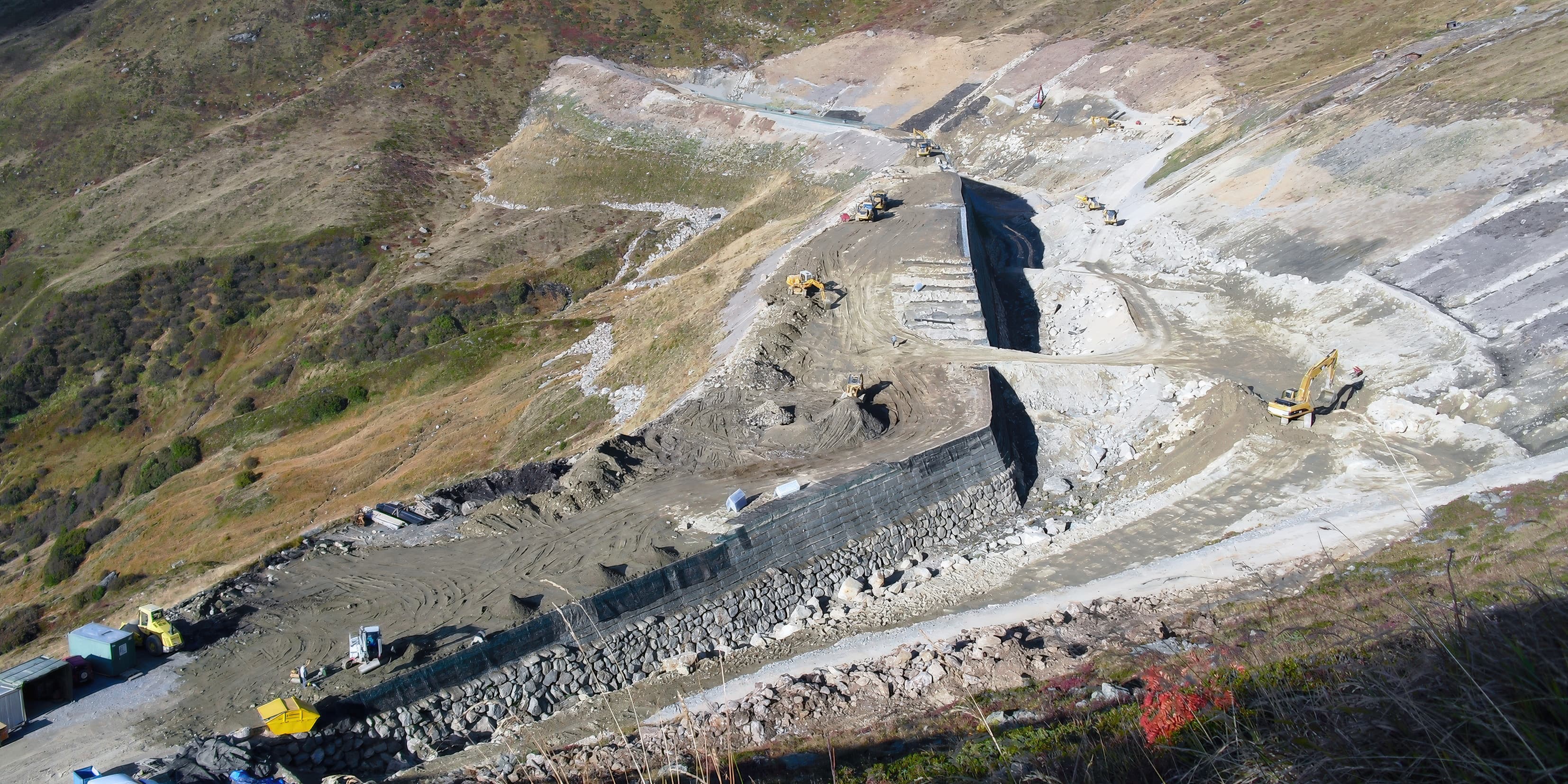
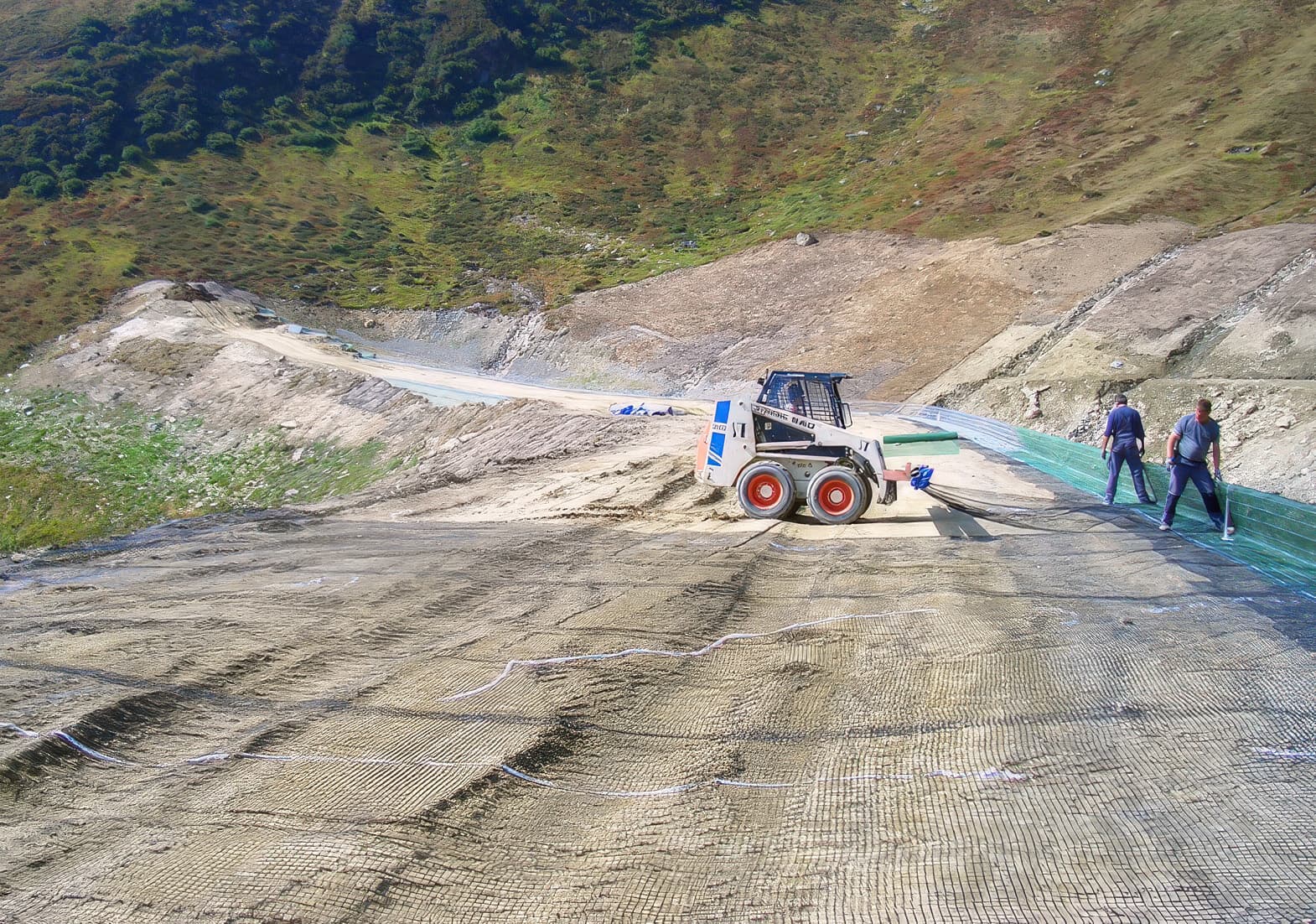
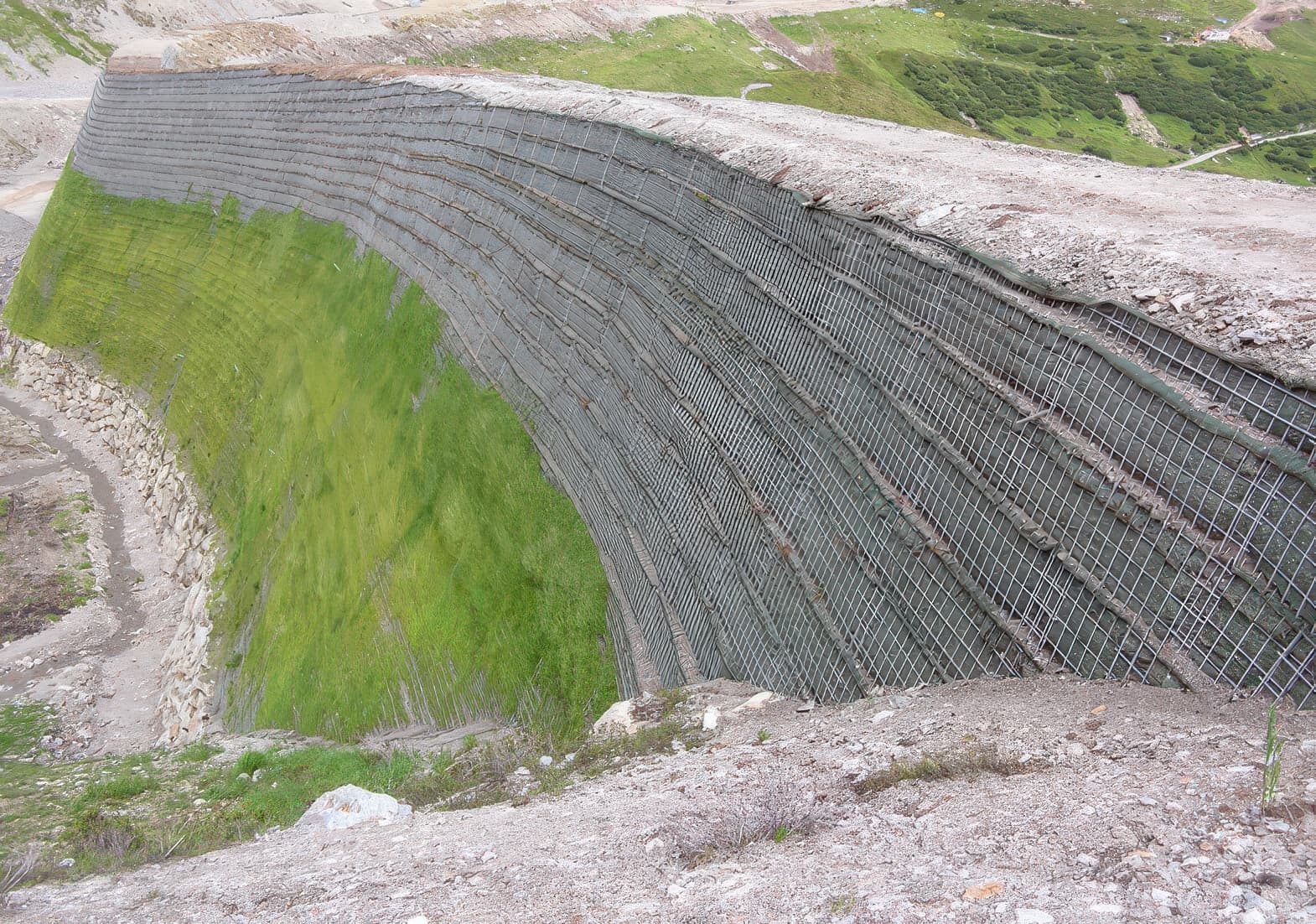
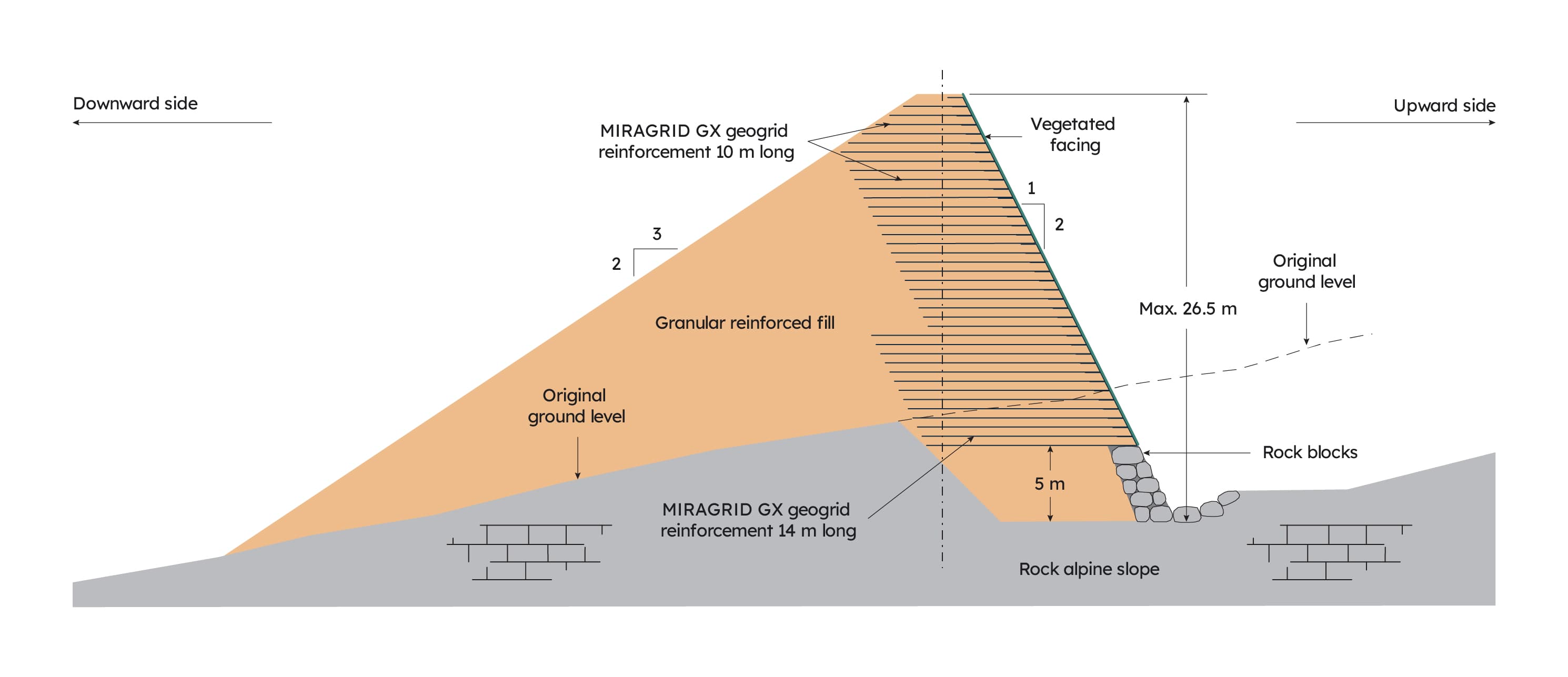
To contain future snow, ice and debris slides and direct them away from the resort village of Kappl below, it was decided to construct a large avalanche protection barrier across the side of the Diasbach alp. This option was considered to be the only feasible and cost-effective solution. The protection barrier had a total length of 650 m and a maximum height of 26.5 m, making it the largest structure of its type in Austria. The upward side of the barrier is reinforced at a slope of 2V:1H while the downward side is a natural slope of 2V:3H. The construction of the barrier was carried out during the Summer months only (June to September) over a 4 year period. The first 5 m in height of the barrier was constructed using rock blocks in order to provide a stable foundation and adequate resistance and hydraulic conductivity for the large water flows emanating from the snow melt and passing along the barrier during the Spring thaw seasons. The 0.5 m high steel mesh facings coincided with the 0.5 m geogrid vertical spacings. In the lower part of the slope the MIRAGRID® GX geogrid reinforcement extended 14 m into the slope, while in the upper part the geogrid reinforcement extended 10 m into the slope. Inside the steel mesh facing an erosion protection grid made of glass fibers was installed. The role of this glass grid is to protect the soil face from surface erosion until such time as vegetation growth has been established. The glass grid also provides long term local stability to the slope face. Immediately behind the steel mesh and glass grid facing good quality top soil was placed to enable vegetation growth, followed by the placement and compaction of the granular reinforced fill. The granular reinforced fill was obtained locally as part of the avalanche protection barrier earthworks. Because of the high altitude of the site special techniques were adopted, such as improving the durability of the steel mesh facings and using altitude-resistant plant mixtures on the reinforced slope facing. Studies were undertaken to determine the best type of vegetation growth that would occur at this altitude. This special type of vegetation was subsequently planted on the face of the reinforced slope.


Explore more case studies

View all