Overview
A section of the A1/N1 dual carriageway between Dundalk and Newry, forming the cross-border link between the Republic of Ireland and Northern Ireland, has recently been constructed. The project was faced with many challenges, one being the crossing of the Flurry bog, a large peat bog combined with very soft silts of almost 1 km in length, with depths ranging up to 9 m. Beneath the peat bog was a firm stratum of gravel overlying rock. The Flurry bog is low-lying, with groundwater levels at ground surface. The area is subject to periodic flooding from the adjacent Salmonid River, and the area resembles more of a wetland than a bog. The peat has limited fiber strength making surface access very difficult, even on foot.
Challenge
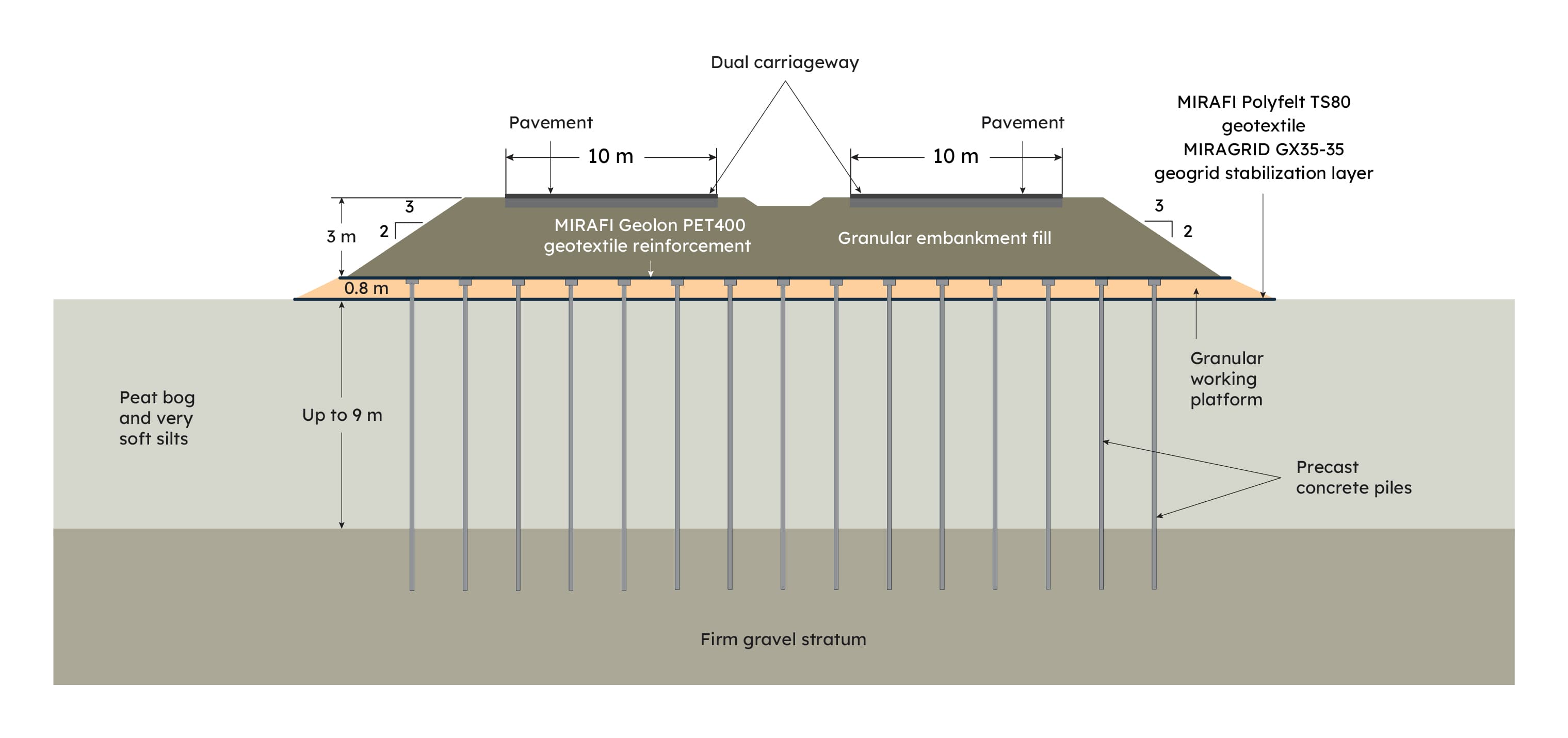
Due to the variable depth of peat along the highway alignment, two different foundation treatments were proposed to construct the dual carriageway embankments. In areas where the peat depth was relatively shallow the peat was excavated and replaced with granular fill. In areas where the peat depth could not economically justify this approach (along a 400 m length), a basal reinforced piled embankment solution was used, with the piles driven into the firm gravel stratum beneath the peat bog. The basal reinforced piled embankment was designed according to BS8006:2010, an internationally recognized design code, with consideration given to the variation in fill height along the length of the piled embankment. Due to alignment constraints, the embankment height approximated 3 m over the pile caps. Because of this low height, it was decided to preload the embankment with 1 m of surcharge in order to pre-strain the basal reinforcement, thereby reducing long-term localized deformations in the embankment.
Solution
The final design incorporated MIRAFI® Geolon PET geotextile reinforcement across the tops of the pile caps. Depending on the embankment height, two different geotextile reinforcement combinations were used. One combination consisted of 600 kN/m longitudinal and 700 kN/m transverse strengths, while the second combination consisted of 700 kN/m longitudinal and 800 kN/m transverse strengths. These strengths were determined based on allowable design loads, strains and required design life.
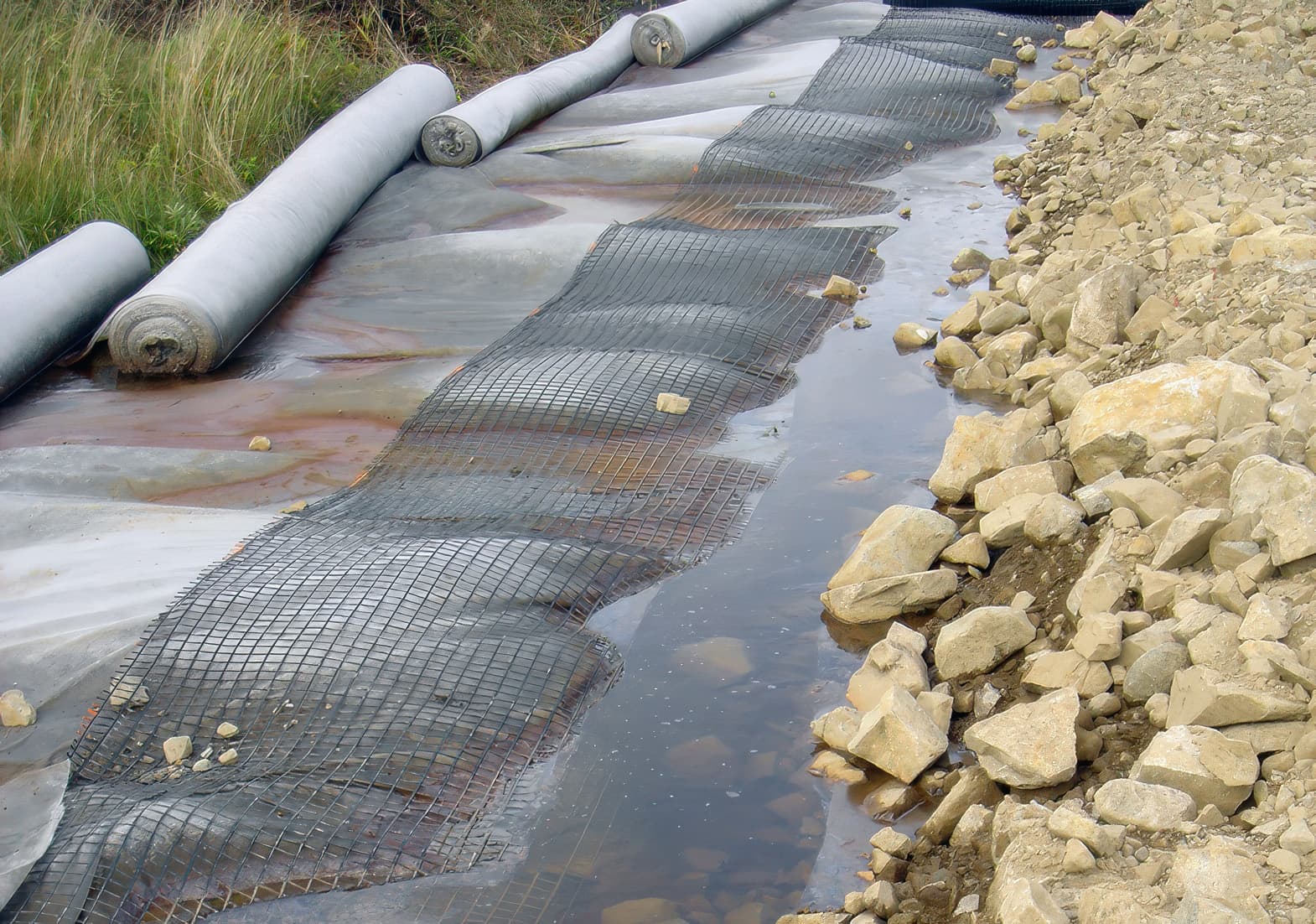
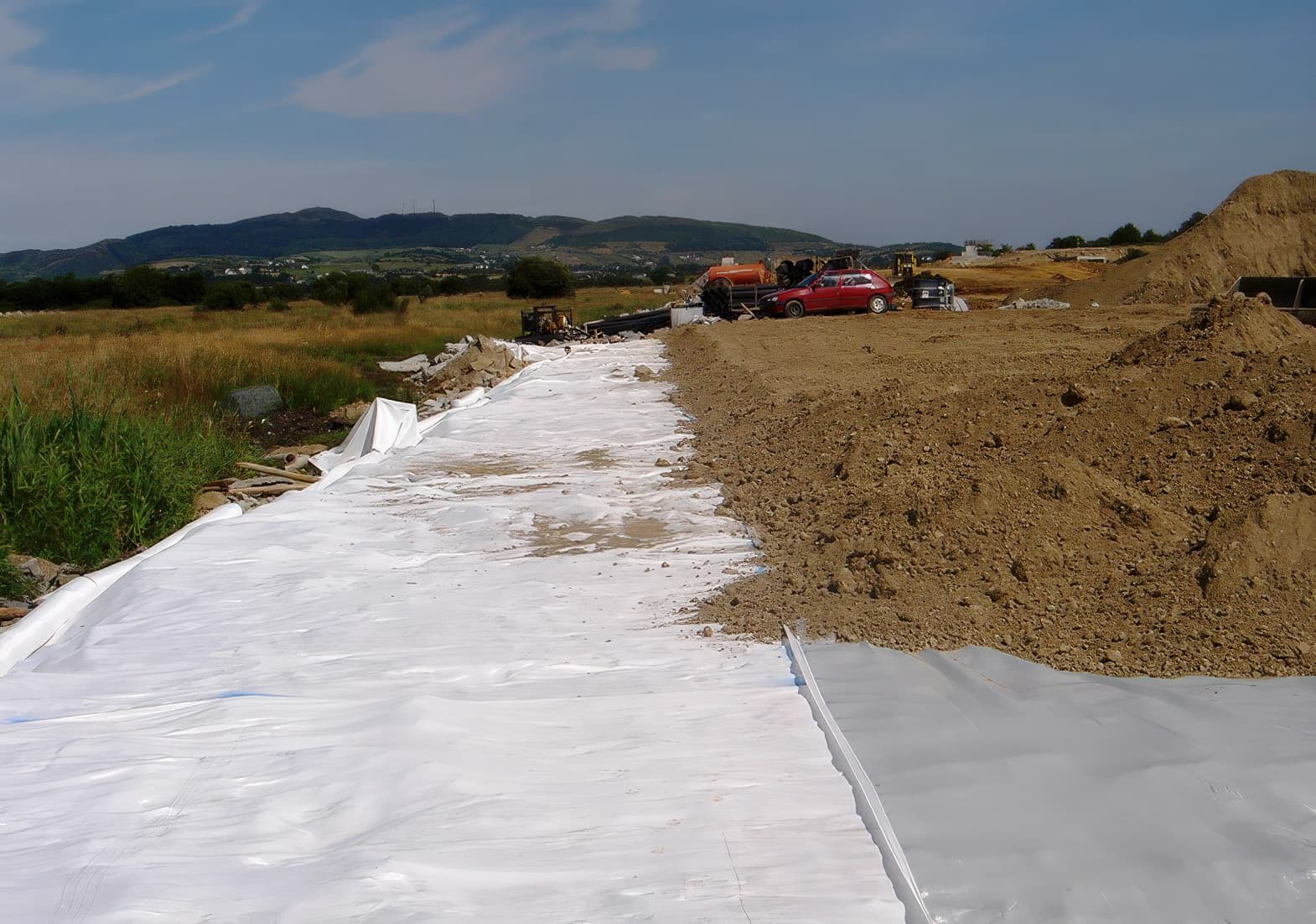
In order to gain access to the site, a working platform needed to be constructed. As the foundation soil was very weak, a MIRAFI Polyfelt TS80 geotextile/MIRAGRID® GX35-35 geogrid stabilization layer was placed in order to construct a reinforced working platform across the base area of the planned piled embankment. The geotextile/geogrid combination provided the strength and stiffness required for stability, allowed quick dissipation of seepage groundwater, and minimized the required thickness (and hence weight) of the working platform.
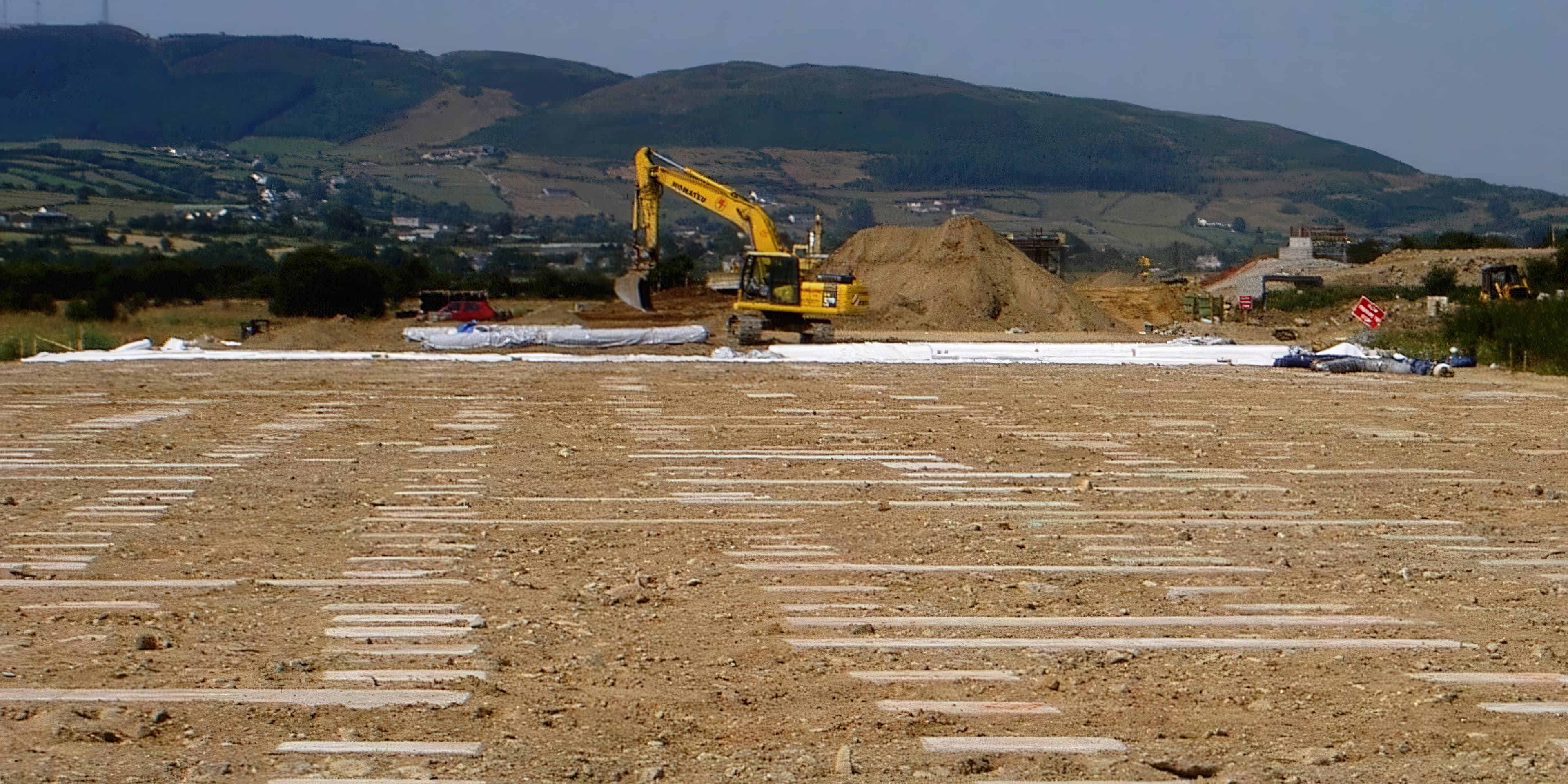
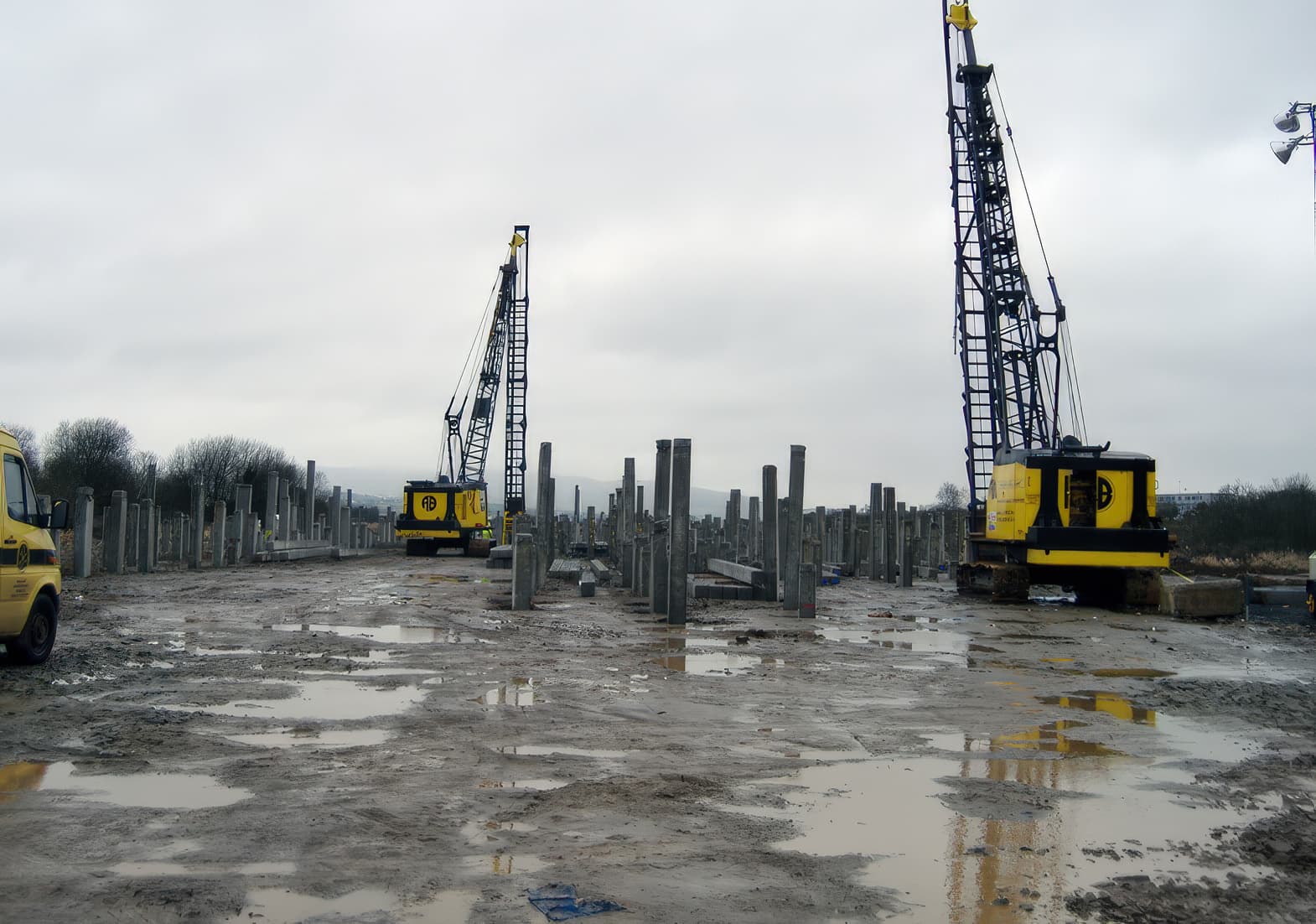
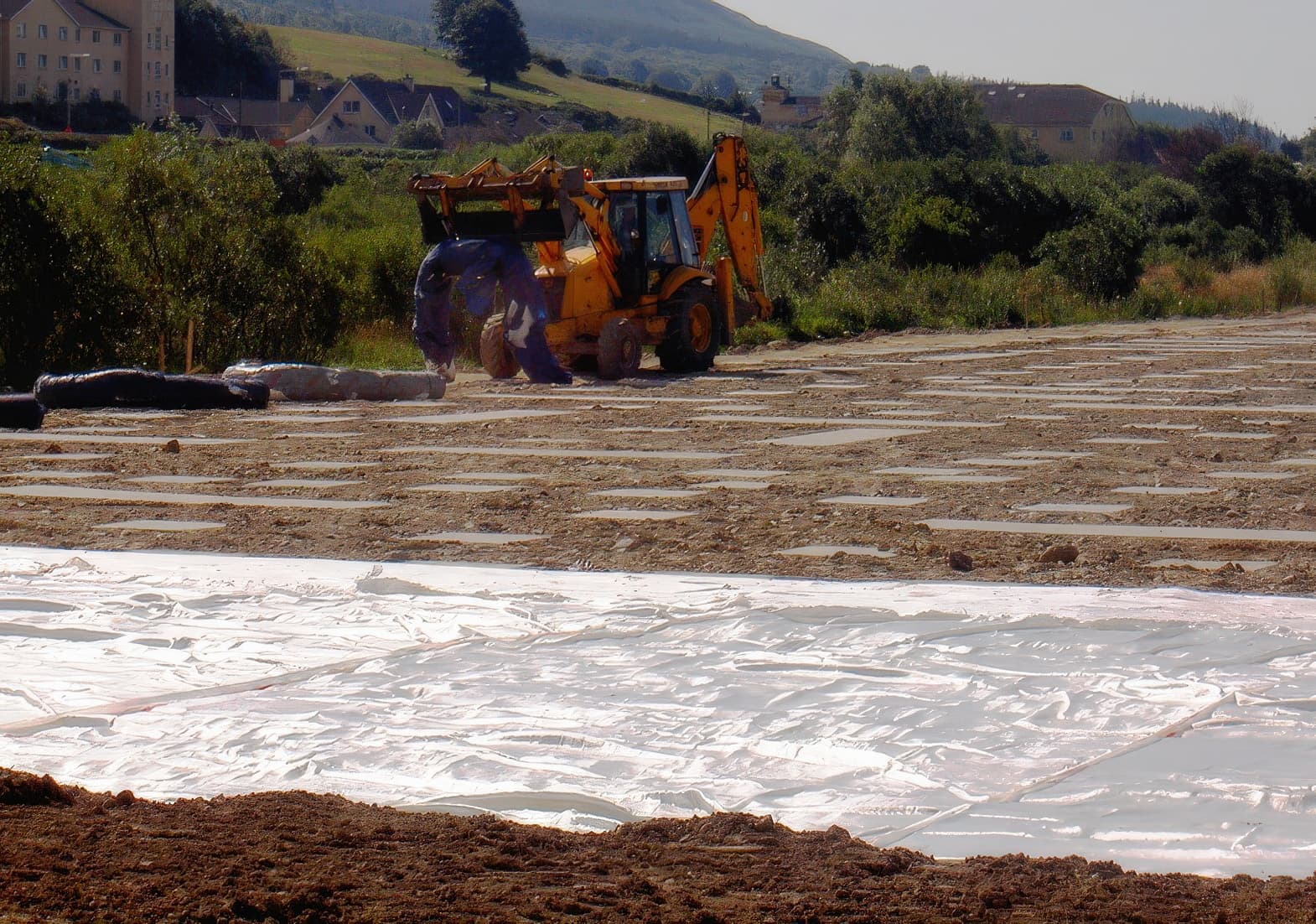
Approximately 2,700 precast concrete piles, spaced on a square 2.5 m grid, were installed for the embankment support. These piles were driven up to 3 m into the firm gravel stratum beneath the peat bog. Pile caps of 0.8 m square were cast on top of the installed piles and then the fill in the working platform was raised to coincide with the top of the pile caps. The appropriate MIRAFI Geolon PET geotextile reinforcement was then laid out across the top of the pile caps with the lower strength material placed longitudinally along the embankment alignment and the higher strength material placed transversely across the embankment alignment. Geotextile joins were made by simple overlap with the overlap amount established in order to meet load transfer requirements.
Granular fill obtained from a cutting further along the highway alignment was used to construct the embankment. This was placed and compacted to meet geometrical and compaction tolerances, including the 1 m surcharge. After 6 months the 1 m surcharge was stripped off and the pavements were constructed.
A comprehensive embankment monitoring program was performed. The results have shown that throughout the monitoring period the surface of the embankment has not settled at all. Settlement recordings at the base of the piled embankment show no settlements on top of the pile caps, with settlements of up to 100 mm on the geotextile reinforcement midway between the pile caps.