Xinfeng MSE landfill expansion, Guangdong Province, China

4 Min read

Share

Xinfeng MSE landfill expansion, Guangdong Province, China

Overview

Guangzhou is the third largest city in China, behind Beijing and Shanghai. With more than 10 million residents, Guangzhou is one of China’s leading manufacturing and commercial centers and generates significant amounts of municipal solid waste (MSW). For many years Guangzhou’s solid waste has mostly been sent to the Xinfeng MSW Landfill for disposal. Xinfeng Landfill is located around 40 km to the Northeast of Guangzhou City center. It currently has a landfill capacity of more than 26 million m3 and is the second largest landfill in China in terms of volume and daily MSW intake. The Xinfeng Landfill was originally developed in 2003 with a design capacity of 19 million m3 based on 3,000 tonnes of MSW daily intake and had a projected collection life of 20 years. However, by 2010 Guangzhou was producing 8,000 tonnes of MSW daily, out of which 7,000 tonnes were sent to Xinfeng Landfill. Today, Xinfeng Landfill still handles on average 75% of the daily MSW generated in Guangzhou City.

Challenge

By 2012 it was clear that Xinfeng Landfill was quickly running out of capacity. There was an urgent need to find a way to increase the capacity of the landfill, without which it would have to stop accepting waste. This would have had drastic consequences for Guangzhou City as other alternative new landfill and incinerator projects were still at the initial planning stage.

Solution

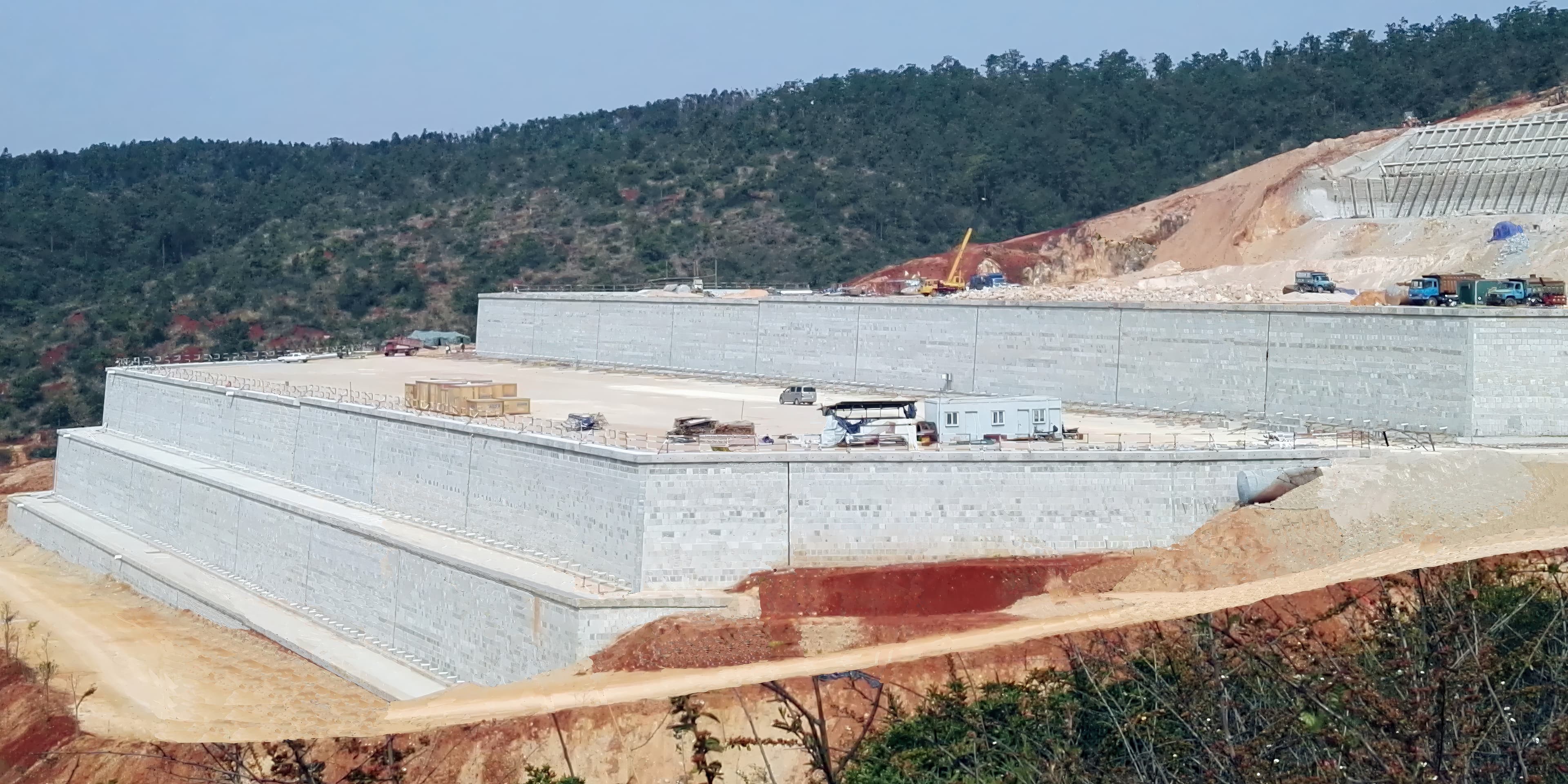
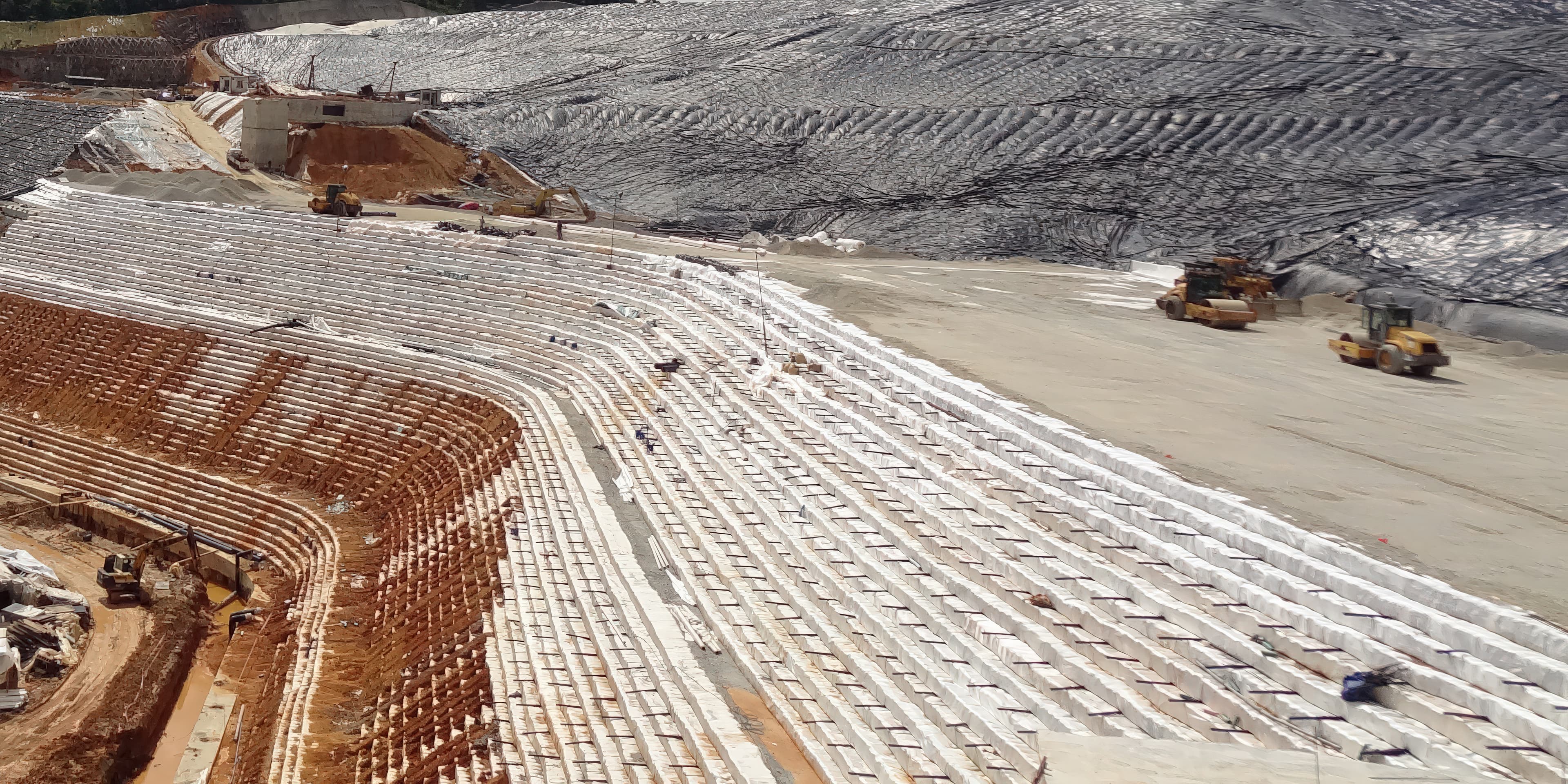
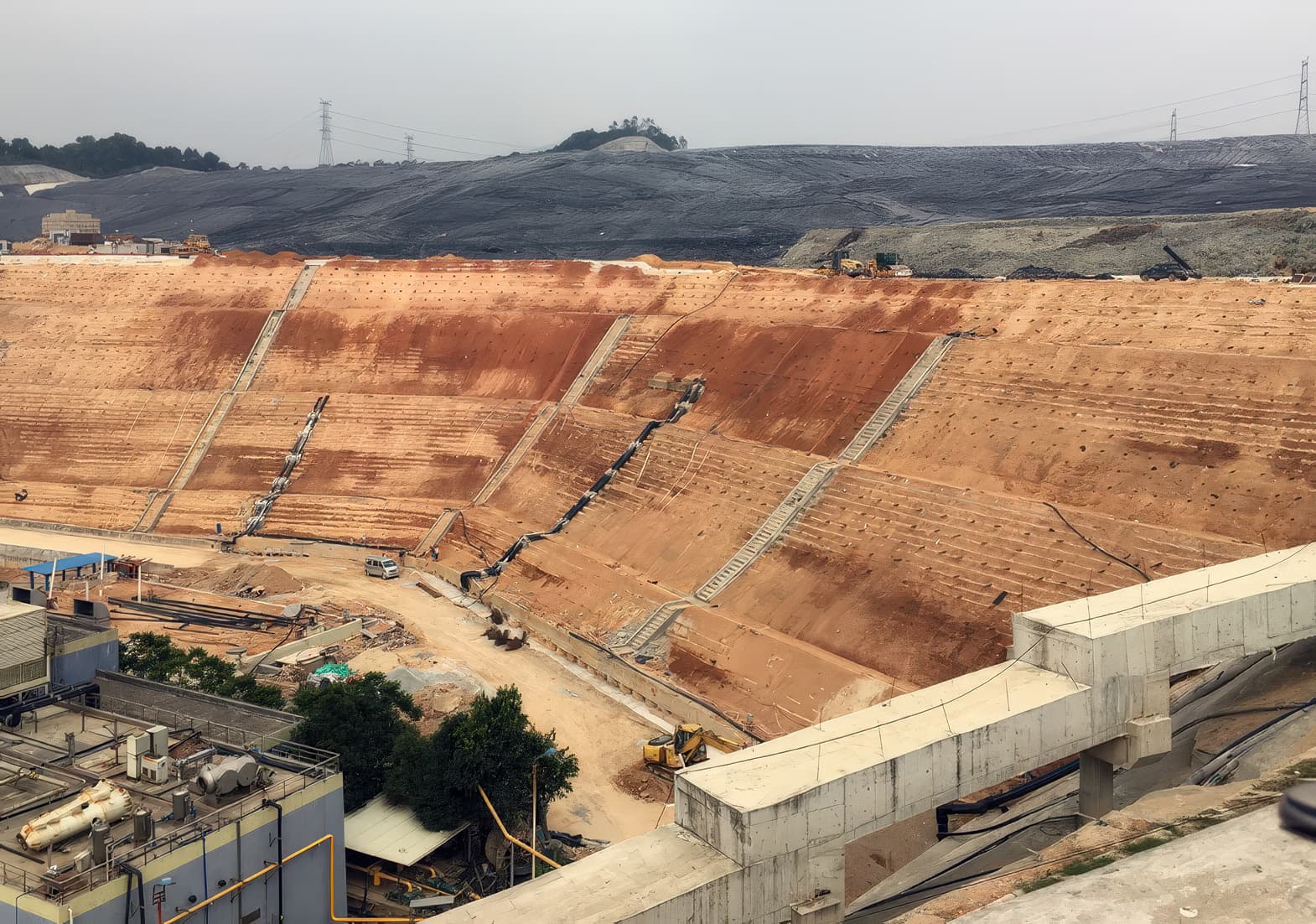
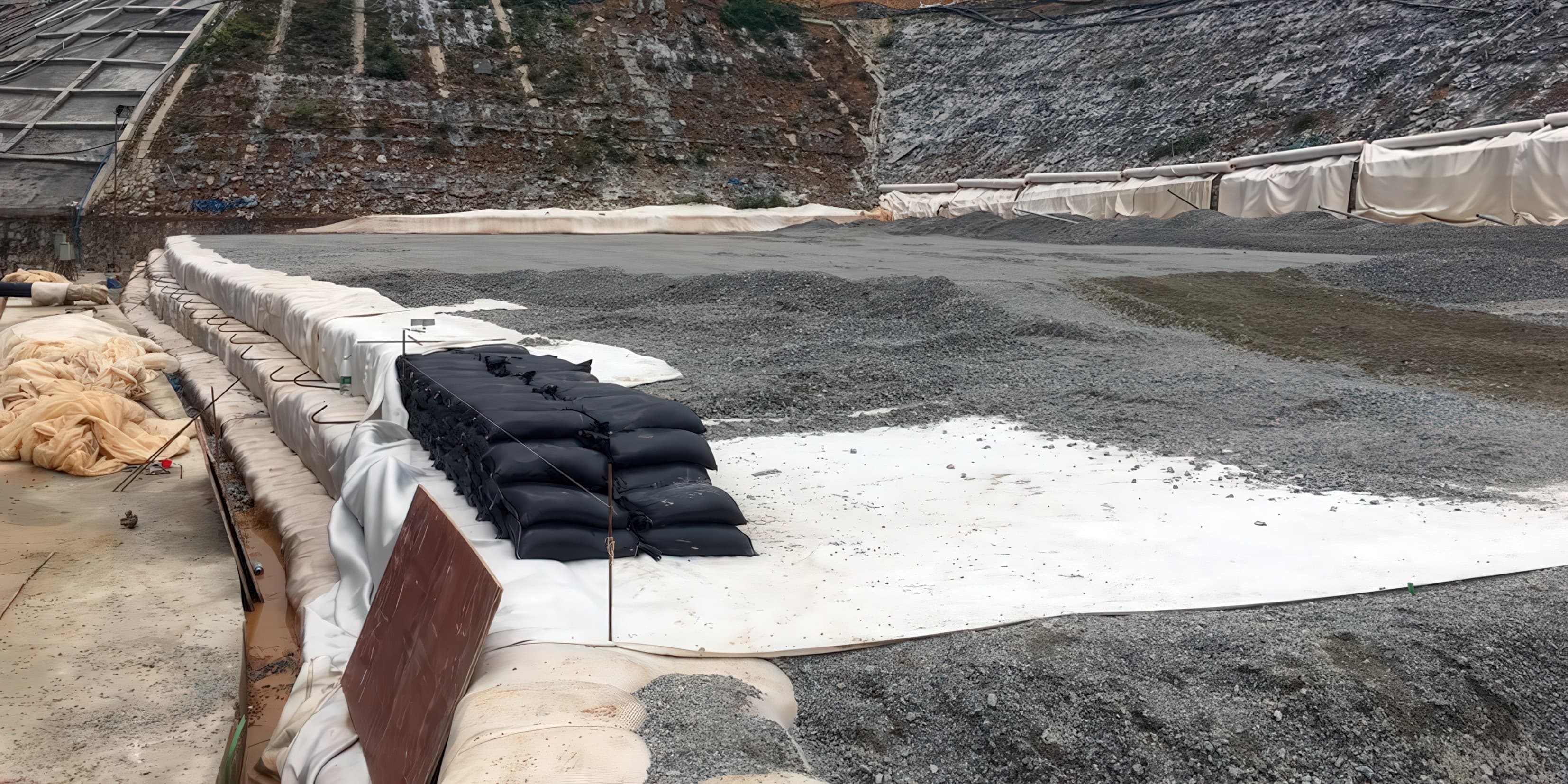
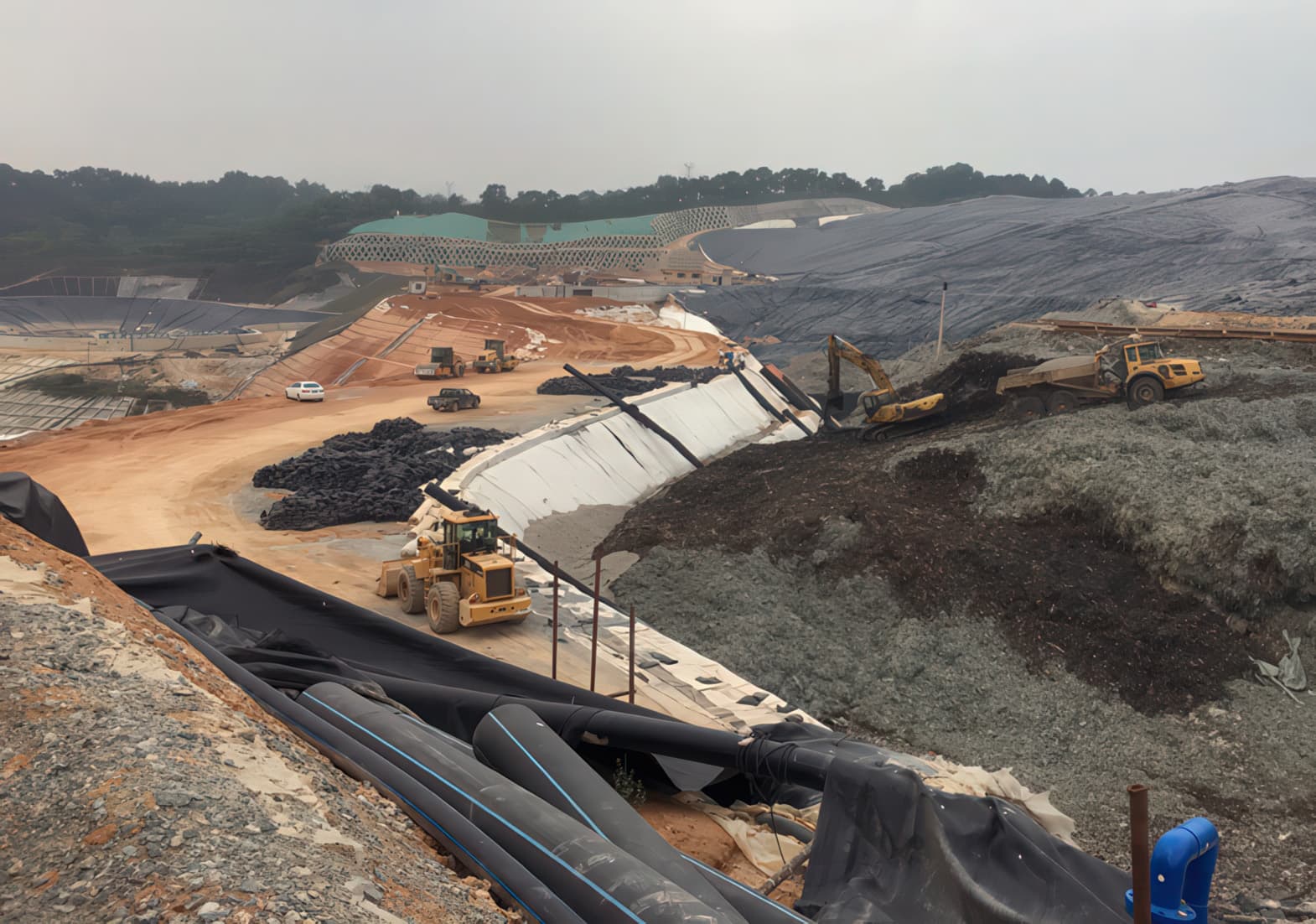
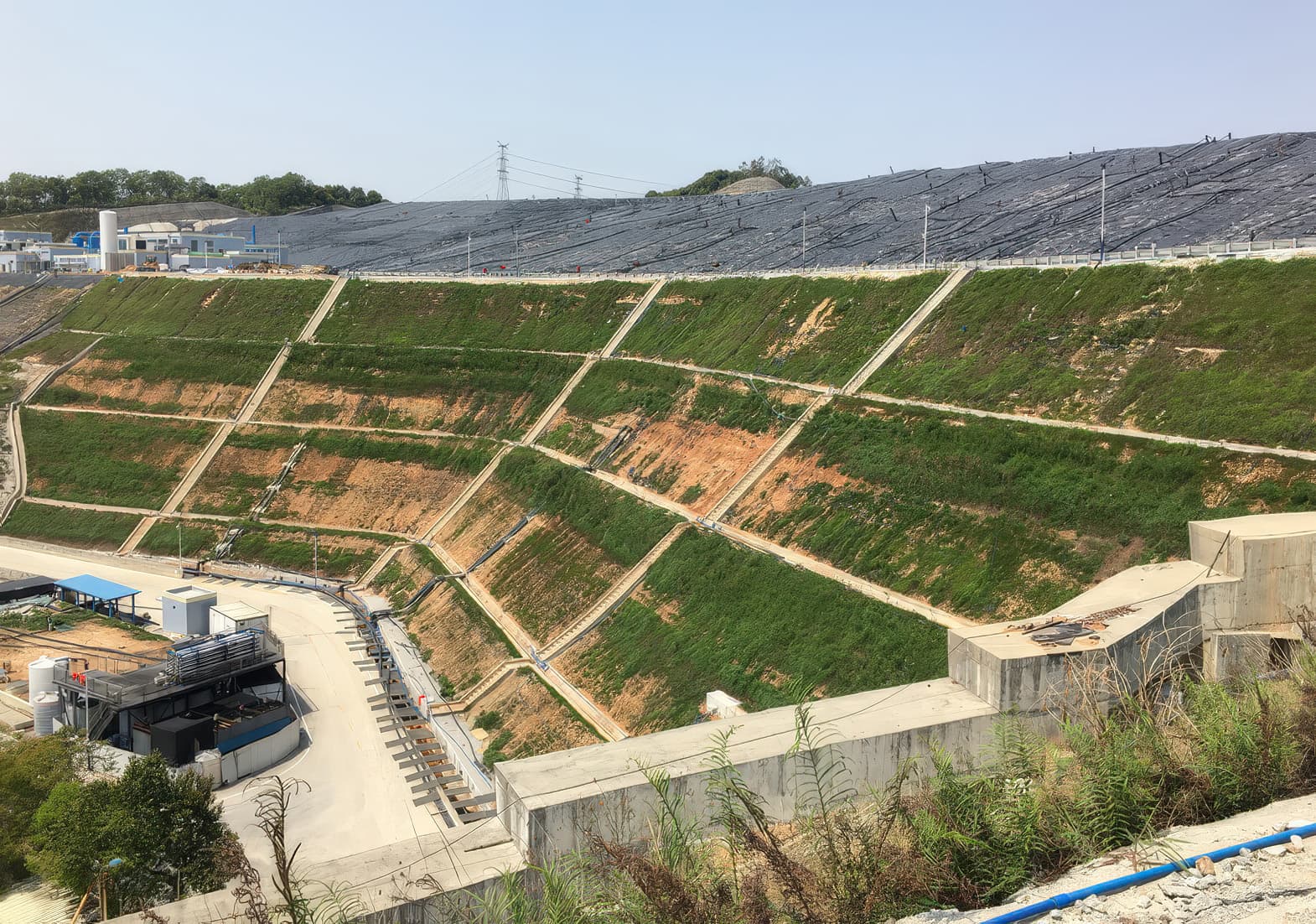
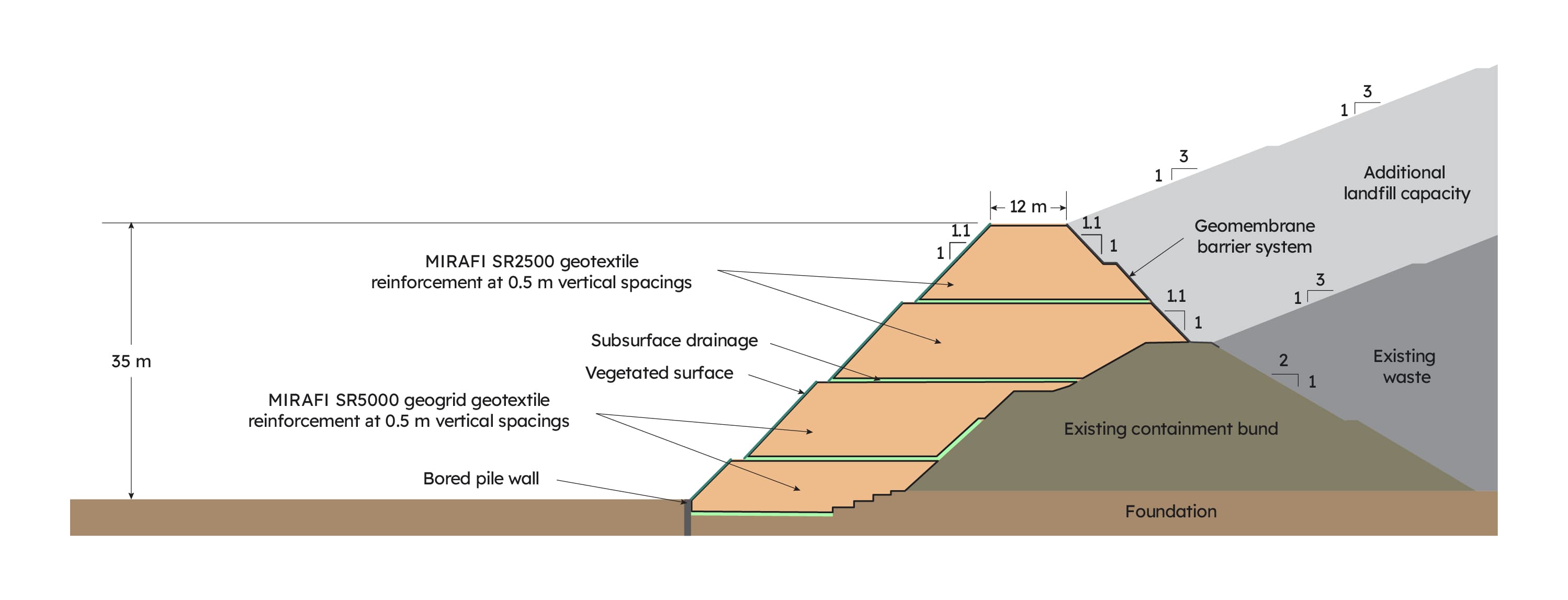
The decision was made to expand the capacity of the Xinfeng Landfill by constructing a 35 m high containment bund of over 300 m in length over the existing containment bund at the Southern end of the landfill. This would expand the MSW capacity by a further 7.5 million m3. Due to site constraints and in order to gain maximum landfill capacity increase, the sides of the new containment bund were designed to a slope angle of about 1:1.1. The Mechanically Stabilized Earth (MSE) technique utilizing geotextile reinforcement layers in the compacted reinforced fill was used to construct the containment bund to this required slope angle. A row of 1.6 m diameter bored piles was designed to act as a shear key at the toe of the new containment bund to provide adequate stability against global failure. The bored piles typically ranged from 18 to 21 m in length. The new containment bund has a maximum height of 35 m (from ground level), with an additional 2 m embedded below ground level. There are 4 MSE tiers in the containment bund, each set back 2 m from the tier below. The top of the containment bund is 12 m wide at the crest. MIRAFI® SR PET geotextile reinforcement was used throughout the reinforced bund because of its good long term performance in reinforced soil structures. MIRAFI SR5000 with an initial tensile strength of 500 kN/m was used at 0.5 m vertical spacings in the bottom two tiers of the bund, while MIRAFI SR2500 with initial tensile strength of 250 kN/m was used at 0.5 m vertical spacings in the upper two tiers. The reinforcement layers were continued for the full width of the bund. At both sides of the bund the geotextile reinforcement was wrapped around soil bags and extended back into the bund fill by 2 m. At the base of each of the tiers a subsurface drainage blanket was constructed to enable easy exit of any seepage water. This consisted of a geotextile filter encapsulating granular drainage material. Once the reinforced fill and geotextile reinforcement placement had been completed a geomembrane barrier system was installed on the inner side of the MSE bund. This barrier system connected into the existing side slope barrier system against the existing bund and continued up to the top of the new MSE bund. On the outer slope of the MSE bund a topsoil layer was placed over the MIRAFI SR geotextile reinforcement wrapped facing and this was held in place by an erosion control mat that was fixed to the reinforced slope by means of steel pins anchored into the reinforced fill. This topsoil layer was then vegetated.


Explore more case studies

View all