Road widening, Chiangmai, Thailand

4 Min read

Share

Road widening, Chiangmai, Thailand

Overview

Chiangmai is the major city of Northern Thailand. Wat Phrathat (or Phrathat Temple) is Chiangmai’s most famous Buddhist temple and a major tourist attraction. It is located 17 km from Chiangmai in hilly terrain along Srivichai Road, which was first built in 1935. This is a steep road that aligns with the surrounding hilly terrain. Over the last few years the road has been upgraded and widened to cater for increased traffic and improved road safety standards. Specific locations along the route required specialist geotechnical solutions, including reinforced soil technology, to execute road widening works due to the rugged terrain. One section involved the straightening of the existing road alignment.

Challenge

The most important constraint for the design was that the road had to remain open as this road was the principal access from Chiangmai to Wat Phrathat as well as to Phu Ping Palace and beyond. Prior to construction, various geotechnical options were evaluated. It was deemed impractical to widen the road by cutting back into the upslope. The only practical way was to widen the carriageway in the direction of the downslope.

Solution

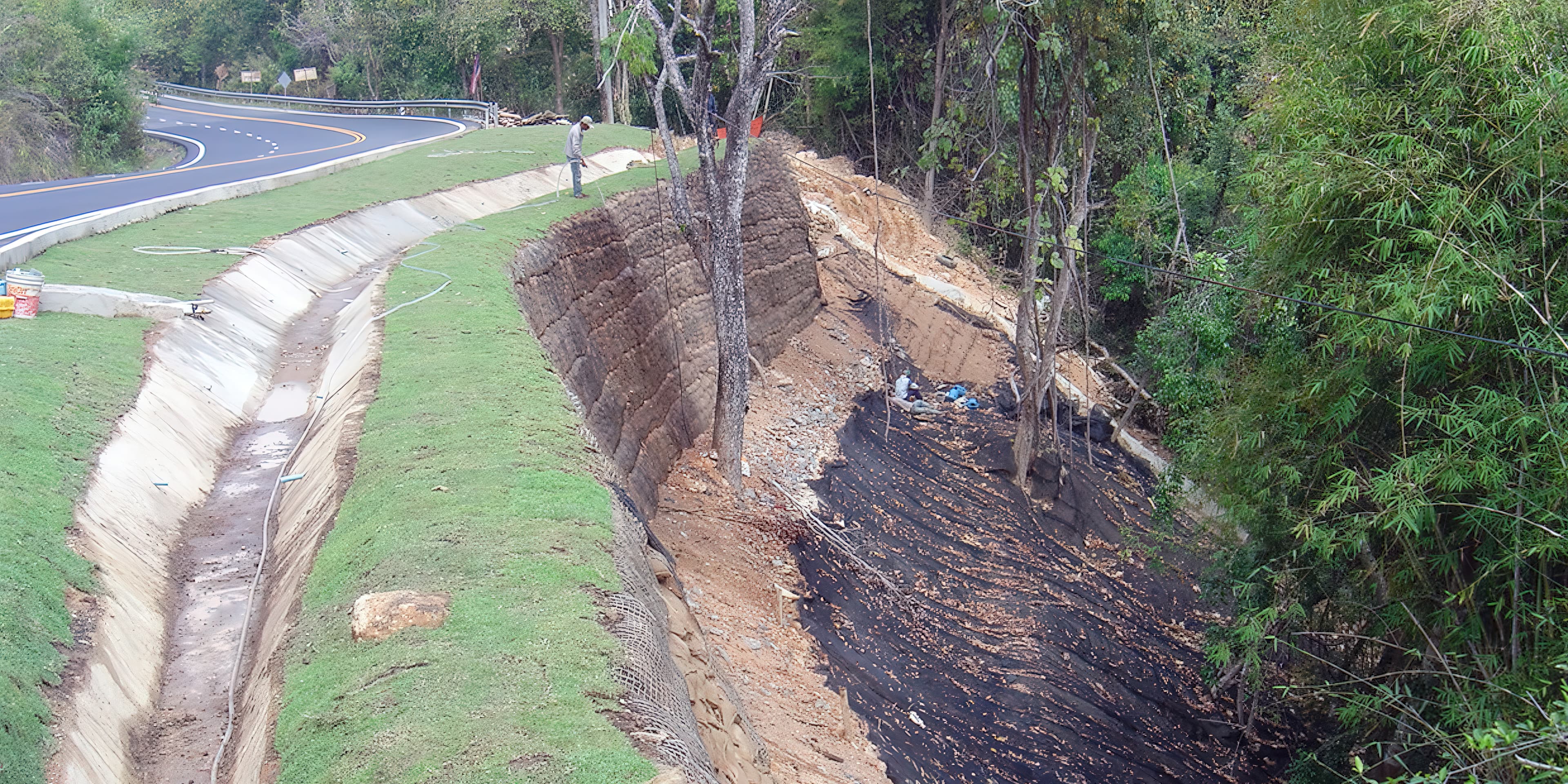
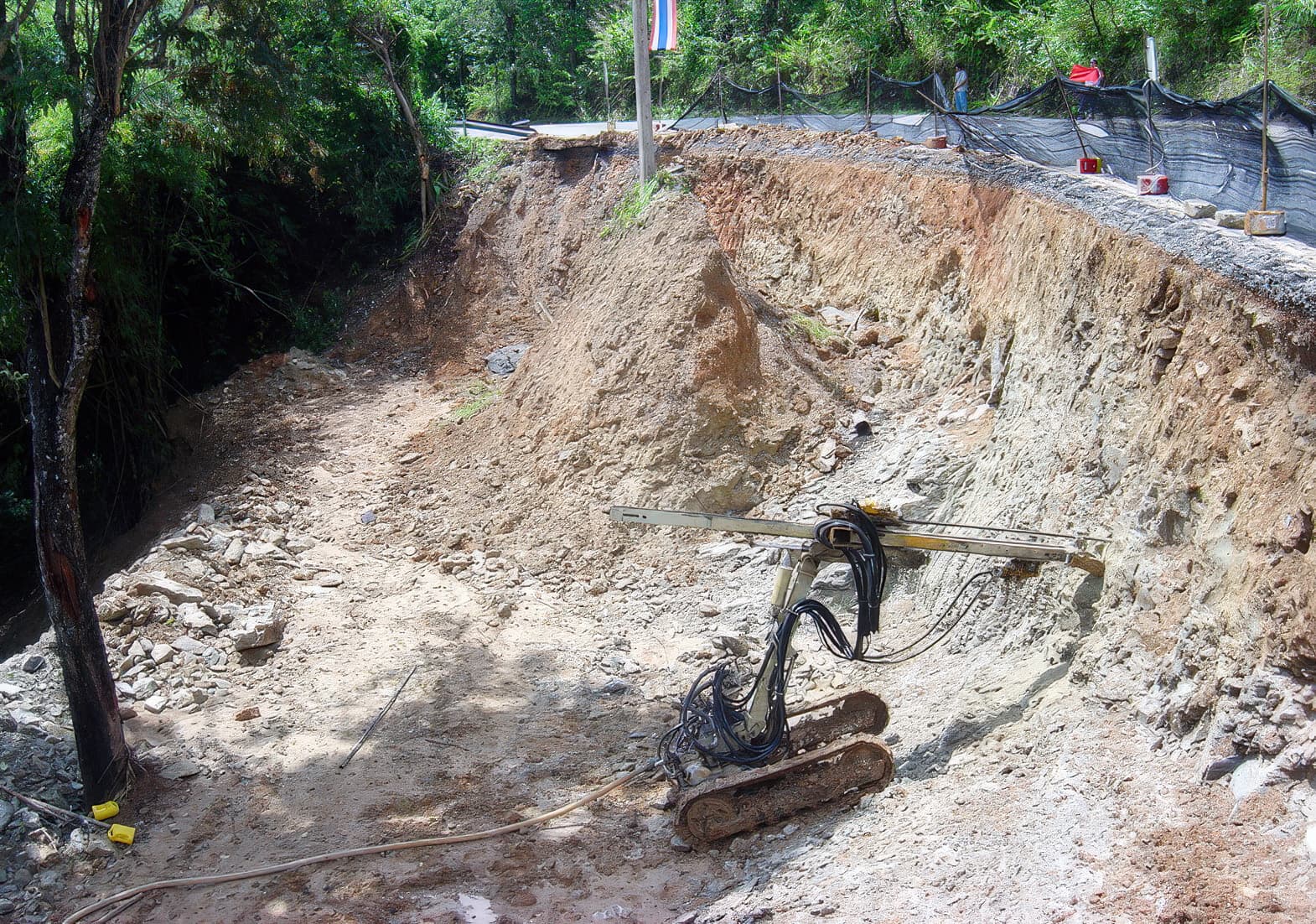
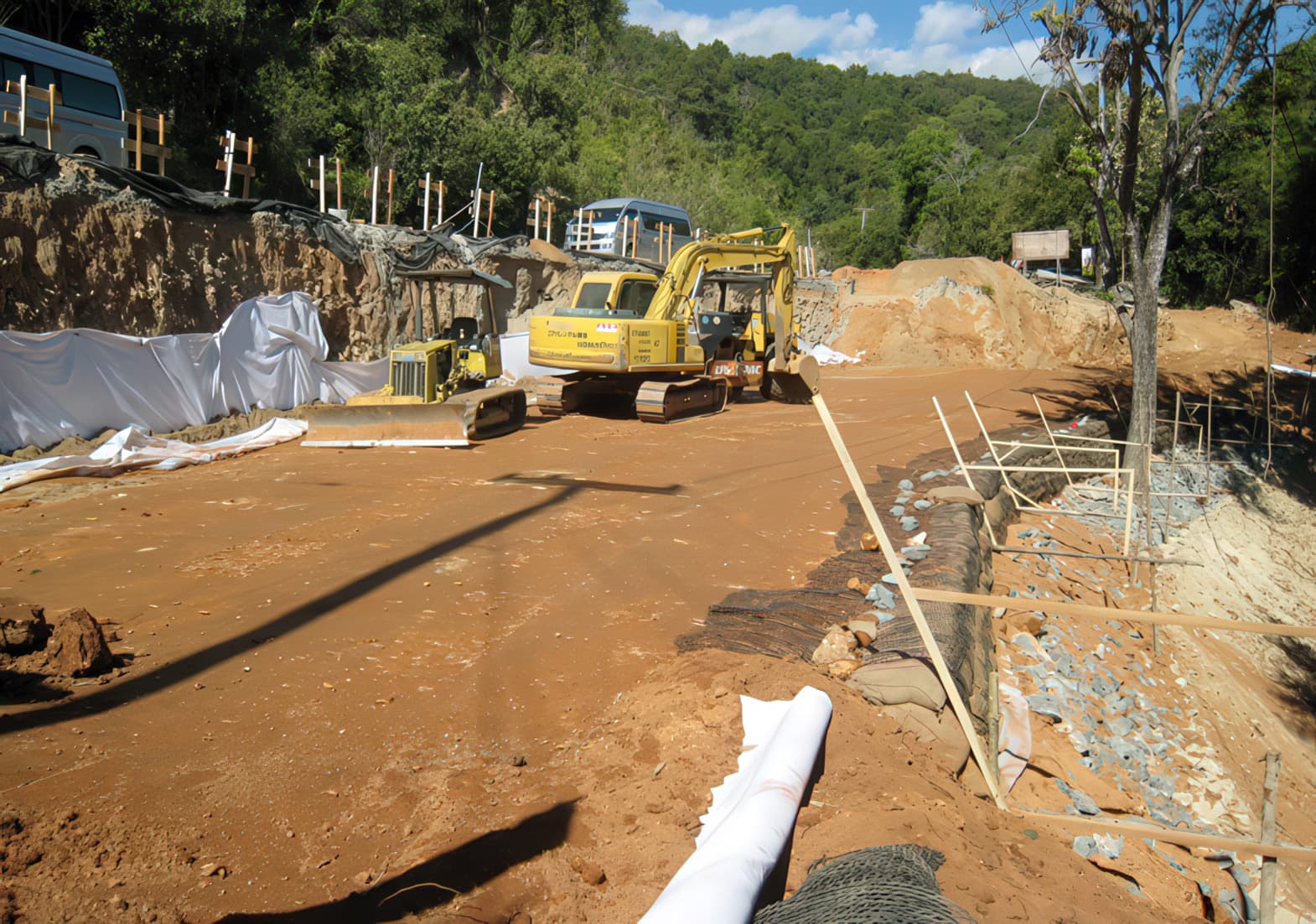
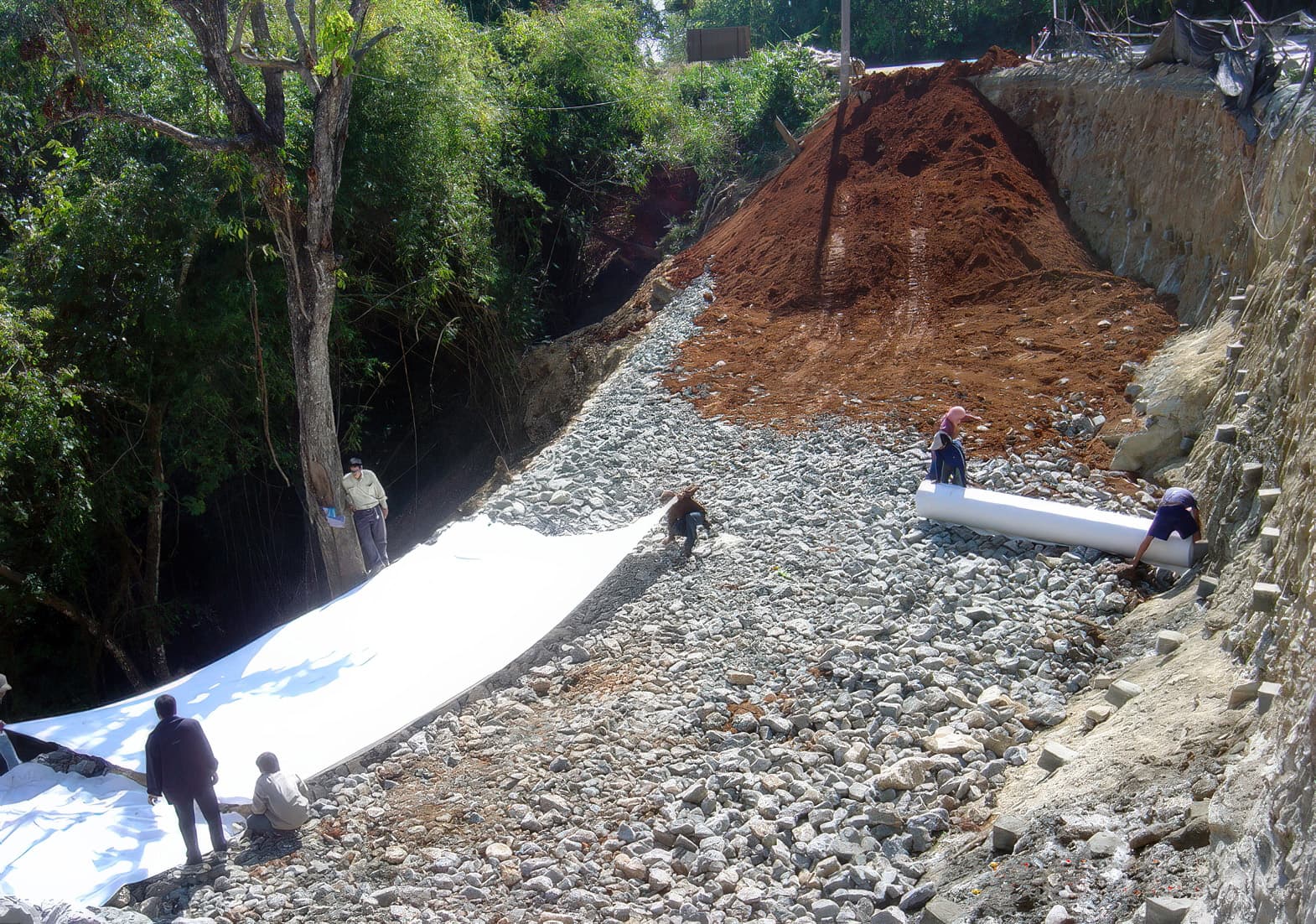
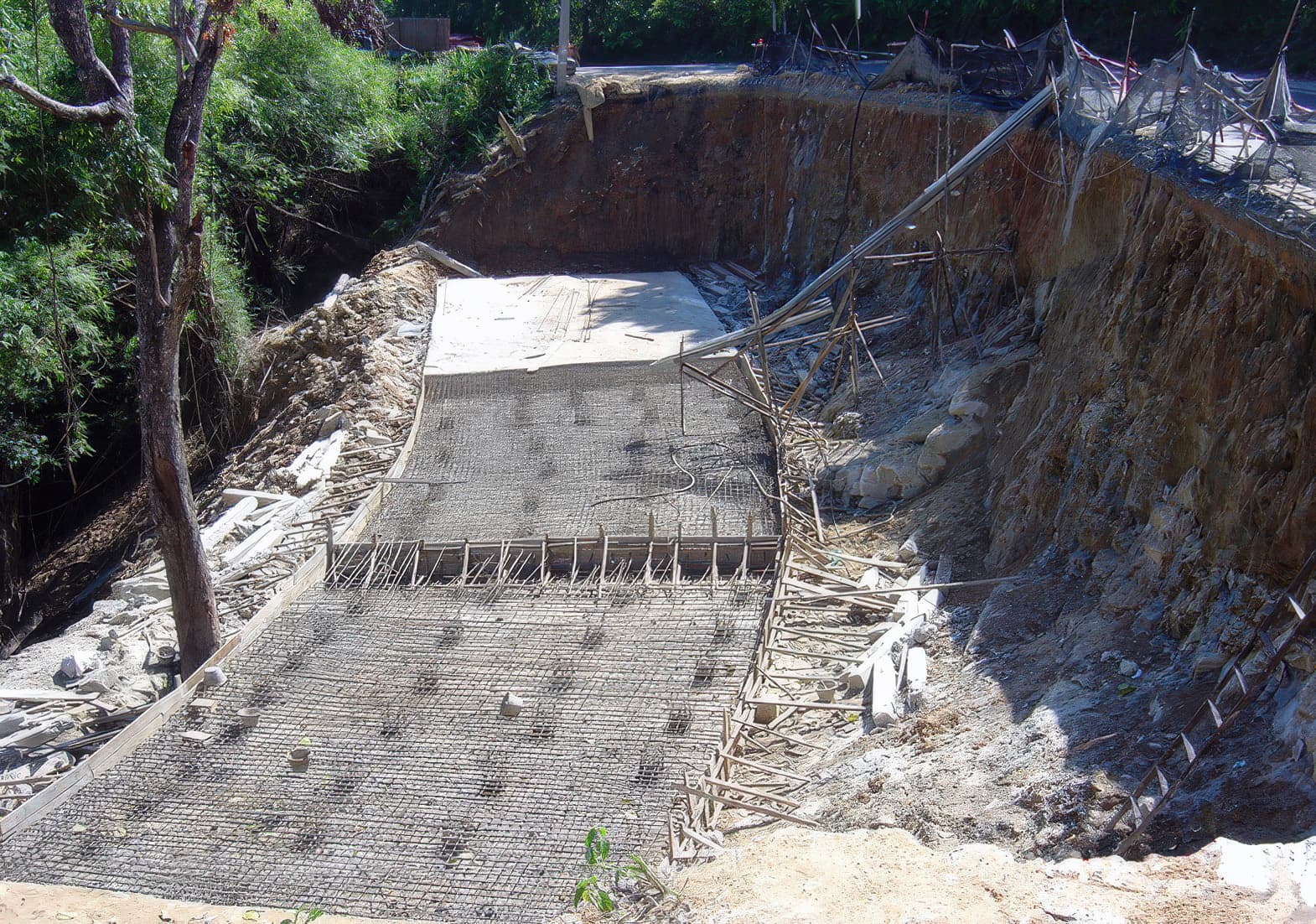
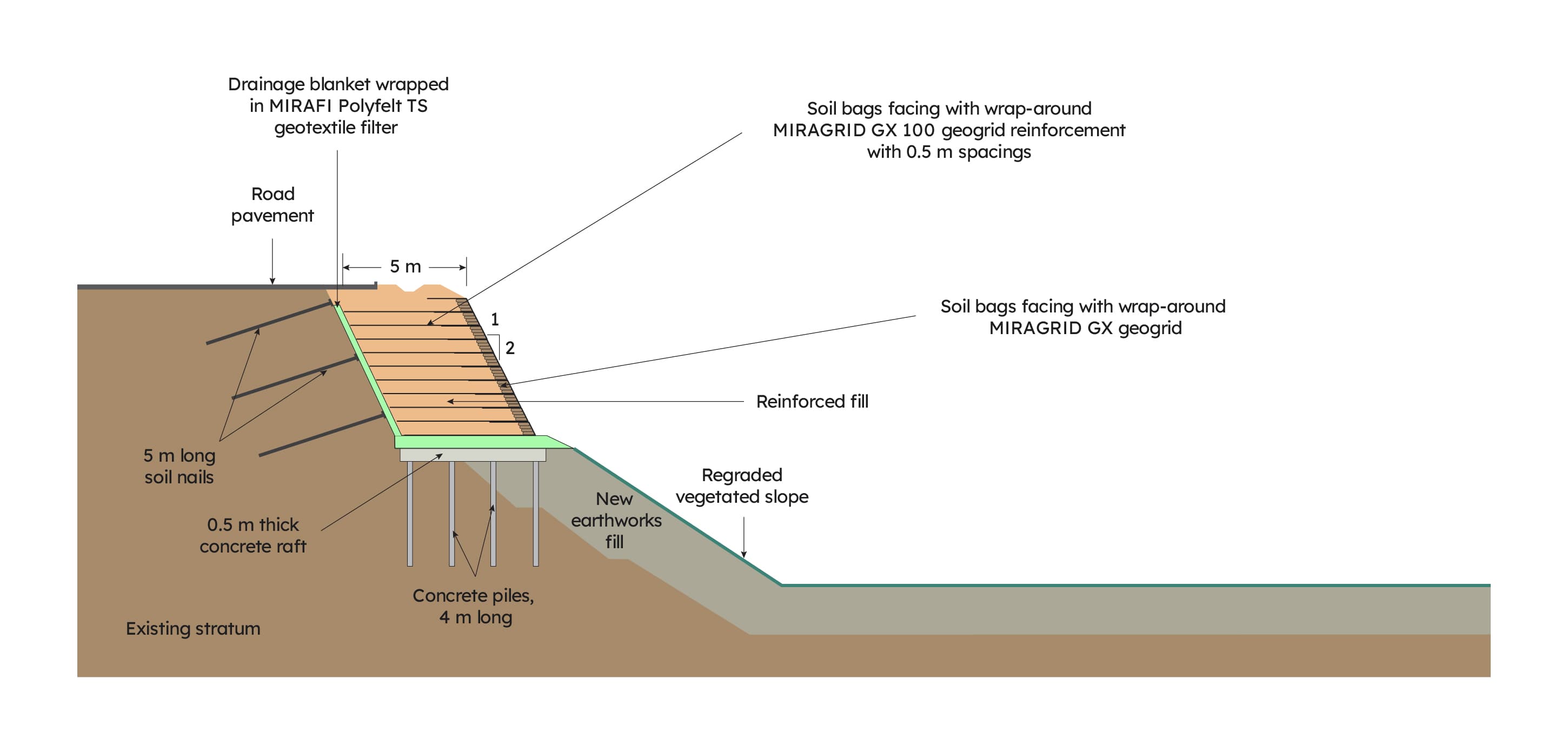
The geogrid reinforced fill slope option was determined to be the most practical and cost effective as well as taking the least time for construction. The geogrid reinforced fill slope also has the advantage of allowing a vegetated surface to blend well with the surrounding green environment. Due to space limitations, temporary steep excavations were necessary during construction. So as not to jeopardize the integrity of the existing road, soil nails were installed in a 1.5 m square grid pattern to provide stability to the steep excavations necessary for the reinforced fill structure to be constructed. Also, in this location a deep ravine had to be partially filled to allow for the reinforced fill structure to be constructed on top. To prevent differential settlements between the fill and the cut ground from damaging the reinforced soil structure the designer decided to provide a piled foundation support. Precast concrete square piles were driven 4 m into the ground and capped with a reinforced concrete raft prior to constructing the reinforced soil structure. Above the concrete raft a drainage blanket was installed consisting of single-size stone wrapped with a MIRAFI® Polyfelt TS geotextile filter. This drainage blanket was continued up the rear of the reinforced slope to intercept groundwater flows emanating from the existing slope. The reinforced fill slope was constructed to a height of 5 m at a slope angle of 2V:1H. MIRAGRID® GX100 geogrid reinforcement was used at 0.5 m vertical spacings. MIRAGRID GX100 geogrid reinforcement is composed of high modulus polyester yarns within a robust polymer coating and has an initial tensile strength of 100 kN/m. Soil bags were used to form the face of the reinforced fill slope. The MIRAGRID GX100 geogrid reinforcement was wrapped around the soil bags and tucked back into the slope at the next reinforcement level. The soil bags also enable fairly heavy compaction of the reinforced fill close to the slope face without undue face deformations. The jute bags also serve to prevent surface erosion during the initial phase of surface vegetation. Once completed, rapid vegetation occurs on the reinforced slope face. The local residual soil was used as the reinforced fill and was compacted in 0.25 m thick lifts. Once compacted, this soil exhibits good reinforced fill properties. The regraded toe slope formed by infilling the ravine was covered with a PROPEX® Polymat EM4 erosion control mat to prevent surface erosion during construction and to aid rapid vegetation growth for long term erosion resistance.


Explore more case studies

View all