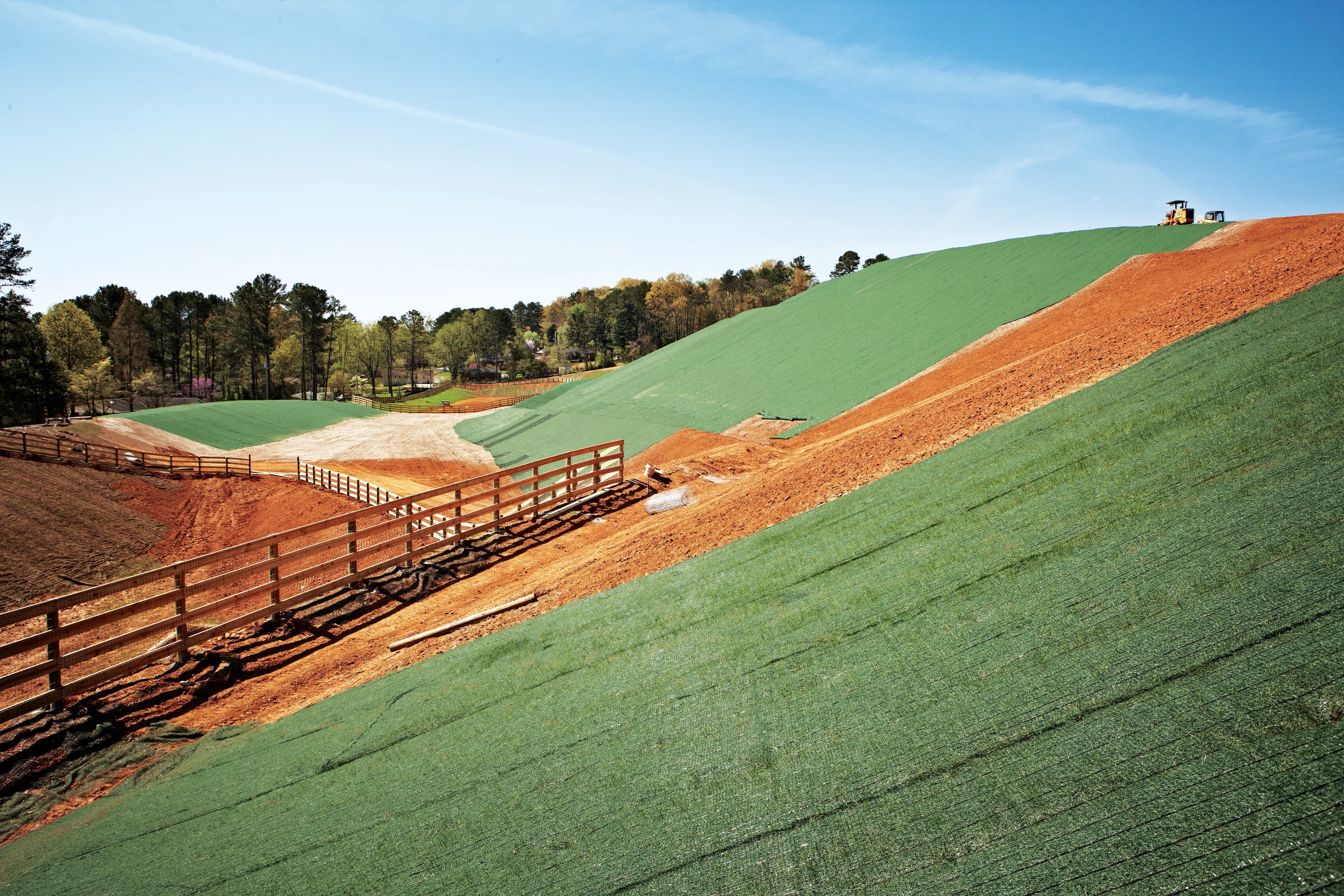
Fire resistant systems
Engineered erosion control and stabilization systems for wildfire-prone slopes, shorelines, waterways, and vulnerable infrastructure
Key benefits

Ignition resistant performance helps support fire resilience in wildfire-prone areas.
Self-extinguishing technology supports safer long-term erosion control performance in exposed conditions.
No flame spread and zero burn rate reinforce the fire-resistant performance profile of the system family.
Superior slope protection helps stabilize vulnerable surfaces before and after fire events.
Quick installation helps rapidly mitigate post-fire flash flooding and accelerate response in damaged areas.
Encapsulated flame-resistant additives will not inhibit vegetation, supporting long-term vegetated performance.
Superior UV resistance supports long service life, including solutions with up to 75-year design life.
Nature-based performance helps support resilient, vegetated, lower-impact erosion control strategies.
Verified low carbon footprint supports more sustainable infrastructure design.
Resistance to hydraulic and non-hydraulic stresses extends performance across diverse site and exposure conditions.
The EPA has recognized HPTRM technology like PROPEX erosion control systems as a Best Management Practice (BMP) for improving groundwater quality.