Overview
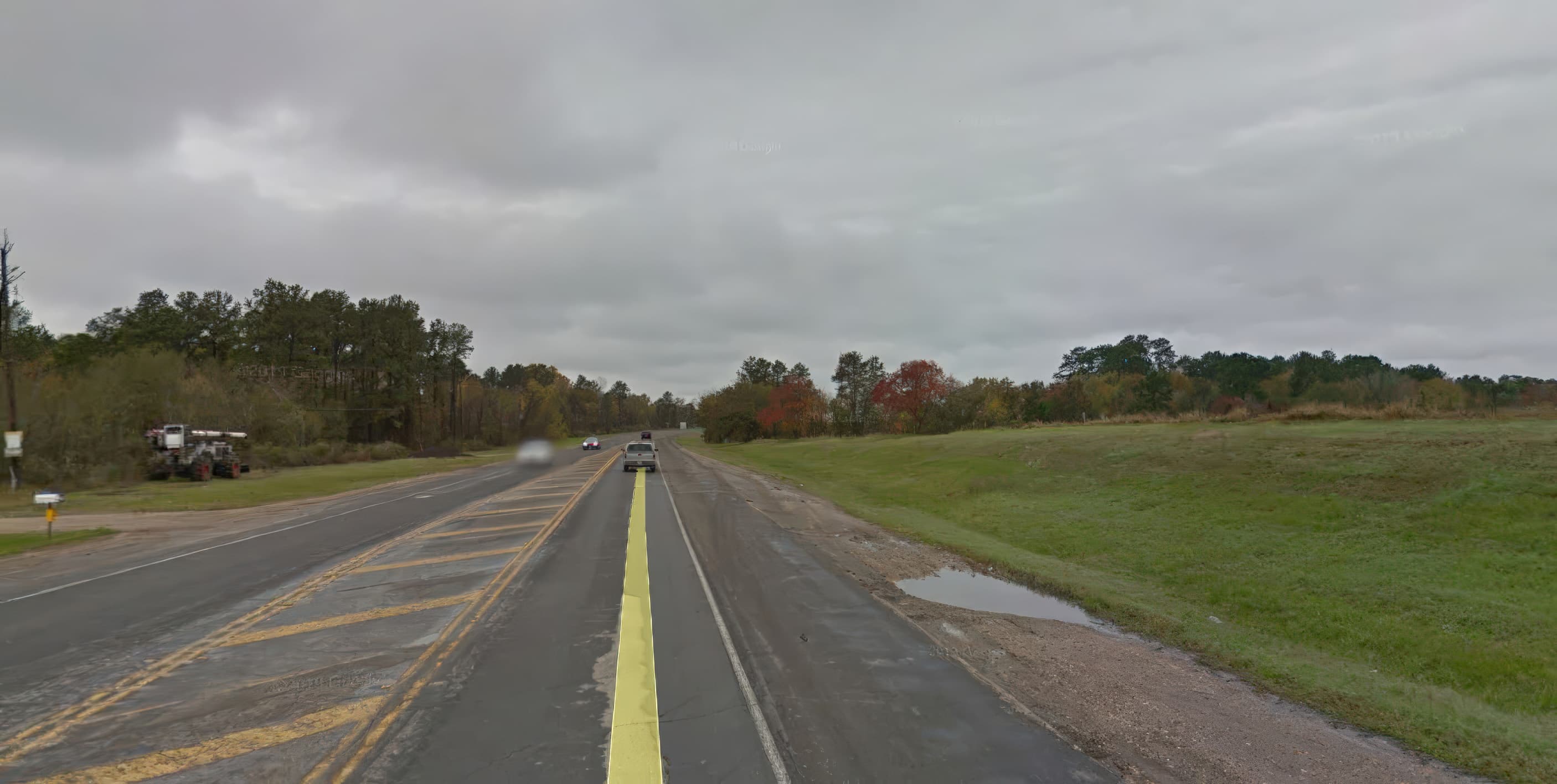
The widening of State Highway 105 at the FM1774 crossing in Plantersville, Texas, presented both construction and long-term performance challenges. The project involved expanding the existing east-west, two-lane roadway into a four-lane roadway.
Challenge
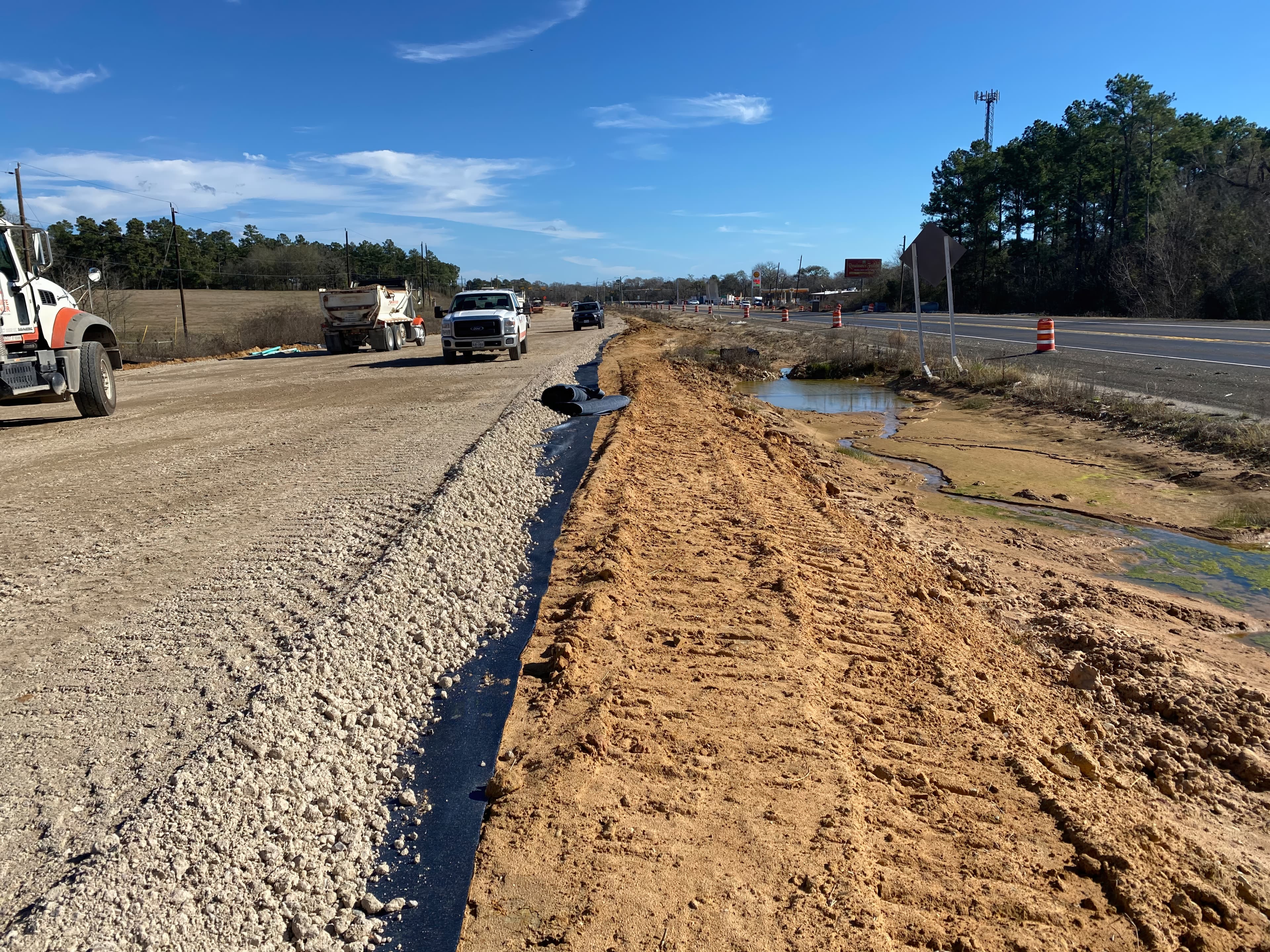
During earthwork, cuts into the natural hillside revealed the presence of springs in the westbound portion of the project. This led to increased moisture content, bringing the subgrade to a nearly saturated state and creating challenging conditions for construction. The observed cracking was likely caused by the roadway being built over moisture-sensitive soils, specifically expansive clays, combined with fluctuating groundwater levels and capillary action.
The original pavement design for the project included cement-stabilized subgrade to treat the existing soil, which had a California Bearing Ratio (CBR) of 1.5%. Additionally, the pavement section incorporated seven inches of flex base and eight inches of asphalt. However, the project team recognized that cement stabilization of the subgrade under saturated conditions would be problematic. As a result, they sought alternative solutions for subgrade stabilization and moisture management.
Solution
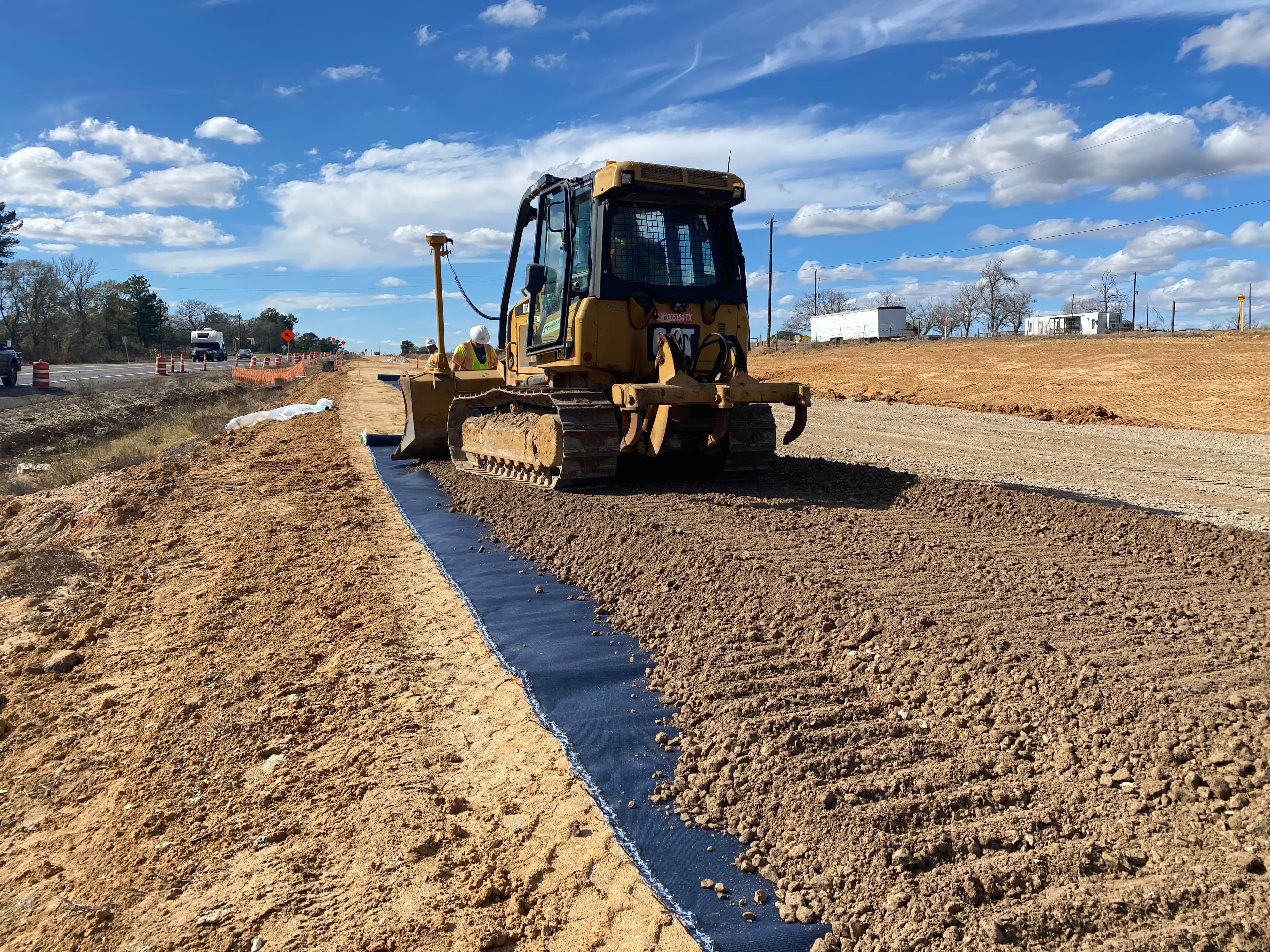
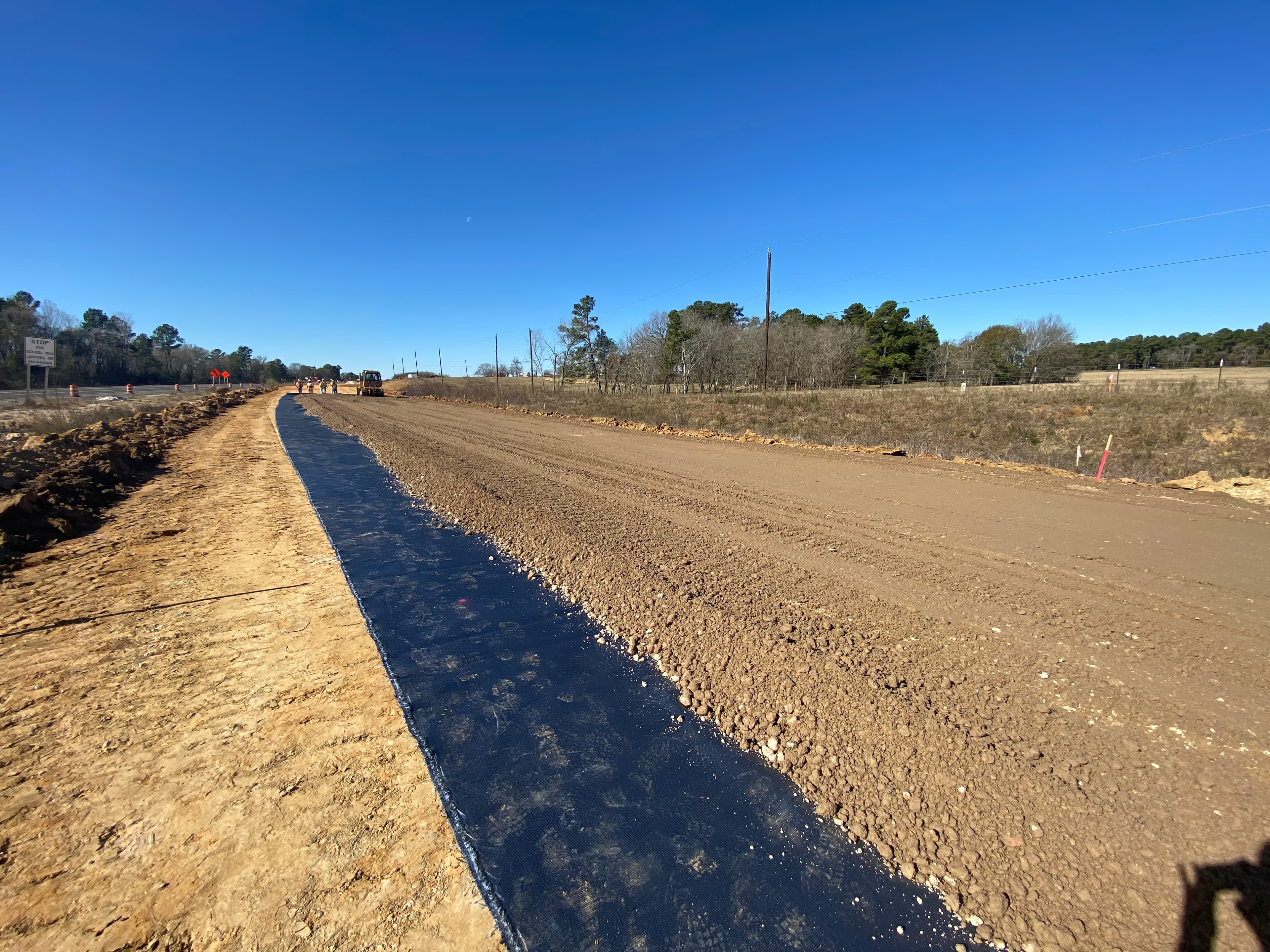
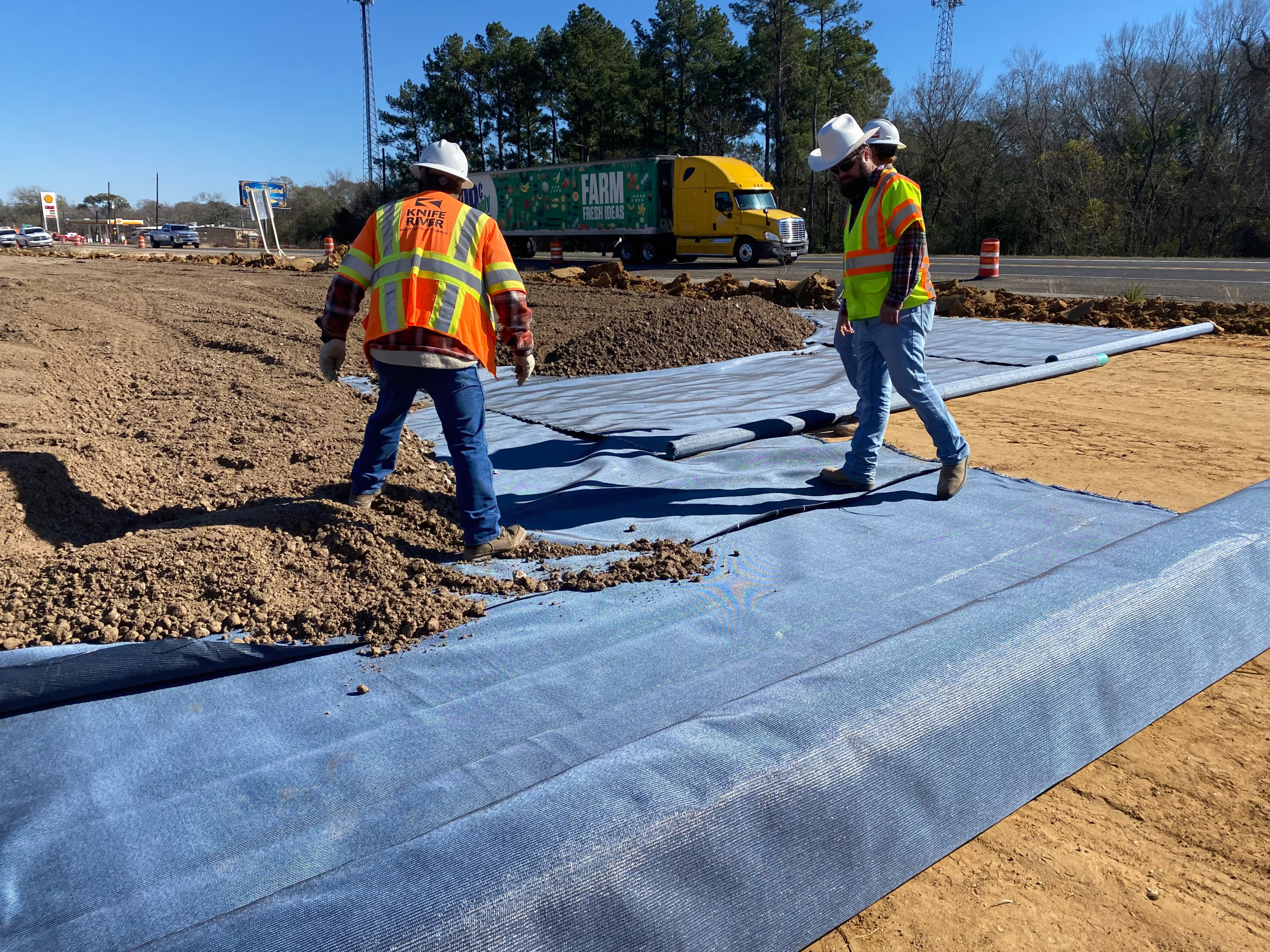
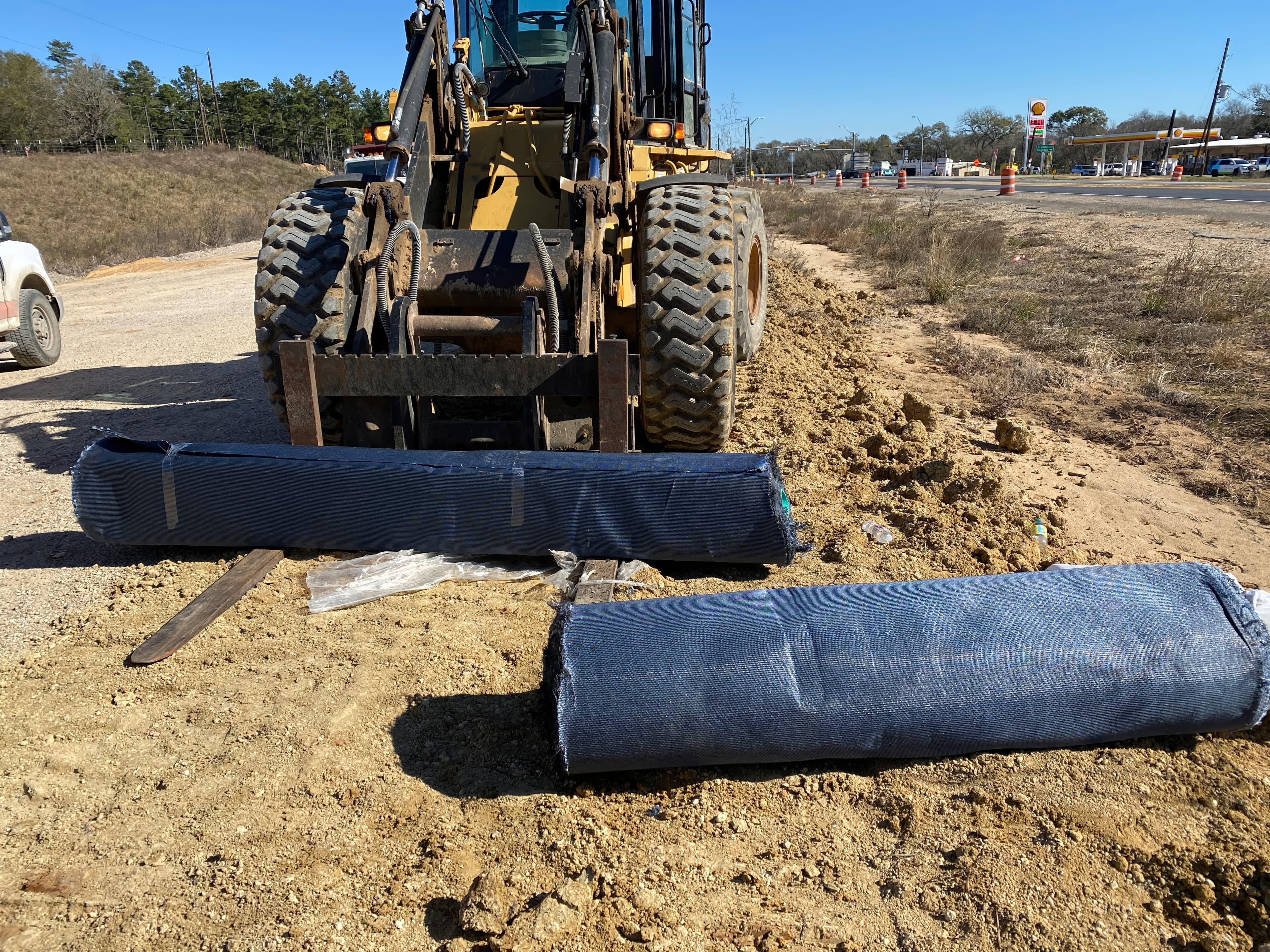
To address the subgrade challenges, the project team reinforced the pavement section using MIRAFI® H2Ri, a high-strength geosynthetic engineered to manage moisture. This solution allowed the team to eliminate the need for cement stabilization while maintaining the original pavement thickness.
The Texas Department of Transportation (TxDOT) had previously used MIRAFI H2Ri in a test installation and was able to apply the same solution for this project. The use of MIRAFI H2Ri provided both mechanical stabilization and active moisture management, ensuring long-term pavement performance despite the challenging soil conditions. The roadway has shown no signs of distress since construction in 2020.
To learn more about how geosynthetics outperform chemical stabilization in roadway applications, click here.