Overview
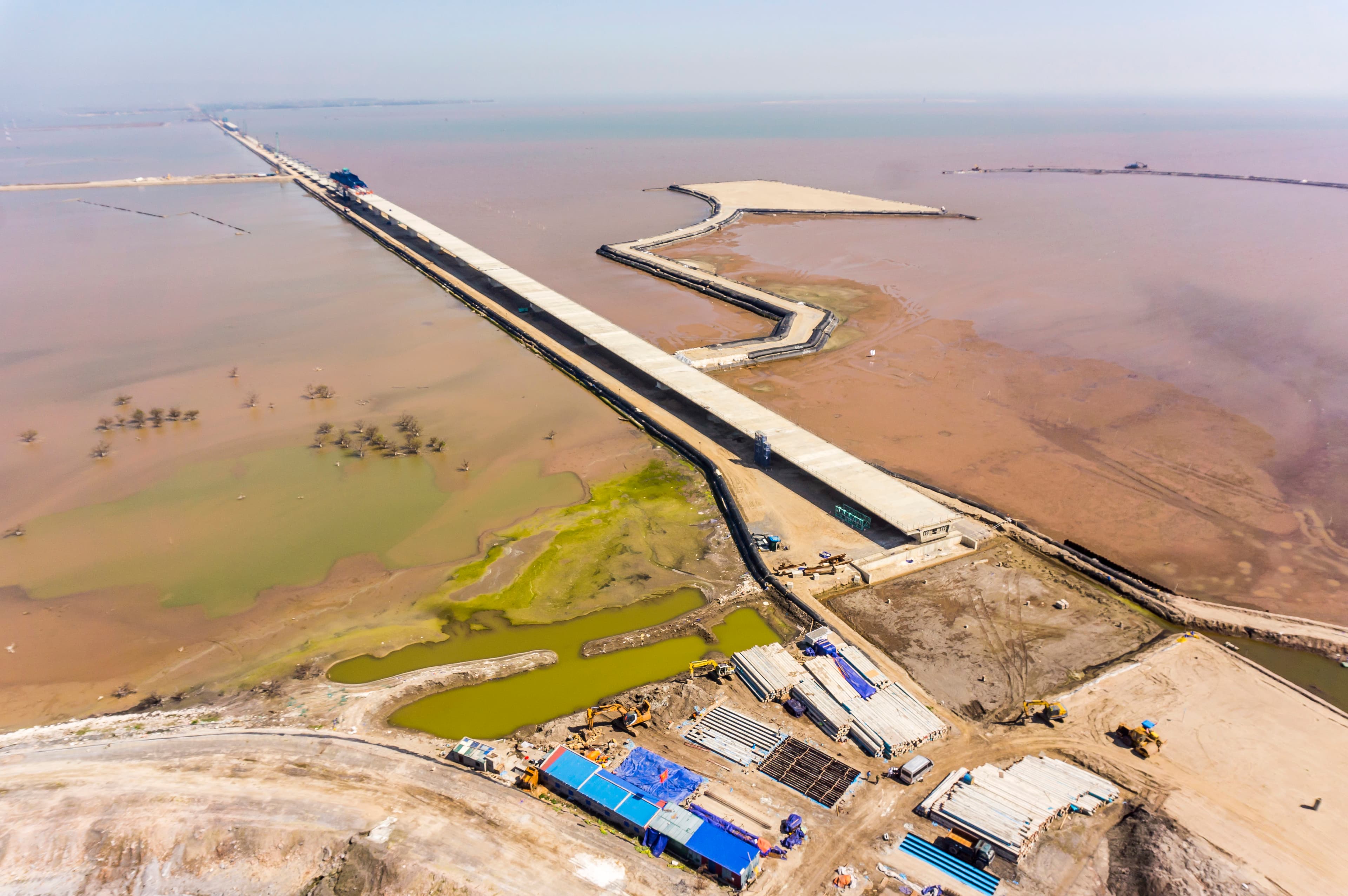
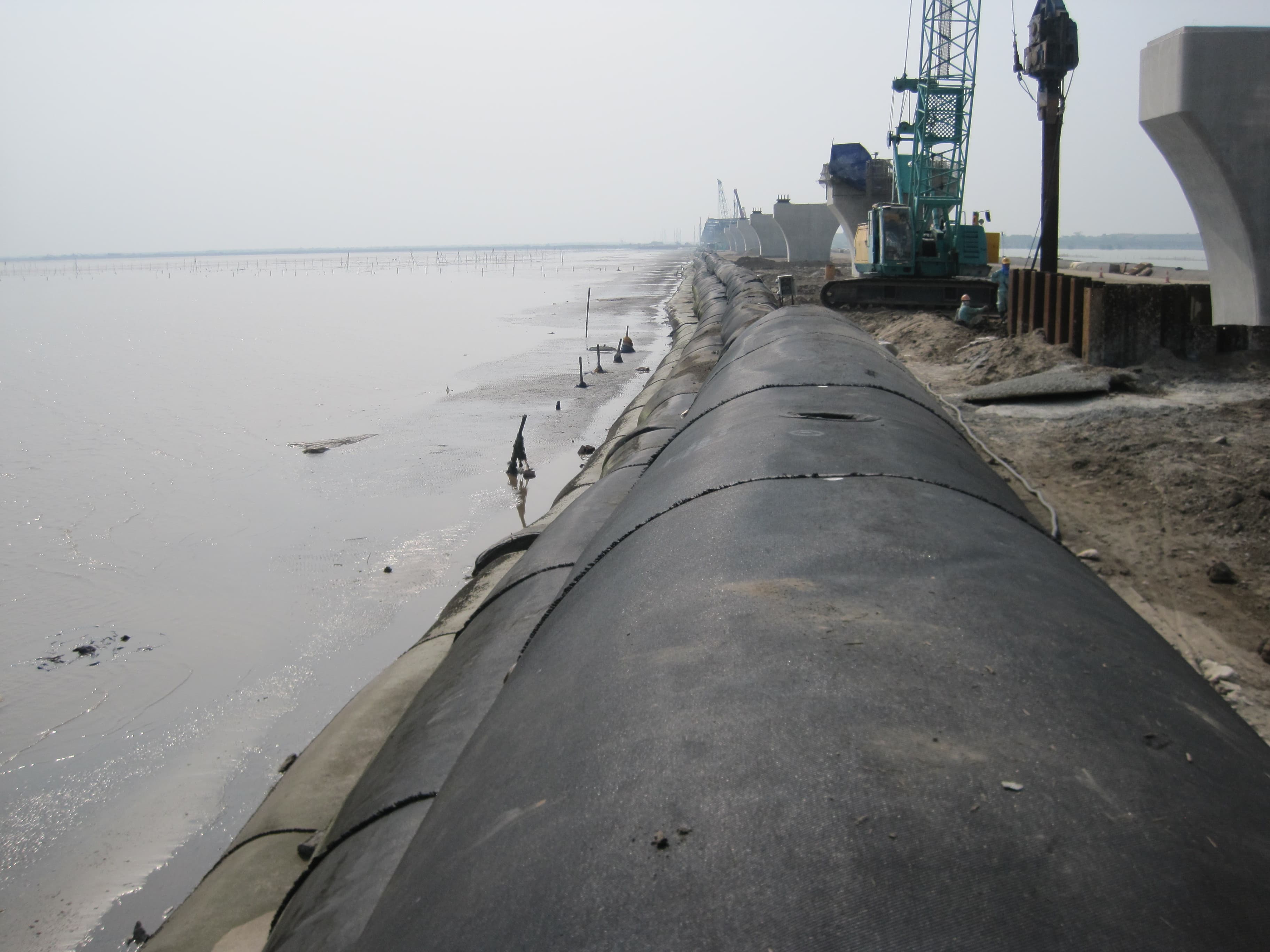
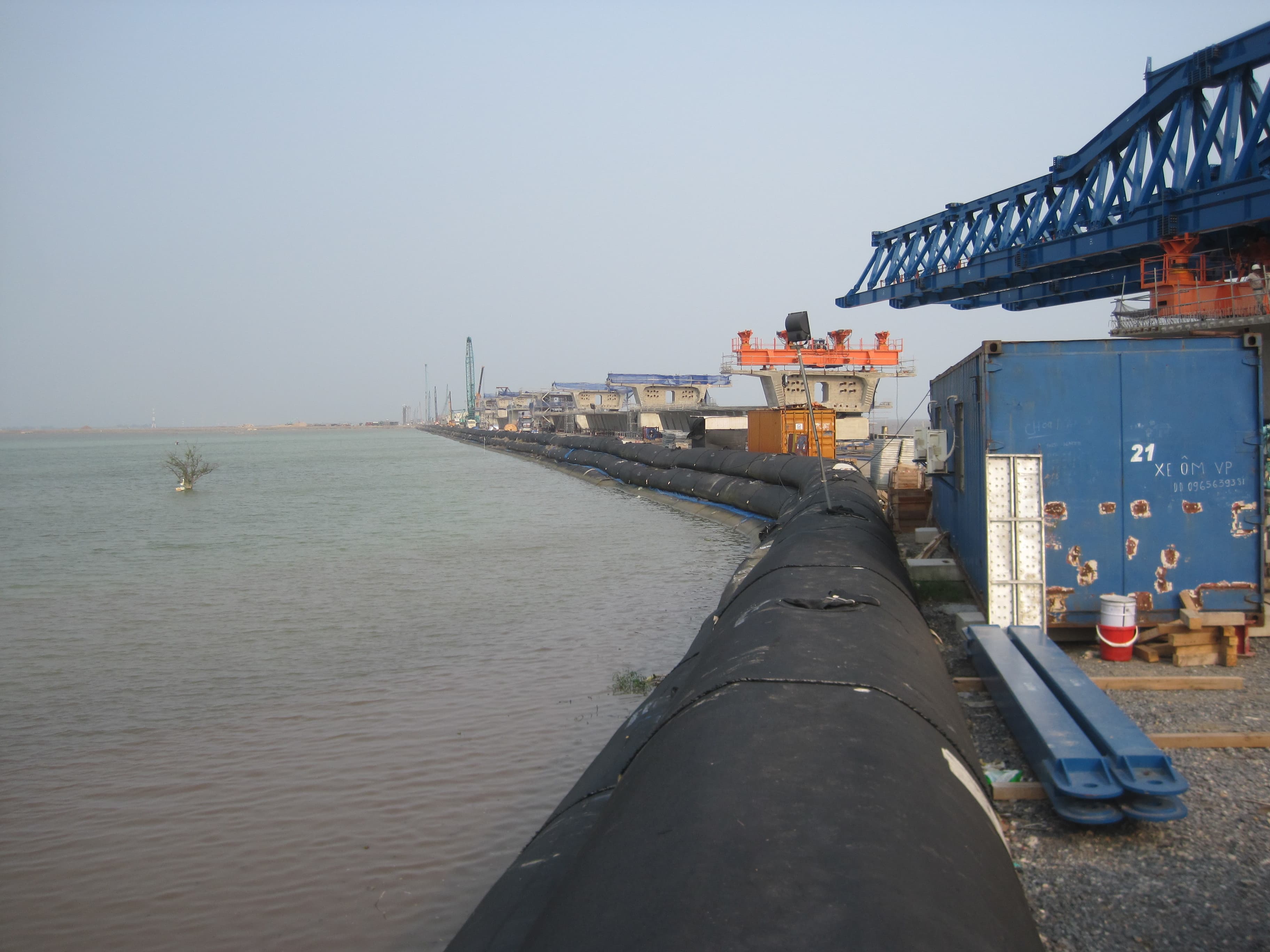
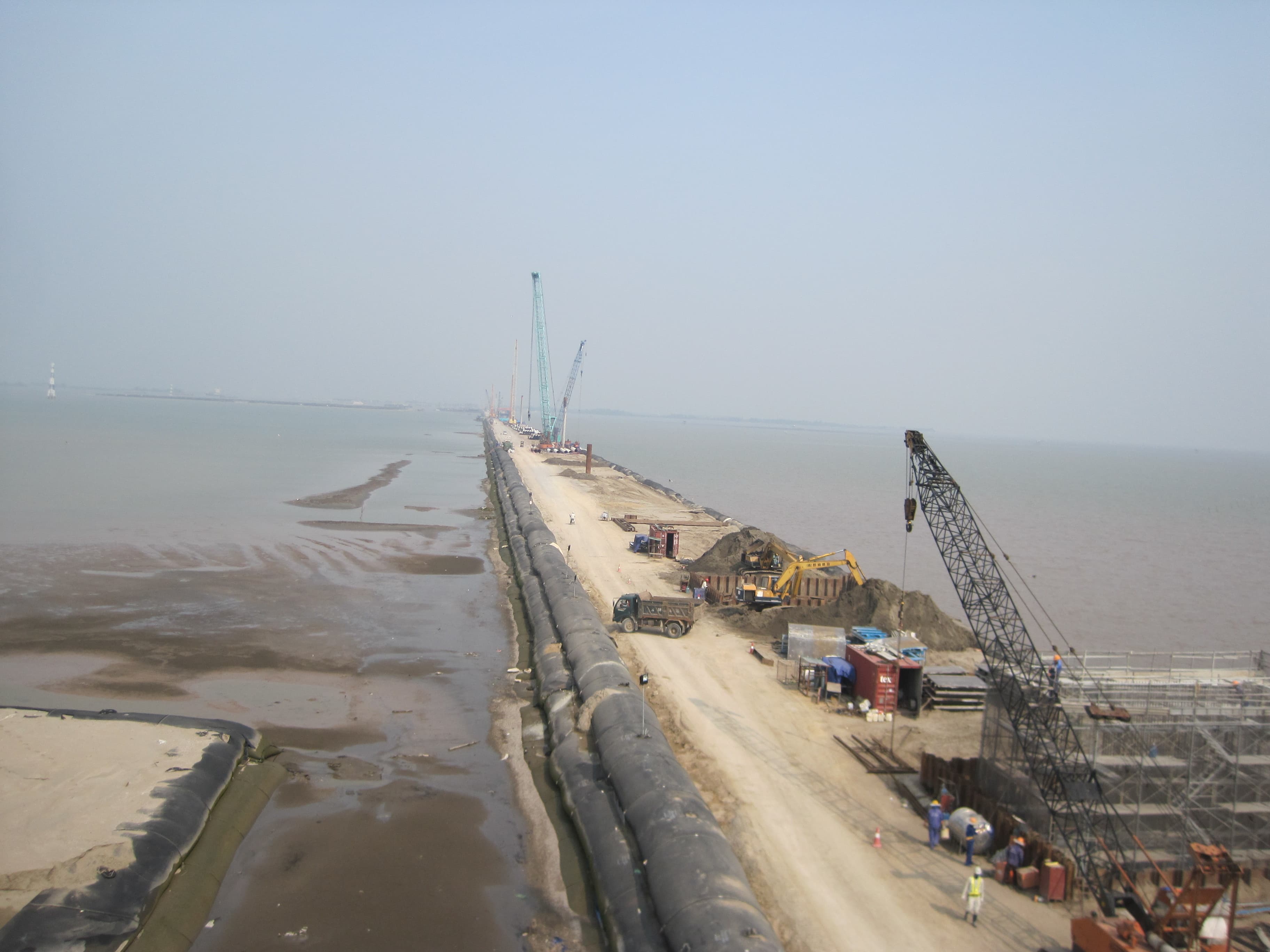
Over 27 km (16.8 miles) of geotextile tubes were installed for the construction of the Lach Huyen Bridge in Vietnam. These tubes were used to reclaim 4.1 km × 26 m (2.5 miles × 85.3 feet) work platforms and build a 600,000 m³ (784,777 cubic yards) dredged sediment containment facility.
The bridge, currently under construction, spans approximately 5.44 km (almost 3.5 miles) and accommodates a four-lane highway. It crosses the combined estuary of the Bach Dang and Cam rivers and will be the longest sea-crossing bridge in Vietnam when completed in 2017.
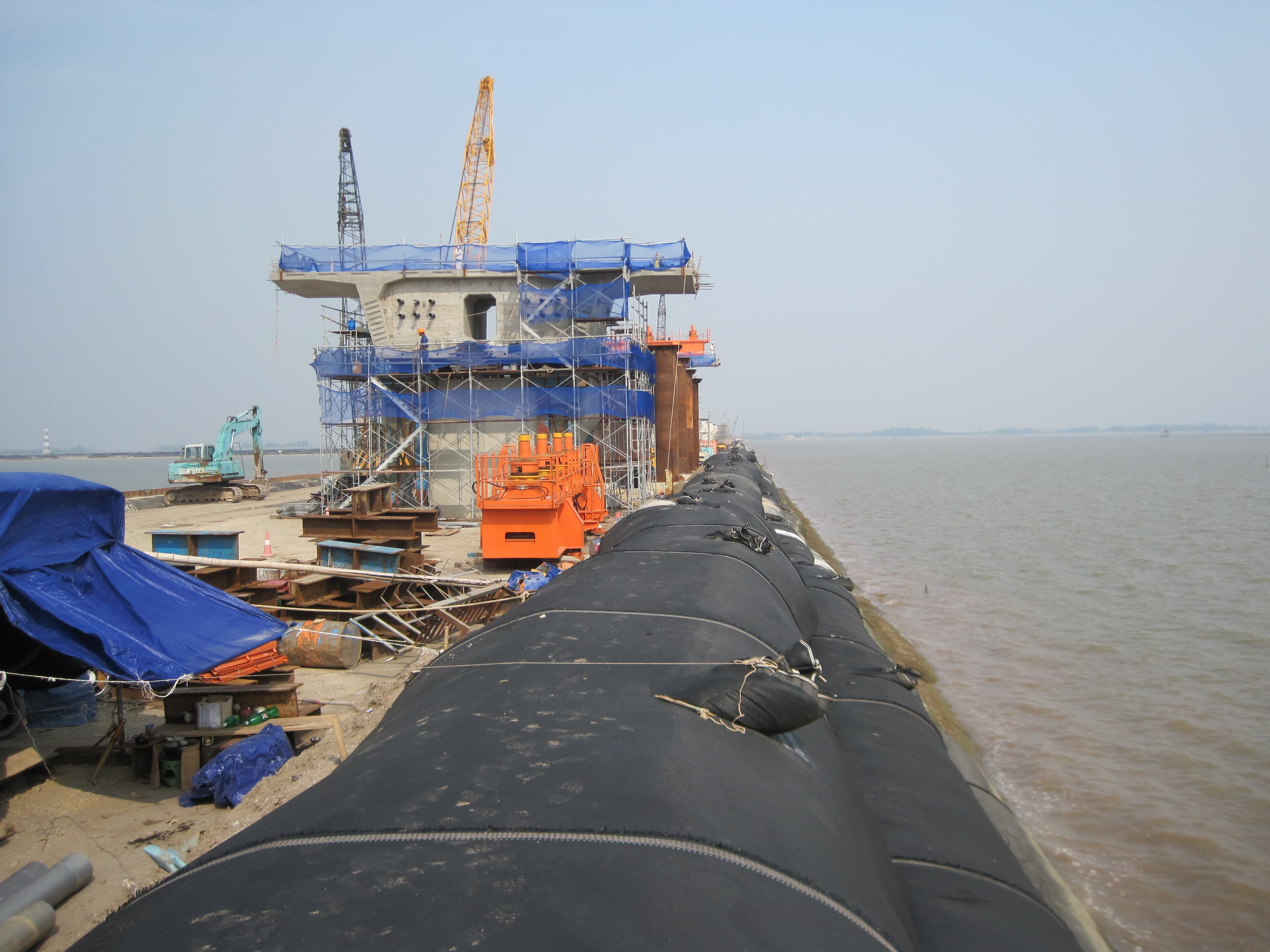
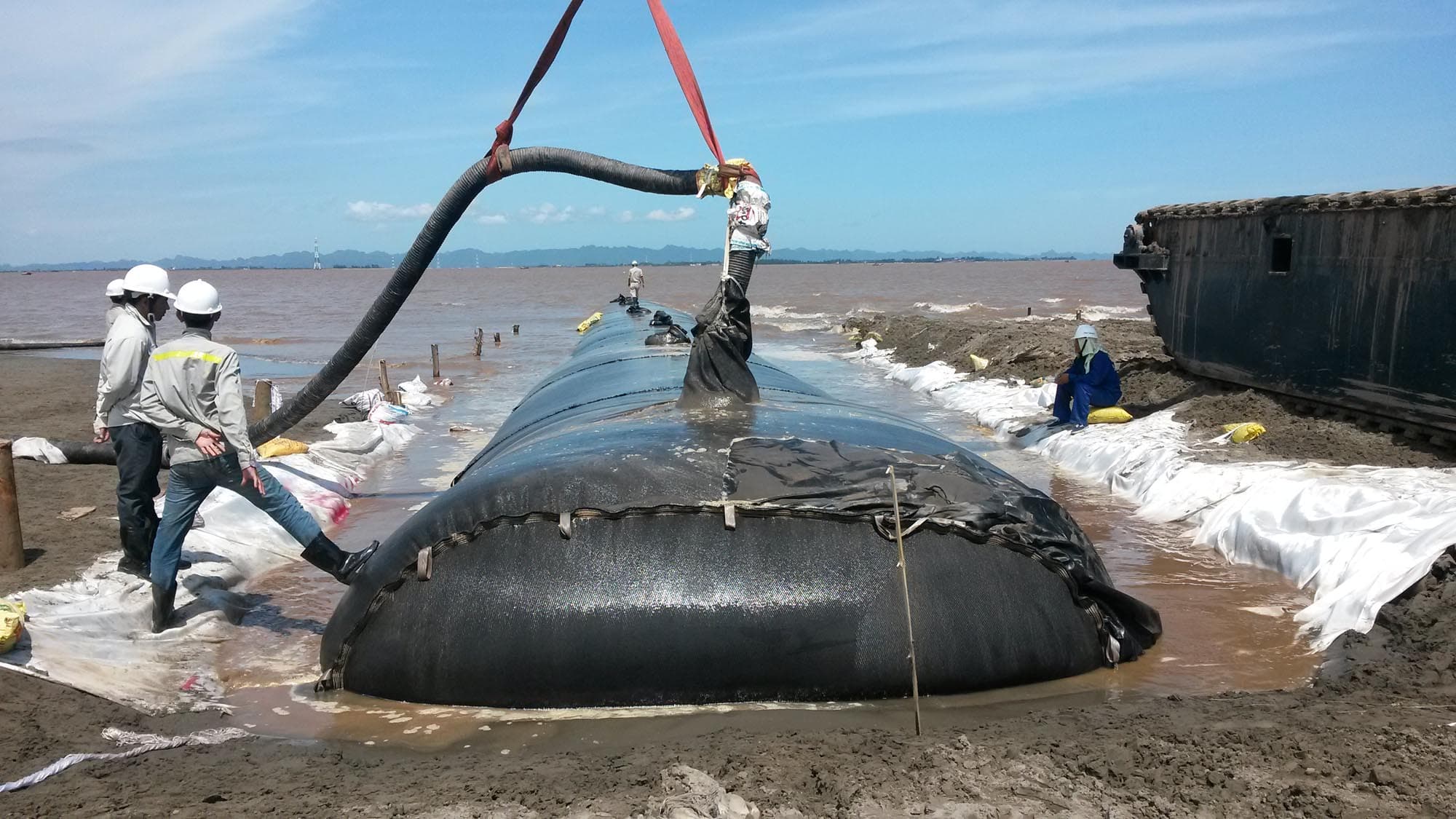
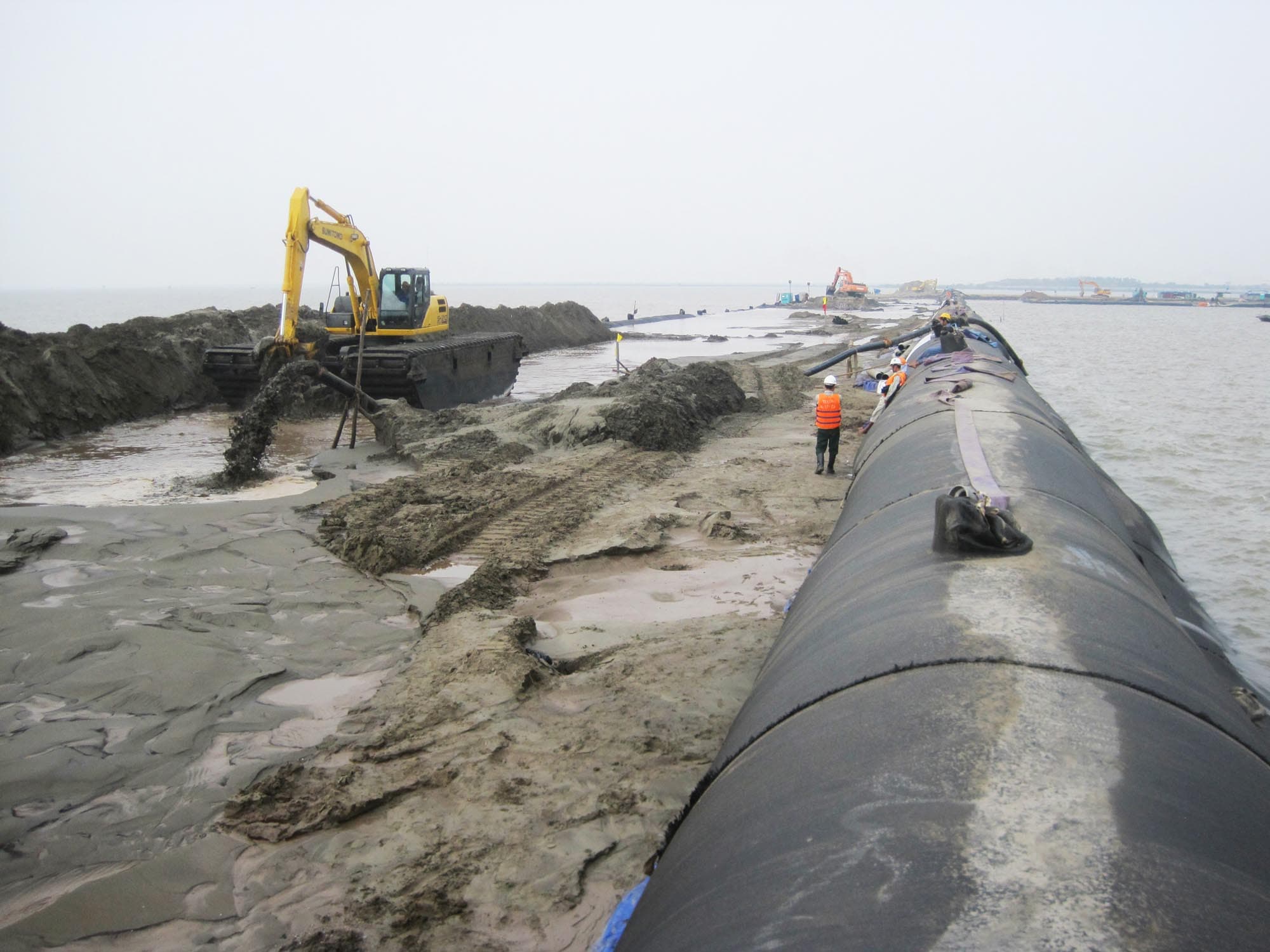
Around 23 km (14.3 miles) of geotextile tubes were used to construct the reclamation dikes and work platforms. The tubes were stacked up to five layers high, with circumferences ranging from 4.6 to 9.5 meters (15.1 to 31.2 feet) and typical lengths of 50m (164 feet).
The work platforms, along with the geotextile tubes, will be embedded within a future land reclamation project that will double the size of the Dinh Vu Development Area. A 1.3 km (0.8 mile) section of the bridge was constructed offshore using work barges.
A 1 km (0.6 mile)-long channel was dredged to increase water depth for the work barges. Geotextile tubes were also used to construct the perimeter dike of the dredged spoil containment facility.
The Challenge
The construction methodology had to overcome soft soil conditions, withstand typhoons, and avoid disruptions caused by large daily tidal ranges. Two work platforms, totaling 4.1 km (2.5 miles) in length and approximately 26 m (85.3 ft) in width, were reclaimed above the highest tide levels to allow dry land construction activities.
Instead of using rocks, sand was dredged from nearby channels and stored in a temporary yard to fill the work platforms. Geotextile tubes provided an economical alternative to rock fill. The use of geotextile tubes reduced costs and allowed convenient installation using hydraulic sand delivery. This saved expenses and eliminated the need for long-distance transportation of rocks in challenging tidal and soft seabed conditions.
Soft ground and adverse tidal conditions posed challenges for heavy machinery used in foundation pile installation, bridge pier construction, and bridge section launching. The geotextile tube solution proved successful when the tubes withstood a direct hit by Typhoon Kalmaegi in September 2014.