Overview
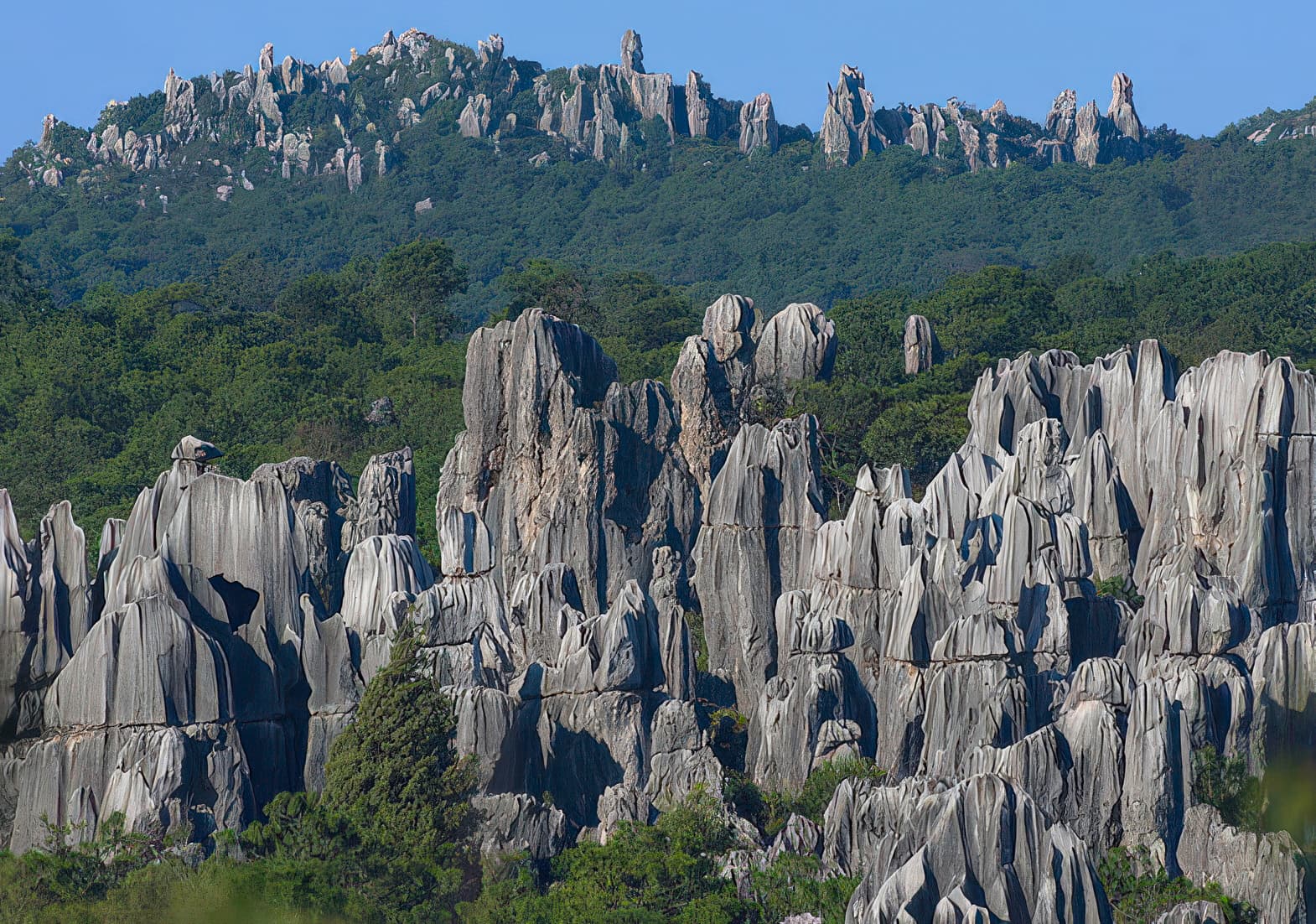
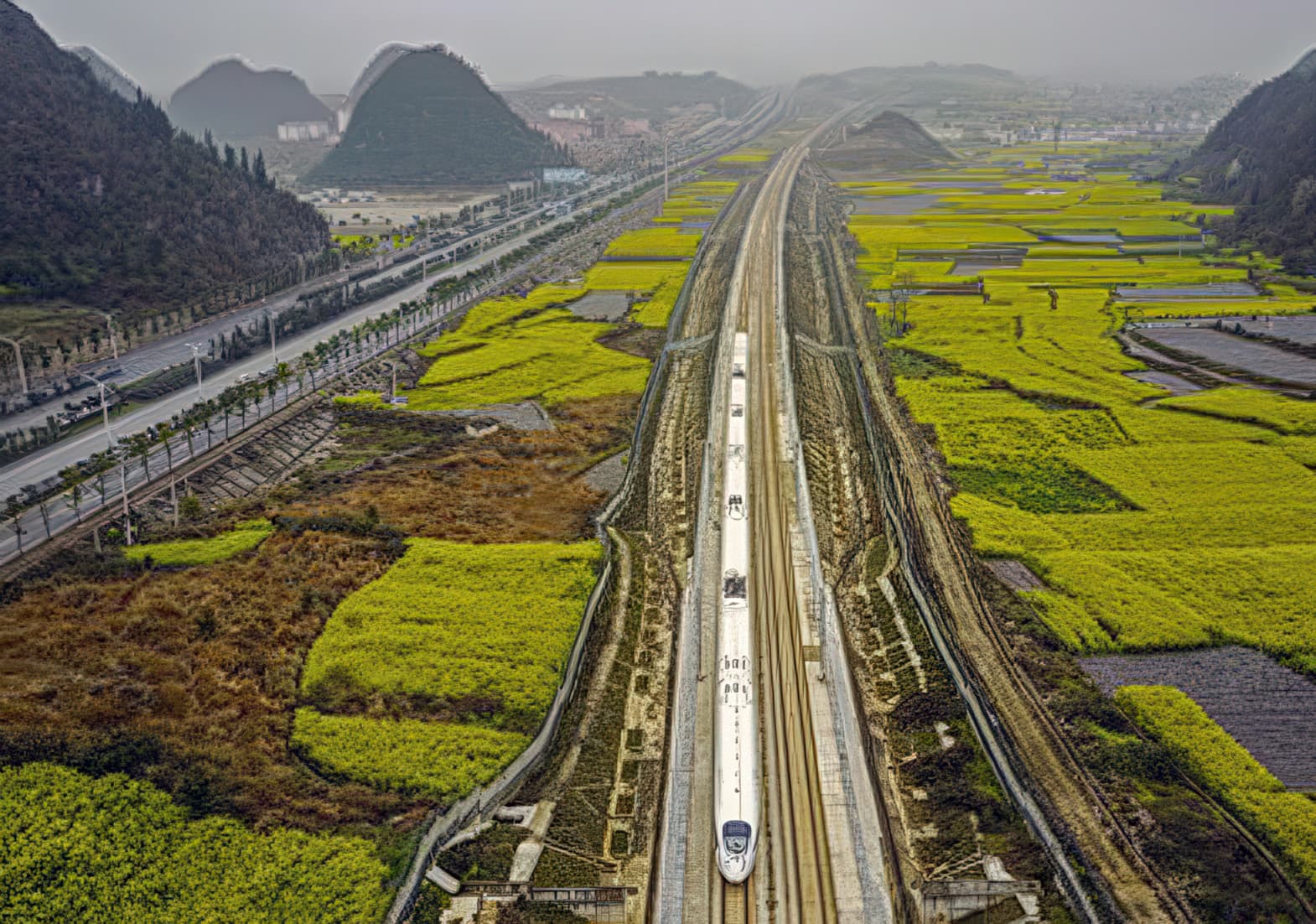
Guizhou Province, located in the southwest of China, consists of largely mountainous terrain with elevations ranging from around 590 m to 2,900 m. It is home to China’s 500 m Aperture Spherical Radio Telescope (FAST), which is the world’s largest single-dish radio telescope. Guizhou Province aims to connect every city in the province with nearly 2,000 km of high-speed railway lines by 2022. The 125 km long Anshun–Liupanshui highspeed railway section was put into operation in 2020, reducing the travel time between Guiyang (the Guizhou provincial capital) and Liupanshui (the border city with Yunnan Province) from 3.5 hours to 1 hour. The design speed of the Anshun– Liupanshui high-speed railway is 250 km/h. Guizhou Province’s geology consists of a sequence of limestone strata, thousands of meters in thickness. Around three-quarters of Guizhou Province is made up of karst landscapes, earning it the title “Karst Province” of China.
Challenge
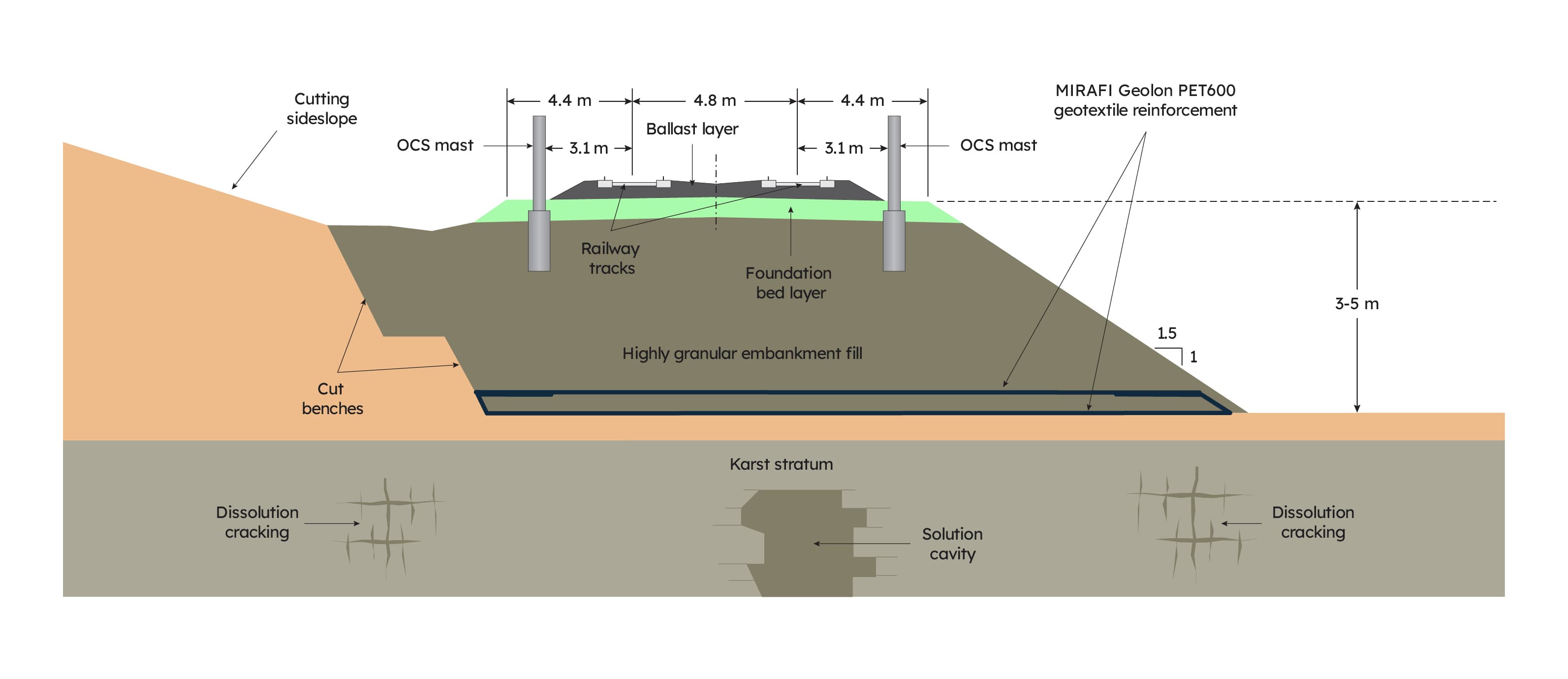
From a geotechnical standpoint, karst terrain is one of the most challenging ground conditions in foundation engineering. Above ground it is easy to see the unique shapes of limestone outcrops; some are massive while others are in the form of towers, pinnacles, and cones. Therefore, it is easy to imagine that the subterranean soil/rock interface would reflect what is seen in the outcrops. As limestone is soluble, solution channels are common features in the foundation rock mass. Sometimes the roof of the solution channel collapses, with the overburden soil falling into the solution channels. In more severe cases, total overburden soil collapse occurs, resulting in sinkholes becoming visible at ground surface. Such conditions make the ground highly variable in strength and prone to localized deformations and collapse over time. The Anshun–Liupanshui high-speed railway was constructed using a combination of viaducts, tunnels, and embankments. In one section, the railway was constructed in a cutting where the subterranean karst features were close to the ground surface. Here, the ground was variable in terms of subgrade stiffness over short distances and there was a risk of subsidence occurring over the design life of the railway. As high-speed railways have strict differential settlement design limits for travel comfort and safety, the railway embankment in the cutting was designed using basal geotextile reinforcement.
Solution
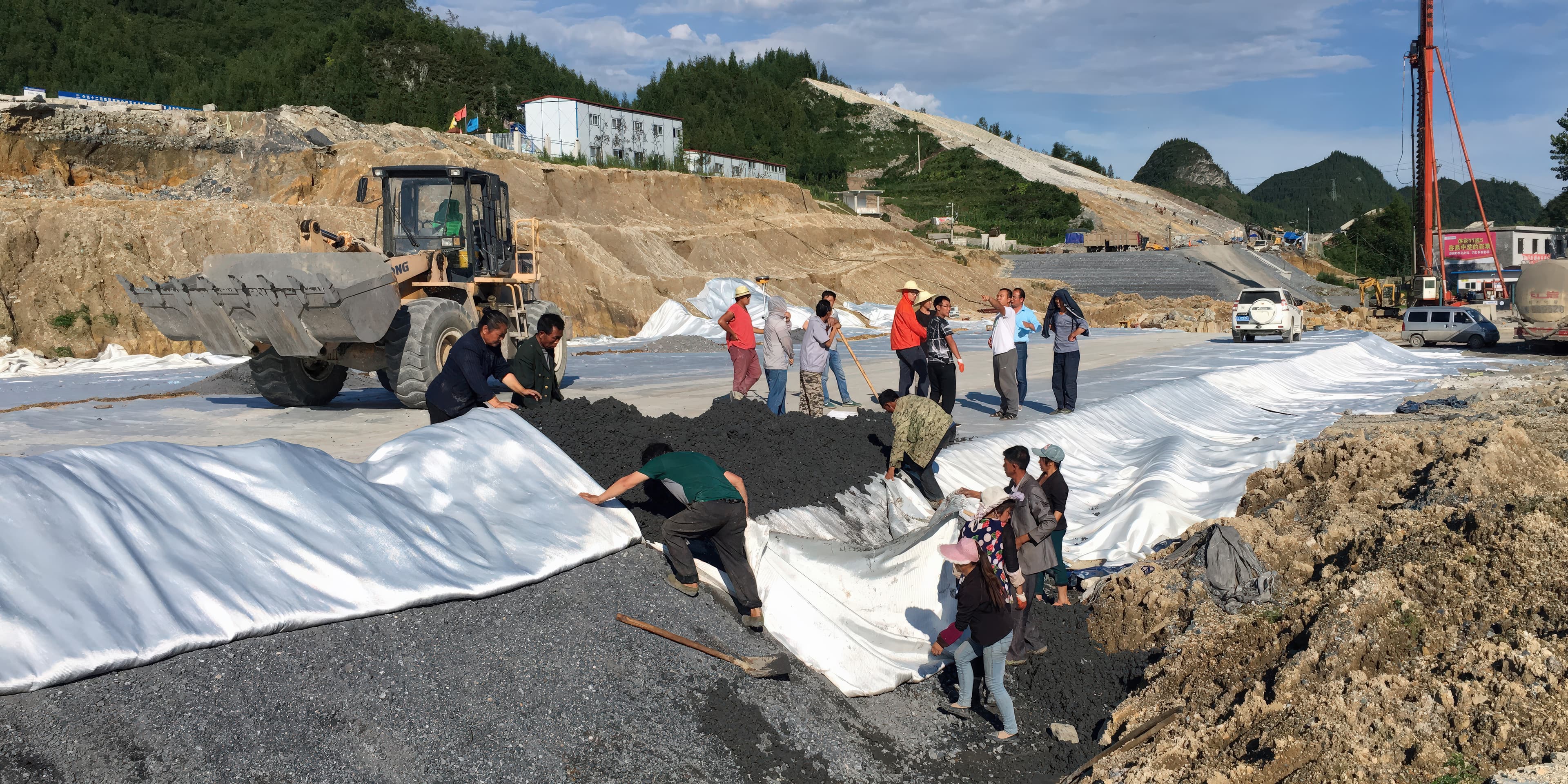
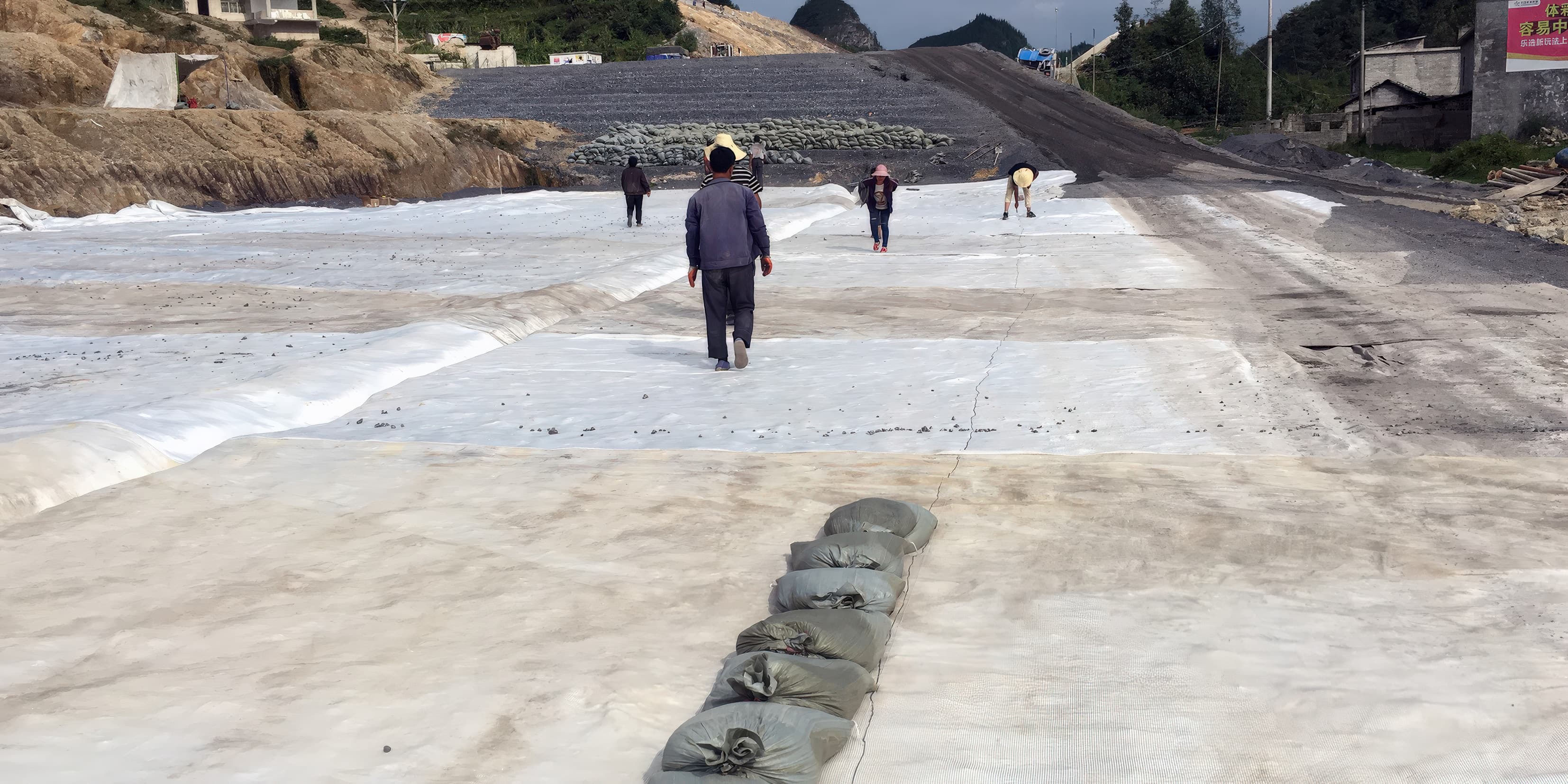
Two layers of MIRAFI® PET600 geotextile reinforcement were included at the base of the embankment, with the lower layer laid in the direction across the embankment and the upper layer laid in the direction along the embankment. MIRAFI PET600 geotextile reinforcement is composed of high modulus MIRAFI PET yarns and has an initial tensile strength of 600 kN/m. The MIRAFI PET600 geotextile reinforcement acts as insurance to limit the deformation at the base of the railway embankment should subsidence occur in the foundation beneath. The construction procedure for the project was as follows. The ground surface was first leveled. The first layer of MIRAFI PET600 geotextile reinforcement was then laid in one continuous piece in the direction across the embankment. A 250 mm lift of gravel sand layer was then placed over the first layer of MIRAFI PET600 and compacted to specification. The second layer of MIRAFI PET600 was then laid in one continuous piece in the direction along the embankment length. Granular embankment fill was then placed in lifts on top and compacted until the required embankment height was reached. Once that was achieved, the rail track superstructure was constructed on top.