Overview
Reeuwijk is a village in the south-central part of the Netherlands, and historically was established as a center for peat harvesting. Consequently, the ground in the area consists of thick layers of peat and organic clays, ranging around 8 m in depth. These are compressible and very soft. Further, the groundwater level is high at 0.2 to 0.5 m below ground surface. To improve the capacity of the existing road through Reeuwijk, but also limit traffic congestion in the village center, a 3.5 km bypass road was constructed around the village. The new bypass road is a single carriageway in both directions with extra lanes at road junctions.
Challenge
To construct the new bypass road over these very poor ground conditions, the construction method had to be selected carefully. Using embankment fills alone would have resulted in high settlements, instability and high post-construction maintenance costs. It would have also adversely impacted the underground services that existed along the bypass alignment. Further, one of the main conditions for the bypass road was that its surface level approximated the level of the surrounding ground (thus no embankment structures could be constructed). To construct a shallow embankment layer and at the same time prevent undue settlements led the designers to adopt the basal reinforced piled embankment technique for the bypass road.
Solution
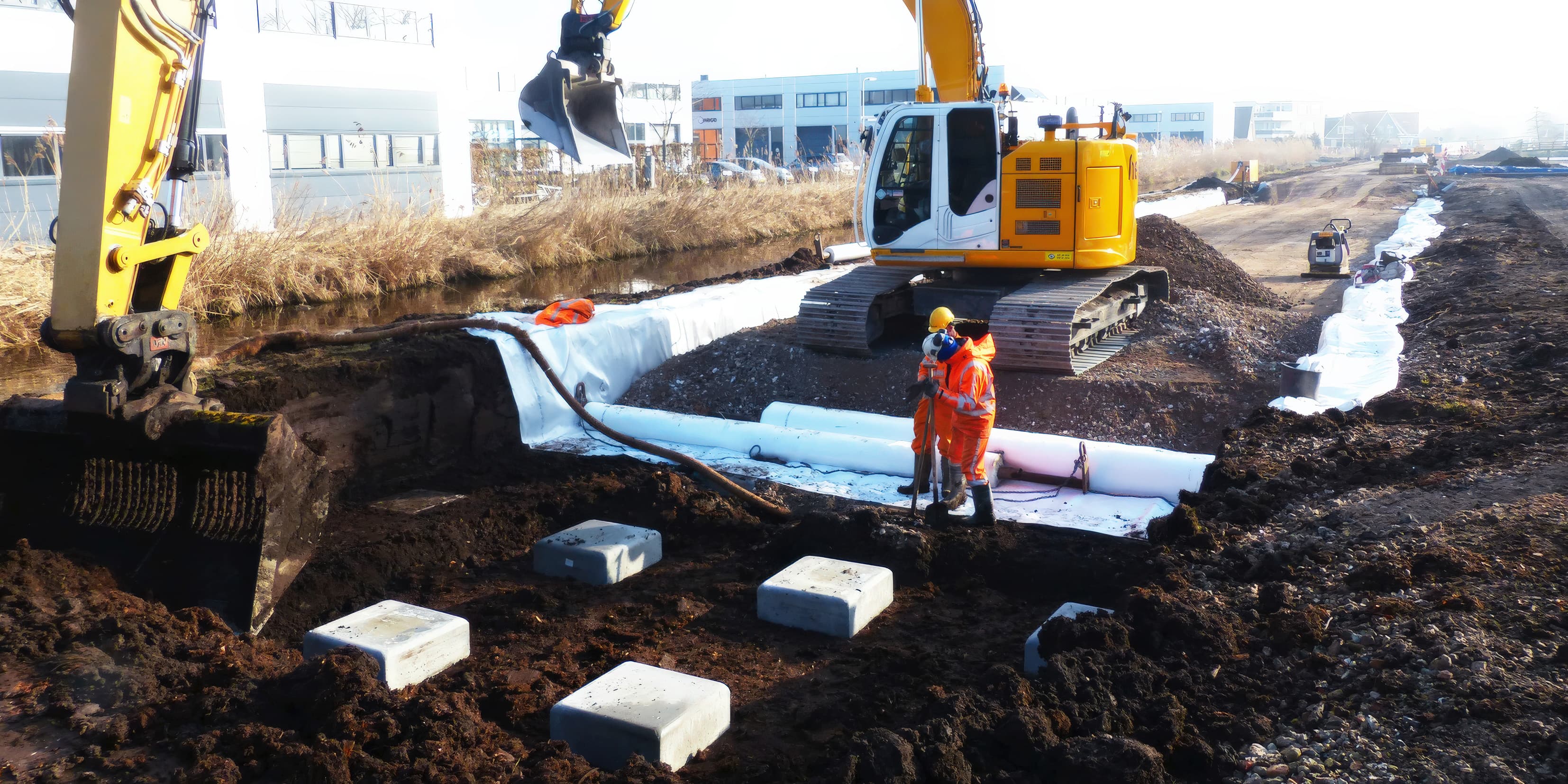
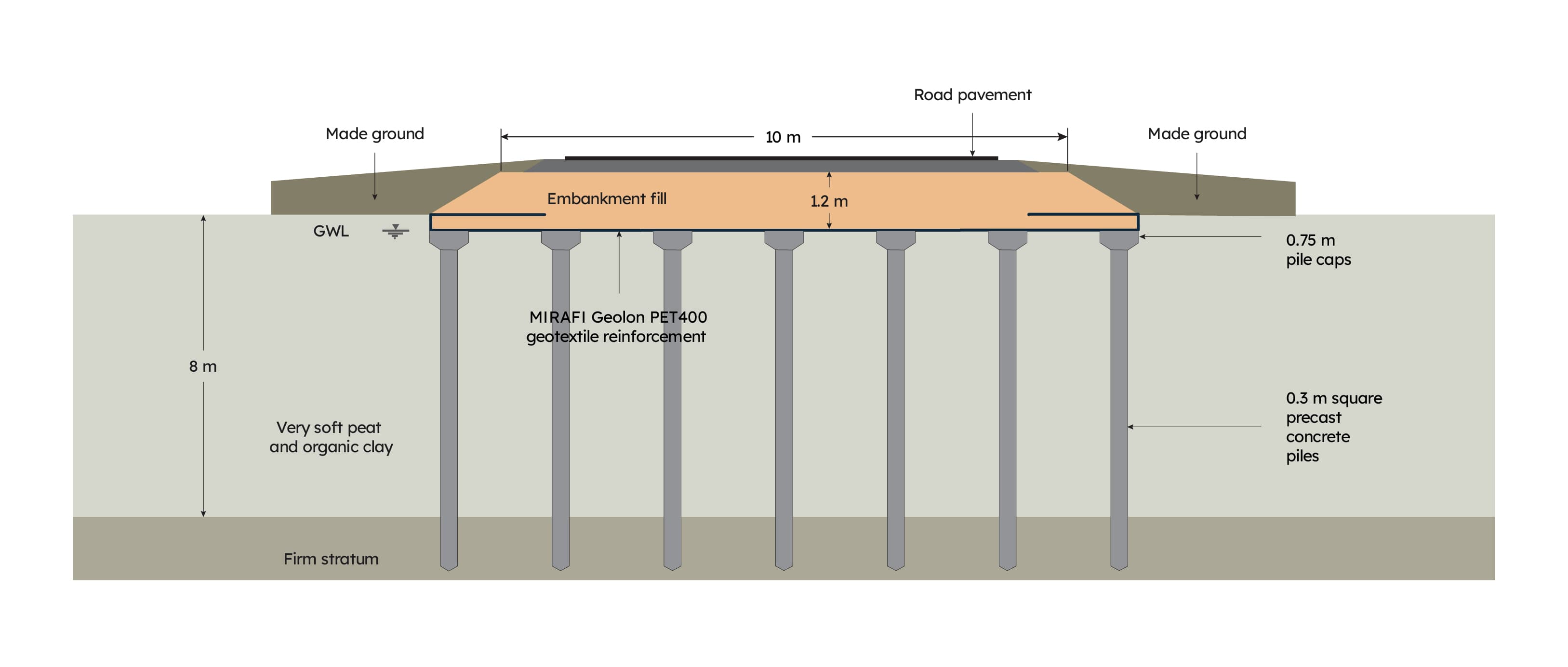
To enable the basal reinforced piled embankment structure to meet the 100-year design life requirement, 0.3 m square precast concrete piles were used to support the embankment. On top of these piles, 0.75 m square concrete pile caps were used. To maximize the embankment height available for arching across adjacent pile caps, it was decided to excavate the surface soil down to the water table level, around 0.2 m below ground surface. At the same time, the embankment height was raised to a level of 1.2 m (this embankment height included 0.25 m of pavement) so that the embankment would not be too thin in spanning across the pile caps. Also, to maximize the arching effect, highly granular embankment fill consisting of recycled crushed demolition waste was used.
The Dutch Design Guideline CUR226:2010 was used to design the pile foundation layout and the required strengths of the basal reinforcement in both the longitudinal and transverse directions. For a shallow embankment of this height (H = 1.2 m), CUR226:2010 allows a maximum pile spacing in the transverse direction of 1.9 m with a consequent basal reinforcement strength of 400 kN/m in both transverse and longitudinal directions, based on allowable design loads, strain, and required 100-year design life. MIRAFI® Geolon PET400 geotextile reinforcement was selected as the basal reinforcement because it met the strength requirements and at the same time has high tensile stiffness to carry the tensile loads at low strain.
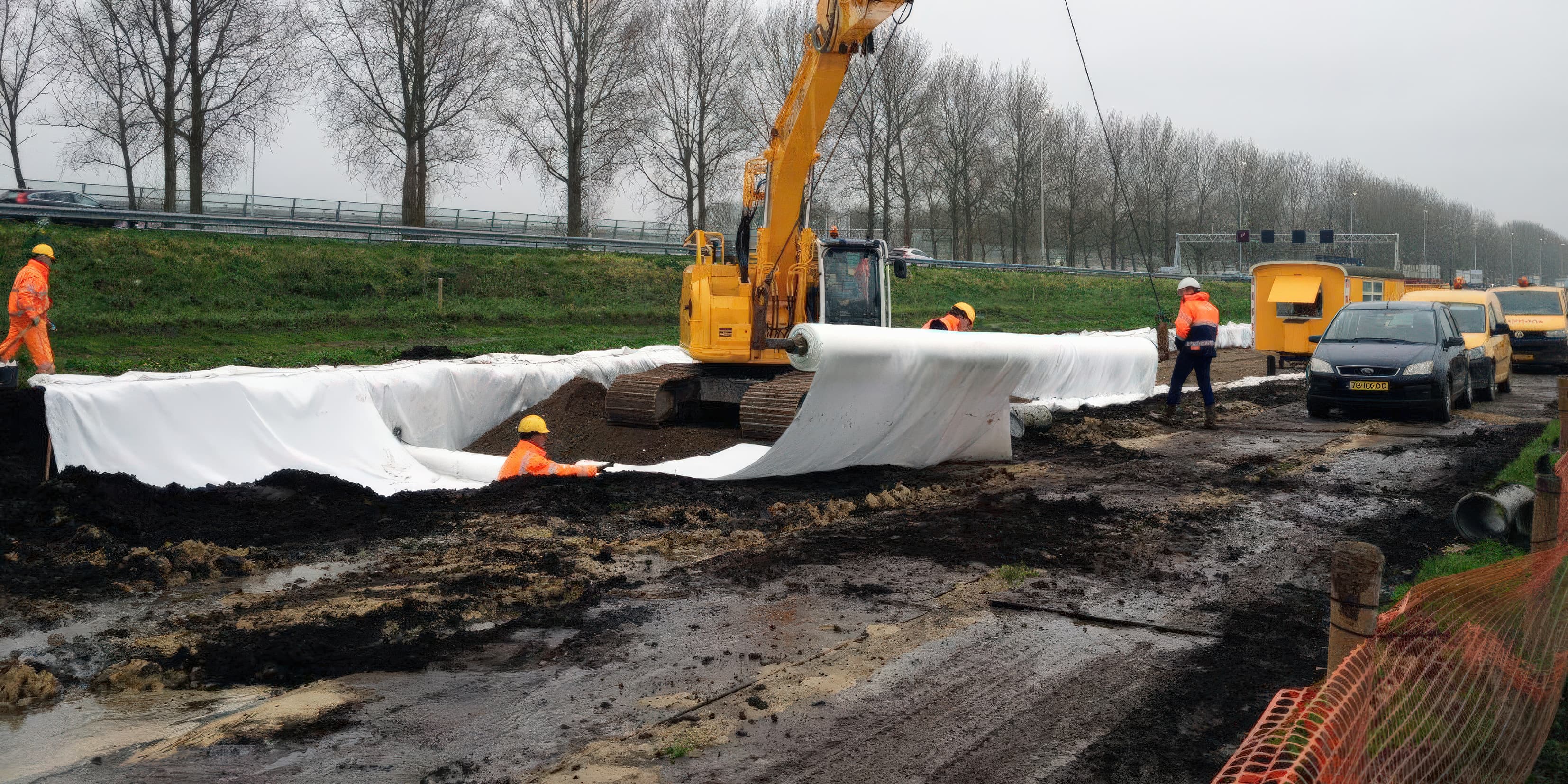
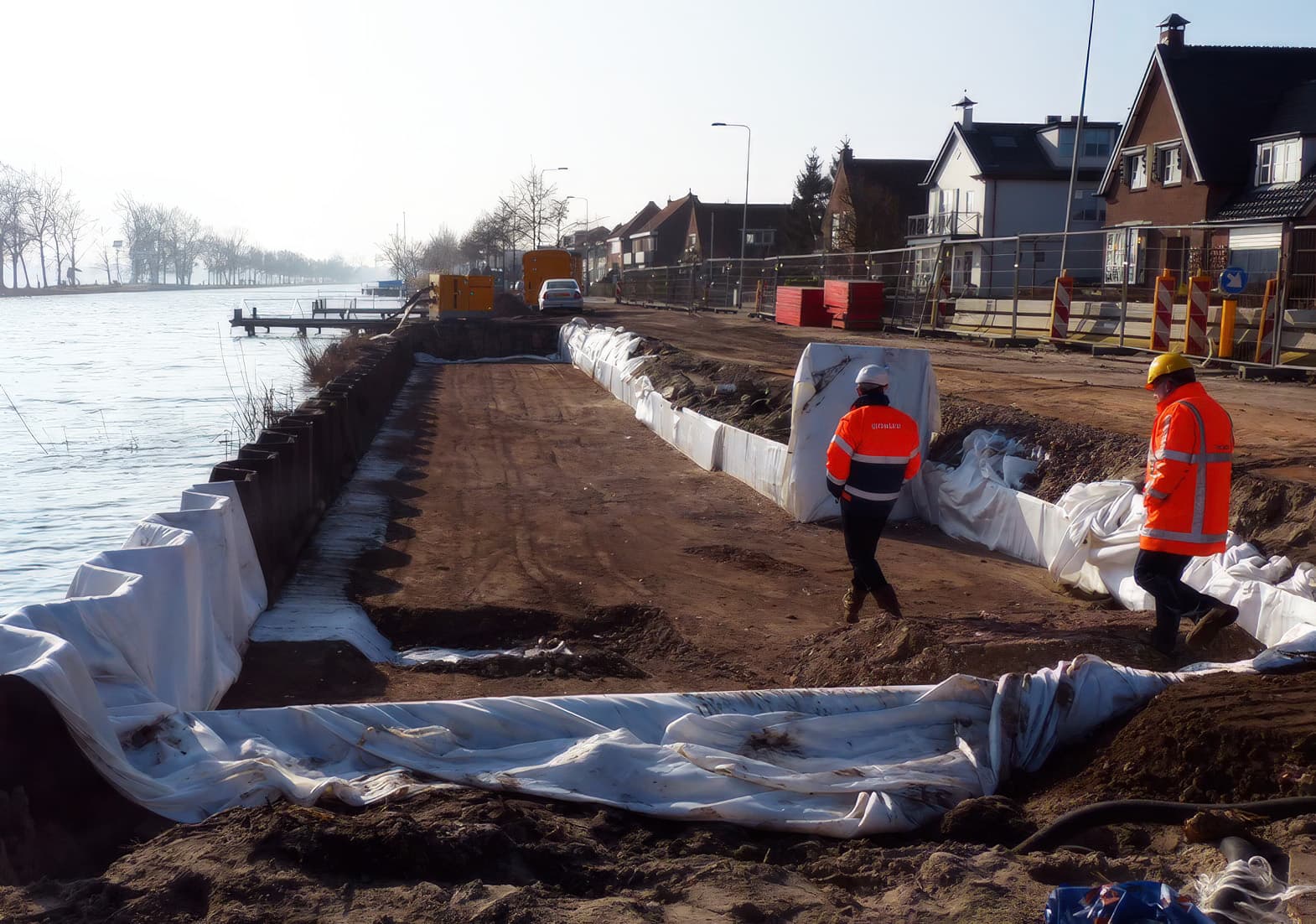
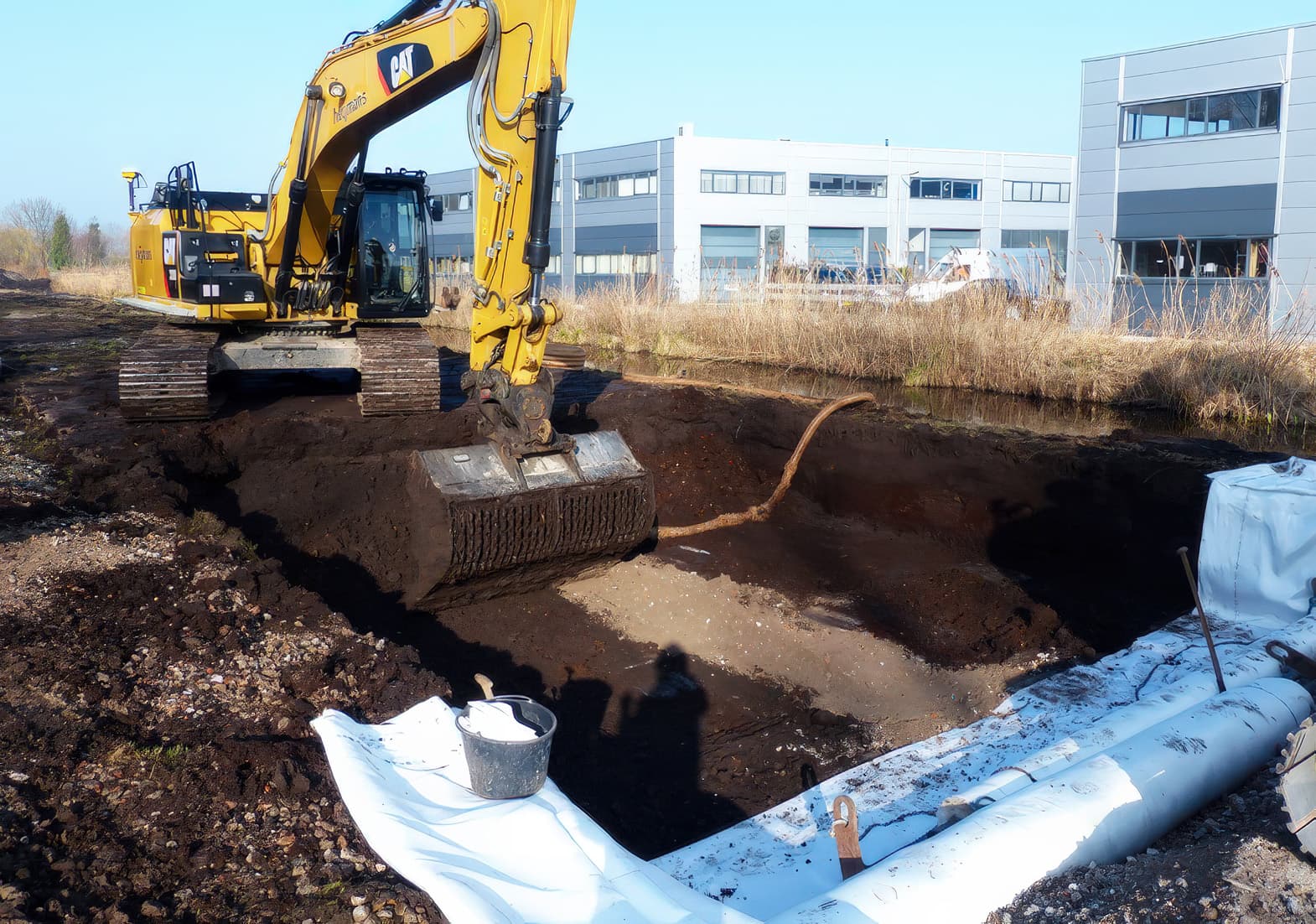
The construction of the basal reinforced piled embankment structure involved first excavating down to the groundwater level. After this, the piles and pile caps were installed at the required geometry. Then, the MIRAFI Geolon PET400 geotextile reinforcement was installed across the tops of the pile caps in both the longitudinal and transverse directions. Next, the embankment fill was placed in layers and compacted. Finally, the pavement layers were constructed. To make the shallow embankment blend into the surrounding environment, made ground was filled to the height of the pavement surface.