Overview
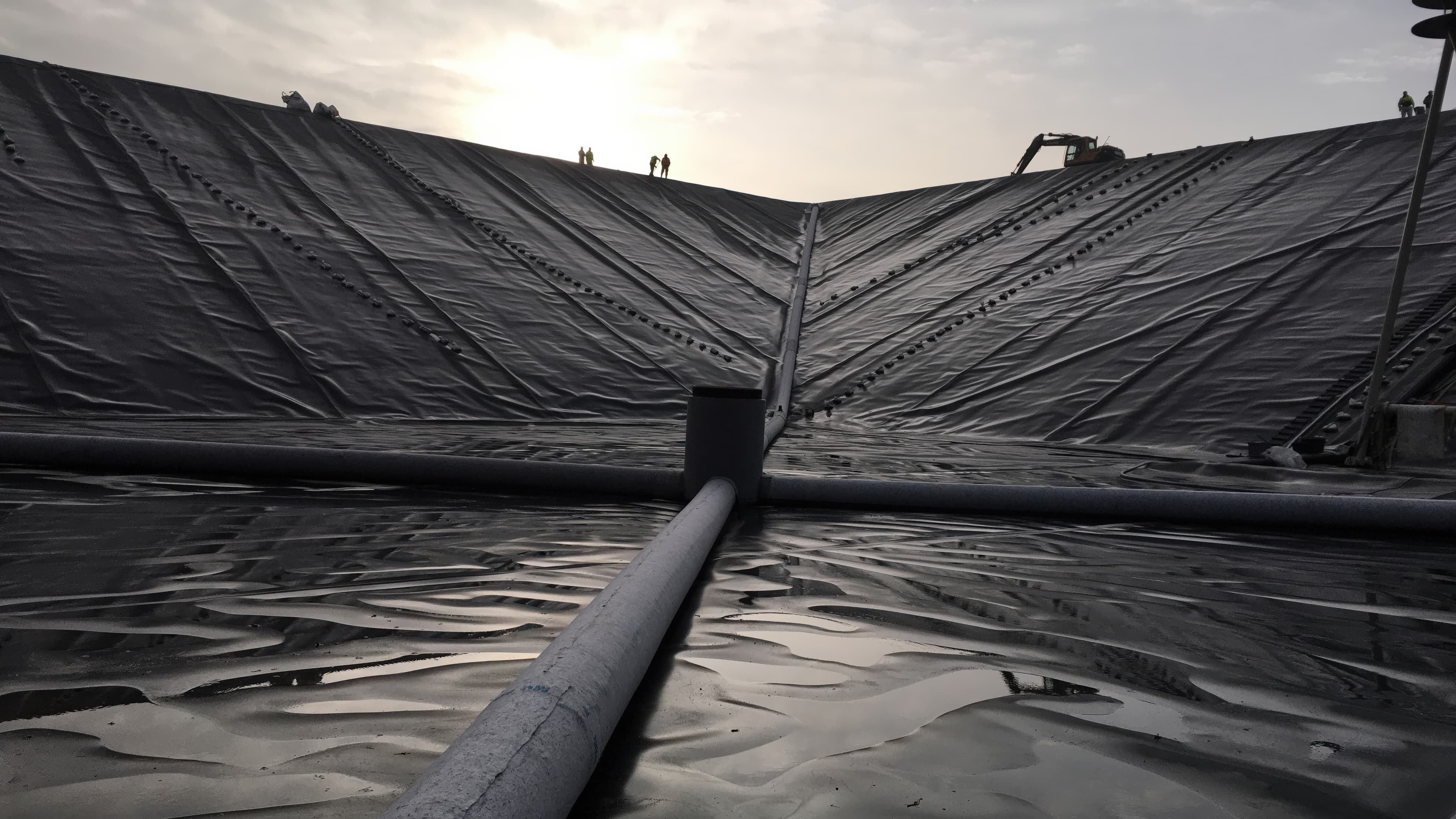
In the Danish town of Toftlund, a seasonal pit thermal energy storage (PTES) facility was constructed to enhance the efficiency and sustainability of district heating. The facility has a total storage capacity of 85,000 m3. By storing excess solar thermal energy generated during the summer, the system provides reliable heating supply during the winter months, when solar input is insufficient to meet demand. This allows the community to maximize the use of renewable energy, reduce dependency on fossil fuels, and stabilize long-term heating costs. The PTES in Toftlund was specifically designed to bridge the seasonal imbalance between renewable energy availability and heat demand. During summer, large solar collector fields produce significant amounts of thermal energy, often more than is needed for immediate use. Without adequate storage, this surplus would be wasted. By capturing and storing the energy in a large earth basin, it can be discharged months later through the district's heating network. The 85,000 m³ capacity of the Toftlund PTES provides sufficient volume to make this seasonal transfer of energy feasible and efficient. Solmax, as a global leader in geosynthetics, contributed essential products and services to the project. These included prefabrication, material supply, installation, and quality assurance. The company provided geosynthetic solutions specifically engineered for high-temperature, long-term containment applications. Among the products installed were GSE® HDH, FABRINET® Base Protect, GSE HD color geomembrane. Each played a distinct role in ensuring the structural integrity, impermeability, and durability of the storage system. The Toftlund PTES illustrates the capacity of engineered geosynthetics to support renewable energy infrastructure. The project provides an example of how geosynthetic liners, protective layers, and prefabricated components can be integrated into large-scale storage systems to ensure safe and efficient operation under demanding conditions.
Challenge
The construction of a large-scale pit thermal energy storage system involves several technical challenges that must be resolved for the facility to perform as intended over its service life. Chief among these is the containment of large volumes of hot water at temperatures reaching up to 90 C. At this scale, the hydrostatic pressures on the lining system are substantial, and the elevated temperatures accelerate the aging of polymeric materials. Traditional geomembranes may not retain their impermeability or mechanical strength under such conditions, leading to potential leakage or water and heat loss. Another challenge lies in the seasonal nature of the energy storage process. The PTES must remain permanently watertight, during discharge cycles, but also over long durations of static storage when water temperatures remain high for months. This requires the liner to resist long-term creep, maintain flexibility, and prevent stress cracking even under fluctuating thermal conditions. Additionally, the presence of ultraviolet radiation, freeze-thaw cycles, and environmental loading can further compromise material performance if not addressed by appropriate design. The Toftlund project also required precise coordination among multiple trades to ensure that the geosynthetic system integrated seamlessly with the civil works, insulation layers, and cover system. The geosynthetics had to be prefabricated to exact dimensions, transported to site, and installed under strict quality assurance protocols. Any defects in welding or seam integrity could compromise the entire storage system, making quality control a critical component of the installation. Finally, because pit thermal energy storage was still a relatively novel application at the time of the installation, the project required specialized expertise to ensure that the chosen geosynthetics met the technical requirements of thermal storage rather than conventional containment. This included not only high-temperature resistance but also compatibility with protective layers, insulation systems, and cover materials.
Solution
The solution implemented in Toftlund relied on a combination of engineering design, advanced geosynthetics, and rigorous installation practices. The PTES was constructed as an earth basin with a total capacity of 85,000 m³. Its purpose is to store sun heat collected during summer months and release it through the district heating network in winter. This seasonal transfer allows Toftlund Fjernvarme to provide renewable heating to its customers while reducing reliance on fossil fuels. Solmax delivered a complete package of products and services for the project. Prefabrication ensured that materials were manufactured to the required dimensions before arriving on site, minimizing waste and improving installation efficiency. Material delivery was coordinated with the construction schedule to ensure timely progress. Installation was carried out by experienced technicians, and quality assurance protocols were applied throughout the process to guarantee the performance of the lining system. The geosynthetics installed in the Toftlund PTES included four key products, each fulfilling specific technical functions:
13,000 m² of FABRINET BP 50 5000: This layer provided subgrade protection and served as a barrier against mechanical damage to the geomembrane, ensuring the long-term integrity of the sealing system.
27,000 m² of GSE HDH 2.5 mm geomembrane: Designed for applications involving hot water storage, this liner provided the primary barrier against leakage. Its formulation resists stress cracking, creep, and degradation at sustained high temperatures, making it critical to the success of the PTES.
10,000 m² of FABRINET Base Protect 40 2000: As a multifunctional geocomposite, this product contributed to drainage, filtration, and puncture protection. Its role was to enhance durability and safeguard the geomembrane under field conditions.
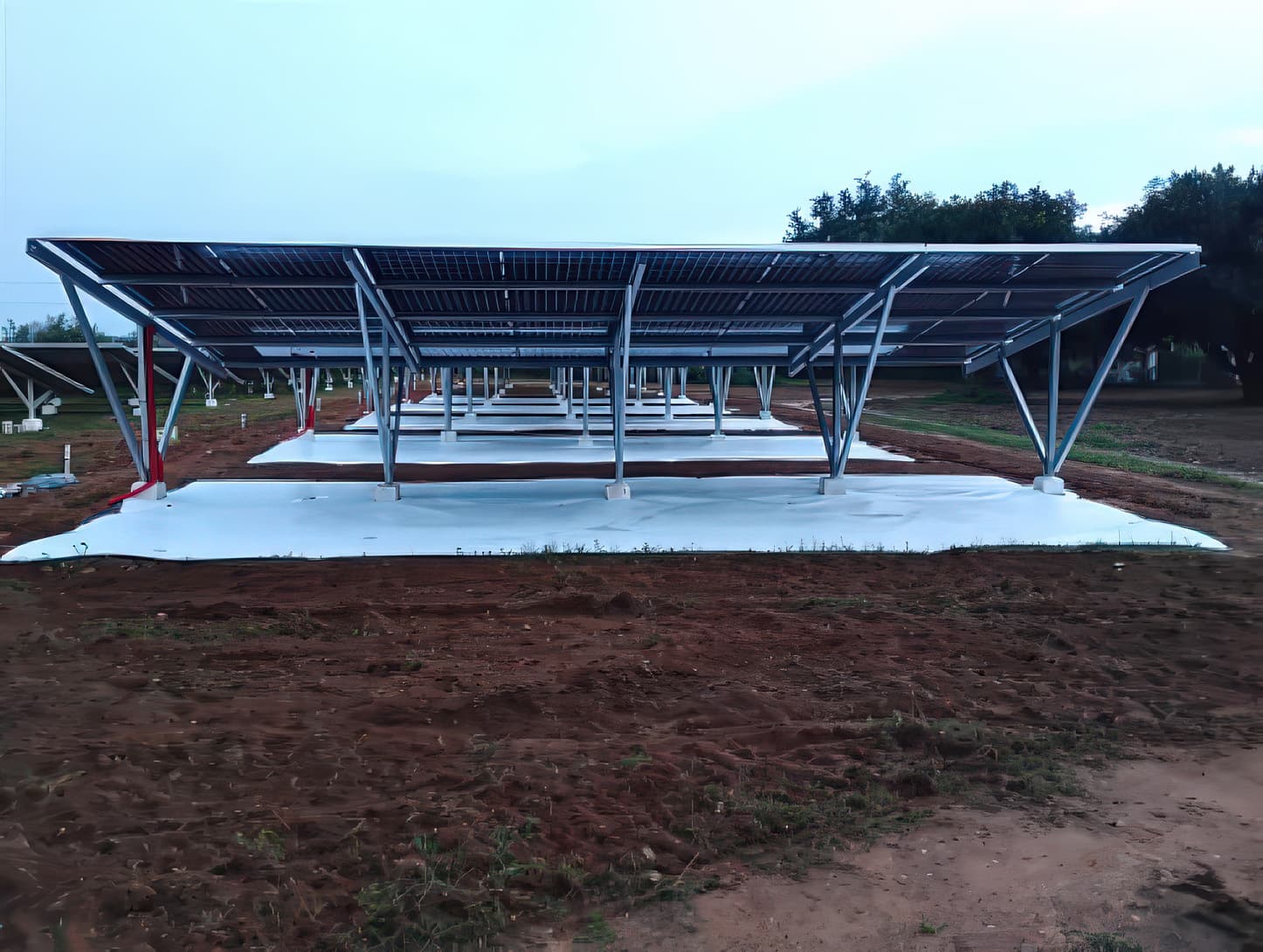
13,000 m² of GSE HD Color 1.5 mm (light grey): This geomembrane was used for the cover system, combining impermeability with UV resistance. The light grey color minimized heat absorption from solar radiation, reducing thermal length elongation.
Together, these materials formed a multilayer containment system designed to withstand the hydrostatic pressures, thermal stresses, and environmental conditions of the PTES. The high-temperature geomembrane provided the essential sealing function, while the protective and drainage layers ensured stability and durability.
Installation was completed within the designated timeframe. Throughout the process, welding of geomembrane seams was carefully monitored to ensure impermeability, and all system components were integrated to achieve optimal performance. By combining prefabrication, precise material selection, and strict quality control, Solmax ensured that the Toftlund PTES would function safely and effectively for its intended lifespan.
The Toftlund PTES project underscores the importance of geosynthetics in sustainable infrastructure. By applying high-temperature resistant geomembranes, multifunctional protection layers, and durable cover systems, engineers were able to design and construct a large-scale seasonal storage system that meets demanding technical and environmental requirements.